

Preview: New Scientist Magazine – Oct 15, 2022

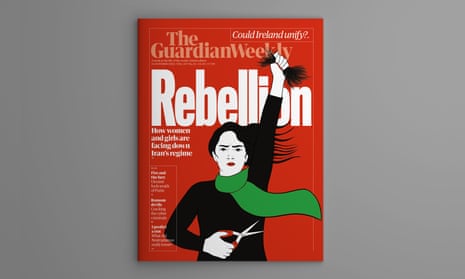
The women and girls facing down Iran’s leaders. Plus: Putin strikes back
For the past few weeks, nationwide protests have gripped Iran after the death in police custody of Mahsa Amini, a 22-year-old Kurdish woman who had been detained for breaching Islamic dress codes.
Details of what is happening inside the country remain patchy, but social media footage suggests action has been substantial, resulting in mass arrests and scores of deaths. Yet Iran’s repressive state apparatus has not been able to quell the unrest or diminish the morale of protesters, many of whom are young women and schoolgirls.

This week’s @TheTLS , featuring Rosemary Righter and @peterfrankopan on Xi Jinping; @LaurenElkin on Annie Ernaux; @pottmeister on John le Carré; @MirandaFrance1 on Clarice Lispector; @Lordoflongitude on measurement – and more.
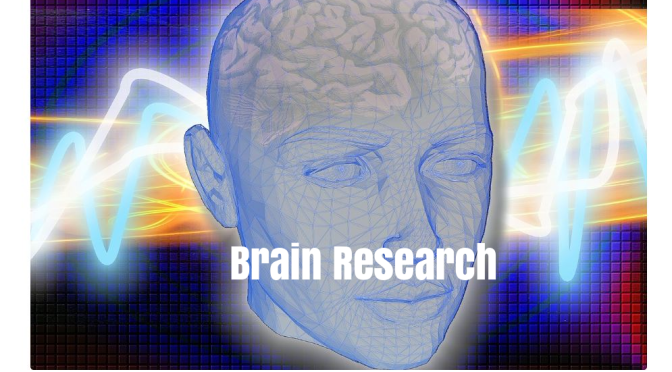
Take an animated look inside the neuron, and learn how scientists are addressing brain disease. With approximately 86 billion neurons in the brain, humans contain the most complex communications network imaginable. To address diseases of brain development and degeneration, neuroscientists are investigating how and why this network breaks down, and what can be done to repair it.
One area of study is dendrites, which are the tree-like structures of neurons, that receive electrical impulses. Researchers are carefully mapping out brain circuits and uncovering how connectivity changes can result in defects of the visual system or behavioral problems. The core section of the neuron is the cell body. Genetic engineering tools are revealing how mutations impact brain development and contribute to autism spectrum disorder or rare, inherited forms of neurological disease.
The transmission of nerve impulses occurs along the axon, which is insulated, much like an electrical wire, by a fatty layer called the myelin sheath. Scientists have invented a medicine to stop the immune system from mistakenly attacking this layer, which occurs during multiple sclerosis. Other molecules currently in development instruct the body to regenerate the sheath and repair damage. The axon also transports valuable cellular cargo, such as neurotransmitters, along tracks from one end of the neuron to the other.
Researchers are testing drug candidates for their ability to remove molecular traffic jams when this transport system fails, as often occurs in Parkinson’s and Alzheimer’s disease. The axon terminals make connections called synapses with other cells, using neurotransmitters as signals. Some scientists are evaluating how finely tuning the receptors for these chemicals could ease depression and anxiety.
Others are finding ways to promote the regrowth of lost synapses, which could halt neurodegeneration. From genetics to behavior, neuroscience is accelerating new interventions for the most challenging disorders of the nervous system.
Learn more: https://www.scripps.edu/

There’s plenty to go around, but it’s going to the wrong places.
Developing countries need to boost their yields, even if that conflicts with climate goals.
Who’s eating more, and who’s eating less.
A selection of three essential articles read aloud from the latest issue of The Economist. This week, the outlook for the world economy, how worried you should be about Elon Musk’s superpowers (12:50), and a study allays fears that covid vaccines harm menstrual cycles (16:50).
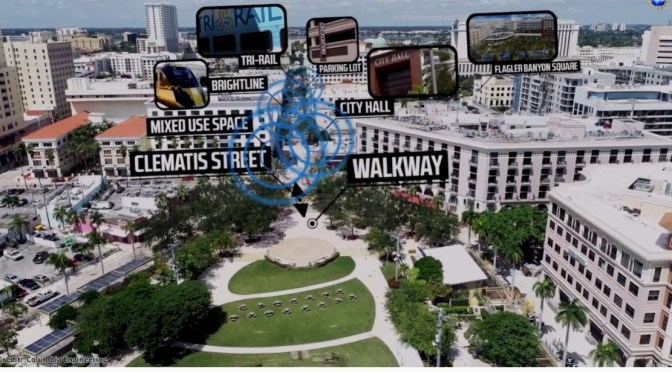
How are you connected on the street where you live, the street where you do business, the street you share with neighbors? But how could a smarter street improve your life?
Video timeline: 00:00 Building Smarter Cities 00:14 Next Evolution 00:36 ERC Partners
Could technology help guide disabled pedestrians, eliminate traffic bottlenecks, enhance trash collection and pest control, improve emergency services, protect people from environmental and health threats. “Smart Streetscapes,” a new National Science Foundation Engineering Research Center, aims to create livable, safe, and inclusive communities. Learn more on NSF’s “The Discovery Files.”
Set right on the spectacular coast of Cannes, France, La Palme d’Or rests inside the Grand Hyatt Cannes Hotel Martinez. This restaurant has won two Michelin stars, and is most known for its Mediterranean-style dishes. However, the most notable thing about this restaurant is the head chef, who creates bespoke ceramic dishware to for the restaurant to best compliment his unique recipes.

Some places you fall in love with at first sight and La Palme d’Or is one of them. In the fabulous Art Deco setting of the Hotel Martinez, diners look down on the famous promenade of La Croisette and the Bay of Cannes, while savouring the luxury and refinement so beautifully brought together here. Of course, all this would be worth nothing without high-calibre cuisine. No worries on that score: chef Christian Sinicropi, a local man, has matters entirely in hand. At each stage of the “Mouvements” set menu, he homes in on one ingredient, supporting it with elements from its own ecosystem. The result is coherent and sophisticated, right down to the remarkably precise desserts by Julien Ochando. Definitely worthy of a Golden Palm award.

A posthumous release of the songwriter’s unseen novel and stories from the 1950s reveals his nascent fascination with human frailty.
Silicon chips power everything from cars and toys to phones and nukes. “Chip War,” by Chris Miller, recounts the rise of the chip industry and the outsize geopolitical implications of its ascendancy.
In his new book, the satirist and comedian traces the rise of ill-equipped politicians and considers how to thwart them.
By Becky Hughes Photographs by Karsten Moran

Pack in 400 years of history at the Museum of the City of New York in East Harlem ($20 suggested admission), opposite Central Park at the top end of Museum Mile. Its ongoing exhibition, “New York at Its Core,” will give you a glimpse of the neighborhoods you’ll encounter this weekend, and an overview of the many eras of the city’s development, including its few decades as the Dutch settlement of New Amsterdam, its 19th-century shift to an immigrant hub, the growth of the city’s park program after the New Deal and the birth of the punk and hip-hop subcultures of the 1970s and 1980s.

To the dismay of the too-cool-for-school set, Midtown is having a moment. Rockefeller Center is enticing popular restaurateurs with real-estate deals, aiming to draw locals and tourists alike. One glamorous newcomer is Le Rock, a French brasserie (from the owners of the popular TriBeCa restaurant Frenchette) with a sleek Art Deco design and a pricey (around $200 for two without drinks) menu of chilled oysters ($24 for a half dozen), bison au poivre ($60) and a long list of natural wines. For a night of grand Manhattan opulence, you’re in good hands. Other notable arrivals in the area: Detroit-style slices at Ace’s Pizza, Italian dining with outdoor seating at Lodi (a Times food critic’s favorite) and the 11-seat Blue Ribbon Sushi Bar.

The real breakfast of champions is a pastrami, egg and cheese sandwich ($12.50) at Frankel’s Delicatessen & Appetizing in Greenpoint, Brooklyn. There may be no better representation of New York deli cuisine than the happy marriage between the Jewish staple meat, and the bodega and coffee-cart hero, the bacon, egg and cheese. If securing a window seat is a bust, the benches of McCarren Park across the street are calling your name. And for breakfast dessert (you’re on vacation!): Peter Pan Donut & Pastry Shop. You might recognize the bakery from the 2021 movie “Spider-Man: No Way Home,” but regulars know it for the unparalleled blueberry buttermilk doughnuts ($1.75).
From Greenpoint, the northernmost neighborhood in Brooklyn, the views of the East River are unbeatable. Follow Noble Street all the way to the end, and you’ll find Greenpoint Terminal Market, a marketplace of vendors, every Saturday and Sunday, rain or shine. You’ll get a top-tier view of the Manhattan skyline while you sift through racks of vintage clothes, tables of art and jewelry, and maybe get a really bad portrait made ($5) to commemorate the day. For a little more shopping, try Big Night, a “shop for dinner, parties and dinner parties”; Dobbin St. Vintage Co-op for vintage furniture; and the mini-Japanese market at 50 Norman for housewares by Cibone and customized dashi packs from Dashi Okume.

Hidden away from Williamsburg’s chain coffee shops and boutique gyms is City Reliquary ($7 entry) a tiny, colorful storefront wedged between buildings on Metropolitan Avenue. Inside is a quirky and fascinating collection of New York artifacts curated by this not-for-profit community museum and civic organization. Packed (really packed) into two small rooms, you’ll find defunct subway signage, souvenirs from New York World’s Fairs, samples of rocks from far below the city and an astonishing amount more. Look for the many iterations of paper deli cups, including the iconic Anthora cup (designed by Leslie Buck in the 1960s), which you’ll still see at diners and bodegas today.

Greenwich Village cynics will complain about its restaurants: Lines everywhere, many cash-only and littered with celebrities and the rubberneckers that follow. For first-time Village diners, though, Bar Pitti unfailingly delivers an entertaining night out. Get there around 6 p.m. (with cash — no cards accepted) and there should be a short wait. Order the eggplant Parmesan if it’s on the chalkboard of specials ($14.50), pappardelle in a pink cream sauce ($23.50) and a bottle of Lambrusco ($50). The best Italian food in New York? It’s probably not the best on its block. But the brash-yet-somehow-charming service, prime location and killer people-watching makes Bar Pitti a true New York affair. For a more relaxed alternative, Malatesta Trattoria has an excellent tagliatelle ragu ($17, cash-only) and a lower-key ambience.
To state the obvious: You can’t see New York City in 36 hours. You could easily fill a couple of days eating your way down one street in Jackson Heights, Queens, or spend an entire weekend uncovering corners of Central Park. This guide is not designed to check landmarks off a list, but rather to offer visitors one slice of life in New York (minus the laundry schlepping and skyrocketing rent). Below you’ll find a subterranean piano bar, a hidden garden, market shopping against the backdrop of an unbeatable skyline and some big-picture and hyperlocal history to bring you a little closer to feeling the gestalt of the city.








 Boomers Daily