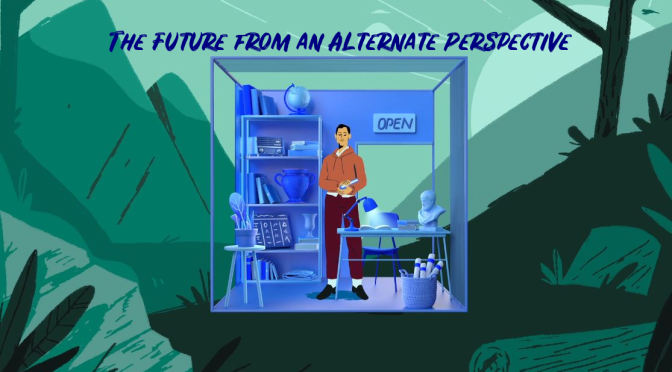
Artificial Intelligence: “The Future From An Alternate Perspective”

The story follows our main character Luis as he tries to clearly explain the complexities and nuances of ‘language’, and the challenges of teaching AI to thoroughly understand it.

A massive project, an incredibly talented team, and a little bit of luck to get to the finish line. So thankful to my fellow artists and friends who helped pull this off.

Client: Microsoft
Agency: Trifilm
Creative Director: Mia Vyzis
Producer: Corey Lovett
Animation Director: Reece Parker
Art Director: Reece Parker
Illustration: Tom Goyon, Millie Woodcock, Reece Parker
Character Animation Lead: Khylin Woodrow
Cel: Khylin Woodrow, TJ Peters, Mathijs Luijten, Adam Henderson, Reece Parker, Salvador Padilla, Nata Metlukh
2D Animation: Matt Jameson, TJ Peters, Mathijs Luijten, Manuel Neto, Reece Parker
3D modeling/Animation: Billy Chitkin, Nocky Dinh
Editing/composite: Bruce Stead, Matt Jameson, Mathijs Luitjen, Manuel Neto, Tj Peters
Sound design: Ambrose Yu
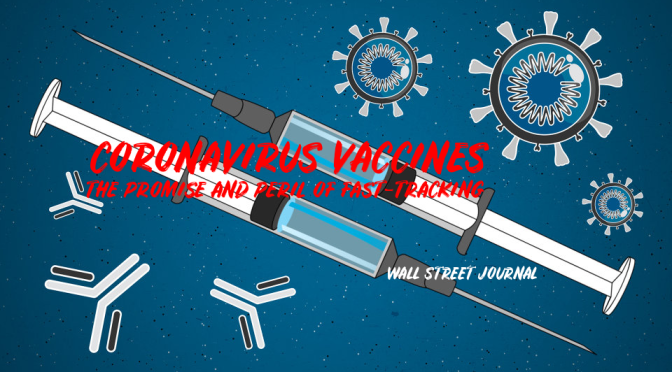
 

Coronavirus Vaccines: The Promise And Peril In Fast-Tracking (WSJ Video)

As the coronavirus continues to spread around the globe, companies and academic labs are racing to develop a vaccine that would help society get back to normal. But there could also be costs to moving too quickly.

WSJ’s Daniela Hernandez explains. Photo illustration: Laura Kammermann

New Research Podcasts: “Human Brains Are Wired To Enjoy Musical Pitch”

The Scientist PodcastsIn this month’s episode, we learn that human brains differentiate musical pitch a way that macaque monkeys do not. In fact, speech and music shaped the human brain’s hearing circuits. Researchers are studying these circuits with an eye on developing treatments for neurological disorders. 
Website

Top New Science Podcasts: New Skin That Grows Hair, Spontaneous RNA (Nature)

Nature PodcastThis week, Nature looks at a new method to grow hairy skin in a dish, and new research takes aim at the RNA world hypothesis.



In this episode:

00:45 Hairy Skin

Researchers may have developed a way to make skin that can grow hair in the lab, paving the way for treatment of a variety of skin disorders, and perhaps even baldness. Research Article: Lee et al.News and Views: Regenerative medicine could pave the way to treating baldness

08:56 Research Highlights

How mercury moved during the ‘Great Dying’, and the link between mobile phones and gender equality. Research Highlight: Giant eruptions belched toxic metal during the ‘Great Dying’Research Article: Rotondi et al.

11:21 Does DNA predate life?

The RNA world hypothesis posits that RNA formed spontaneously leading eventually to life. Now new research suggests that RNA and DNA formed together, before life. Research Article: Xu et al.News and Views: How DNA and RNA subunits might have formed to make the first genetic alphabet

19:25 Pick of the Briefing

We pick our highlights from the Nature Briefing, including the recent SpaceX launch, and the earliest fossil of a land animal. CBC: Scientists find oldest fossil of a land animalNature News: SpaceX to launch astronauts — and a new era of private human spaceflight

Subscribe to Nature Briefing, an unmissable daily round-up of science news, opinion and analysis free in your inbox every weekday.

Other links

Video: We test a home antibody kit for tracking Covid-19 transmission

Top Gardens: Astonishing “Wisteria Pergolas” Of Petworth House, England

From Country Life Magazine (May 31, 2020):

The Private Gardens at Petworth House West Sussex Photos by Val Corbett Country LifeThe wisteria at Petworth’s private garden is simply astonishing. Non Morris takes a look at how it’s done, with pictures by Val Corbett.

The beautiful pergolas in the Cloister Garden are trained with Wisteria floribunda Alba, a white Japanese wisteria selected for the tantalising length of its racemes — up to 24in — and the way the flowers open gradually along the stem, which prolongs its flowering period. The wisteria is pruned once only, in September.

Petworth House and Park England
Website

Read full article

Podcast Profiles: Author Georges Simenon, Creator Of Inspector Maigret (LRB)

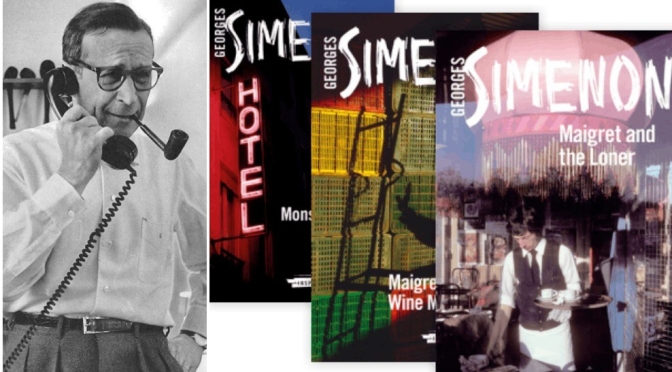
London Review of Books’ John Lanchester talks to Thomas Jones about Georges Simenon, whose output was so prodigious that even he didn’t know how many books he wrote.

Georges Simenon - Maigret ReturnsTRANSCRIPT

Thomas Jones: Hello, and welcome to the London Review of Books podcast. My name is Thomas Jones, and today I’m talking to John Lanchester, who’s written a piece in the current issue of the LRB about Georges Simenon and his 75 Maigret novels, which Penguin have just finished reissuing in new translations. Hello, John.

John Lanchester: Hi Tom. Thanks for having me.

TJ: Thank you for joining me. And I thought we could begin where you begin your piece with Simenon’s ‘colossal output’, as you put it, and that nobody knows how many books he actually wrote, though it was probably more than four hundred, which is fewer than Barbara Cartland, but still puts the rest of us to shame.

JL: He didn’t half crack on, that’s true. Yes, he started as a young man in Liège, his home town in Belgium. And he got a job as a reporter on the local paper. I think he was not quite 16, which is properly strange. It’s like something out of a high concept kid’s TV show, you know, Georges Simenon – Boy Reporter, and very early on latched onto the idea of making money through writing.He began writing when he was 18, his first book came out when he was 19. He started writing every sort of potboiler, thrillers, romances, sort of semi-porn westerns, things like that, at an absolutely astounding rate of productivity. And his target was eighty pages a day, typewritten, and even on the assumption that the pages … I mean, a short page would be 150 words and it could well have been more, but it was 10,000 words a day, and he did that every single day. And then he’d write eighty pages, and then he’d go and be sick. Just from the physical and mental exertion and the strain. That was in the morning. And then he’d recover and do a bit of light reading and pottering about. And then the next day he did the same again, over and over and over for about seven years. And in that period, as you’ve mentioned, we don’t know exactly how many, because he forgot, and he had multiple pseudonyms. The main one being Georges Sim, which was how he was known when he began writing the Simenon novels. People thought that Simenon was a pseudonym because George Sim was so well known, but he seems to have written about 150 or more books in this seven-year burst. It  makes you feel peculiar even to think about what that must have been like.

Read full transcript

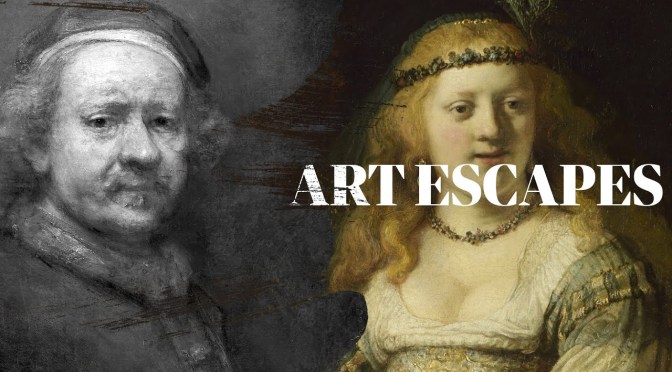
Art History: Rembrandt’s Portraits – “Love And Loss” At The National Gallery

A revealing look at Rembrandt’s most intimate portraits, on display in the locked-down National Gallery in London. The Guardian’s art critic Jonathan Jones reveals his favourite portraits, of vulnerable and unpretentious people the artist had known and loved. Jones asks what we can learn from these great masterpieces, especially during lockdown.

Health & Design: The New “Touchless Products” To Limit Spread Of Germs

The importance of touchless bathroom and kitchen products during the coronavirus pandemic is highlighted in this video interview with Patrick Speck from Grohe, as part of the brands takeover of Virtual Design Festival Today.

Speck is the the vice president of design consumer experience for the EMENA region of Japanese water technology brand Lixil, which is the parent company of bathroom and kitchen brand Grohe. Speck told Dezeen that following the coronavirus pandemic, the brand has seen an increased demand for products that limit the spread of germs and diseases.

“With the increased demand for hygiene we’re having right now, we know that to minimise the risk of spreading germs and also cross contamination, we need to reduce contact with any surface as much as we can,” Speck explained in the video. According to Speck, the solution could be touchless products such as faucets and toilets that rely on sensor technology.

Read more on Dezeen: http://www.dezeen.com/vdf

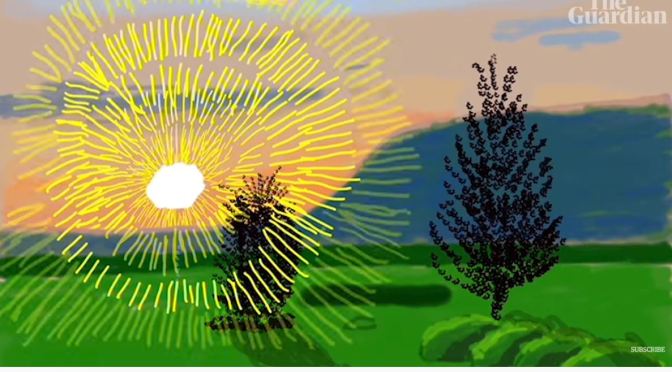
Arts & Culture: David Hockney’s “Lockdown Sunrise” And Other Masterpiece Dawns (Video)

David Hockney created a glorious depiction of a sunrise on his iPad in April and emailed it from his lockdown in Normandy to the Guardian’s art critic Jonathan Jones. He has made pictures from nature every day through this bitter spring as his artistic stand against despair – and what is more hopeful than the sun coming up? Jones describes how the picture reminded him of all the sunrises shut away inside the National Gallery, in London. From Bellini to Monet, Titian to Turner, a private view of some of the greatest masters’ sunrises