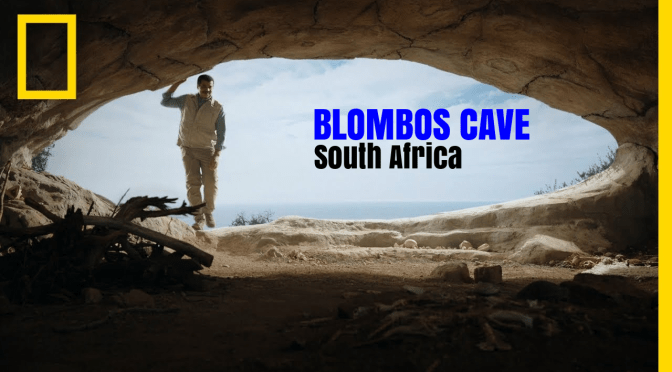
See the first laboratory on Earth – Blombos Cave. Here our ancestors conducted the first chemistry experiments.
Blombos Cave is an archaeological site located in Blomboschfontein Nature Reserve, about 300 km east of Cape Town on the Southern Cape coastline, South Africa. The cave contains Middle Stone Age (MSA) deposits currently dated at between c. 100,000 and 70,000 years Before Present (BP), and a Late Stone Age sequence dated at between 2000 and 300 years BP. The cave site was first excavated in 1991 and field work has been conducted there on a regular basis since 1997, and is ongoing.
The excavations at Blombos Cave have yielded important new information on the behavioural evolution of anatomically modern humans. The archaeological record from this cave site has been central in the ongoing debate on the cognitive and cultural origin of early humans and to the current understanding of when and where key behavioural innovations emerged among Homo sapiens in southern Africa during the Late Pleistocene. Archaeological material and faunal remains recovered from the Middle Stone Age phase in Blombos Cave – dated to ca. 100,000–70,000 years BP – are considered to represent greater ecological niche adaptation, a more diverse set of subsistence and procurements strategies, adoption of multi-step technology and manufacture of composite tools, stylistic elaboration, increased economic and social organisation and occurrence of symbolically mediated behaviour.
The most informative archaeological material from Blombos Cave includes engraved ochre, engraved bone ochre processing kits, marine shell beads, refined bone and stone tools and a broad range of terrestrial and marine faunal remains, including shellfish, birds, tortoise and ostrich egg shell and mammals of various sizes.[20][21][22] These findings, together with subsequent re-analysis and excavation of other Middle Stone Age sites in southern Africa, have resulted in a paradigm shift with regard to the understanding of the timing and location of the development of modern human behaviour.
From an Art Daily online article (March 19, 2020):
“I love eating suits of arms, in fact I love all shell fish… food that only a battle to peel makes it vulnerable to the conquest of our palate.”
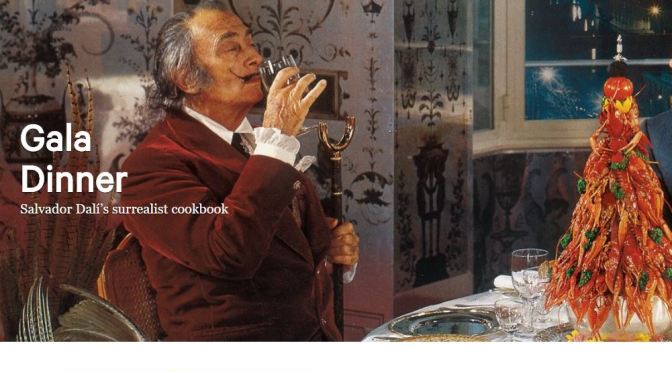
This reprint features all 136 recipes over 12 chapters, specially illustrated by Dalí, and organized by meal courses, including aphrodisiacs. The illustrations and recipes are accompanied by Dalí’s extravagant musings on subjects such as dinner conversation: “The jaw is our best tool to grasp philosophical knowledge.”
NEW YORK, NY.- “Les diners de Gala is uniquely devoted to the pleasures of taste … If you are a disciple of one of those calorie-counters who turn the joys of eating into a form of punishment, close this book at once; it is too lively, too aggressive, and far too impertinent for you.”—Salvador Dalí
Food and surrealism make perfect bedfellows: sex and lobsters, collage and cannibalism, the meeting of a swan and a toothbrush on a pastry case. The opulent dinner parties thrown by Salvador Dalí (1904–1989) and his wife and muse, Gala (1894–1982) were the stuff of legend. Luckily for us, Dalí published a cookbook in 1973, Les diners de Gala, which reveals some of the sensual, imaginative, and exotic elements that made up their notorious gatherings.
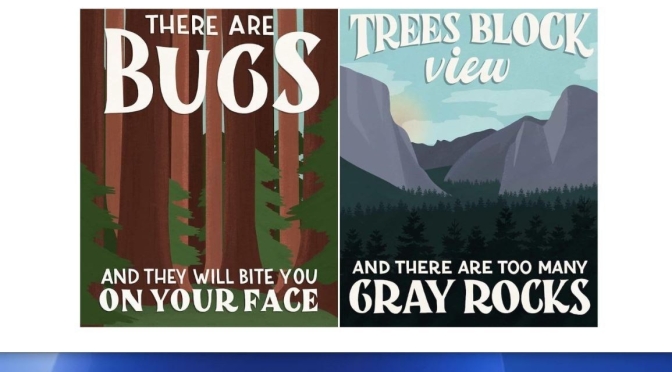
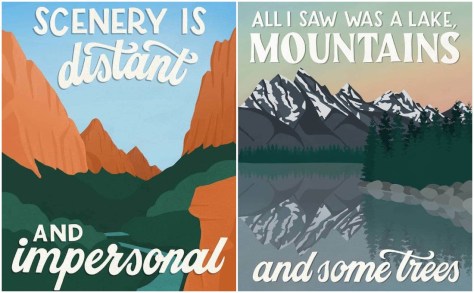
Subpar Parks is a snarky love letter to the National Parks System. When I discovered that there were 1-star reviews for every single one of the 62 national parks, I set out to illustrate each park along with a hand lettered 1-star review as a way to put a positive, fun spin on such a negative mindset.
Listen to the latest from the world of science, brought to you by Benjamin Thompson and Nick Howe. This week, Nautre speaks to Rosamund Pike about her experience portraying Marie Skłodowska Curie, and we find out how science in Russia is changing after years of decline.
In this episode, Sidney talks about how Gemini GEL got started and grew into the organization it is today, sharing stories about the artists he’s worked with along the way.
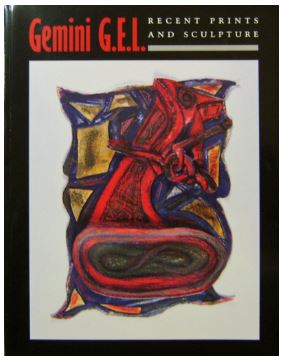
In 1966, at the age of forty-one, Sidney Felsen moved from the world of accounting to that of art, founding the artists’ workshop and fine-art print publisher Gemini GEL in Los Angeles. With Gemini GEL, Sidney quickly got to work with some of the biggest artists of the twentieth century: Man Ray, Josef Albers, Jasper Johns, and Robert Rauschenberg, to name a few. And Gemini GEL continues its work with new generations of artists, including Julie Mehretu, Tacita Dean, and David Hammons.
Sidney Felsen is the co-founder of Gemini G.E.L., a printmaking studio in Los Angeles that has been operating since 1965. Some of his photographs documenting the artists at work at Gemini are collected in the book The Artist Observed.
Sarah Watkinson is Wytham Woods’ first poet in residence. She leads us through a delicate maze of woodland and words, weaving together nature, research and poetry. In their work, scientists are objective: they don’t express opinions, they don’t talk about themselves. Poetry would seem science’s diametrical opposite: it’s traditionally inward-looking and self-reflective. Sarah’s writing combines her scientific background and her love for form and words in the most delicate and unexpected way: observing the world, for her, is a form of poetry.
“The finding in two randomised trials that advice to use ibuprofen results in more severe illness or complications helps confirm that the association seen in observational studies is indeed likely to be causal. Advice to use paracetamol (acetaminophen) is also less likely to result in complications.”
Scientists and senior doctors have backed claims by France’s health minister that people showing symptoms of covid-19 should use paracetamol (acetaminophen) rather than ibuprofen, a drug they said might exacerbate the condition.
Ian Jones, a professor of virology at the University of Reading, said that ibuprofen’s anti-inflammatory properties could “dampen down” the immune system, which could slow the recovery process. He added that it was likely, based on similarities between the new virus (SARS-CoV-2) and SARS I, that covid-19 reduces a key enzyme that part regulates the water and salt concentration in the blood and could contribute to the pneumonia seen in extreme cases. “Ibuprofen aggravates this, while paracetamol does not,” he said.
At First Light chronicles twenty-six extraordinary artists of the last two hundred years who have lived and worked in Maine. Published to coincide with the state’s bicentennial in 2020, the volume considers the significant contributions artists have made to a deeper and more profound understanding of Maine’s history, its land and its peoples. Maine’s unique and breathtaking landscape–from its rugged coastline, quaint harbors, majestic mountains, and verdant forests–continues to have a powerful effect on the artists who are drawn to its shores.
Written and expertly researched by some of the foremost scholars and curators in the field, each chapter focuses on a different artist, featuring the artists’ artworks and anchored by breathtaking contemporary photography of their homes, studios, and surroundings. From picturesque bungalows to grander structures with beautiful vistas, the houses and studios featured are as diverse as the artists who have inhabited them. The artists featured include fan favorites to lesser known yet important figures from the eighteenth century to the present day, working in a range of media from painting to photography to sculpture, including: Jonathan Fisher, Winslow Homer, Frank Weston Benson, Charles Herbert Woodbury, John Marin, Marsden Hartley, Rockwell Kent, N. C. Wyeth, Andrew Wyeth, Jamie Wyeth, Marguerite and William Zorach, Rockwell Kent, Marsden Hartley, John Marin, Eliot Porter, Fairfield Porter, Rudy Burckhardt, Yvonne Jacquette, Ashley Bryan, Lois Dodd, Alex Katz, Bernard Langlais, Robert Indiana, David C. Driskell, Molly Neptune Parker, Richard Tuttle, and William Wegman.
About The Author
Anne Collins Goodyear is codirector of the Bowdoin College Museum of Art. Frank H. GoodyearIII is codirector of the Bowdoin College Museum of Art. Michael K. Komanecky is chief curator at the Farnsworth Art Museum, in Rockland, Maine. Stuart Kestenbaum is the Poet Laureate of Maine. Walter Smalling is a photographer based in Washington, D.C.

 This reprint features all 136 recipes over 12 chapters, specially illustrated by Dalí, and organized by meal courses, including aphrodisiacs. The illustrations and recipes are accompanied by Dalí’s extravagant musings on subjects such as dinner conversation: “The jaw is our best tool to grasp philosophical knowledge.”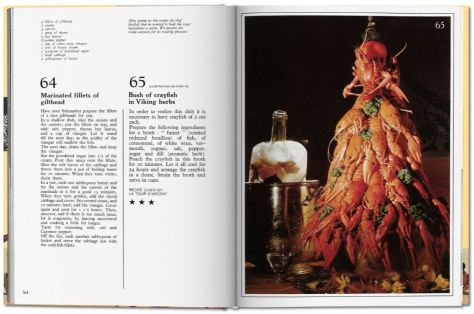


 Listen to the latest from the world of science, brought to you by Benjamin Thompson and Nick Howe. This week, Nautre speaks to Rosamund Pike about her experience portraying Marie Skłodowska Curie, and we find out how science in Russia is changing after years of decline.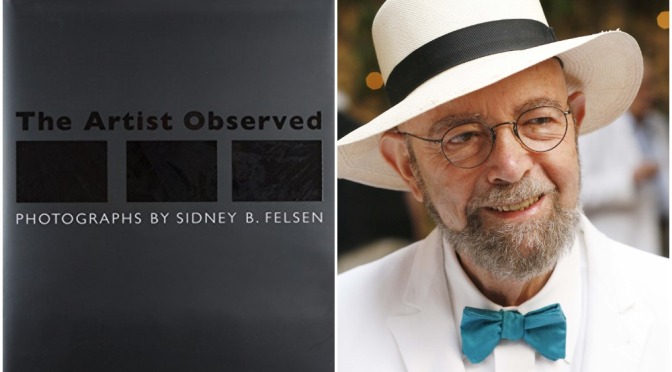
 In this episode, Sidney talks about how Gemini GEL got started and grew into the organization it is today, sharing stories about the artists he’s worked with along the way.
 In 1966, at the age of forty-one, Sidney Felsen moved from the world of accounting to that of art, founding the artists’ workshop and fine-art print publisher Gemini GEL in Los Angeles. With Gemini GEL, Sidney quickly got to work with some of the biggest artists of the twentieth century: Man Ray, Josef Albers, Jasper Johns, and Robert Rauschenberg, to name a few. And Gemini GEL continues its work with new generations of artists, including Julie Mehretu, Tacita Dean, and David Hammons.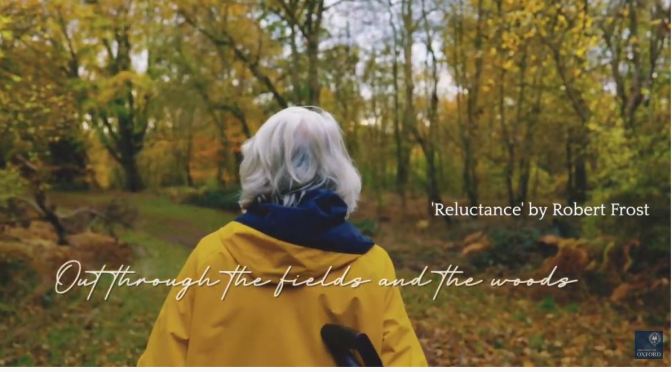
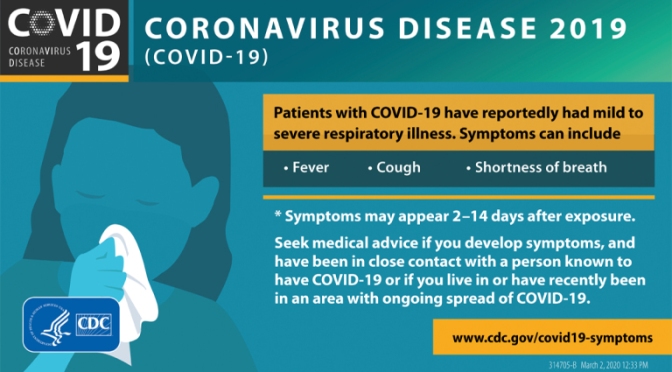
 “The finding in two randomised trials that advice to use ibuprofen results in more severe illness or complications helps confirm that the association seen in observational studies is indeed likely to be causal. Advice to use paracetamol (acetaminophen) is also less likely to result in complications.”
 Ian Jones, a professor of virology at the University of Reading, said that ibuprofen’s anti-inflammatory properties could “dampen down” the immune system, which could slow the recovery process. He added that it was likely, based on similarities between the new virus (SARS-CoV-2) and SARS I, that covid-19 reduces a key enzyme that part regulates the water and salt concentration in the blood and could contribute to the pneumonia seen in extreme cases. “Ibuprofen aggravates this, while paracetamol does not,” he said.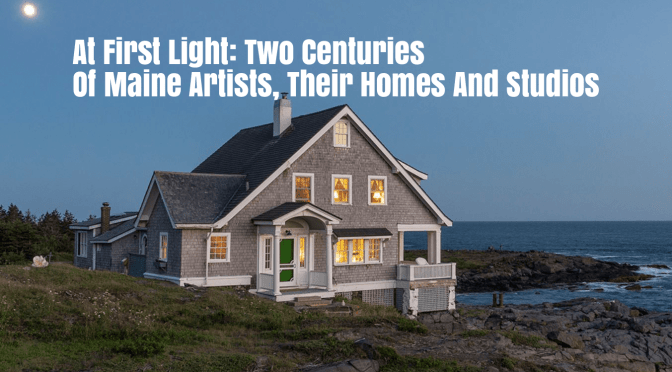
 At First Light chronicles twenty-six extraordinary artists of the last two hundred years who have lived and worked in Maine. Published to coincide with the state’s bicentennial in 2020, the volume considers the significant contributions artists have made to a deeper and more profound understanding of Maine’s history, its land and its peoples. Maine’s unique and breathtaking landscape–from its rugged coastline, quaint harbors, majestic mountains, and verdant forests–continues to have a powerful effect on the artists who are drawn to its shores.
 Boomers Daily