
Scientists lead the way in repairing the cathedral, while discovering historical insights along the way.

Scientists lead the way in repairing the cathedral, while discovering historical insights along the way.
Excerpts from a Wall Street Journal online review (Feb 25, 2020):
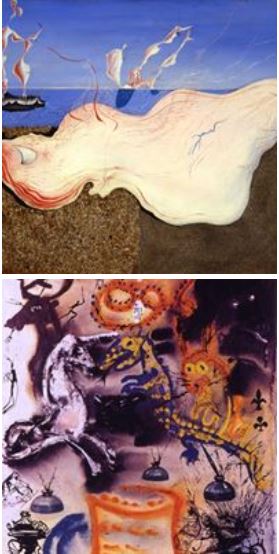 Masson, a founding Surrealist, saw the movement as an immersion “into what the German romantics call the night side of things.” However, “towards 1930,” Masson wrote, “a formidable disaster appeared in its midst: the demagogy of the irrational.” “Midnight in Paris” touches on Surrealism’s highs and lows, its darkness, poetry, beauty and banalities, reminding viewers—at the heart of the Dalí Museum, no less—that the movement is much, much more than melting watches.
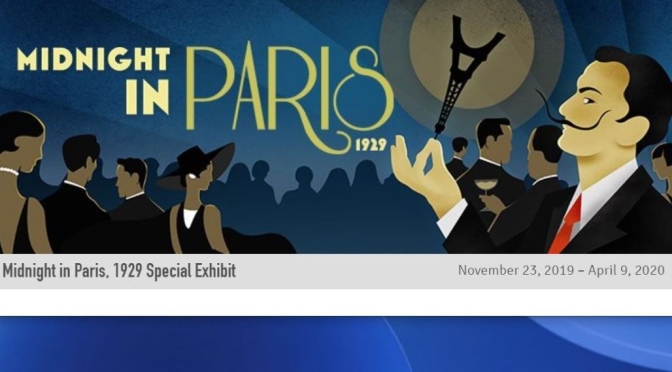
In 1920s Paris, Surrealist revolution and transgression were in the air, but not everyone agreed on how to make Surrealist works or what they should look like. “Midnight in Paris: Surrealism at the Crossroads, 1929,” an exhibition of 80 paintings, prints, sculptures, drawings, collages, photographs, films and documents at St. Petersburg’s Dalí Museum, proposes to examine Surrealism’s rich visual fabric, conflicts and rivalries during the movement’s heyday in the City of Light. Organized by Didier Ottinger, deputy director of the Musée national d’art moderne at the Centre Pompidou, and William Jeffett, chief curator of special exhibitions at the Dalí, it focuses on the moment just before Surrealism burst onto and began to dominate the world stage.
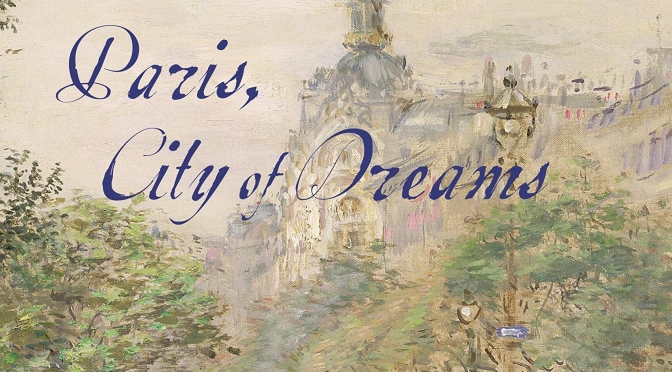
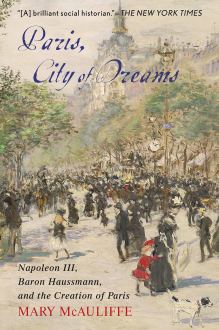 Paris, City of Dreams traces the transformation of the City of Light during Napoleon III’s Second Empire into the beloved city of today. Together, Napoleon III and his right-hand man, Georges Haussmann, completely rebuilt Paris in less than two decades—a breathtaking achievement made possible not only by the emperor’s vision and Haussmann’s determination but by the regime’s unrelenting authoritarianism, augmented by the booming economy that Napoleon fostered.
Acclaimed historian Mary McAuliffe vividly recaptures the Paris of Napoleon III, Claude Monet, and Victor Hugo as Georges Haussmann tore down and rebuilt Paris into the beautiful City of Light we know today.
McAuliffe follows the lives of artists such as Edouard Manet, Berthe Morisot, and Claude Monet, as well as writers such as Emile Zola, Gustave Flaubert, and the poet Charles Baudelaire, while from exile, Victor Hugo continued to fire literary broadsides at the emperor he detested.
McAuliffe brings to life a pivotal era encompassing not only the physical restructuring of Paris but also the innovative forms of banking and money-lending that financed industrialization as well as the city’s transformation. This in turn created new wealth and lavish excess, even while producing extreme poverty. More deeply, change was occurring in the way people looked at and understood the world around them, given the new ease of transportation and communication, the popularization of photography, and the emergence of what would soon be known as Impressionism in art and Naturalism and Realism in literature—artistic yearnings that would flower in the Belle Epoque.
Napoleon III, whose reign abruptly ended after he led France into a devastating war against Germany, has been forgotten. But the Paris that he created has endured, brought to vivid life through McAuliffe’s rich illustrations and evocative narrative.
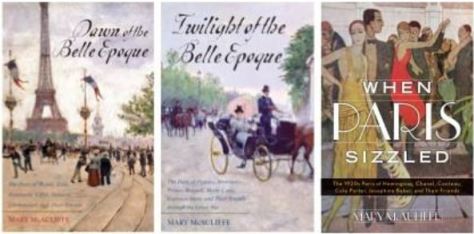
Mary McAuliffe holds a PhD in history from the University of Maryland, has taught at several universities, and has lectured at the Smithsonian Institution, the Barnes Foundation, and the Frick Pittsburgh. She has traveled extensively in France, and for many years she was a regular contributor to Paris Notes. Her books include Clash of Crowns, Dawn of the Belle Epoque, Twilight of the Belle Epoque, When Paris Sizzled, and Paris on the Brink. She lives in New York City with her husband.
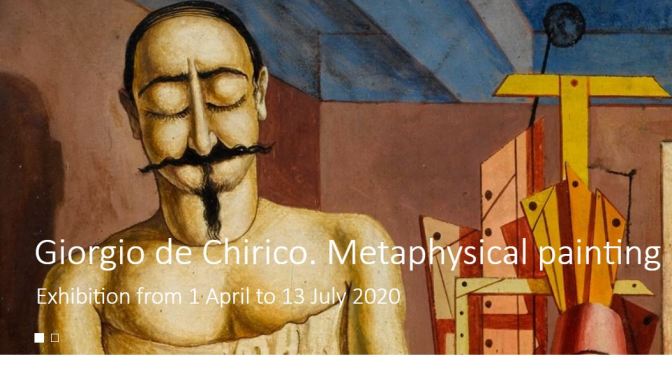
The exhibition Giorgio de Chirico. Metaphysical painting retraces the career and the artistic and philosophic influences of the artist Giorgio de Chirico from Munich to Turin, then to Paris where he discovered the artistic avant-garde of his era, and lastly Ferrare. The connections between the painter – discovered by Apollinaire and 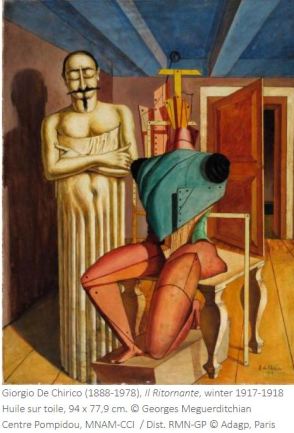 subsequently backed by the art dealer Paul Guillaume – and the Parisian cultural and literary circles will be highlighted as never before.
Born in Greece and trained in the fount of classical culture and late German Romanticism, de Chirico developed the foundations of a new artistic exploration alongside his younger brother Alberto Savinio. A student at the Academy of Fine Arts in Munich as of 1908, he discovered the thinking of Nietzsche and Schopenhauer as well as the works of Böcklin and Klinger. After travelling to Milan then Florence, it was in France, and more specifically Paris, as of autumn 1911, that he established his unique visual vocabulary through contact with the modernist artistic revolutions. He was quickly noticed by numerous artistic celebrities of the time, among whom Guillaume Apollinaire, Maurice Raynal, André Salmon, André Breton, Paul Éluard and Jean Paulhan were the first to take an interest in and promote his work.
 The exhibition thus comes into its own at the Musée de l’Orangerie alongside the figure of Paul Guillaume, the first art dealer to work with Giorgio de Chirico. On his return to Italy in 1915, he and his brother Savinio were sent to Ferrare for military reasons, where he continued his artistic research. This period (June 1915-December 1918) provided an opportunity for painters Carlo Carrà and Giorgio Morandi to get to know the two brothers, thus resulting in the creation of what was later to be known as the “metaphysical movement” which brings the exhibition to a close.
Exhibition organised by the Musée d’Orsay and the Musée de l’Orangerie, Paris and the Hamburger Kunsthalle, Hamburg
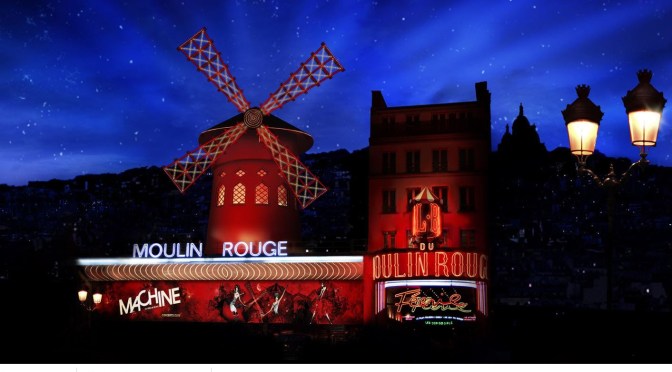
The Moulin Rouge, the famous cabaret with a windmill that opened in the Montmartre section of Paris 130 years ago, is still drawing crowds to its spectacular shows featuring a chorus line of often-topless dancers. And it’s now 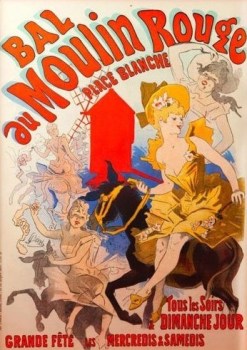 the inspiration for a hit Broadway musical. Correspondent Alina Cho visits the landmark that has inspired artists and writers (and even marriage proposals), and talks with its artistic director and dancers, along with the Tony Award-winning set designer of the new Broadway show, “Moulin Rouge!: The Musical.”
Moulin Rouge (“Red Mill”) is a cabaret in Paris, France.
The original house, which burned down in 1915, was co-founded in 1889 by Charles Zidler and Joseph Oller, who also owned the Paris Olympia. Close to Montmartre in the Paris district of Pigalle on Boulevard de Clichy in the 18th arrondissement, it is marked by the red windmill on its roof. The closest métro station is Blanche.
Moulin Rouge is best known as the birthplace of the modern form of the can-can dance. Originally introduced as a seductive dance by the courtesans who operated from the site, the can-can dance revue evolved into a form of entertainment of its own and led to the introduction of cabarets across Europe. Today, the Moulin Rouge is a tourist attraction, offering musical dance entertainment for visitors from around the world. The club’s decor still contains much of the romance of fin de siècle France.
From Wikipedia
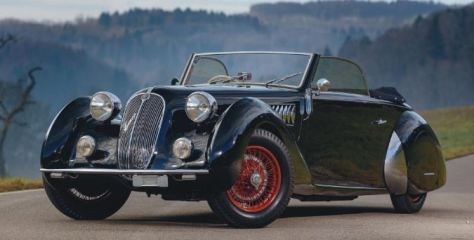
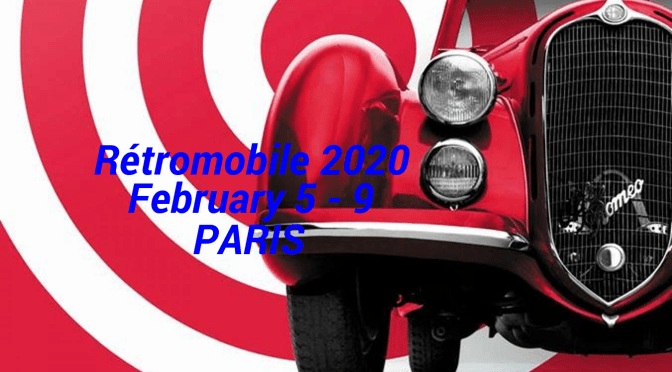
The winter break is finally over and the automotive year is about to kick off in emphatic fashion at Rétromobile, undeniably the finest event of its type on the planet.
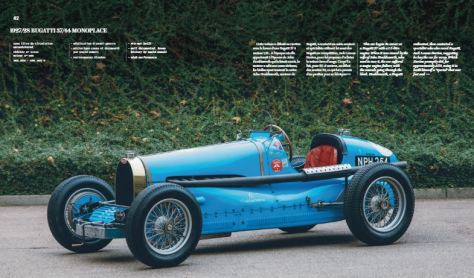 The annual salon is Paris provides manufacturers with a stage on which to show off their commitment to preserving their precious pasts, dealers the chance to set out their stalls and signal their intentions for the coming year and humble enthusiasts like us an opportunity to ogle thousands of collectable cars ranging from the affordable and the obscure to the rare and the downright priceless.
From a Wall Street Journal online article:

Ms. O’Loughlin participates in a sport called tower running, which involves racing up skyscrapers, towers and stadium stairs. She’s ranked first in her age group nationally and 76th among women globally, according to the Towerrunning World Association. “I never take an elevator up a building unless it’s the only way up,” says Ms. O’Loughlin, who lives in a retirement community in Denton, Texas.
Ms. O’Loughlin runs the 20 floors of a building at Texas Woman’s University in Denton on Mondays and Thursdays. There are 20 steps a floor and she usually runs three to four reps. Leading up to a race, she will increase to five reps, and she descends backward, holding the railing. “It saves your knees,” she says. “I realize I’m 75, not 20.”
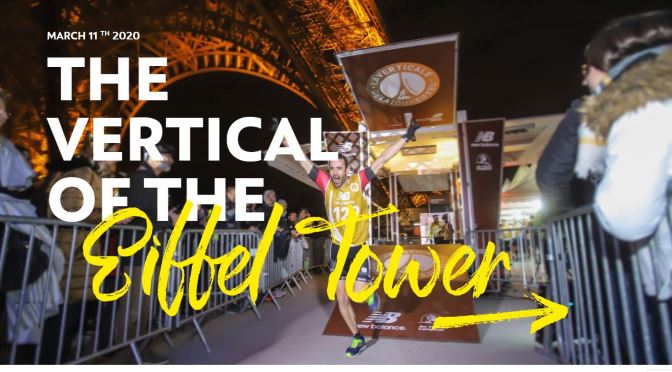
When Marsha O’Loughlin goes to Paris this March, she won’t be snapping photos of the Eiffel Tower. She’ll be too busy running up its stairs.
The 75-year-old is one of 131 participants who plan to compete in the 2020 Verticale de la Tour Eiffel, a race up 665 of the tower’s stairs.
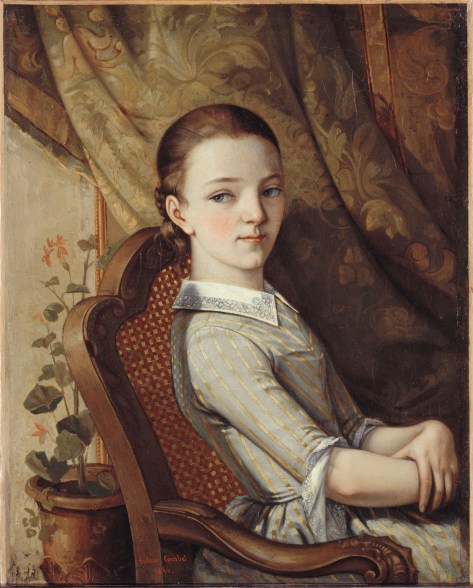
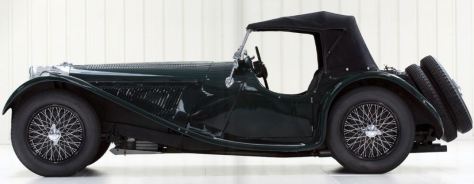
RM Sotheby’s is set to start its European calendar in spectacular fashion with a return to Paris on 5 February at the highly popular Place Vauban during the world-famous Rétromobile show week. With thousands of automotive enthusiasts from all over the world in the heart of Paris, we are thrilled to offer an exciting roster of 75 automobiles led by a spectacular and historic Jaguar D-Type.


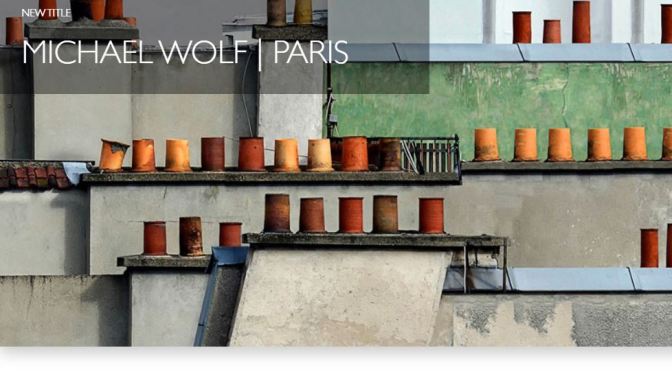
 Michael Wolf achieved fame when he won the 2005 World Press Photo with his China, Factory of the World project, and the 2010 World Press Photo with his Tokyo Compression. The present book offers his personal take on the French capital. Singling out typical architectural features of the Parisian landscape he renders the seemingly banal immortal, as only he knows how.
Roofs, chimneys, and lights provide the pictures with rhythm, with their colours, shapes, and above all their volumes. Wolf invites the reader to enter his highly distinctive visual world and let his gaze follow the snaking lines of walls and gutters, dwelling on unexpected details lovingly picked out. The photographer’s underlying desire is to encourage us to consider the environmental and architectural context that provides a framework for all these rigorously rectangular features.
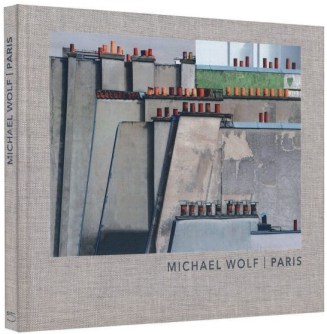 This dreamlike journey into a Paris viewed from the rooftops is underlined in the second part of the book. The shadows of trees decorate the façades of various buildings, creating a visual poetry and prompting an intimate dialogue where, in the absence of all human presence, nature and architecture blend into one another.
Michael Wolf (1954-2019) lived in Europe, America, and Asia, spending his last years in Hong Kong. A German photographer specialized in urban shots, he graduated in photography from the Folkwang University of the Arts in Essen, where he studied under Otto Steinert. Among his most noteworthy projects are the “beehive” skyscrapers in Hong Kong. The focus of his research is city life, especially in overpopulated contemporary metropolises, and their inhabitants’ loss of individuality. Wolf’s work has been displayed in a variety of locations, including the Venice Biennale of Architecture, the Aperture Foundation Gallery in New York, the Hong Kong Shenzhen Biennale, and the Museum of Contemporary Photography in Chicago. His works are also present in many permanent collections, including those of the Metropolitan Museum of Art in New York, the Museum of Contemporary Photography in Chicago, and the German Architecture Museum in Frankfurt.
Johan-Frederik Hel Guedj, a French writer, has published two novels (Le traitement des cendres, L’amour grave), a collection of short stories (De mon vivant), an account of polar exploration (Chercheurs d’éternité), and an essay on Orson Welles (La règle du faux). He lives in Brussels and writes on contemporary art in the daily newspaper L’Echo/De Tijd.

 Boomers Daily