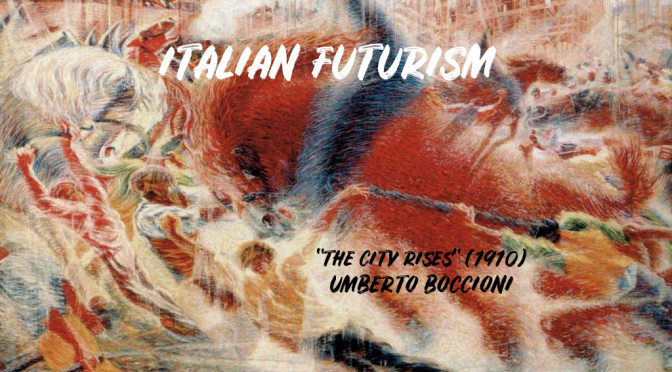
An introduction to Futurism, the dynamic movement that revolutionised Italian art at the beginning of the twentieth century. Obsessed with speed, the Futurists created art that captured the dawning of a new age. Also included is a closer look at Umberto Boccioni a founding member of the group, who died tragically young during the First World War. An extract from the Christie’s Education online course, Modern Art.
Zagato is an independent coachbuilding company and total design centre located northwest of Milan in the Terrazzano frazione of Rho, Lombardy, Italy.
The 1960s: Fuoriserie cars
The higher demand for special bodies required a passage from a handcraft to an industrially-based organization. Elio Zagato found a larger location at 30 Via Arese in Terrazzano (northwest of Milan), very close to Arese where Alfa Romeo would have chosen soon to establish its new plants. In 1960 Ugo Zagato was awarded with the Compasso d’Oro design prize for the design of the Fiat Abarth 1000 Zagato. In this period the mission of Zagato was to design special bodies to be assembled in series and fitted with mechanical parts and interiors supplied by major constructors. Under the partnership with Alfa Romeo the Giulia SZ, the TZ, TZ2, 2600 SZ, the 1750 4R and the Junior Zagato were born. In partnership with Lancia, Zagato continued the “Sport” series with the Lancia Appia Sport, the Flaminia Sport and Super Sport, the Flavia Sport and Supersport and the Fulvia Sport and Sport Spider. In addition there were some for special customers: Osca, Lamborghini, Bristol, Rover, Honda and Fiat.
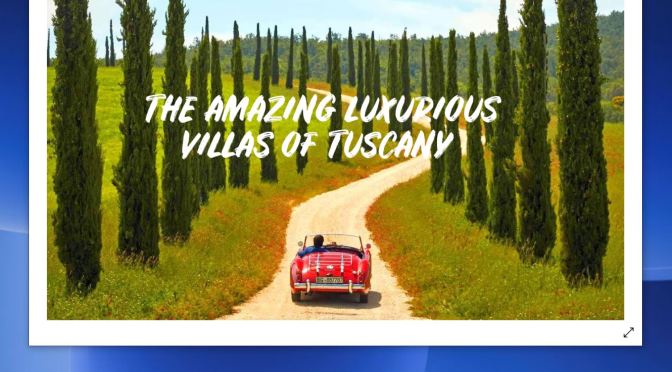
Tuscany, Italy is an Incredible Land With Beautiful Landscapes, Where Striking Historical Villas Dominate the Vineyards, Olive Groves and Sunflowers Fields. A Hilly Region Rich in Agriculture, Tuscany Was the Home of the Etruscan Civilization, and Later the Birthplace of the Renaissance. It’s Known for Charming, Historic Towns Like Siena, Florence, Cortona and Lucca, Tuscany Offers the Best in Culture, Scenery and Serenity. (Part 1 below)
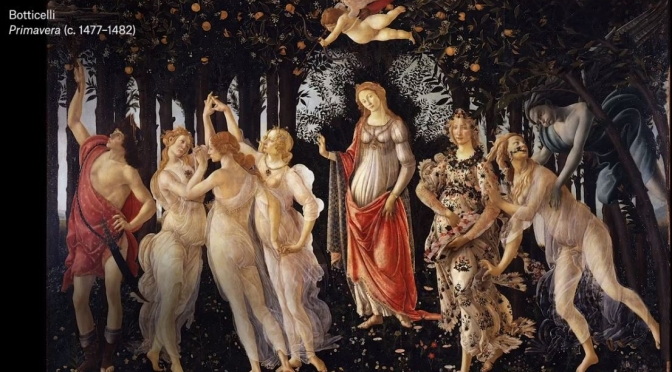
An extract from the Christie’s Education online course, The Great Masters of European Art 1350–1850. Florence in the 1400s, a city of wealthy guilds and merchants, in particular the Medici family, who commissioned astonishing works of art to show off their success and cultivation.
Here we are introduced to one of the great artists the Medicis favoured: Sandro Botticelli, and his most famous works: ‘Primavera’ and ‘The Birth of Venus’.
Alessandro di Mariano di Vanni Filipepi (c. 1445 – May 17, 1510), known as Sandro Botticelli, was an Italian painter of the Early Renaissance. He belonged to the Florentine School under the patronage of Lorenzo de’ Medici, a movement that Giorgio Vasari would characterize less than a hundred years later in his Vita of Botticelli as a “golden age”. Botticelli’s posthumous reputation suffered until the late 19th century; since then, his work has been seen to represent the linear grace of Early Renaissance painting.
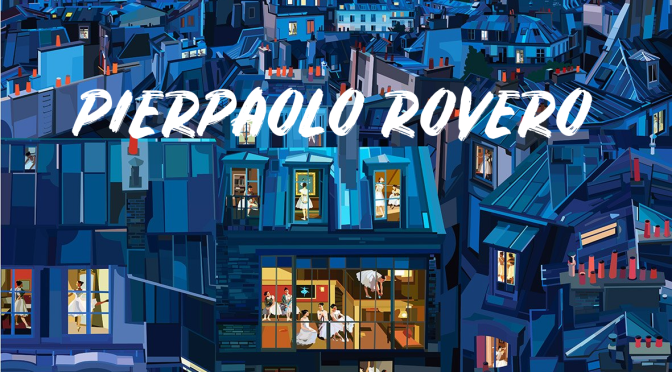
“Imagine all the people” is a project by Turin-based artist and illustrator Pierpaolo Rovero that fantasizes about the way people around the word spend their time in quarantine. Depicting a diverse range of metropolitan panoramas, from New York and Paris, to Jerusalem, to Tokyo, Rovero imagines the citizens of each city indulging in the same activity while stuck at home, allowing viewers to catch glimpses through windows, balconies and skylights.
Hosted in the Andito degli Angiolini space at Palazzo Pitti, “The Immensity of the Universe in the Art of Giovanna Garzoni” exhibition encompasses 100 floral compositions, still lives and miniatures by the Baroque, Marche-born painter friend of Artemisia Gentileschi.
The show has been curated by Sheila Barker of The Medici Archive Project and the Advancing Women Artists foundation is running a challenge to inspire the creation of contemporary art based on Garzoni’s oeuvre. While her role in the evolution of scientific illustration is widely acknowledged, Giovanna Garzoni is less familiar as an illustrator of geographical fantasy in the age of the Baroque.
In harmonic and often relatively small compositions, the painter combines exotic objects of extremely varied provenance such as Chinese porcelain, Pacific nautili, Mexican marrows and flowers, South American plants and English lapdogs, in an effort both to astonish and to amuse.
Turning her back on the conventional role reserved for women in her day, Garzoni travelled in Italy, and possibly also in France, gaining access to the most important collections of curios of her era. The exhibition showcases her works collected by the Medici and still owned by the Gallerie degli Uffizi, alongside targeted loans illustrating the artist’s field of action and her prowess as a portraitist.
On the basis of a previously untapped inventory, a section of the exhibition reconstructs Vittoria della Rovere’s Wunderkammer, once hosted in the Sala dell’Aurora in the villa of Poggio Imperiale, thus indirectly shedding light also on a leading member of the grand ducal family.
The little Tuscan town of Arezzo is everything the world wants Italy to be: ancient grandeur, natural abundance and high culture, basking sun and brimming with passion.
I was therefore thrilled at the opportunity to make a flow-motion promoting Arezzo and its most quintessential festival: the ancient Saracen Joust.
As we look ahead, I hope this little film is reminder of what we have to look forward to.
“from roots to crowns” describes the vertical metamorphosis of a hybrid building, moving from below ground through fields and trunks up to the crowns. It is a living shell on the move, able to take on 3 main positions “under the earth”(-1), “on the fields” (0) and “in the tree crowns” (+1+2). The lifting house is a visionary way of adapting the concept of “living and working in nature” to the varying requirements of its inhabitants.
noa* (Network of Architecture) is the essential expression of a collaborative work-ethos: the young team of architects & designers, led by founders Lukas Rungger and Stefan Rier and based in Bolzano (Italy) and Berlin (Germany), explores and examines interdisciplinary methods of design, continuously evolving depending on both nature and requirements of each project.
By following the concept of „emergence“, where the whole is perceived as being far greater than the sum of its parts, a holistic approach and strategy is central to noa*s way of conceiving design.
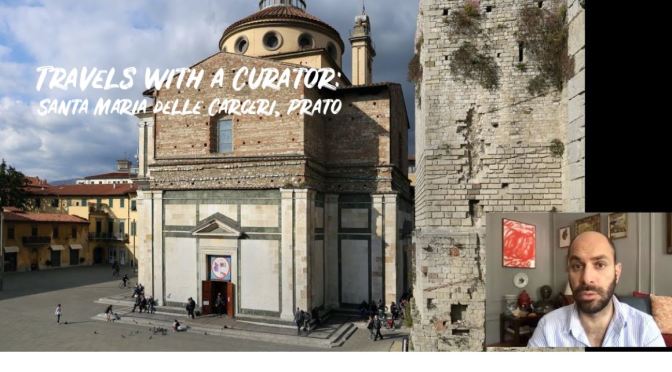
In this episode of “Travels with a Curator,” Xavier F. Salomon, Peter Jay Sharp Chief Curator, brings us to the church of Santa Maria delle Carceri in Prato, Italy, to explore the original home of one of the Frick’s spectacular bronzes, “St. John Baptizing” by Francesco da Sangallo. Discover the family connections that link this important sculpture to the church and retrace the history of the bronze from its creation in the sixteenth century to its acquisition by Henry Clay Frick in 1916.
News, Views and Reviews For The Intellectually Curious





 “Imagine all the people” is a project by Turin-based artist and illustrator Pierpaolo Rovero that fantasizes about the way people around the word spend their time in quarantine. Depicting a diverse range of metropolitan panoramas, from New York and Paris, to Jerusalem, to Tokyo, Rovero imagines the citizens of each city indulging in the same activity while stuck at home, allowing viewers to catch glimpses through windows, balconies and skylights.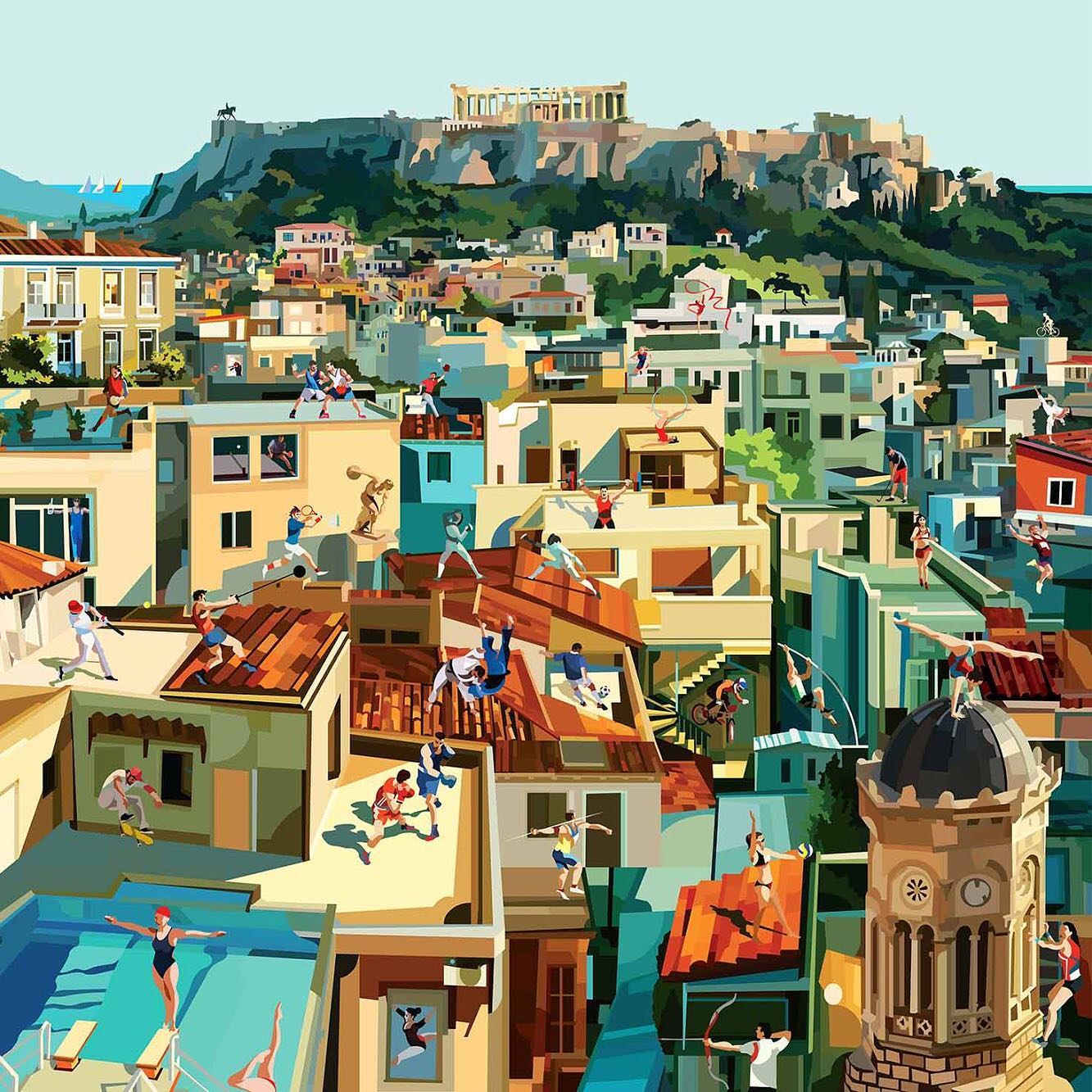
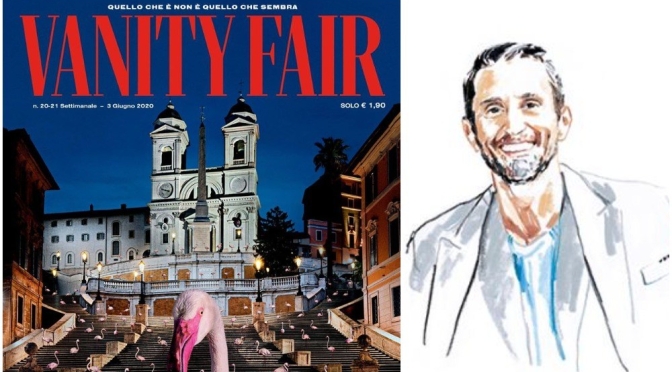
 Monocle 24’s “The Stack” speaks with ‘Vanity Fair Italia’ editor in chief Simone Marchetti.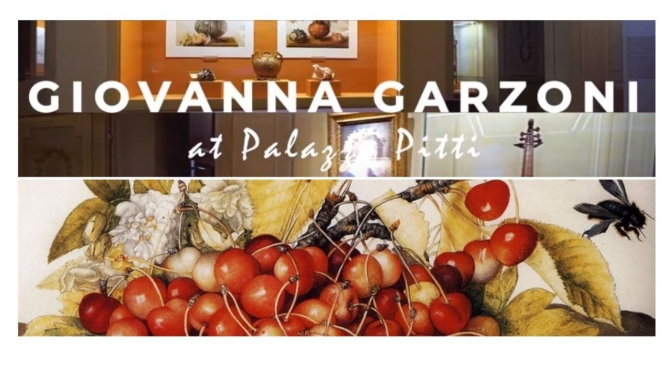
 The show has been curated by Sheila Barker of The Medici Archive Project and the Advancing Women Artists foundation is running a challenge to inspire the creation of contemporary art based on Garzoni’s oeuvre. While her role in the evolution of scientific illustration is widely acknowledged, Giovanna Garzoni is less familiar as an illustrator of geographical fantasy in the age of the Baroque.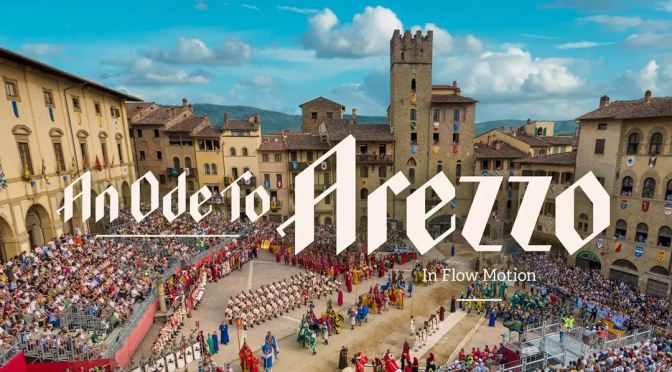
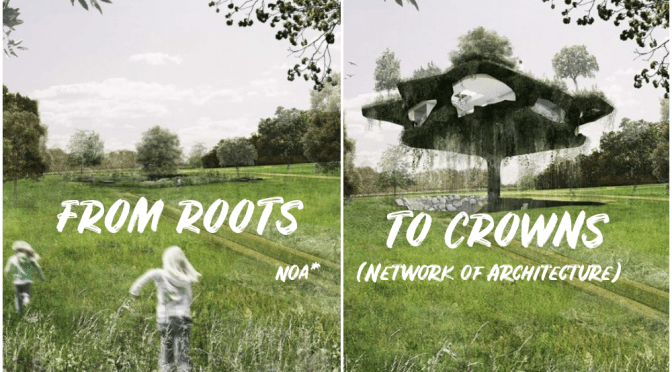
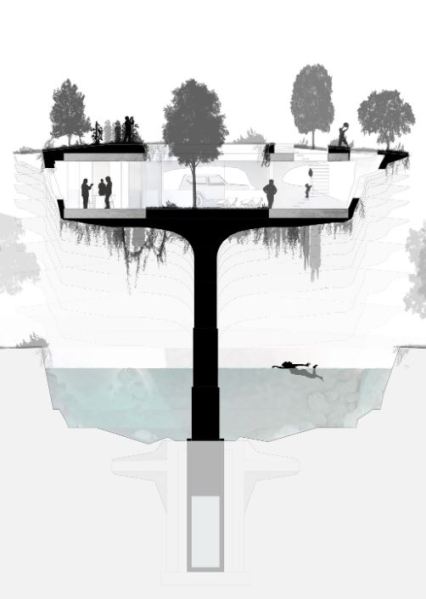 “from roots to crowns” describes the vertical metamorphosis of a hybrid building, moving from below ground through fields and trunks up to the crowns. It is a living shell on the move, able to take on 3 main positions “under the earth”(-1), “on the fields” (0) and “in the tree crowns” (+1+2). The lifting house is a visionary way of adapting the concept of “living and working in nature” to the varying requirements of its inhabitants.
 Boomers Daily