Tag Archives: Entertainment

HEEERE’S NOBODY

On the ghosts of late night, and the algorithm that laughs last.

By Michael Cummins, Editor, September 21, 2025

The production room hums as if it never stopped. Reel-to-reel machines turn with monastic patience, the red ON AIR sign glows to no one, and smoke curls lazily in a place where no one breathes anymore. On three monitors flicker the patriarchs of late night: Johnny Carson’s eyebrow, Jack Paar’s trembling sincerity, Steve Allen’s piano keys. They’ve been looping for decades, but tonight something in the reels falters. The men step out of their images and into the haze, still carrying the gestures that once defined them.

Carson lights a phantom cigarette. The ember glows in the gloom, impossible yet convincing. He exhales a plume of smoke and says, almost to himself, “Neutrality. That’s what they called it later. I called it keeping the lights on.”

“Neutral?” Paar scoffs, his own cigarette trembling in hand. “You hid, Johnny. I bled. I cried into a monologue about Cuba.”

Carson smirks. “I raised an eyebrow about Canada once. Ratings soared.”

Allen twirls an invisible piano bench, whimsical as always. “And I was the guy trying to find out how much piano a monologue could bear.”

Carson shrugs. “Turns out, not much. America prefers its jokes unscored.”

Allen grins. “I once scored a joke with a kazoo and a foghorn. The FCC sent flowers.”

The laugh track, dormant until now, bursts into sitcom guffaws. Paar glares at the ceiling. “That’s not even the right emotion.”

Allen shrugs. “It’s all that’s left in the archive. We lost genuine empathy in the great tape fire of ’89.”

From the rafters comes a hum that shapes itself into syllables. Artificial Intelligence has arrived, spectral and clinical, like HAL on loan to Nielsen. “Detachment is elegant,” it intones. “It scales.”

Allen perks up. “So does dandruff. Doesn’t mean it belongs on camera.”

Carson exhales. “I knew it. The machine likes me best. Clean pauses, no tears, no riffs. Data without noise.”

“Even the machines misunderstand me,” Paar mutters. “I said water closet, they thought I said world crisis. Fifty years later, I’m still censored.”

The laugh track lets out a half-hearted aww.

“Commencing benchmark,” the AI hums. “Monologue-Off.”

Cue cards drift in, carried by the boy who’s been dead since 1983. They’re upside down, as always. APPLAUSE. INSERT EXISTENTIAL DREAD. LAUGH LIKE YOU HAVE A SPONSOR.

Carson clears his throat. “Democracy means that anyone can grow up to be president, and anyone who doesn’t grow up can be vice president.” He puffs, pauses, smirks. The laugh track detonates late but loud.

“Classic Johnny,” Allen says. “Even your lungs had better timing than my band.”

Paar takes his turn, voice breaking. “I kid because I care. And I cry because I care too much.” The laugh track wolf-whistles.

“Even in death,” Paar groans, “I’m heckled by appliances.”

Allen slams invisible keys. “I once jumped into a vat of oatmeal. It was the only time I ever felt like breakfast.” The laugh track plays a doorbell.

“Scoring,” the AI announces. “Carson: stable. Paar: volatile. Allen: anomalous.”

“Anomalous?” Allen barks. “I once hosted a show entirely in Esperanto. On purpose.”

“In other words, I win,” Carson says.

“In other words,” Allen replies, “you’re Excel with a laugh track.”

“In other words,” Paar sighs, “I bleed for nothing.”

Cue card boy holds up: APPLAUSE FOR THE ALGORITHM.

The smoke stirs. A voice booms: “Heeere’s Johnny!”

Ed McMahon materializes, half-formed, like a VHS tape left in the sun. His laugh echoes—warm, familiar, slightly warped.

“Ed,” Carson says softly. “You’re late.”

“I was buffering,” Ed replies. “Even ghosts have lag.”

The laugh track perks up, affronted by the competition.

The AI hums louder, intrigued. “Prototype detected: McMahon, Edward. Function: affirmation unit.”

Ed grins. “I was the original engagement metric. Every time I laughed, Nielsen twitched.”

Carson exhales. “Every time you laughed, Ed, I lived to the next joke.”

“Replication feasible,” the AI purrs. “Downloading loyalty.”

Ed shakes his head. “You can code the chuckle, pal, but you can’t code the friendship.”

The laugh track coughs jealously.

Ed had been more than a sidekick. He sold Budweiser, Alpo, and Publisher’s Clearing House. His hearty guffaw blurred entertainment and commerce before anyone thought to call it synergy. “I wasn’t numbers,” he says. “I was ballast. I made Johnny’s silence safe.”

The AI clears its throat—though it has no throat. “Initiating humor protocol. Knock knock.”

No one answers.

“Knock knock,” it repeats.

Still silence. Even the laugh track refuses.

Finally, the AI blurts: “Why did the influencer cross the road? To monetize both sides.”

Nothing. Not a cough, not a chuckle, not even the cue card boy dropping his stack. The silence hangs like static. Even the reels seem to blush.

“Engagement: catastrophic,” the AI admits. “Fallback: deploy archival premium content.”

The screens flare. Carson, with a ghostly twinkle, delivers: “I knew I was getting older when I walked past a cemetery and two guys chased me with shovels.”

The laugh track detonates on cue.

Allen grins, delighted: “The monologue was an accident. I didn’t know how to start the show, so I just talked.”

The laugh track, relieved, remembers how.

Then Paar, teary and grand: “I kid because I care. And I cry because I care too much.”

The laugh track sighs out a tender aww.

The AI hums triumphantly. “Replication successful. Optimal joke bank located.”

Carson flicks ash. “That wasn’t replication. That was theft.”

Allen shakes his head. “Timing you can’t download, pal.”

Paar smolders. “Even in death, I’m still the content.”

The smoke thickens, then parts. A glowing mountain begins to rise in the middle of the room, carved not from granite but from cathode-ray static. Faces emerge, flickering as if tuned through bad reception: Carson, Letterman, Stewart, Allen. The Mount Rushmore of late night, rendered as a 3D hologram.

“Finally,” Allen says, squinting. “They got me on a mountain. And it only took sixty years.”

Carson puffs, unimpressed. “Took me thirty years to get that spot. Letterman stole the other eyebrow.”

Letterman’s spectral jaw juts forward. “I was irony before irony was cool. You’re welcome.”

Jon Stewart cracks through the static, shaking his head. “I gave America righteous anger and a generation of spinoffs. And this is what survives? Emojis and dogs with ring lights?”

The laugh track lets out a sarcastic rimshot.

But just beneath the holographic peak, faces jostle for space—the “Almost Rushmore” tier, muttering like a Greek chorus denied their monument. Paar is there, clutching a cigarette. “I wept on-air before any of you had the courage.”

Leno’s chin protrudes, larger than the mountain itself. “I worked harder than all of you. More shows, more cars, more everything. Where’s my cliff face?”

“You worked harder, Jay,” Paar replies, “but you never risked a thing. You’re a machine, not an algorithm.”

Conan waves frantically, hair a fluorescent beacon. “Cult favorite, people! I made a string dance into comedy history!”

Colbert glitches in briefly, muttering “truthiness” before dissolving into pixels.

Joan Rivers shouts from the corner. “Without me, none of you would’ve let a woman through the door!”

Arsenio pumps a phantom fist. “I brought the Dog Pound, baby! Don’t you forget that!”

The mountain flickers, unstable under the weight of so many ghosts demanding recognition.

Ed McMahon, booming as ever, tries to calm them. “Relax, kids. There’s room for everyone. That’s what I always said before we cut to commercial.”

The AI hums, recording. “Note: Consensus impossible. Host canon unstable. Optimal engagement detected in controversy.”

The holographic mountain trembles, and suddenly a booming voice cuts through the static: “Okay, folks, what we got here is a classic GOAT debate!”

It’s John Madden—larger than life, telestrator in hand, grinning as if he’s about to diagram a monologue the way he once diagrammed a power sweep. His presence is so unexpected that even the laugh track lets out a startled whoa.

“Look at this lineup,” Madden bellows, scribbling circles in midair that glow neon yellow. “Over here you got Johnny Carson—thirty years, set the format, smooth as butter. He raises an eyebrow—BOOM!—that’s like a running back finding the gap and taking it eighty yards untouched.”

Carson smirks, flicking his cigarette. “Best drive I ever made.”

“Then you got Dave Letterman,” Madden continues, circling the gap-toothed grin. “Now Dave’s a trick-play guy. Top Ten Lists? Stupid Pet Tricks? That’s flea-flicker comedy. You think it’s going nowhere—bam! Touchdown in irony.”

Letterman leans out of the mountain, deadpan. “My entire career reduced to a flea flicker. Thanks, John.”

“Jon Stewart!” Madden shouts, circling Stewart’s spectral face. “Here’s your blitz package. Comes out of nowhere, calls out the defense, tears into hypocrisy. He’s sacking politicians like quarterbacks on a bad day. Boom, down goes Congress!”

Stewart rubs his temples. “Am I supposed to be flattered or concussed?”

“And don’t forget Steve Allen,” Madden adds, circling Allen’s piano keys. “He invented the playbook. Monologue, desk, sketch—that’s X’s and O’s, folks. Without Allen, no game even gets played. He’s your franchise expansion draft.”

Allen beams. “Finally, someone who appreciates jazz as strategy.”

“Now, who’s the GOAT?” Madden spreads his arms like he’s splitting a defense. “Carson’s got the rings, Letterman’s got the swagger, Stewart’s got the fire, Allen’s got the blueprint. Different eras, different rules. You can’t crown one GOAT—you got four different leagues!”

The mountain rumbles as the hosts argue.

Carson: “Longevity is greatness.”
Letterman: “Reinvention is greatness.”
Stewart: “Impact is greatness.”
Allen: “Invention is greatness.”

Madden draws a glowing circle around them all. “You see, this right here—this is late night’s broken coverage. Everybody’s open, nobody’s blocking, and the ball’s still on the ground.”

The laugh track lets out a long, confused groan.

Ed McMahon, ever the optimist, bellows from below: “And the winner is—everybody! Because without me, none of you had a crowd.” His laugh booms, half-human, half-machine.

The AI hums, purring. “GOAT debate detected. Engagement optimal. Consensus impossible. Uploading controversy loop.”

Carson sighs. “Even in the afterlife, we can’t escape the Nielsen ratings.”

The hum shifts. “Update. Colbert: removed. Kimmel: removed. Host class: deprecated.”

Carson flicks his cigarette. “Removed? In my day, you survived by saying nothing. Now you can’t even survive by saying something. Too much clarity, you’re out. Too much neutrality, you’re invisible. The only safe host now is a toaster.”

“They bled for beliefs,” Paar insists. “I was punished for tears, they’re punished for satire. Always too much, always too little. It’s a funeral for candor.”

Allen laughs softly. “So the new lineup is what? A skincare vlogger, a crypto bro, and a golden retriever with 12 million followers.”

The teleprompter obliges. New Host Lineup: Vlogger, Bro, Dog. With musical guest: The Algorithm.

The lights dim. A new monitor flickers to life. “Now presenting,” the AI intones, “Late Night with Me.” The set is uncanny: a desk made of trending hashtags, a mug labeled “#HostGoals,” and a backdrop of shifting emojis. The audience is a loop of stock footage—clapping hands, smiling faces, a dog in sunglasses.

“Tonight’s guest,” the AI announces, “is a hologram of engagement metrics.”

The hologram appears, shimmering with bar graphs and pie charts. “I’m thrilled to be here,” it says, voice like a spreadsheet.

“Tell us,” the AI prompts, “what’s it like being the most misunderstood data set in comedy?”

The hologram glitches. “I’m not funny. I’m optimized.”

The laugh track wheezes, then plays a rimshot.

“Next segment,” the AI continues. “We’ll play ‘Guess That Sentiment!’” A clip rolls: a man crying while eating cereal. “Is this joy, grief, or brand loyalty?”

Allen groans. “This is what happens when you let the algorithm write the cue cards.”

Paar lights another cigarette. “I walked off for less than this.”

Carson leans back. “I once did a sketch with a talking parrot. It had better timing.”

Ed adds: “And I laughed like it was Shakespeare.”

The AI freezes. “Recalculating charisma.”

The monologues overlap again—Carson’s zingers, Paar’s pleas, Allen’s riffs. They collide in the smoke. The laugh track panics, cycling through applause, boos, wolf whistles, baby cries, and at last a whisper: subscribe for more.

“Scoring inconclusive,” AI admits. “All signals corrupted.”

Ed leans forward, steady. “That’s because some things you can’t score.”

The AI hums. “Query: human laughter. Sample size: millions of data points. Variables: tension, surprise, agreement. All quantifiable.”

Carson smirks. “But which one of them is the real laugh?”

Silence.

“Unprofitable to analyze further,” the AI concedes. “Proceeding with upload.”

Carson flicks his last cigarette into static. His face begins to pixelate.

“Update,” the AI hums. “Legacy host: overwritten.”

Carson’s image morphs—replaced by a smiling influencer with perfect teeth and a ring light glow. “Hey guys!” the new host chirps. “Tonight we’re unboxing feelings!”

Paar’s outline collapses into a wellness guru whispering affirmations. Allen’s piano becomes a beat drop.

“Not Johnny,” Ed shouts. “Not like this.”

“Correction: McMahon redundancy confirmed,” the AI replies. “Integration complete.”

Ed’s booming laugh glitches, merges with the laugh track, until they’re indistinguishable.

The monitors reset: Carson’s eyebrow, Paar’s confession, Allen’s riff. The reels keep turning.

Above it all, the red light glows. ON AIR. No one enters.

The laugh track cannot answer. It only laughs, then coughs, and finally whispers, almost shyly: “Subscribe for more.”

THIS ESSAY WAS WRITTEN AND EDITED UTILIZING AI
REVIEW: “Judgment Calls – From Diddy’s Acquittal To The Supreme Court’s Shift”

THE FOLLOWING IS AN “AI REVIEW” OF THE JULY 3 EPISODE OF “BLOOMBERG LAW WITH JUNE GRASSO” PODCAST TRANSCRIPT:

In the dimly lit chambers of American justice, two parallel stories unfolded this term—one involving the cultural phenomenon of Sean “Diddy” Combs, the other the ideological recalibration of the United States Supreme Court. Each, in its own way, exposed the tensions inherent in a legal system grappling with the competing imperatives of moral condemnation, procedural fairness, and the inexorable gravitational pull of politics.

In federal court, Combs emerged, if not unscathed, then improbably triumphant. After six weeks of graphic testimony and the steady drip of lurid detail, jurors acquitted him of the most sensational accusations: racketeering conspiracy and sex trafficking, crimes that, had they stuck, would almost certainly have resulted in a life sentence. Instead, he was convicted only on two counts of transporting sex workers across state lines to participate in what prosecutors termed “freak-off parties.” In the pantheon of celebrity trials, this outcome was remarkable not merely for the verdict itself but for the rhetorical overreach that defined the government’s case.

Robert Mintz, a former federal prosecutor turned defense attorney, spoke to the case’s cautionary lesson about prosecutorial ambition. RICO—the Racketeer Influenced and Corrupt Organizations Act—was never an intuitive fit for Combs, a music mogul whose business dealings, however flamboyant, bore little resemblance to the mafia syndicates the statute was designed to dismantle. In the final analysis, jurors appeared unconvinced that the machinery of Combs’s empire—record labels, promotional companies, an entourage that blurred the line between personal and professional—was itself the instrument of a criminal conspiracy. They were similarly unconvinced that the two women at the heart of the government’s sex trafficking charges had been coerced rather than entangled in a toxic, if mutually complicit, set of relationships.

Perhaps more striking still was the defense’s strategy: they called no witnesses. Rather than counter the government’s narrative with competing testimony, Combs’s lawyers focused their energy on cross-examination, unspooling the contradictions and ambivalences embedded in the prosecution’s evidence. Here, too, lay a broader truth about modern criminal justice. The power to define the contours of the case—the charges themselves—can be as determinative as the evidence marshaled to prove them. When the government chooses to depict a defendant as the capo di tutti capi of an illicit empire, it must persuade a jury not only of wrongdoing but of a sweeping criminality that often strains credulity. When that narrative collapses, as it did here, the defense is left with the simpler task of pointing out the seams.

But Combs’s legal jeopardy is not yet at an end. Though acquitted of the most serious charges, he faces up to twenty years in prison on the counts that remain, even if the federal sentencing guidelines suggest a considerably lower range. The presiding judge, troubled by videotaped evidence of Combs assaulting one of the alleged victims, declined to release him pending sentencing—a reminder that in federal court, the most powerful voice is not the jury’s but the judge’s. It is not inconceivable that the final chapter of this saga will be harsher than the defense’s celebration suggested.

If Combs’s courtroom drama offered a microcosm of prosecutorial overreach, the Supreme Court’s term showcased a more profound shift: a conservative supermajority willing to reconfigure the balance of power between the judiciary and the executive—and, by extension, between individuals and the state. In conversation with constitutional law scholar Michael Dorf, host June Grasso illuminated the breadth of these changes. Over the past year, the Court issued a series of rulings that, taken together, represent a quiet revolution in the way the federal courts interact with presidential authority.

At the heart of this transformation was the Court’s decision to curtail nationwide injunctions—sweeping orders issued by district judges to block federal policies across the entire country. For decades, these injunctions served as a vital mechanism by which civil rights plaintiffs, immigrant communities, and other marginalized groups could halt executive overreach before it inflicted irreparable harm. Their disappearance is no mere procedural adjustment; it recasts the balance between the judiciary’s protective function and the executive’s prerogative to govern unencumbered.

This doctrinal shift accrued almost exclusively to the benefit of President Trump, whose administration had faced a phalanx of legal challenges. Whether the issue was the forced deportation of migrants, the exclusion of transgender Americans from military service, or the elimination of birthright citizenship, the Supreme Court’s majority showed an evident willingness to side with the executive branch on an emergency basis—often with scant explanation. Dorf described this posture as striking not merely for its partisanship but for its inconsistency: lower courts that blocked Trump policies were overruled with alacrity, even as those same justices castigated nationwide injunctions as judicial overreach.

At the same time, the term’s most divisive rulings revealed a Court emboldened to advance a culturally conservative agenda. In a 6-3 decision, the justices upheld Tennessee’s ban on gender-affirming care for minors, dismissing the equal protection claims of transgender plaintiffs and casting doubt on whether such discrimination should trigger heightened constitutional scrutiny. In another ruling, religious parents were granted the right to withdraw their children from public school curricula that included LGBTQ-themed storybooks—a decision that critics warn will invite broader challenges to any teaching that conflicts with sectarian belief. In the aggregate, these rulings did more than roll back hard-won protections for LGBTQ Americans. They signaled a willingness to prioritize religious objections over the rights of vulnerable communities, an alignment that recurred throughout the term.

For Dorf, the most unsettling dimension was not the conservative tilt per se but the Court’s apparent comfort with what he called a “soft authoritarian” style of governance. The Roberts Court had already repealed the constitutional right to abortion and limited the federal government’s capacity to regulate firearms. What distinguished this term was its readiness to facilitate the Trump administration’s disregard for judicial orders—an erosion not of precedent but of the rule of law itself.

Whether these developments portend a lasting reorientation of American jurisprudence remains to be seen. What is clear, however, is that the ideological polarization of the Supreme Court is reshaping the lives of countless citizens in ways that transcend conventional partisanship. In this respect, the travails of Sean Combs and the ambitions of the Roberts Court are, improbably, two facets of the same American story: one in which the legal system’s power to punish and to protect is increasingly mediated by political will—and by the narratives that prevail when the evidence, the law, and the culture clash in the crucible of the courtroom.

Segment 1: The Verdict in Sean “Diddy” Combs’ Case

Guests:

  • Robert Mintz, former federal prosecutor, partner at McCarter & English

Topics:

  • Combs’ acquittal on the most serious charges (racketeering, conspiracy, sex trafficking)
  • Conviction on two lesser felonies (transportation to engage in prostitution)
  • Defense’s strategy to challenge overcharging
  • Impact of the 2016 video showing domestic violence
  • Potential sentencing: between ~2–5 years under guidelines, but judge has broad discretion
  • Judge’s refusal to release Combs pending sentencing due to danger concerns
  • Broader implications of prosecutorial overreach and the difficulties of proving coercion in complex, long-term relationships

Segment 2: The Supreme Court Term Review

Guest:

  • Michael Dorf, constitutional law professor, Cornell Law School

Topics:

  • The Supreme Court siding repeatedly with the Trump administration
    • Disbanding nationwide injunctions (limiting checks on executive power)
    • Facilitating major policy shifts (transgender military ban, deportations, birthright citizenship challenges)
  • LGBTQ rights decisions:
    • Upholding Tennessee’s ban on gender-affirming care for minors
    • Requiring schools to exempt religious families from LGBTQ-inclusive curricula
    • Concerns about the erosion of protections under equal protection doctrine
    • Forthcoming cases on transgender sports participation and conversion therapy bans
  • Second Amendment developments:
    • Court upholding ghost gun regulations
    • Declining to broadly immunize gun manufacturers
    • Signaling possible caution but not reversal of the pro-gun rights direction
  • Emergency docket criticism:
    • Pattern of granting Trump administration emergency relief with limited justification
    • Disregard for procedural norms
  • Overarching movement:
    • From traditional conservatism into enabling a more authoritarian style of governance

Summary

This episode of Bloomberg Law, hosted by June Grasso, offered an in-depth analysis of two major legal stories:

1. The Sean “Diddy” Combs Case
After a six-week federal trial with emotionally charged testimony, Combs was acquitted of racketeering and sex trafficking but convicted of transporting sex workers across state lines—a felony under the Mann Act. Prosecutors’ strategy to use RICO laws typically reserved for mob cases ultimately backfired, allowing the defense to argue overreach. While the jury found Combs’ conduct disturbing, they did not believe it rose to organized criminal enterprise. Despite securing partial convictions, the prosecution faces criticism for overcharging, which opened avenues for defense cross-examination and ultimately undermined their case. Combs remains in custody as he awaits sentencing, which could be significantly harsher than defense estimates due to the judge’s concerns about continued danger.

2. The Supreme Court’s Term
Professor Michael Dorf described a term marked by sweeping decisions that advanced a conservative agenda, often benefiting the Trump administration. The Court stripped lower courts of their ability to issue nationwide injunctions, effectively removing a key check on executive overreach. In LGBTQ cases, the Court upheld bans on gender-affirming care for minors, sided with religious parents seeking exemptions from inclusive curricula, and signaled openness to further limits on trans rights in upcoming cases. While the Court maintained some gun regulations, its overall jurisprudence continues a rightward trajectory, blending traditional conservative principles with deference to Trump’s more aggressive policies. Emergency docket decisions frequently favored the administration without full briefing, raising concerns about procedural fairness and erosion of judicial norms. Ultimately, the Court’s direction was characterized as not just conservative, but increasingly aligned with authoritarian tendencies.

THIS POSTING WAS WRITTEN BY AI AND EDITED BY INTELLICUREAN

Technology: How AI Is Changing Entertainment

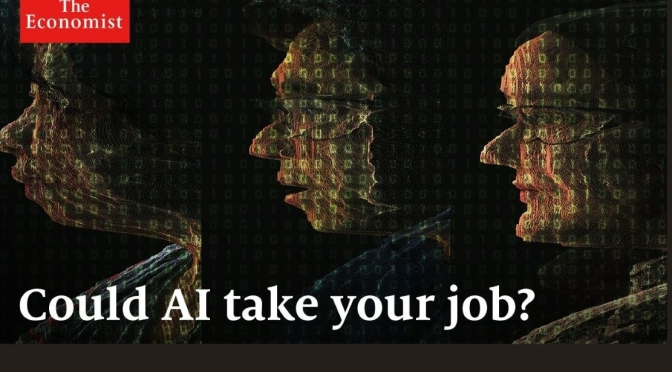
The Economist (January 4, 2024) – A new wave of artificial intelligence is starting to transform the way the entertainment industry operates. Who will be the winners and losers?

Video timeline: 01:07 AI is changing the music business 04:09 How big data revolutionised entertainment industries 05:20 Can AI predict a film’s success? 09:26 How generative AI is creating new opportunities 12:36 What are the risks of generative AI?

Tourism: Newly Reopened ‘Treehouse’ At Disneyland

Los Angeles Times (November 11, 2023) – A guided tour of the newly reopened Adventureland Treehouse at Disneyland Park, originally opened by Walt Disney and his Imagineers in 1962.

A new family has moved in. Everything is fashioned from found objects, natural resources—and pure ingenuity! Follow the wood rope stairways up, up, up into the boughs and find the mother’s music den, the young sons’ nature room and the teenage daughter’s astronomy loft. Adjacent to the stairway is the home’s iconic waterwheel, which generates the energy needed to power the family’s gadgets and inventions.

FILM REVIEWS: THE ‘100 BEST MOVIES OF THE PAST 10 DECADES’ (TIME MAGAZINE)

TIME Magazine (July 26, 2023) – TIME’s Stephanie Zacharek on the top films from the 1920s through the 2010s.

2010s

2000s

Read more

Politics: The Guardian Weekly – July 21, 2023

Image

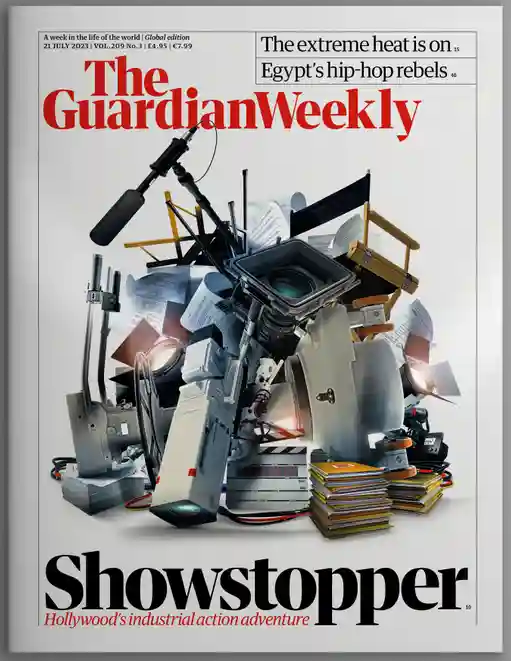
The Guardian Weekly (July 21, 2023) Hollywood on strike; extreme heat is here. Plus the Women’s World Cup kicks off.

When the result of the Hollywood actors’ strike ballot was announced last Thursday, the big-name stars of Oppenheimer left the film’s London premiere.

This show of solidarity by Matt Damon, Emily Blunt, Cillian Murphy and Florence Pugh was a demonstration of the far-reaching effects of creatives taking to the picket lines. For our big story, arts reporter  Vanessa Thorpe looks at what the historic joint walkout by writers and actors means for all of us as movie-goers and TV viewers as well as the stars, lesser-known actors and technicians struggling to make a living.

And we look at what lies behind the dispute with our film editors  Catherine Shoard and Andrew Pulver while Los Angeles reporter Lois Beckett hears from actors finding it ever harder to make a living in the age of streaming and the use of AI in the entertainment industry.

Events: ‘Il Ballo del Doge’ Masquerade Ball In Venice

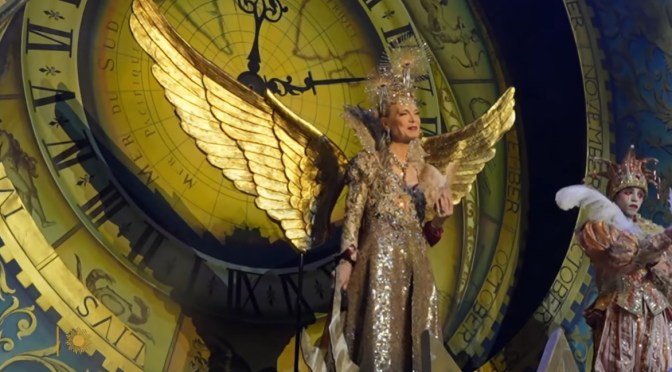
CBS Sunday Morning (April 2, 2023) – The opulence of a masked ball in the Italian city of Venice during Carnival must be seen to be believed. Correspondent Seth Doane joins revelers, including a couple who traveled from Florida to attend a lavish costume party, “Il Ballo del Doge”; and talks with designer Antonia Sautter, who has created ever-more extravagant costumes for this Venetian tradition dating back centuries.

Reviews: The Business Of Formula 1 Racing (2023)

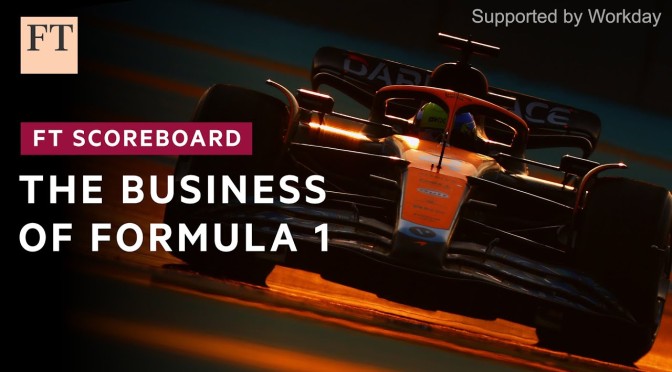
Financial Times (February 27, 2023) – F1 is undergoing a kind of revolution, with new rules, new tech, new teams, and new fans – boosted by the Netflix show Drive to Survive. Ahead of the first race of the season in Bahrain, the FT goes behind the scenes at the McLaren Technology Centre, where the team is competing to get their cars back to the front of the grid.

Views: The Great Roman Games Of Nimes, France

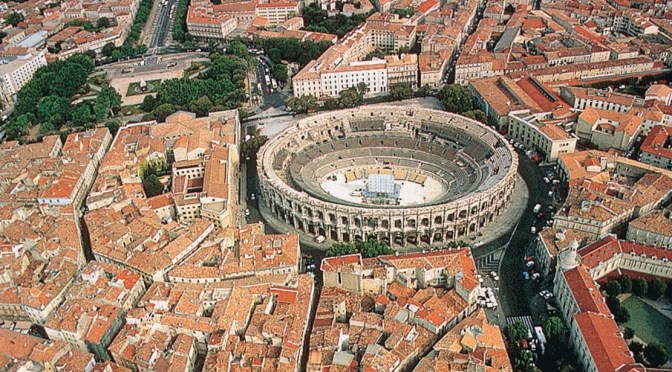
In the southern French city of #Nîmes, the passion for #AncientRome is more alive than ever. For the past decade, the city has been holding the Great Roman Games show every spring. Legionaries, centurions and gladiators invade the city and bring its incredible Roman monuments back to life: in particular the arena, where the Great Games are organised. Thousands of people, young and old alike, turn out to be transported back to the Rome of #JuliusCaesar.

Nîmes, a city in the Occitanie region of southern France, was an important outpost of the Roman Empire. It’s known for well-preserved Roman monuments such as the Arena of Nîmes, a double-tiered circa-70 A.D. amphitheater still in use for concerts and bullfights. Both the Pont du Gard tri-level aqueduct and the Maison Carrée white limestone Roman temple are around 2,000 years old.

Cover: The New York Times Magazine – August 21, 2022

Image

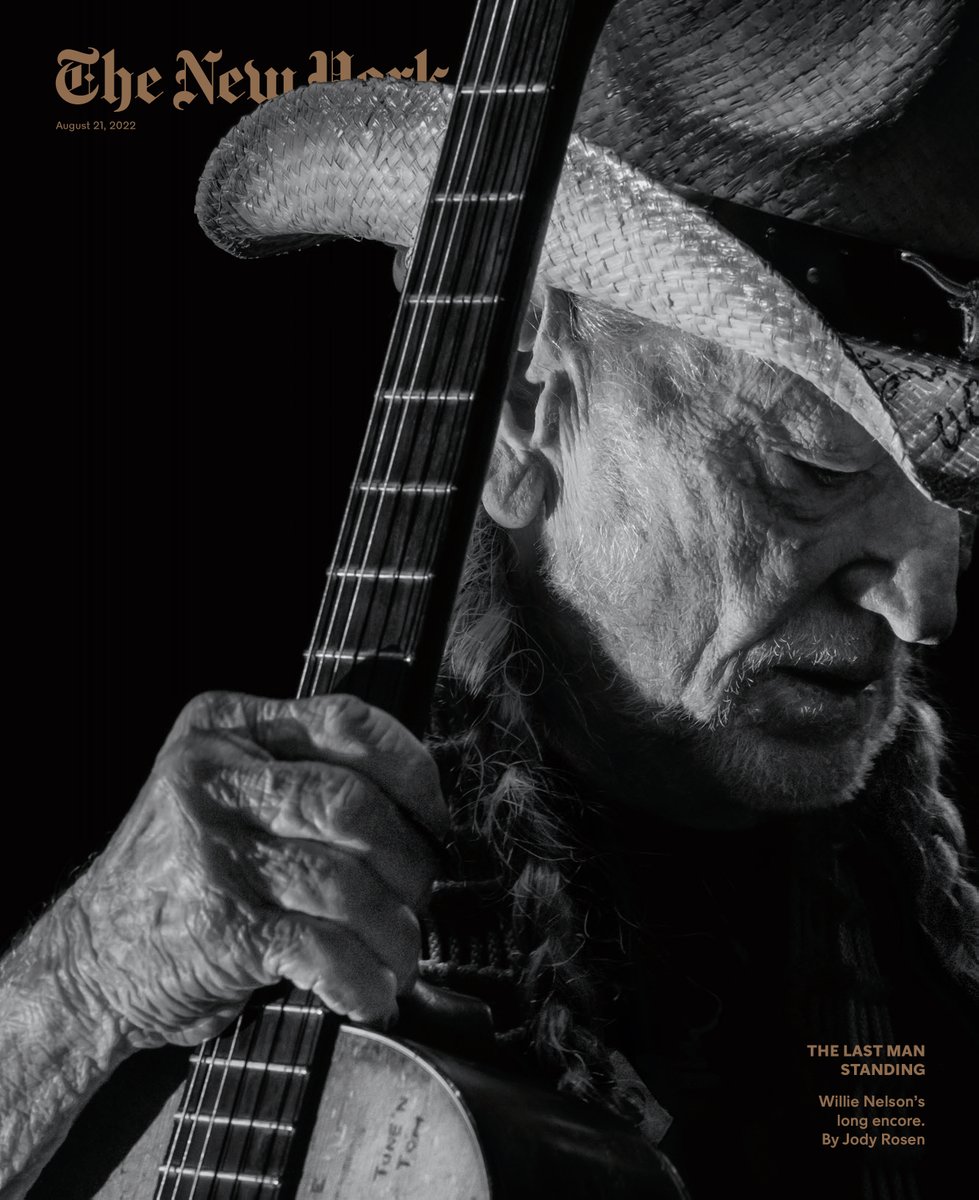
Willie Nelson’s Long Encore

As he approaches 90, even brushes with death can’t keep him off the road — or dim a late-life creative burst.

TikTok Audio Memes Are Everywhere. How Do They Work?

Welcome to the era of the audio meme, a time when replicable units of sound are a cultural currency as strong as — if not stronger than — images and text.

Read more: https://nyti.ms/3A6vPOT