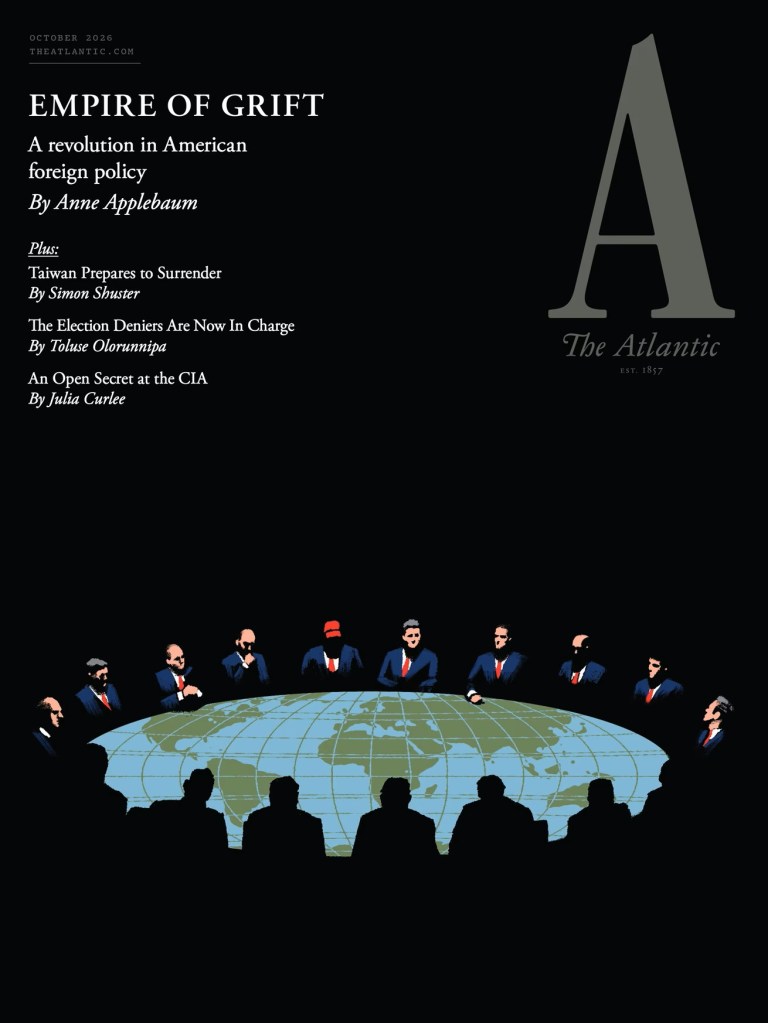
THE ATLANTIC MAGAZINE: The latest issue features “EMPIRE OF GRIFT” – Anne Applebaum examines how hardened ideologues and opportunistic profiteers are bending American diplomacy to advance an antidemocratic agenda—and their own financial interests. For our cover, the illustrator Ben Hickey created an ominous image of figures in shadow arrayed around a map of the world, evoking the war-room scenes from Stanley Kubrick’s 1964 film, Dr. Strangelove or: How I Learned to Stop Worrying and Love the Bomb.
Tracy Daugherty’s biography of Cormac McCarthy is a landmark publication. Putting together the life of a writer who not only shunned publicity but actively worked to keep fans, journalists, the media, and academics off his trail requires the powers of both a skilled biographer and a nosy private detective. In that latter role, some of what Daugherty has uncovered is unsavory, though with the recent revelation of McCarthy’s relationship with Augusta Britt, who was sixteen when they began an affair, readers may be prepared for some of the shocks. One of Daugherty’s leitmotifs is McCarthy the “bad boy” and “outlaw,” and though such appellations risk cliché, the story he tells is of a man who, at least in the first half of his life, preferred the company of moonshiners, gamblers, hard drinkers, and petty criminals like his old Knoxville pal John Sheddan, who seems to have been the Falstaff to McCarthy’s Prince Hal.
There are two books before me, which, if I mistake not, will mark an epoch,” wrote W. E. B. Du Bois in The Crisis magazine in 1924. One was a novel of middle-class African-American life by Jessie Fauset called There Is Confusion. The other was a collection of stories, songs, poems, and character sketches called…
During the last quarter of the twentieth century, few writers were more admired by peers and critics than Andre Dubus. But because Dubus’s territory was the relatively confined space of the short story and novella, he never enjoyed great commercial success or recognition. Dubus was destined to be a writer’s writer—what Joshua Bodwell calls a…
In that we’ve been married for sixteen years, you really don’t have to try so hard to make your feelings known,” Janet said at the wheel. “I’m well aware you don’t want to do this.”
“I THINK I’ve been pretty stoic about it,” Rick said, eyes to the thick woods he’d be reflexively scanning for deer. Ever since they’d planted an ambitious garden behind their upstate New York summerhouse, the creatures that had once seemed so exquisite had become evil incarnate.
“Stoic? More like long-suffering,” Janet said. “You’ve hardly said a word the whole way here. But there’s no point in having joined Saint Peter’s if we don’t put our beliefs into practice. Charity doesn’t only mean parting with twenty bucks to get someone at the door to go away. It means sometimes doing what’s right when you don’t feel like it.”
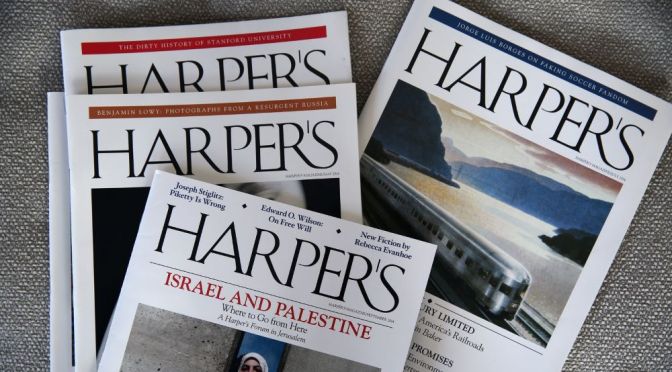
HARPER’S MAGAZINE:Erin Somers charts the rise and fall of cultivated meat, Barrett Swanson reports on the Ugly People Festival in Italy, Kyle Berlin on the French bestseller whose controversy divided the country, a pseudonymous memoir of a government official in Beijing, Finn Brunton on prediction markets and crypto-anarchism, Thomas Frank on the Obama Center, Kasia Boddy reviews William Kennedy’s Albany Trilogy, five stories from Diane Williams, and more.
Where’s The Beef?
The lab-grown-meat revolution that wasn’t by Erin Somers
Some institutions jumped onto the MAGA bandwagon after the 2024 election, but it hasn’t taken long for those decisions to look shortsighted. By David A. Graham
How the ‘Body Positivity’ Movement Died
A few years ago, there was a push for acceptance of different body types. Now? Not so much. By Julie Beck and Natalie Brennan
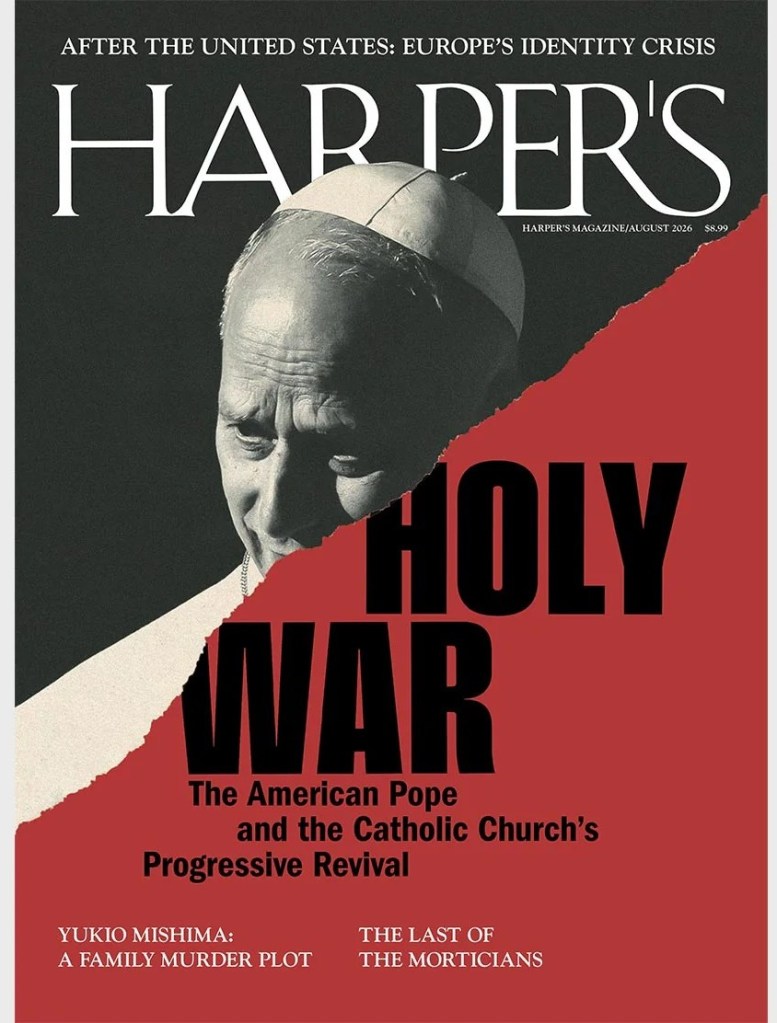
THE ATLANTIC MAGAZINE: The latest issue featuresReading shaped the modern mind. Its decline will reshape it—and transform civilization, Rose Horowitch argues in our August cover story.
The End of Reading Is Here
Optimists once believed that universal literacy was inevitable. Now it seems that the age of reading might be a short anomaly in human history. By Rose Horowitch
The Corner of Hollywood That’s Most Susceptible to AI
Animators are figuring out whether to fight or accept the new technology that’s coming for their jobs. By Shirley Li
Perhaps the Nazi Tattoo Was a Clue
Graham Platner’s unfitness for office was clear long ago. By Mike Nelson
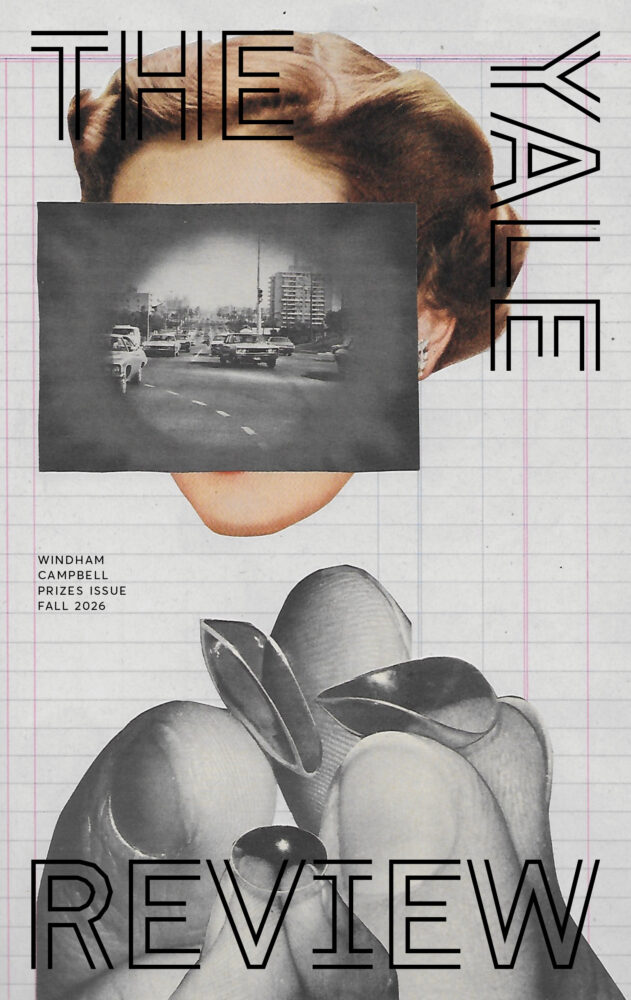
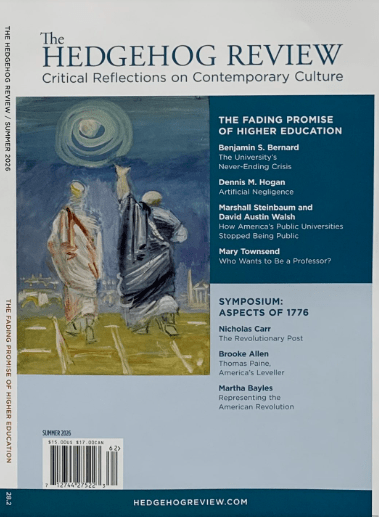
A loss of public faith in higher education and and what it represents for the larger community. This issue also features a Symposium on Aspects of 1776 in commemoration of America at 250.
The University’s Never-Ending Crisis
Higher education has dealt with epistemic revolution before.







 Boomers Daily