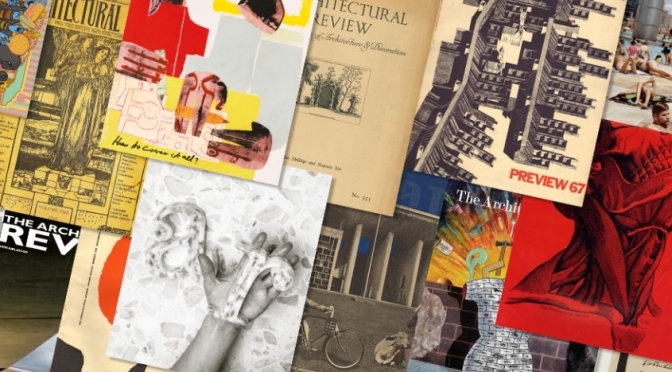
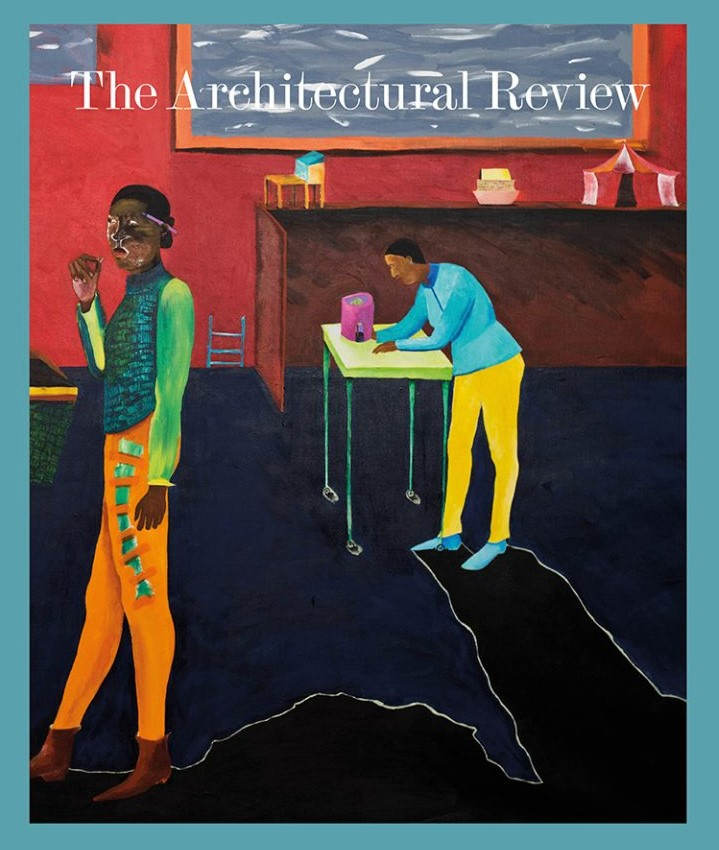
The Architectural Review (March 2023) – This issue brings together the winners and nominees of the W Awards, celebrating exemplary work by women and non-binary people around the world. We explore the expansive bodies of work of the founder of the CCA and winner of the Ada Louise Huxtable Prize for Contribution to Architecture, Phyllis Lambert, and co-founder of SANAA and winner of the Jane Drew Prize for Architecture, Kazuyo Sejima. And in its inaugural year, the Prize for Research in Gender and Architecture is awarded to Part W for their mapping project, Women’s Work.
The W Awards issue is here 💥 celebrating exemplary work by women and non-binary people around the world, including @ccawire's Phyllis Lambert, SANAA's Kazuyo Sejima, @PartWCollective, as well as the shortlists for the MJ Long and Moira Gemmill Prizes https://t.co/cw16HzX4bUpic.twitter.com/biUSFKbVWv
This issue also includes the work of the architects shortlisted for the Moira Gemmill Prize for Emerging Architecture – recognising emerging talent in architects under the age of 45 from around the world – and the MJ Long Prize for Excellence in Practice, which celebrates architects who are working in UK‑based practices, with a focus on their role in the design and delivery of a recently completed project.
Classic Driver (February 23, 2023) – The Lincoln Indianapolis concept was created in 1955 by Carrozzeria Boano, using the chassis and running gear from the 1955 Lincoln. The only time it was shown to the public as a new concept study was at the 1955 Turin Motor Show.
If you’re planning to hit The Ice St Moritz this weekend, prepare to be amazed at the sight of this unique Lincoln Indianapolis that’s likely to ‘out-jet’ anything that even the famous jet-set resort has to offer.
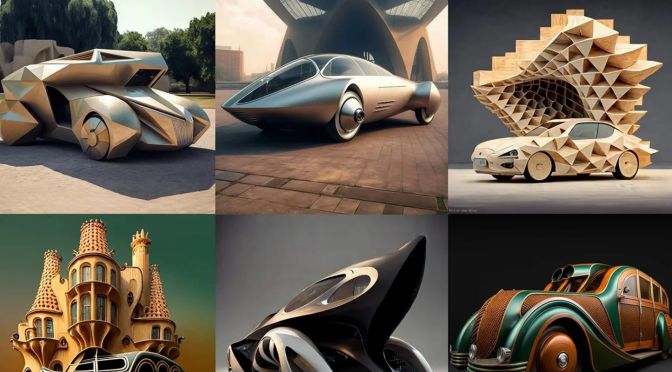
Moss & Fog (February 2023) – What if they designed cars, as well as buildings? Would they look like the architect’s famous creations? Would the car embody their trademark style?
We’ve enlisted AI to help us explore the ‘what if?‘. We used the program MidJourney to help visualize what an architect-derived car might look like. It was a fun visual journey, creating images that fit the time period and overall style of the famous architect in question.
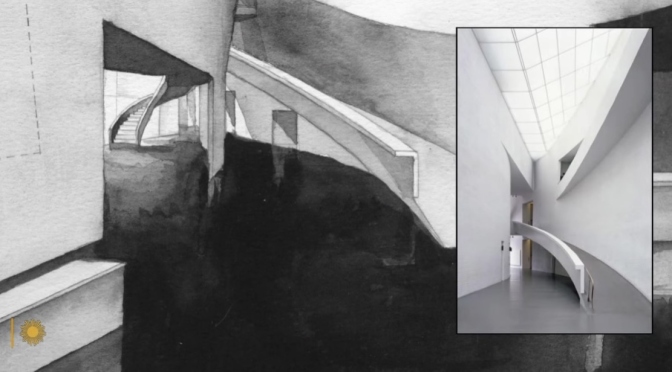
CBS Sunday Morning (January 29, 2023) – The works of architect Steven Holl have helped define the look of cities around the world, making remarkable use of light and space.
Correspondent Rita Braver talks with Holl, whose recent works include the REACH at the John F. Kennedy Center for the Performing Arts, in Washington, D.C., and the Kinder Building at The Museum of Fine Arts, Houston – buildings in which Holl hopes to express “the joy from the creative act.”
Steven Holl is a tenured Professor of Architecture who has taught at Columbia GSAPP since 1981. After completing architecture studies in Rome in 1970, the University of Washington in 1971, and graduate studies at London’s Architectural Association in 1976, Holl founded Steven Holl Architects in 1977. Based in New York City, the forty person firm also has an office in Beijing.
Steven Holl has realized cultural, civic, academic and residential projects both in the United States and internationally including the Kiasma Museum of Contemporary Art in Helsinki, Finland (1998); the Chapel of St. Ignatius, Seattle, Washington (1997); Simmons Hall at the Massachusetts Institute of Technology in Cambridge, Massachusetts (2002); the Nelson-Atkins Museum of Art in Kansas City, Missouri (2007); the Horizontal Skyscraper in Shenzhen, China (2009); the Linked Hybrid mixed-use complex in Beijing, China (2009); Cité de l’Océan et du Surf in Biarritz, France (2011); the Reid Building at the Glasgow School of Art, Glasgow, Scotland (2014); the Arts Building West and the Visual Arts Building at the University of Iowa in Iowa City, Iowa (2006, 2016); the Ex of IN House (2016); the Lewis Arts Complex at Princeton University in Princeton, New Jersey (2017); Maggie’s Centre Barts in London (2017); the Institute for Contemporary Art at Virginia Commonwealth University (2018); and the Glassell School of Art at the Museum of Fine Arts, Houston (2018). Upcoming work includes the REACH expansion of the John F. Kennedy Center for Performing Arts in Washington, D.C. (2019); the Winter Visual Arts Center at Franklin & Marshall College (2019); Rubenstein Commons at the Institute for Advanced Study in Princeton, New Jersey (2019); and the expansion of the Museum of Fine Arts, Houston (2020).
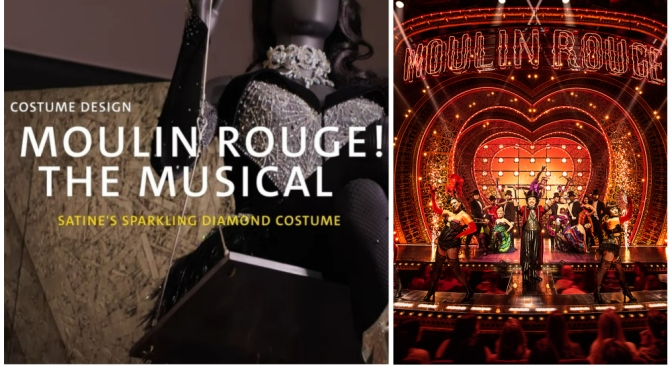
Victoria and Albert Museum (January 24, 2023) – Moulin Rouge! The Musical is a spectacle of romance and cabaret, set in the heart of Paris’ bohemian scene during the Belle Époque era. Bringing Baz Luhrmann’s landmark film to life on stage, the production is a musical mash-up extravaganza, immersing you in a world of splendour and glory.
Video timeline:00:00 Catherine Zuber’s design process 0:29 What is Moulin Rouge! The Musical? 00:49 Was the Moulin Rouge real? 01:05 Adapting Baz Luhrmann’s film 01:23 Creating a costume for Satine – design sketches 02:17 Researching the history of showgirls 02:49 How does the costume work? 03:53 Designing costumes for theatre 04:12 Mounting and installing the costume in the Re:Imagining Musicals display
Join Costume Designer Catherine Zuber and Curator Harriet Reed as they take us behind the scenes, introducing the real Moulin Rouge and showgirls of the time, showing the original design sketches for Satine’s dazzling diamond studded costume, and demonstrating how one vital mechanism is crucial for the piece’s quick change on stage.
The costume is now in the V&A’s collection of Theatre and Performance and can be seen as part of the Re:Imagining Musicals display until November 2023.
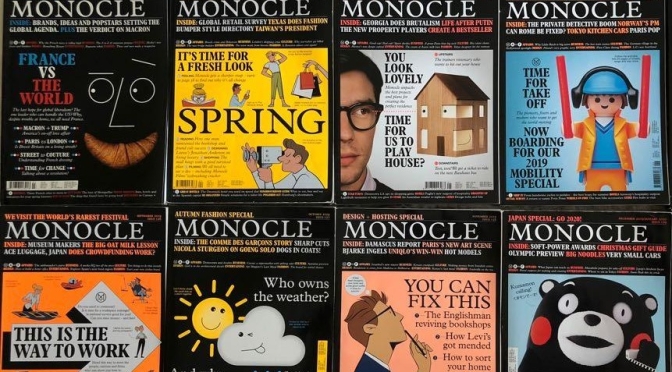
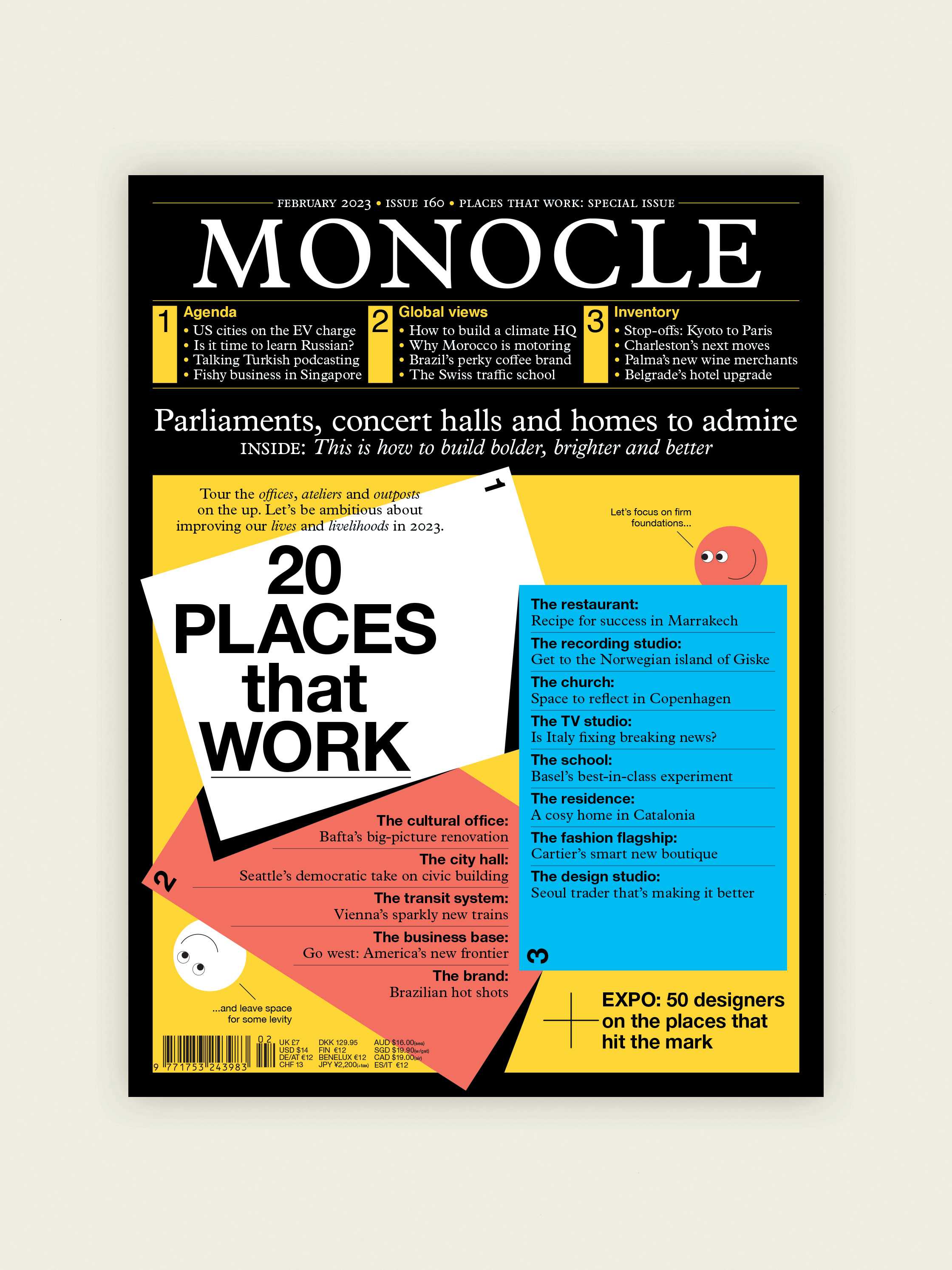
Monocle Films – Monocle’s February 2023 issue is all about celebrating places that work, whether that’s a parliament, home or metro carriage. From a floating office to a school teaching children the rules of the road, we profile the locations that look good and work well for those who use them. Plus: Charleston’s hospitality boom and why you should learn Russian.
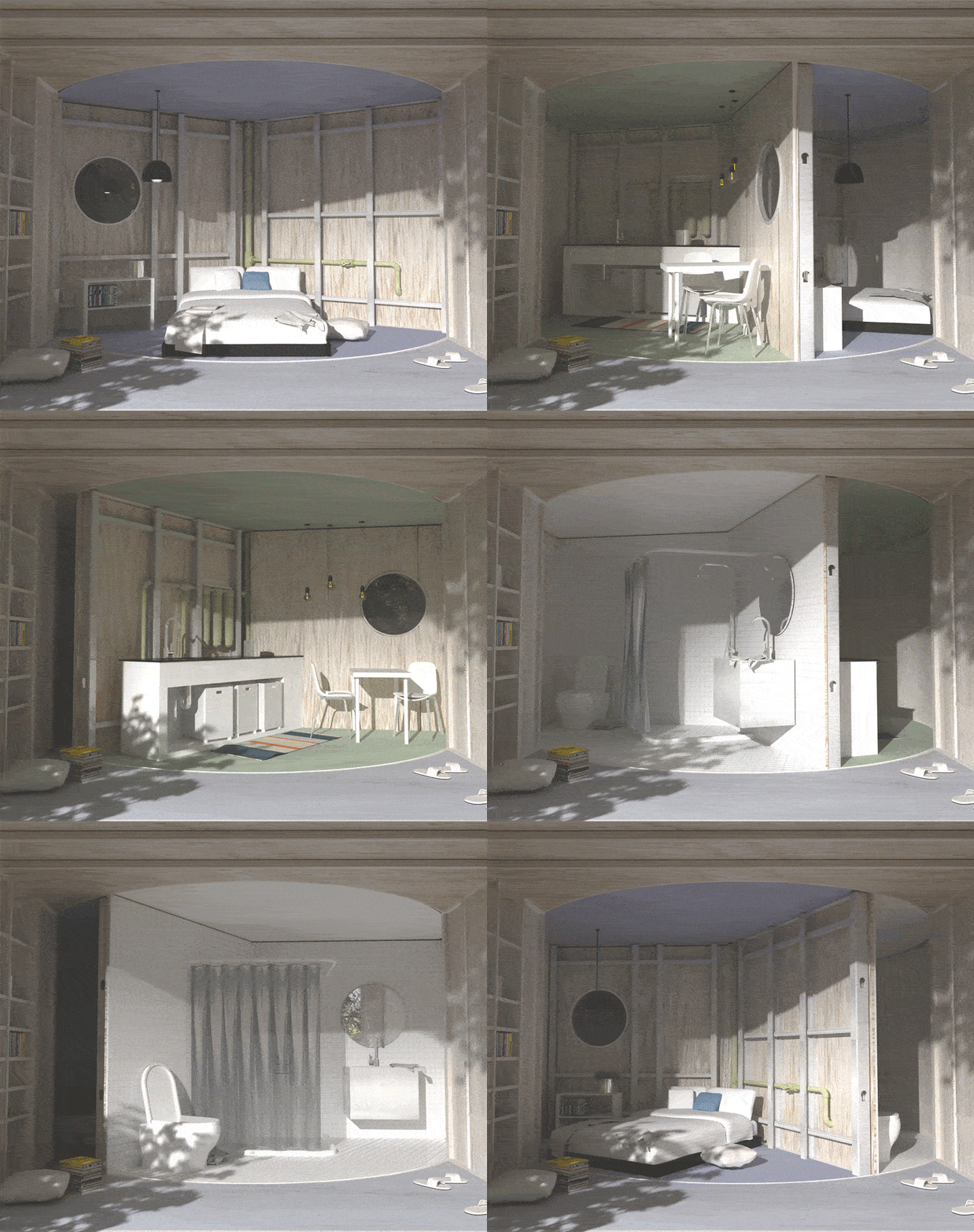
The three scenes of the home | all images by Studio Supra-Simplicities
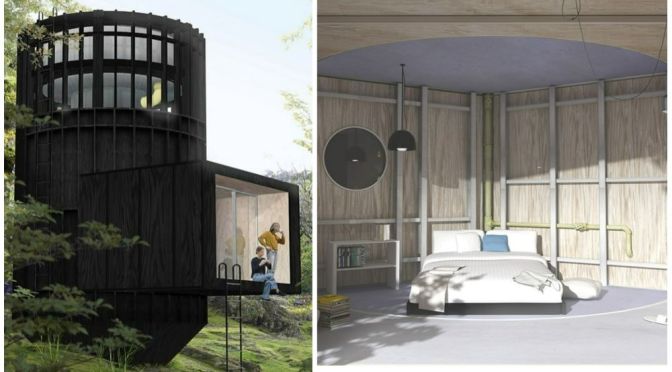
designboom (January 20, 2023) – In a swiftly rotating display, this micro-scale cabin shifts its program on its axis to integrate three different ‘scenes’ of living on one small platform. Studio Supra-Simplicities conceptualizes ‘3 Scenes of Home’ to compactly integrate spaces for sleeping, dining, and washing into one mechanism that marks a sophisticated integration between the typical house program and the theatrical function of a stage.
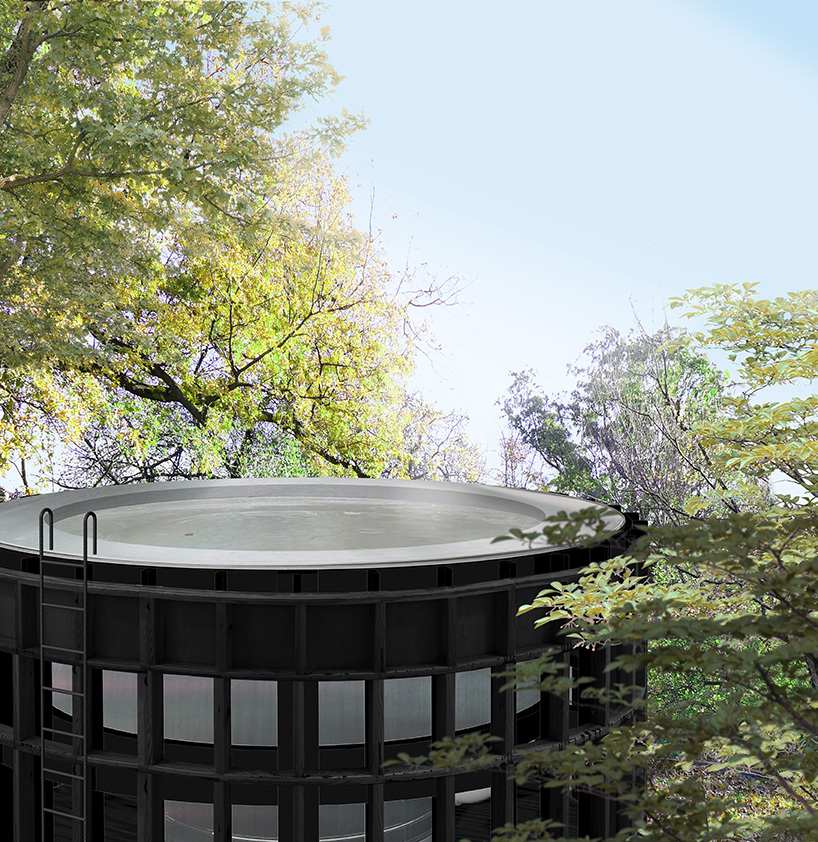
topped with a rainwater harvesting system
project info:
Removing the need for unnecessary circulation spaces and infusing a distinctive dynamic character, the structure maximizes its internal mobility and flexibility of living, while sitting with a micro footprint. It minimizes external impact by covering only a tiny parcel on the natural landscape, and recycling rainwater for daily use through its rooftop harvesting system.
Today Michael Wyetzner of Michielli + Wyetzner Architects returns to Architectural Digest for a deep, detail-oriented break down of New York City’s singular Chrysler Building. From its unmistakable Art Deco design to the hidden details that echo its automotive inspiration, see why the Chrysler Building is an iconic staple of the Manhattan skyline.
HISTORY
The story of the Chrysler Building began in 1928, when automotive titan Walter P. Chrysler, founder of Chrysler Corporation, bought the property from Coney Island developer William H. Reynolds for $2 million. Chrysler hired architect William Van Alen, who had previously designed a skyscraper for Reynolds on the site, to create the world’s tallest tower. Construction on Chrysler’s project began in 1929 and was completed in 1930. Reaching a height of 1,048 feet, including its 125-foot steel spire, the Chrysler Building surpassed the Woolworth Building and 40 Wall Street in Lower Manhattan in a “Race to the Sky” to claim the tallest building in the world–a title it held until 1931. The Chrysler Building still reigns as the world’s most famous skyscraper, playing prominent roles in film and television from Godzilla and Spider-Man to Sex and the City.
designboom – Over the past year, the field of design has seen a dramatic shift with artists and architects alike increasingly adapting innovative technologies to explore and expand the bounds of their creative practices.
illustrative capabilities of AI-powered design programs
Perhaps the most sensational innovation has been the wave of AI-powered design programs, kicking off with DALL-E which quickly consolidated its place in the framework of popular culture, taken further by Midjourney from which a blurred but exciting reality emerged, to Stable Diffusion which moreover has made this work open source.















 topped with a rainwater harvesting system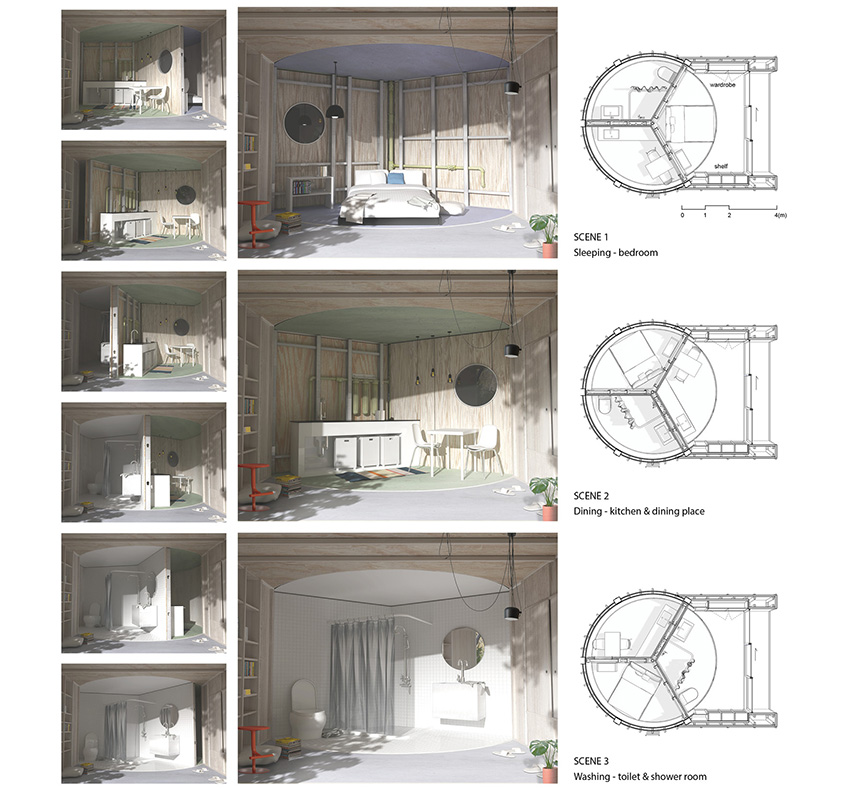



 illustrative capabilities of AI-powered design programs
 Boomers Daily