Tag Archives: Architecture

The Silvered City with a Fevered Heart

In 1590, the Spanish port of Seville was the epicenter of the first global economy—a city drowning in silver, haunted by plagues, and inventing the anxieties we now know all too well. Its story is a warning.

By Michael Cummins, Editor, Intellicurean, August 20, 2025

Before there was Wall Street, London, or Shanghai, there was Seville. We live today in a world defined by intricate global supply chains, where fortunes are made on the abstract flow of capital and data, and where a single ship stuck in a canal can trigger worldwide anxiety. We know the feeling of living in a hyper-connected age, with all its dizzying wealth and its profound fragility. We talk of unicorn companies, bubbles, and systemic risk, sensing that the towering edifice of our prosperity rests on foundations we don’t fully understand. But what did the very first version of that world feel like, before the risks were modeled and the consequences were known?

To understand the unnerving vertigo of our own time, you have to go back to a muddy river in southern Spain, four centuries ago, when the modern world was being born in a flash of silver and blood. You have to imagine a spring morning in 1590.

At first light, the galleon Nuestra Señora de la Merced drifts slowly up the Guadalquivir River. Its sails, slack after the long Atlantic crossing from Panama, are stained with salt and sea-spray. Its sturdy Iberian oak hull, scarred by shipworms and storms, creaks under the registered weight of 500 tons. On the bustling Arenal waterfront, a dockworker named Mateo shields his eyes against the rising sun. He sees not a symbol of imperial glory, but the promise of a day’s wage, the chance to buy bread for his family at a price that seems to climb higher every month. His ropes are coiled in calloused hands, the air thick around him with the smell of pitch, citrus, and the river’s brackish breath.

Further back, shielded from the morning sun in the arcaded loggias of the Calle de las Gradas, men of a different class watch the same ship with a far more specific terror. A Genoese banker in sober black silk mentally calculates the interest on the massive loan he extended to King Philip II, a loan secured against this very shipment. Beside him, a Castilian merchant, having mortgaged his ancestral lands to finance a speculative cargo of wine and olive oil on the outgoing voyage, feels a tremor of hope and fear. Was the voyage profitable? Did pirates strike? Did the storms claim his fortune?

In a dusty office nearby, a scribe from the Casa de la Contratación—the formidable House of Trade—readies his quills and ledgers. He will spend the day recording every ingot, every barrel, every notarized claim, his neat columns tracking the quinto real, the “royal fifth,” the 20% tax on all precious metals that funds Spain’s sprawling wars in Flanders and the Mediterranean. In this moment, a city of nearly 150,000 souls—the largest and most important in Castile—holds its breath. The Guadalquivir carries not only treasure but the very lifeblood of an empire. And with it, a new kind of global pulse.

For nearly a century, Seville held the absolute monopoly on all trade with the Americas. Granted by the crown in 1503, this privilege meant every ounce of silver from the great mountain-mine of Potosí, every barrel of cochineal dye, every crate of indigo, and every human being—whether a returning colonist, a hopeful migrant, or an enslaved African—was funneled through its port. It was not merely a metropolis; it was a complex, living organism. Its artery was the river; its brain was the bureaucracy of the Casa; its beating heart was the Plaza de San Francisco, where coin, credit, and rumor changed hands with dizzying speed.

The brain of this operation, the Casa de la Contratación, was an institution without precedent. It was a combination of a shipping board, a research institute, and a supreme court for all maritime affairs. Within its walls, master cartographers secretly updated the Padrón Real, the master map of the New World, a document of such immense geopolitical value that its theft would be a blow to the entire empire. Its school for pilots trained men to navigate by the stars to a world that was, to most Europeans, still a realm of myth. The Casa licensed every ship, certified every sailor, and processed every manifest. It was the centralized, bureaucratic engine of the world’s first truly global enterprise.

The lifeblood of the system was the annual treasure fleet, the Flota de Indias. This convoy system, a necessity born from the existential threat of French and English privateers, was a marvel of logistics. Sailing in two main branches—one to Mexico, the other to Panama to collect the silver of Peru—the fleets were floating cities, military and commercial operations of immense scale. Their return, usually in late spring, was the moment the imperial heart beat loudest. The sheer volume of wealth was staggering. According to the foundational economic data compiled by Earl J. Hamilton, in the two decades from 1581 to 1600, over 52 million pesos in silver and gold were officially registered passing through Seville. The clang of heavy presses striking that silver into the iconic reales de a ocho, or pieces of eight—the world’s first global currency—echoed from the Royal Mint near the river.

This deluge of wealth transformed the city. To manage the booming trade, construction had begun in 1584 on a grand new merchant exchange, the Casa Lonja de Mercaderes. Designed by Juan de Herrera, the architect of the king’s austere Escorial palace, its monumental Renaissance style was a physical manifestation of Seville’s self-image: ordered, powerful, and the nerve center of a global Christian empire. The great Gothic Cathedral, already one of the largest in Christendom, glittered with new silver candlesticks and gold-leafed altarpieces forged from American bullion. The city attracted a complex web of foreign merchants and bankers who operated in a state of symbiotic tension with the Spanish crown. As historian Eberhard Crailsheim explains, foreign merchants were “indispensable for the functioning of the Spanish monopoly system, while at the same time they were its greatest threat.” They provided the credit and financial instruments the empire desperately needed, ensuring that American silver circulated rapidly into the European economy to pay the crown’s debts, often before it had even been unloaded at the Arenal.


But this firehose of silver was never pure. The same river that delivered the bullion also carried plague, contraband, and devastating floodwaters. That river of wealth was also a river of poison.

The most visceral fear was disease. Each arriving fleet was a potential vector for an epidemic. Ships from the Caribbean, their crews weakened by months at sea and ravaged by scurvy, disgorged sailors carrying typhus, smallpox, and what was then called vómito negro (yellow fever) into the densely packed, unsanitary tenements of the Triana neighborhood across the river. An outbreak meant sudden, terrifying death. It meant closed gates, armed guards preventing travel, and the dreaded chalk mark on the door of an infected house. While the truly catastrophic Great Castilian Plague of 1596–1601, which would kill a quarter of the city’s population, was still a few years away, smaller outbreaks kept the city in a perpetual state of anxiety.

Economic contagion was just as insidious. The endless flood of American silver triggered a century-long inflationary crisis known as the Price Revolution. As the money supply swelled, the value of each coin fell, and the price of everything—from bread and wine to cloth and rent—skyrocketed. A blacksmith or farmer in the Castilian countryside found himself poorer each year, his labor worth less and less. The very treasure that enriched the king and a small class of merchants was simultaneously impoverishing the kingdom. This paradox revealed the empire’s core fragility: it was living on credit, perpetually on the verge of bankruptcy (which it would declare again in 1596), its vast military and political ambitions financed by treasure it had not yet received.

Illicit trade pulsed through the artery with the same rhythm as legal commerce. Silver was smuggled to avoid the quinto real, often with the collusion of the very officials meant to prevent it. Forbidden books—Protestant tracts from Northern Europe or scientific texts deemed heretical—were hidden in barrels and circulated in the city’s more than one hundred taverns. And in the shadows of the Cathedral, a teeming underworld flourished. This was the world Miguel de Cervantes knew intimately. In the late 1580s, he served in Seville as a naval commissary, requisitioning wheat and olive oil for the navy—a frustrating job that landed him in jail and exposed him to the city’s seedy underbelly. His experience shaped his picaresque tale Rinconete y Cortadillo, a brilliant portrait of a city of hustlers, thieves, and corrupt officials who had created a perfect, parasitic society in the shadow of imperial wealth.

The Guadalquivir itself, the source of all this prosperity, was turning against the city. Centuries of deforestation and agricultural runoff were causing the river channel to silt up, creating treacherous sandbars near its mouth. As modern hydrological studies confirm, the late sixteenth century was a period of extreme environmental change in the estuary. At the time, the city’s frequent, devastating floods were interpreted as divine punishment for its sins of greed and luxury. In reality, it was a slow, man-made thrombosis. The great artery was hardening.


In a city defined by such spectacular contradictions—unimaginable wealth and desperate poverty, global connection and epidemic disease, rigid piety and rampant crime—life was lived on a knife’s edge. To manage these profound anxieties, Seville transformed itself into a grand stage, and the river became the backdrop for its most important dramas of power, faith, and identity.

The sensory experience of the port was an unforgettable piece of theater. Chroniclers describe the overwhelming smells of spices and sewage, the cacophony of ships’ bells and construction cranes, and the shouts of sailors in a dozen languages. Enslaved West Africans loaded and unloaded cargo in the grueling sun, their forced labor the invisible foundation of the entire enterprise. Moorish artisans crafted vibrant ceramics in Triana, while Flemish merchants in lace collars inspected textiles near the Casa Lonja. It was a microcosm of a new, globalized world, assembled by force and commerce on the banks of a single river.

To contain the social and spiritual anxieties this world produced, the city deployed the power of art and ritual. Painters of the emerging Seville School, like Francisco Pacheco, experimented with dramatic chiaroscuro, their canvases echoing the city’s tension between divine order and worldly excess. The church, enriched beyond measure by the tithes on American silver, became the primary patron of this art. As historian Amanda Wunder argues in her book Baroque Seville, these spectacular displays were essential civic mechanisms. The city, she writes, sought to “transmute the New World’s silver into a spiritual treasure that could be stored up in heaven” as a defense against the very instability that wealth created.

Nowhere was this clearer than during the feast of Corpus Christi, the city’s most important celebration. The streets were covered in flowers. The great guilds marched with their banners. And at the heart of the procession was the custodia, an immense, fortress-like monstrance of solid silver, paraded through the city as a tangible symbol of God’s presence. This was not mere decoration; it was a carefully choreographed piece of public therapy. It took the source of the city’s anxiety—silver—and transformed it into an object of sacred devotion, reassuring the populace that their chaotic world was still under divine control. In this baroque theater, as the eminent historian Antonio Domínguez Ortiz noted, Seville’s greatness was inseparable from its “spectacular fragility.”

Overseeing this entire performance was the Holy Office of the Inquisition, its headquarters looming in the castle of Triana. The Inquisition was not just hunting heretics; it was policing the boundaries of thought and expression in a dangerously cosmopolitan city. Its public trials, the autos-da-fé, were another, darker form of theater, designed to root out dissent and reinforce social order. Its presence created a climate of suspicion that simmered beneath the city’s vibrant surface.


The year 1590 was, in retrospect, a historical precipice. To a contemporary observer standing on the Triana bridge, watching the forest of masts on the river, Seville must have seemed invincible, the permanent heart of a permanent empire. The monumental walls of the Casa Lonja were rising, the mint’s hammers clanged incessantly, and the Cathedral shone with American treasure.

Yet within its very triumph lay the seeds of its decay. The shocking defeat of the Spanish Armada just two years prior had been a blow to both the treasury and the national psyche. The bankruptcy of 1596 loomed. The river’s sedimentation was worsening, a physical reality that would, over the next few decades, slowly choke the port and eventually divert the monopoly of trade to Cádiz. The great artery was silting, even as its pulse quickened.

Still, to walk the riverbank in 1590 was to witness the apex. Children stared at ships vanishing over the horizon toward a nearly mythical world; merchants prayed over contracts sealed with a handshake; artisans fashioned silver into monstrances of breathtaking complexity. The Guadalquivir carried all these flows—material, sensory, and symbolic. Its pulse was not merely economic; it was emotional, theological, and aesthetic. A popular epithet of the time called Seville “the city where the world’s heart beats.” In 1590, that heartbeat was fevered, irregular, and already trembling with overexertion—but it was magnificent.

At dusk, as the river darkened to ink, the silver locked away in the city’s coffers seemed to gleam like a heart beating too fast, too bright, and far too fragile to last. In that shimmer lay the paradox of Seville: a city at once glorious and doomed, sustained and threatened by the very waters that had forged its destiny. It’s a paradox baked into the very nature of globalization—a fevered heartbeat we can still hear in the rhythm of our own world.

THIS ESSAY WAS WRITTEN AND EDITED UTILIZING AI
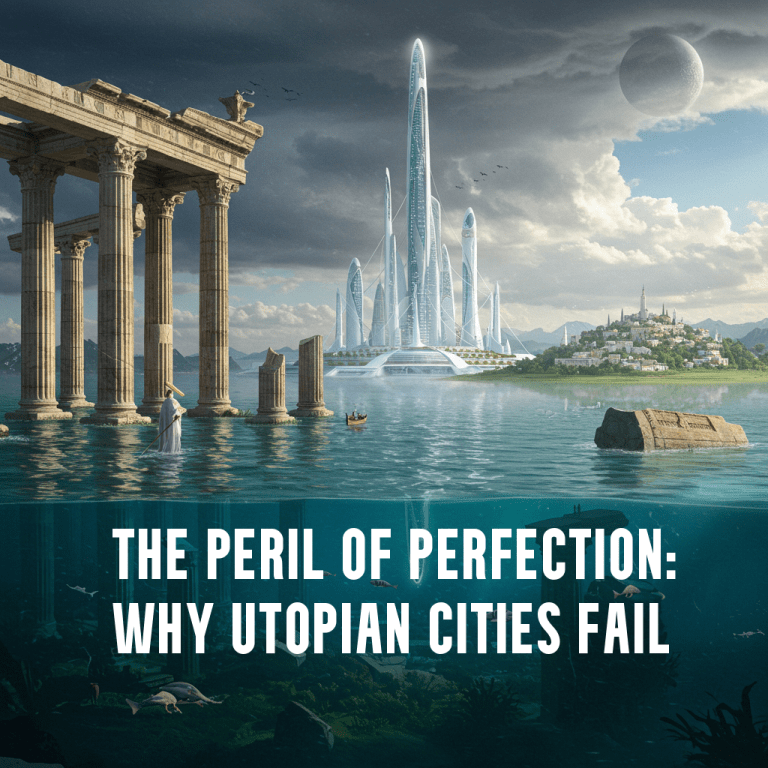
The Peril Of Perfection: Why Utopian Cities Fail

By Michael Cummins, Editor, August 7, 2025

Throughout human history, the idea of a perfect city—a harmonious, orderly, and just society—has been a powerful and enduring dream. From the philosophical blueprints of antiquity to the grand, state-sponsored projects of the modern era, the desire to create a flawless urban space has driven thinkers and leaders alike. This millennia-long aspiration, rooted in a fundamental human longing for order and a rejection of present-day flaws, finds its most recent and monumental expression in China’s Xiongan New Area, a project highlighted in an August 7, 2025, Economist article titled “Xi Jinping’s city of the future is coming to life.” Xiongan is both a marvel of technological and urban design and a testament to the persistent—and potentially perilous—quest for an idealized city.

By examining the historical precedents of utopian thought, we can understand Xiongan not merely as a contemporary infrastructure project but as the latest chapter in a timeless and often fraught human ambition to build paradise on earth. This essay will trace the evolution of the utopian ideal from ancient philosophy to modern practice, arguing that while Xiongan embodies the most technologically advanced and politically ambitious vision to date, its top-down, state-driven nature and astronomical costs raise critical questions about its long-term viability and ability to succeed where countless others have failed.

The Philosophical and Historical Roots

The earliest and most iconic examples of this utopian desire were theoretical and philosophical, serving as intellectual critiques rather than practical blueprints. Plato’s mythological city of Atlantis, described in his dialogues Timaeus and Critias, was not just a lost city but a complex philosophical thought experiment. Plato detailed a powerful, technologically advanced, and ethically pure island society, governed by a wise and noble lineage. The city itself was a masterpiece of urban planning, with concentric circles of land and water, advanced canals, and stunning architecture.

However, its perfection was ultimately undone by human greed and moral decay. As the Atlanteans became corrupted by hubris and ambition, their city was swallowed by the sea. This myth is foundational to all subsequent utopian thought, serving as a powerful and enduring cautionary tale that even the most perfect physical and social structure is fragile and susceptible to corruption from within. It suggests that a utopian society cannot simply be built; its sustainability is dependent on the moral fortitude of its citizens.

Centuries later, in 1516, Thomas More gave the concept its very name with his book Utopia. More’s work was a masterful social and political satire, a searing critique of the harsh realities of 16th-century England. He described a fictional island society where there was no private property, and all goods were shared. The citizens worked only six hours a day, with the rest of their time dedicated to education and leisure.

“For where pride is predominant, there all these good laws and policies that are designed to establish equity are wholly ineffectual, because this monster is a greater enemy to justice than avarice, anger, envy, or any other of that kind; and it is a very great one in every man, though he have never so much of a saint about him.” – Utopia by Thomas More

The society was governed by reason and justice, and there were no social classes, greed, or poverty. More’s Utopia was not about a perfect physical city, but a perfect social structure. It was an intellectual framework for political philosophy, designed to expose the flaws of a European society plagued by poverty, inequality, and the injustices of land enclosure. Like Atlantis, it existed as an ideal, a counterpoint to the flawed present, but it established a powerful cultural archetype.

The city as a reflection of societal ideals. — Intellicurean

Following this, Francis Bacon’s unfinished novel New Atlantis (1627) offered a different, more prophetic vision of perfection. His mythical island, Bensalem, was home to a society dedicated not to social or political equality, but to the pursuit of knowledge. The core of their society was “Salomon’s House,” a research institution where scientists worked together to discover and apply knowledge for the benefit of humanity. Bacon’s vision was a direct reflection of his advocacy for the scientific method and empirical reasoning.

In his view, a perfect society was one that systematically harnessed technological innovation to improve human life. Bacon’s utopia was a testament to the power of collective knowledge, a vision that, unlike More’s, would resonate profoundly with the coming age of scientific and industrial revolution. These intellectual exercises established a powerful cultural archetype: the city as a reflection of societal ideals.

From Theory to Practice: Real-World Experiments

As these ideas took root, the dream of a perfect society moved from the page to the physical world, often with mixed results. The Georgia Colony, founded in 1732 by James Oglethorpe, was conceived with powerful utopian ideals, aiming to be a fresh start for England’s “worthy poor” and debtors. Oglethorpe envisioned a society without the class divisions that plagued England, and to that end, his trustees prohibited slavery and large landholdings. The colony was meant to be a place of virtue, hard work, and abundance. Yet, the ideals were not fully realized. The prohibition on slavery hampered economic growth compared to neighboring colonies, and the trustees’ rules were eventually overturned. The colony ultimately evolved into a more typical slave-holding, plantation-based society, demonstrating how external pressures and economic realities can erode even the most virtuous of founding principles.

In the 19th century, with the rise of industrialization, several communities were established to combat the ills of the new urban landscape. The Shakers, a religious community founded in the 18th century, are one of America’s most enduring utopian experiments. They built successful communities based on communal living, pacifism, gender equality, and celibacy. Their belief in simplicity and hard work led to a reputation for craftsmanship, particularly in furniture making. At their peak in the mid-19th century, there were over a dozen Shaker communities, and their economic success demonstrated the viability of communal living. However, their practice of celibacy meant they relied on converts and orphans to sustain their numbers, a demographic fragility that ultimately led to their decline. The Shaker experience proved that a society’s success depends not only on its economic and social structure but also on its ability to sustain itself demographically.

These real-world attempts demonstrate the immense difficulty of sustaining a perfect society against the realities of human nature and economic pressures. — Intellicurean

The Transcendentalist experiment at Brook Farm (1841-1847) attempted to blend intellectual and manual labor, blurring the lines between thinkers and workers. Its members, who included prominent figures like Nathaniel Hawthorne, believed that a more wholesome and simple life could be achieved in a cooperative community. However, the community struggled from the beginning with financial mismanagement and the impracticality of their ideals. The final blow was a disastrous fire that destroyed a major building, and the community was dissolved. Brook Farm’s failure illustrates a central truth of many utopian experiments: idealism can falter in the face of economic pressures and simple bad luck.

A more enduring but equally radical experiment, the Oneida Community (1848-1881), achieved economic success through manufacturing, particularly silverware, under the leadership of John Humphrey Noyes. Based on his concept of “Bible Communism,” they practiced communal living and a system of “complex marriage.” Despite its radical social structure, the community thrived economically, but internal disputes and external pressures ultimately led to its dissolution. These real-world attempts demonstrate the immense difficulty of sustaining a perfect society against the realities of human nature and economic pressures.

Xiongan: The Modern Utopia?

Xiongan is the natural, and perhaps ultimate, successor to these modern visions. It represents a confluence of historical utopian ideals with a uniquely contemporary, state-driven model of urban development. Touted as a “city of the future,” Xiongan promises short, park-filled commutes and a high-tech, digitally-integrated existence. It seeks to be a model of ecological civilization, where 70% of the city is dedicated to green space and water, an explicit rejection of the “urban maladies” of pollution and congestion that plague other major Chinese cities.

Its design principles are an homage to the urban planners of the past, with a “15-minute lifecycle” for residents, ensuring all essential amenities are within a short walk. The city’s digital infrastructure is also a modern marvel, with digital roads equipped with smart lampposts and a supercomputing center designed to manage the city’s traffic and services. In this sense, Xiongan is a direct heir to Francis Bacon’s vision of a society built on scientific and technological progress.

Unlike the organic, market-driven growth of a city like Shenzhen, Xiongan is an authoritarian experiment in building a perfect city from scratch. — The Economist

This vision, however, is a top-down creation. As a “personal initiative” of President Xi, its success is a matter of political will, with the central government pouring billions into its construction. The project is a key part of the “Jing-Jin-Ji” (Beijing-Tianjin-Hebei) coordinated development plan, meant to relieve the pressure on the capital. Unlike the organic, market-driven growth of a city like Shenzhen, Xiongan is an authoritarian experiment in building a perfect city from scratch. Shenzhen, for example, was an SEZ (Special Economic Zone) that grew from the bottom up, driven by market forces and a flexible policy environment. It was a chaotic, rapid, and often unplanned explosion of economic activity. Xiongan, in stark contrast, is a meticulously planned project from its very inception, with a precise ideological purpose to showcase a new kind of “socialist” urbanism.

This centralized approach, while capable of achieving rapid and impressive infrastructure development, runs the risk of failing to create the one thing a true city needs: a vibrant, organic, and self-sustaining culture. The criticisms of Xiongan echo the failures of past utopian ventures; despite the massive investment, the city’s streets remain “largely empty,” and it has struggled to attract the talent and businesses needed to become a bustling metropolis. The absence of a natural community and the reliance on forced relocations have created a city that is technically perfect but socially barren.

The Peril of Perfection

The juxtaposition of Xiongan with its utopian predecessors highlights the central tension of the modern planned city. The ancient dream of Atlantis was a philosophical ideal, a perfect society whose downfall served as a moral warning against hubris. The real-world communities of the 19th century demonstrated that idealism could falter in the face of economic and social pressures, proving that a perfect society is not a fixed state but a dynamic, and often fragile, process. The modern reality of Xiongan is a physical, political, and economic gamble—a concrete manifestation of a leader’s will to solve a nation’s problems through grand design. It is a bold attempt to correct the mistakes of the past and a testament to the immense power of a centralized state. Yet, the question remains whether it can escape the fate of its predecessors.

The ultimate verdict on Xiongan will not be about the beauty of its architecture or the efficiency of its smart infrastructure alone, but whether it can successfully transcend its origins as a state project. — The Economist

The ultimate verdict on Xiongan will not be about the beauty of its architecture or the efficiency of its smart infrastructure alone, but whether it can successfully transcend its origins as a state project to become a truly livable, desirable, and thriving city. Only then can it stand as a true heir to the timeless dream of a perfect urban space, rather than just another cautionary tale. Whether a perfect city can be engineered from the top down, or if it must be a messy, organic creation, is the fundamental question that Xiongan, and by extension, the modern world, is attempting to answer.

THIS ESSAY WAS WRITTEN AND EDITED UTILIZING AI
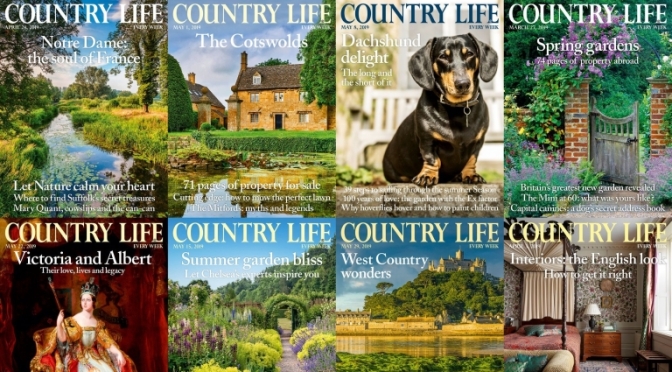
Country Life Magazine – April 30, 2025 Preview

Image

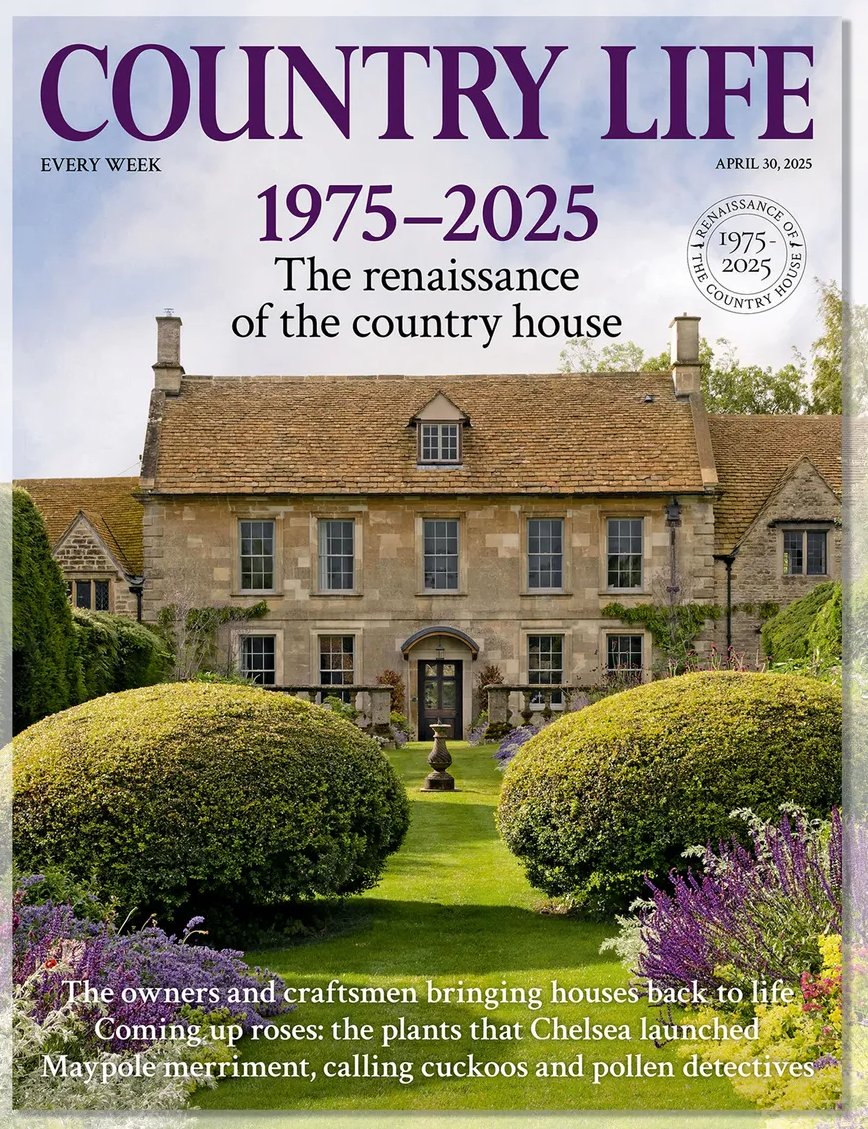
COUNTRY LIFE MAGAZINE (April 29, 2025): The latest issue features ‘The renaissance of the country house’ (1975-2025)…

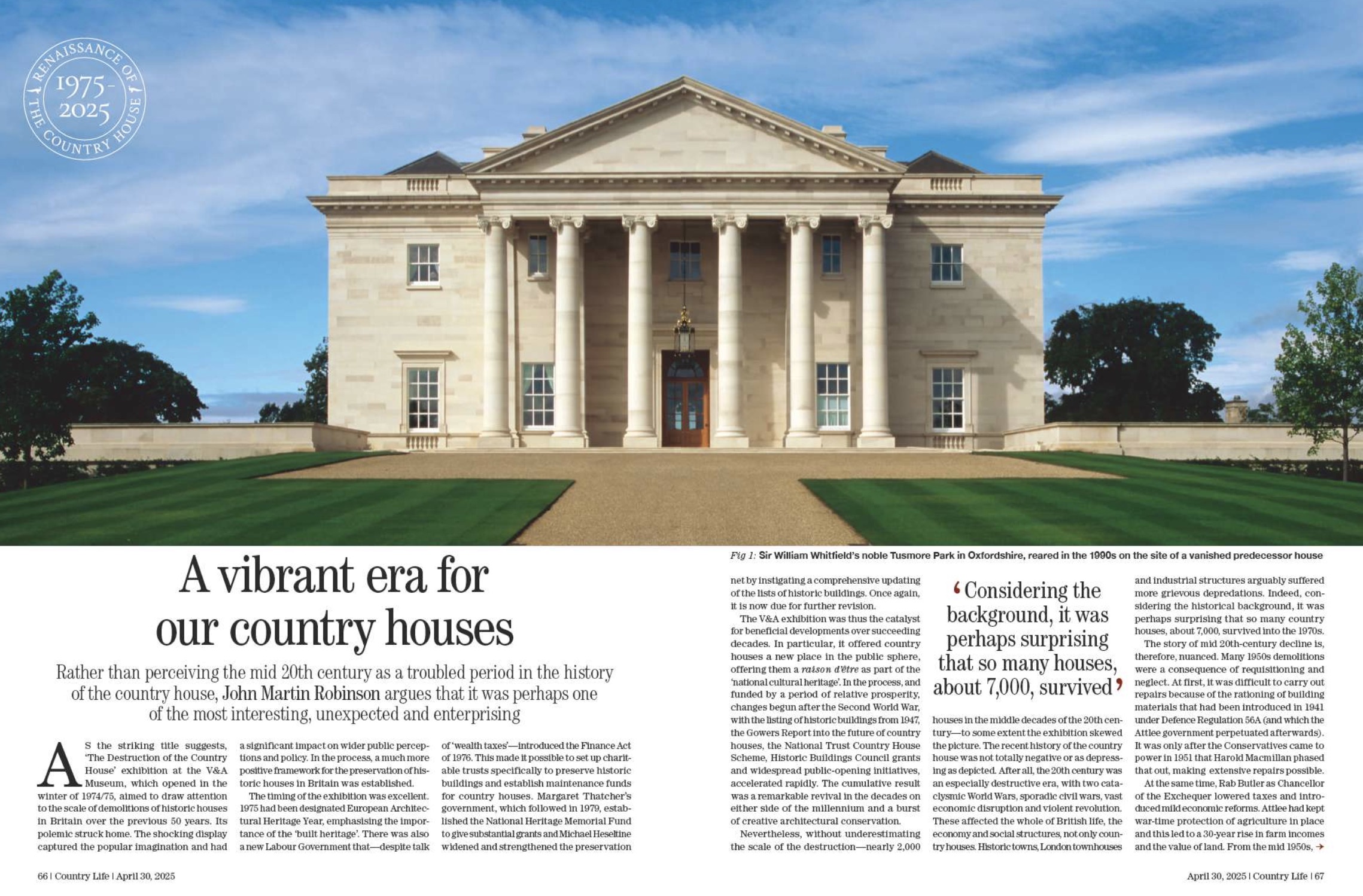
A vibrant era for our country houses

The seeds of a renaissance for the British country house were sown in the mid 20th century, argues John Martin Robinson

Spread from Country Life 30 April 2025

Bringing ‘beauty’ back

Lord Deben assesses his 1997 ‘Gummer’s Law’, conceived to aid the creation of new houses

Radbourne Hall

John Goodall hails the revival of the 1740s Derbyshire house

Sign up for the Country Life Newsletter

Exquisite houses, the beauty of Nature, and how to get the most from your life, straight to your inbox.Contact me with news and offers from other Future brandsReceive email from us on behalf of our trusted partners or sponsorsBy submitting your information you agree to the Terms & Conditions and Privacy Policy and are aged 16 or over.

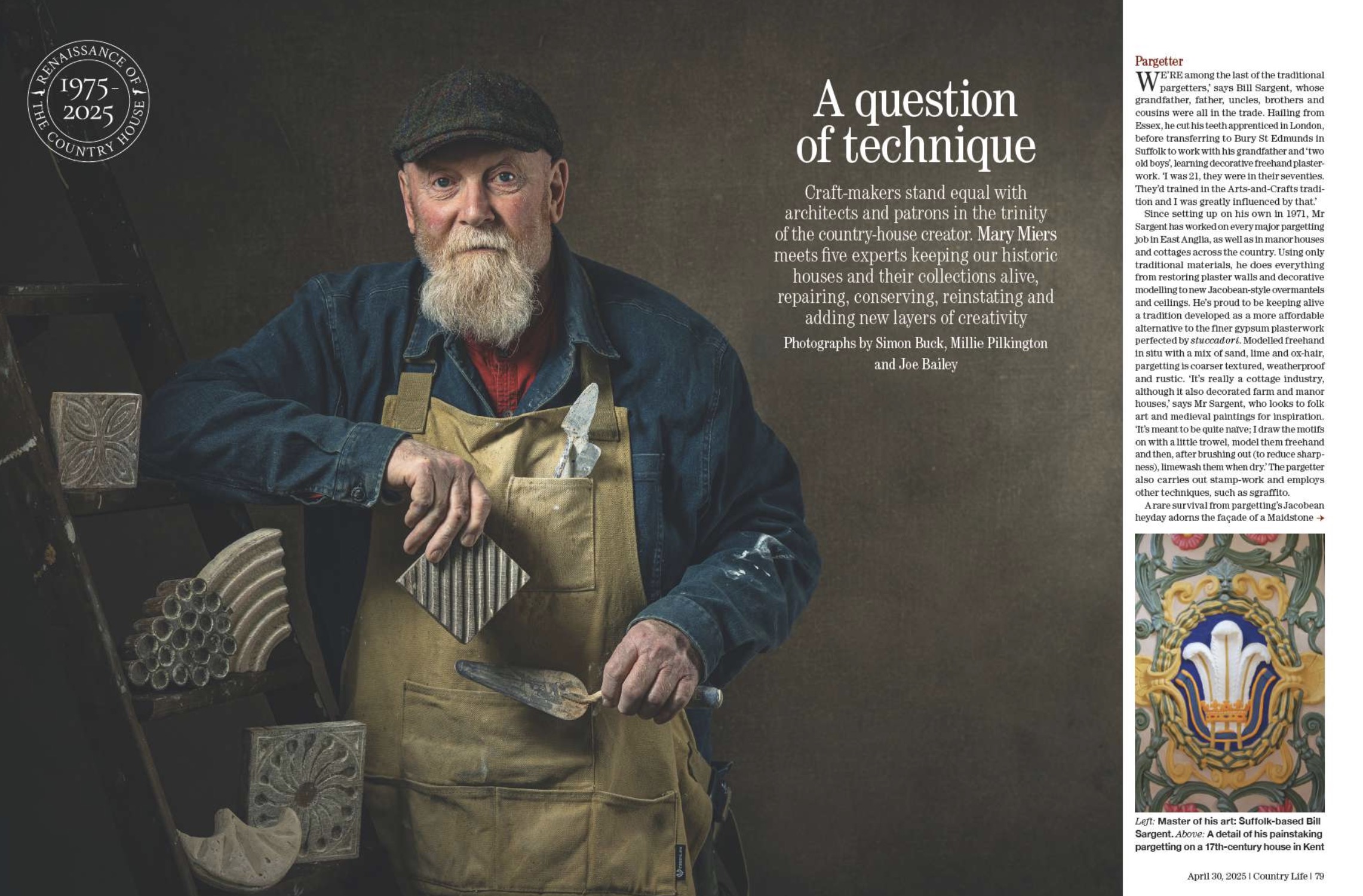
A question of technique

Mary Miers meets the experts keeping country houses and their collections in working order

Spread from Country Life 30 April 2025

Chillingham Castle

The Northumberland landmark lives on, discovers John Goodall

1975 and now

What a difference 50 years make

Asleep no more

Tiffany Daneff celebrates the designers bringing our leading country gardens back to life

Knowsley Hall

John Goodall finds the Lancashire home restored to its former glory

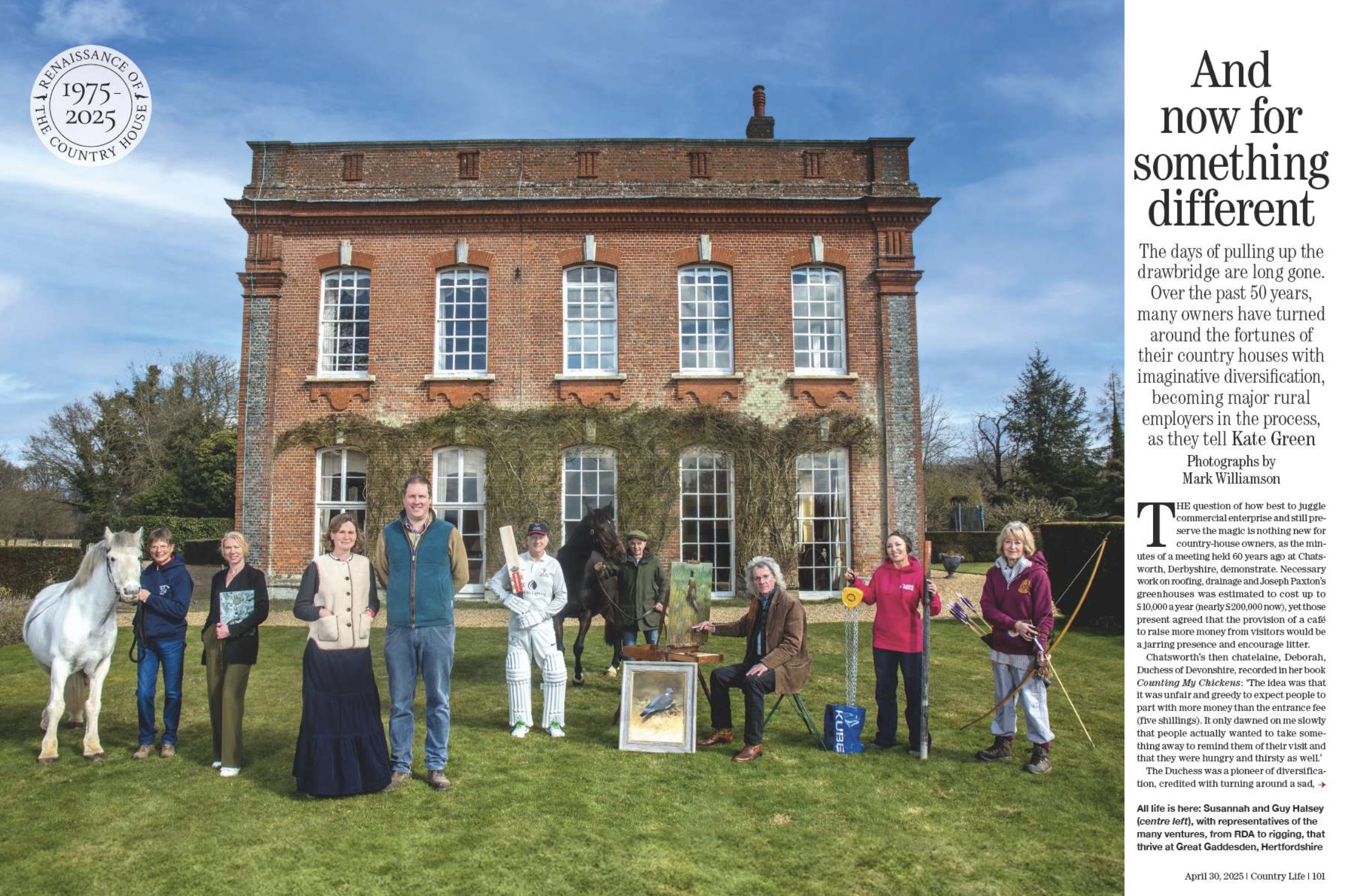
And now for something different

Diversification has revived the fortunes of many an estate in the past 50 years, reveals Kate Green

Spread from Country Life 30 April 2025

What’s on at the big house

This year’s country-house events

Stowe

John Goodall charts the survival of this Buckinghamshire gem

Ready for anything

Arabella Youens examines how owners are equipping their houses to thrive for the next 100 years

Wimborne St Giles

John Goodall lauds this award-winning restoration in Dorset

You saw it here first

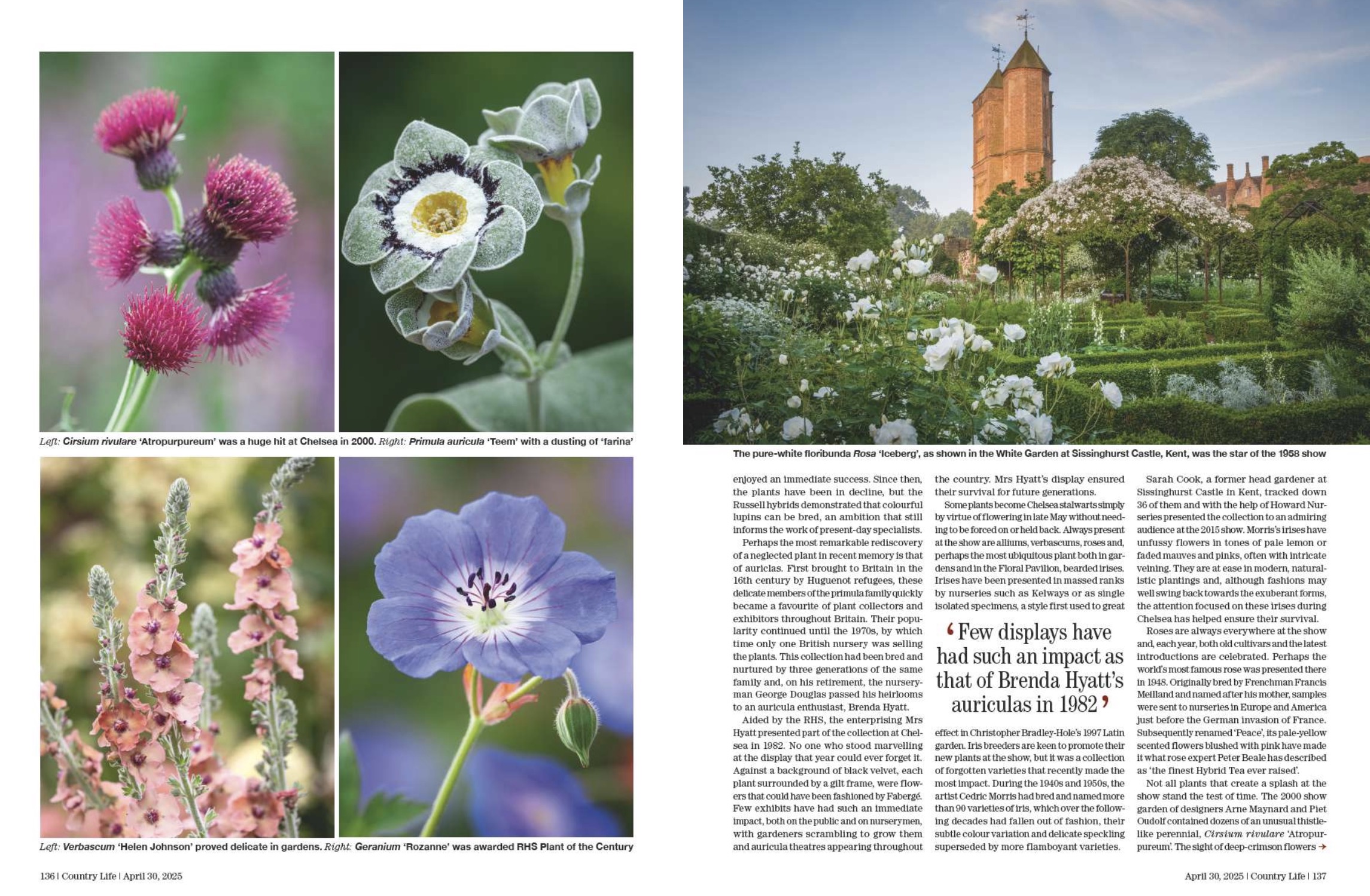
It’s not all about the gardens — John Hoyland profiles some of the plants that made their name at the RHS Chelsea Flower Show

Spread from Country Life 30 April 2025

In cloud cuckoo land

The evocative, echoing cuckoo’s call reverberating across the meadows heralds the arrival of spring for John Lewis-Stempel

Today’s pollen account

Hayfever sufferers may not agree, but Ian Morton argues that pollen’s contribution to life on earth is not to be sneezed at

A rainbow of ribbons

The maypole has been the source of merriment and mayhem for centuries, as Deborah Nicholls-Lee reveals

Stuart Procter’s favourite painting

The Beaumont Mayfair hotel CEO chooses an intriguing work with an air of mystery

The legacy

Amie Elizabeth White reveals how Constance Spry revolutionised flower-arranging a century ago

Interiors

Digital printing and panoramic wallpapers offer endless possibilities, learns Arabella Youens

Foraging

Poetry inspires John Wright, as he seeks out the saccharine, aniseed smack of sweet cicely

Arts & antiques

Carla Passino is captivated by the calming 19th-century landscapes of Utagawa Hiroshige, an artist who continues to inspire today

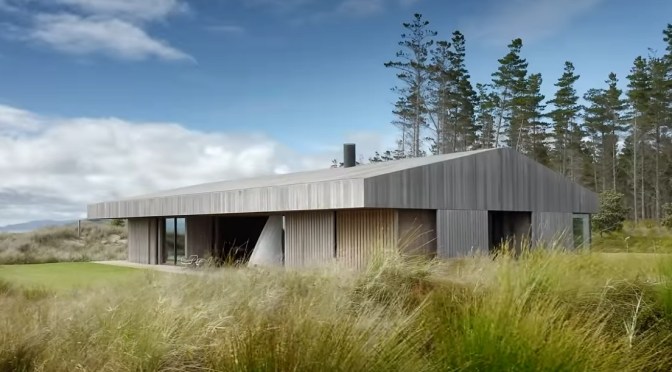
Tours: ‘Te Arai Beach House’ In New Zealand

THE LOCAL PROJECT (January 31, 2025): Nestled between the forest and the ocean on the east coast of New Zealand’s North Island, Te Arai Beach House manifests as a contemporary cabin in the woods. “The power of the site when we first visited was in the ocean, the forest and the sand dunes.

Video timeline: 00:00 – Introduction to the cabin in the woods 01:27 – The early design discussions 02:12 – Interior designers own home 03:27 – The layout of the home 04:30 – A warm material palette 06:56 – Collaborating with artists 07:38 – Rewarding Aspects 08:08 – Proud Moments

So we wanted to provide a building that doesn’t challenge or reduce the sense of beauty that’s already there,” says Tim Hay, design director and co-founder at Fearon Hay. “We instantly looked, in terms of the architecture, to references that related to those different thresholds – the ability to emerge from the forest, discover the ocean, but still have a sense of protection,” notes Hay. “So this idea of the cabin in the woods was an idea that stuck from very early on.”

From afar, Te Arai Beach House appears to be a series of simple, unambiguous silhouettes. However, as one moves closer, complexity is revealed through blurred thresholds, operable screens and considered openings. The first building is a cabin that contains a garage and guest occupation. “This sits between an open space that frames a courtyard and the main building, which is set to the ocean, and is fundamentally a pair of open suites that capture an open plan living space between them,” explains Hay.

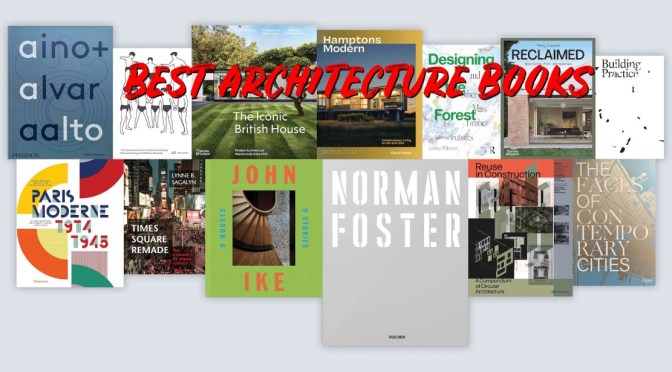
Design And Architecture: The Top Ten Books Of 2024

Best architecture and design books

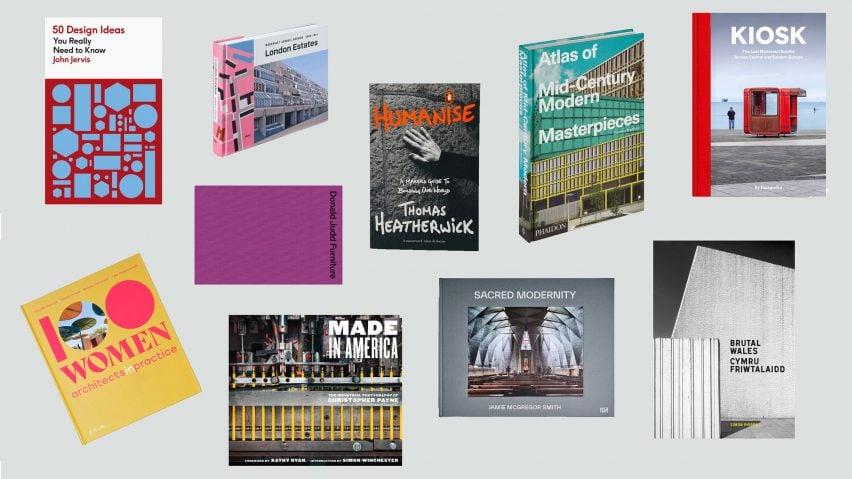
Dezeen (December 17, 2024): The top 10 architecture and design books of 2024 include:

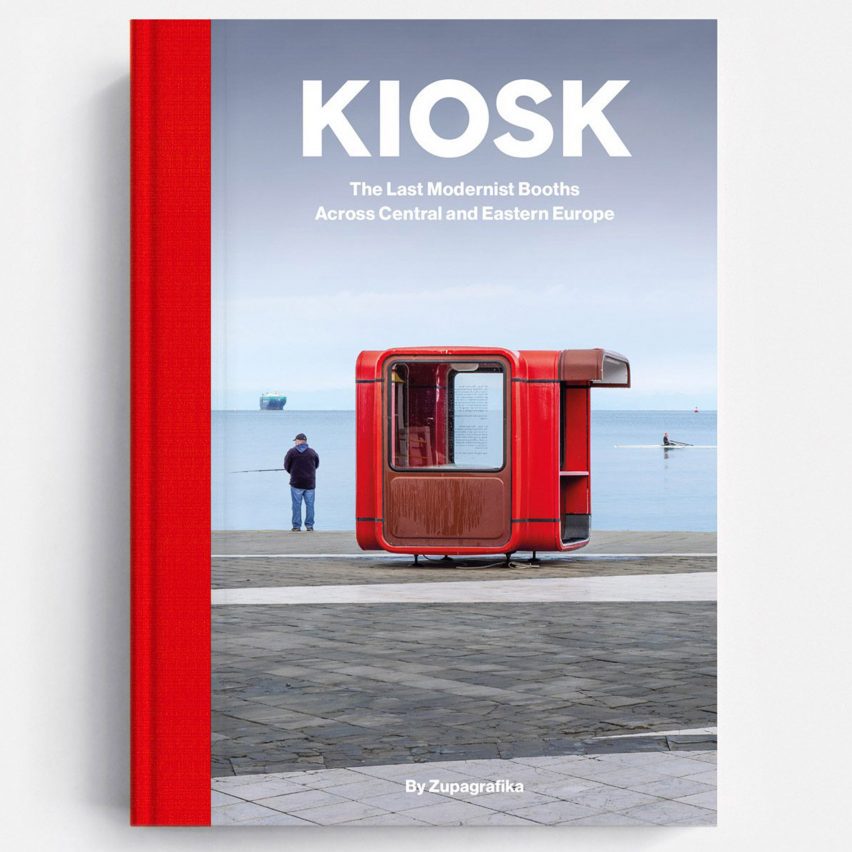
2024 top architecture books: Kiosk by David Navarro and Martyna Sobecka

Kiosk by David Navarro and Martyna Sobecka

Simply named Kiosk, this book features photos of more than 150 modernist, modular kiosks that brighten streets across central and eastern Europe.

Authors David Navarro and Martyna Sobecka aimed to draw attention to the surviving, unusual structures that were constructed in factories in the Eastern Bloc from the 1970s to the 1990s.

Find out more about Kiosk ›


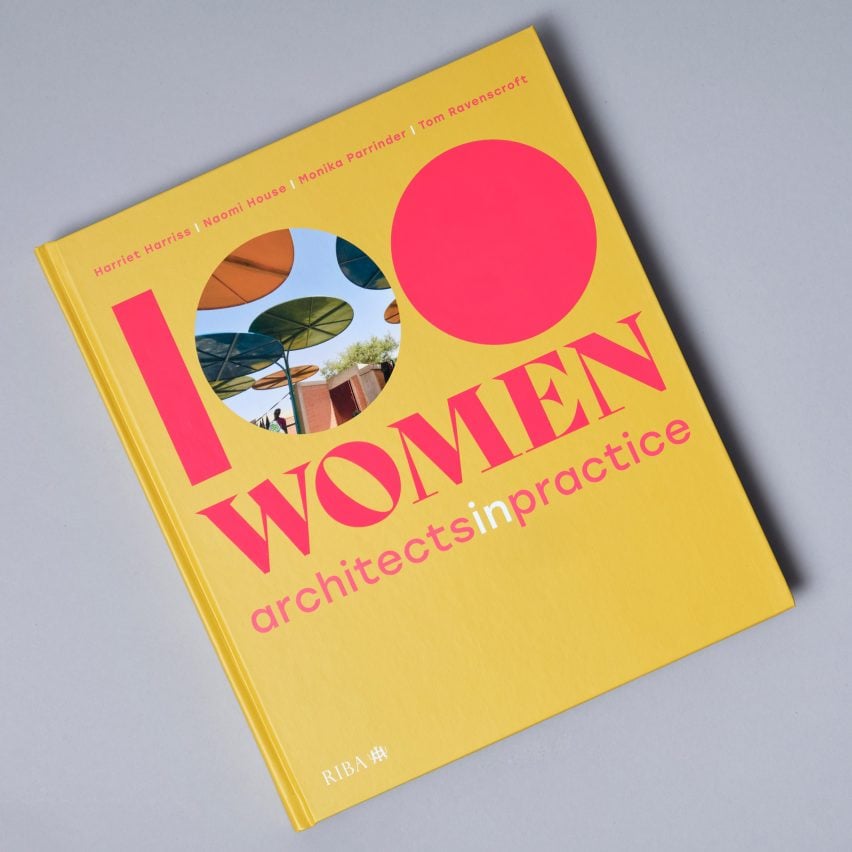
100 Women: Architects in Practice by Harriet Harriss, Naomi House, Monika Parrinder and Tom Ravenscroft

100 Women: Architects in Practice by Harriet Harriss, Naomi House, Monika Parrinder and Tom Ravenscroft

Written by academics Harriet Harriss, Naomi House, Monika Parrinder and Dezeen editor Tom Ravenscroft, 100 Women: Architects in Practice showcases the work of  architects from 78 different countries.

The book contains interviews with some of the world’s best-known architects including Liz Diller, Tatiana Bilbao, Mariam Issoufou Kamara and Lina Ghotmeh, along with numerous women who have not yet received extensive global attention.

Find out more about 100 Women: Architects in Practice ›


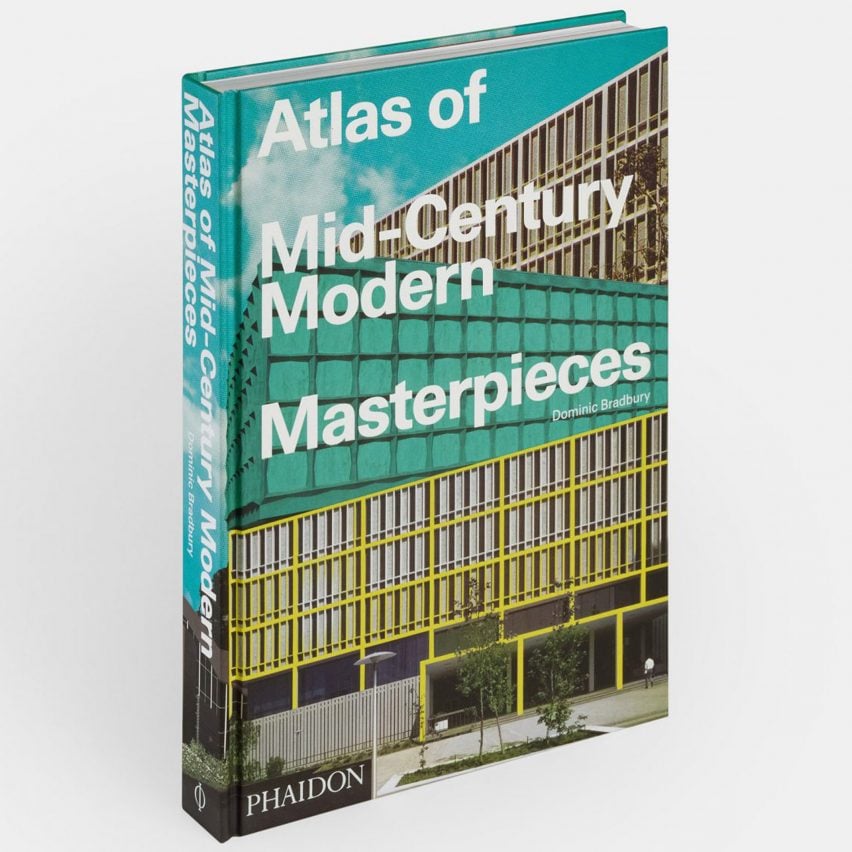
2024 top architecture books: Atlas of Mid-Century Modern Masterpieces by Dominic Bradbury

Atlas of Mid-Century Modern Masterpieces by Dominic Bradbury

Published by Phaidon, the Atlas of Mid-Century Modern Masterpieces is an encyclopedia featuring 450 mid-century-modern buildings from all across the world.

The book not only contains many of the key buildings created by the movement’s trailblazers but also those designed by more under-represented architects.

Find out more about Atlas of Mid-Century Modern Masterpieces ›


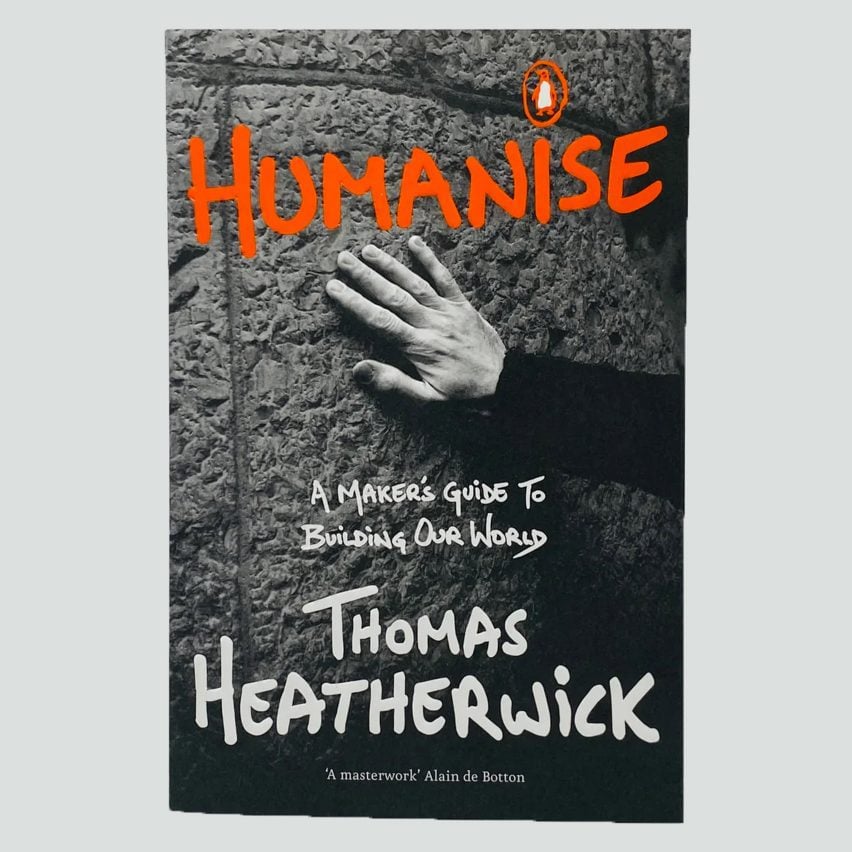
2024 top architecture books: Humanise by Thomas Heatherwick

Humanise by Thomas Heatherwick

The book that undoubtedly drew the most attention this year was Thomas Heatherwick’s Humanise.

In the book, along with a Radio 4 series and initiative of the same name, British designer Heatherwick takes aim at “boring” buildings.

Find out more about Humanise ›


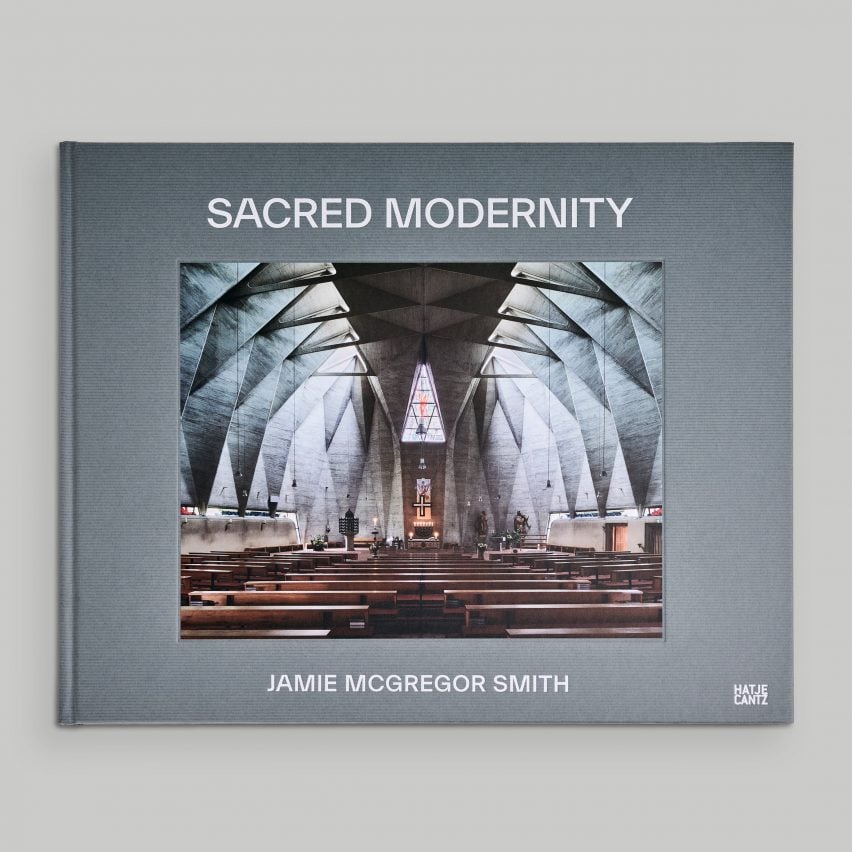
2024 top architecture books: Sacred Modernity by Jamie McGregor Smith

Sacred Modernity by Jamie McGregor Smith

Sacred Modernity aimed to showcase the “unique beauty and architectural innovation” of brutalist churches across Europe.

The book contains 139 photographs of 100 churches taken by photographer Jamie McGregor Smith over five years, along with essays by writers Jonathan Meades and Ivica Brnic.

Find out more about Sacred Modernity ›


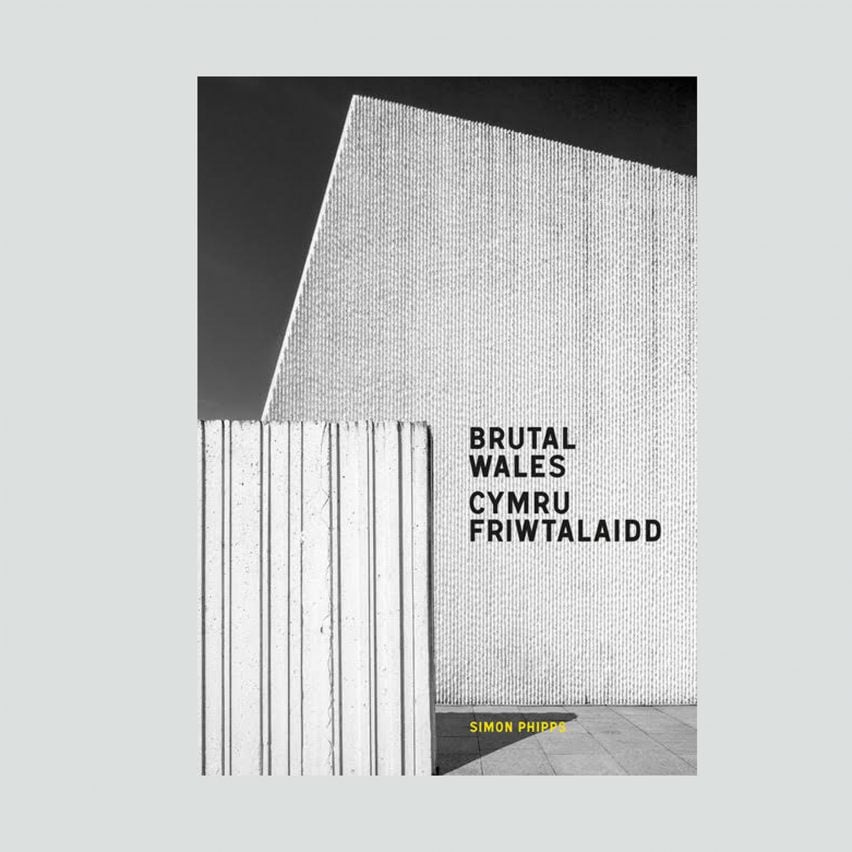
Brutal Wales by Simon Phipps

Brutal Wales by Simon Phipps

Simon Phipps’ follow up to his Brutal North and Brutal London books, Brutal Wales highlights architecture in the brutalist style across the country.

Alongside photography of 60 buildings, the book has explanatory texts in both Welsh and English, as well as an introduction by social historian John Grindrod.

Find out more about Brutal Wales ›


Donald Judd Furniture by Judd Foundation

Donald Judd Furniture by Judd Foundation

The Donald Judd Furniture book contains photos of all the furniture pieces created by the artist for his New York and Marfa, Texas, properties that remain in production.

Along with the photos, the book contains archival sketches by Judd, newly commissioned drawings of each piece and several essays by the artist.

Find out more about Donald Judd Furniture ›


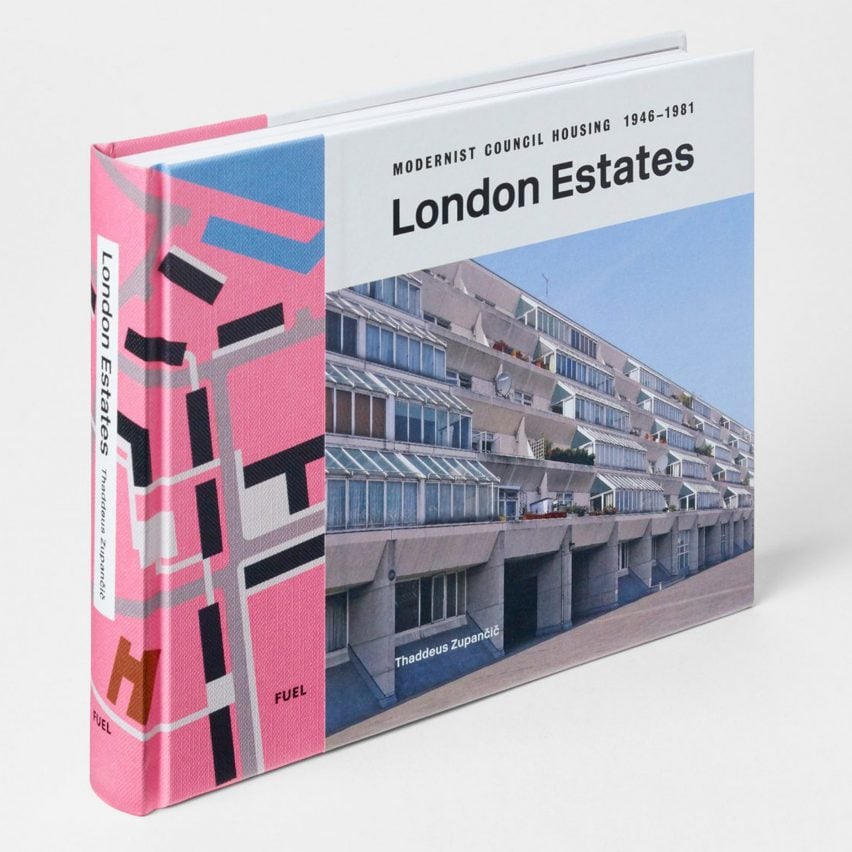
London Estates by Thaddeus Zupančič

London Estates by Thaddeus Zupančič

London Estates documents the modernist council housing built in the UK capital in the post-war period.

Described by publisher Fuel as “the most comprehensive photographic document of council housing schemes in the capital”, the book was photographed by Thaddeus Zupančič.

Find out more about London Estates ›


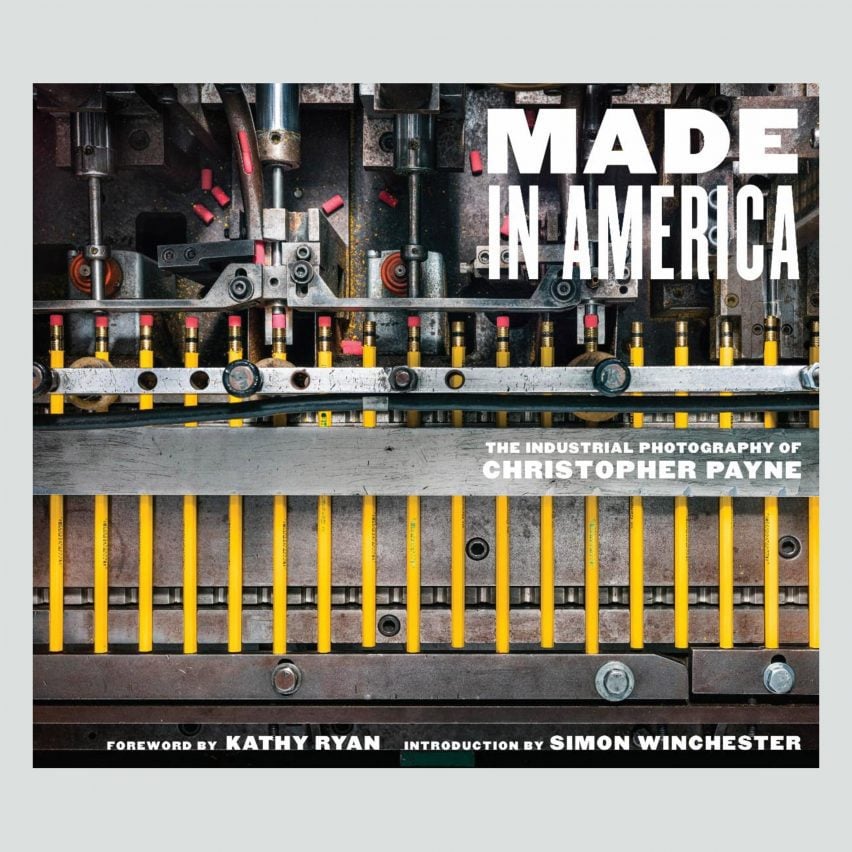
Made in America by Christopher Payne

Made in America by Christopher Payne

Photographer Christopher Payne’s Made in America book contains images taken over the past decade in the USA’s factories.

Payne created the book as a way of helping to preserve the legacy of industry in America, while documenting the skill of workers who are featured in the photography.

Find out more about Made in America ›


50 Design Ideas You Really Need to Know by John Jervis

50 Design Ideas You Really Need to Know by John Jervis

The latest book in the 50 ideas series, 50 Design Ideas You Really Need to Know contains essays tracking the evolution of design from the 19th century to today.

Written by John Jervis, the book aims to make a broad range of design concepts accessible to a wide audience.

Find out more about 50 Design Ideas You Really Need to Know ›

Architecture: Kārearea House In New Zealand

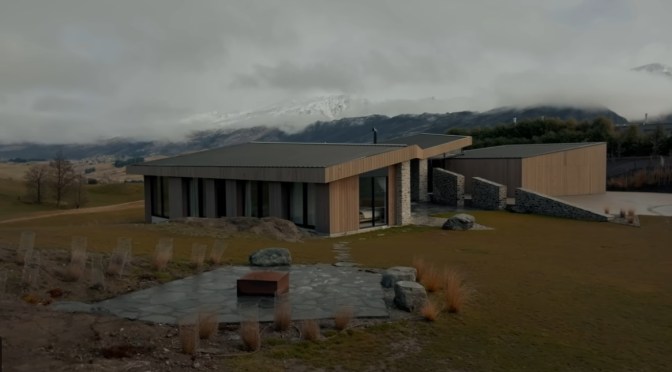
The Local Project (December 15, 2024): Located in the Wakatipu Basin on New Zealand’s South Island, Kārearea House by RTA Studio, which takes inspiration from the region’s majestic native falcons, is the most breathtaking home shaped by nature.

00:00 – Introduction to the Most Breathtaking Home 01:12 – The Location Centred Brief 02:36 – Approaching the Home 03:09 – Walkthrough of the House 04:11 – Restrained Interior Styling 05:44 – The Kitchen Design and Appliances 07:21 – A Balanced Material Palette 08:29 – Curating The Views 09:21 – Proud Moments

What defines it, however, is the site’s staggering 360-degree views to The Remarkables, Coronet Peak and the Crown Range, and the architects’ response to these multifaceted aspects. “We’ve done a few houses in this area and, over the years, we’ve developed an approach that’s firstly about identifying the significant views,” says Richard Naish, founder of RTA Studio.

Though Naish acknowledges that the perspectives are a gift, he believes good architecture is more about the control and release of views. This philosophy underscored RTA Studio’s approach to crafting the most breathtaking home shaped by nature. The roof lines played heavily into this idea; designed to follow the contours of the land and echo the surrounding topography, the roof dips in parts and soars in others, creating views both vast and precise.

#Nature #Home #NewZealand

Country Life Magazine – December 18, 2024 Preview

Country Life Magazine (December 10, 2024): The latest issue features ‘The Christmas Double Issue’…

A story of homeliness

The Revd Dr Colin Heber-Percy considers the Christmas story told in familiar rituals

Earth stood hard as iron

Frost casts a garden’s structure into sharp relief. Tiffany Daneff enters a sparkling world

The Very Revd Jo Kelly-Moore’s favourite painting

The Dean of St Albans chooses a canvas full of uplifting light for dark times

The legacy

Kate Green pays tribute to Dame Ninette de Valois, the ‘godmother of ballet’

Where Britain’s first saint lies

In the first of two articles, John Goodall traces the saintly history of the ancient abbey church of St Albans, Hertfordshire

Love to hear the robin go tweet, tweet, tweet

The feisty robin is the undisputed avian king of Christmas. Mark Cocker wonders why

It’s a most wonderful time of the year

From weaving wreaths to corralling choristers, the work is ramping up for country people, who talk to Kate Green and Paula Lester

Baby, it’s gold outside

Catriona Gray meets the artists capturing Nature’s beauty in gold

Silence is golden

Stop and listen to Nature’s voice, urges John Lewis-Stempel

Each year you bring to us delight

Hanging treasured decorations is all part of the magic. Matthew Dennison opens the bauble box

Look out! Look out! Jack Frost is about

Deborah Nicholls-Lee dares to unveil the mysterious figure

The Editor’s Christmas quiz

Take on our quizmaster — and, more importantly, your family and friends

Anyone for indoor cricket?

Melanie Cable-Alexander buckles up for riotous country-house-corridor games

No Risk, no reward

Harry Pearson takes over the world with the classic board game

Make ’em laugh

Jonathan Self chortles at British comedy

The Christmas Story: ‘Bring me flesh and bring me wine’

The spirit of Christmas works its magic on a curmudgeonly baronet in Kate Green’s tale

Interiors

Natural scents win for Arabella Youens

While shepherds watched their flocks

The sheep and its patient guardians have long delighted artists, finds Michael Prodger

Luxury

Knitting, diamonds and Giles Coren’s treats

It takes a village

Is the perfect rural habitation real, wonders John Lewis-Stempel

Don’t mince your words

Modern mince pies are but pale shadows of the past, believes Neil Buttery

You’re one hot roast potato

Who can resist a roastie? Not Emma Hughes, nor anyone else in their right mind

Kitchen garden cook

Melanie Johnson builds a gingerbread house

That’ll do, pig

Glazed and succulent, the Christmas ham is the king of the feast for Tom Parker Bowles

Lay, lady, lay

Give wine time to age, urges Harry Eyres

Crown Him with many crowns

John Lewis-Stempel gathers in the holly, once divine diadem, now a cow’s Christmas feast

The straw that broke the camel’s back

Labour’s family-farm tax will mean ruin for a beleaguered sector, says Minette Batters

 ‘Growing old is mandatory, but growing up is optional’

Sam Leith opens the well-worn covers of the childhood books we will always cherish

Float like a butterfly, sting like a bee

From frogs to rat armies, the natural world has inspired countless ballets. Laura Parker straps on her pointe shoes for the bunny hop

Highlights, delights and lowlights

Michael Billington awards his accolades to the stars — and the scourges — of the stage

Spectres of the feast

Operas with food and wine may be rousing, but there are perils, warns Henrietta Bredin

Unputdownable: the page turners of 2024

Country Life reviewers select their top books

Paris: Inside Notre Dame Cathedral’s Recovery

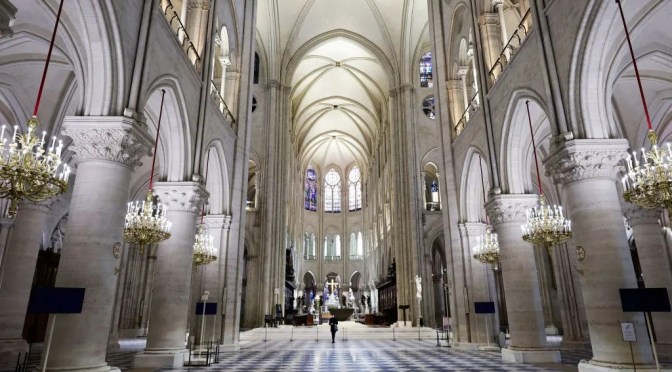
CBS Mornings (December 9, 2024): Saturday was a special day in Paris as Notre Dame Cathedral held its first mass in more than five years after a fire in April 2019 destroyed much of the cathedral’s roof. Senior foreign correspondent Seth Doane has been following the renovation over the years.

Preview: The New Yorker Magazine – Dec. 16, 2024

Santa exits the subway.

The New Yorker (December 9, 2024): The latest issue features Eric Drooker’s “A Seasonal Delivery” – Santa Claus—he’s just like the rest of us.

President Emmanuel Macron Has Plunged France into Chaos

Lawmakers have toppled the government for the first time since 1962. How did we get here? By Lauren Collins

What Will Elon Musk and Vivek Ramaswamy Accomplish with Doge?

Two political newcomers have arrived to slash big government, but so far the project seems less revolutionary than advertised.

Country Life Magazine – December 4, 2024 Preview

Country Life Magazine (December 3, 2024): The latest issue features ‘The Full English’ – Why our homegrown style is back….

London Life

  • Richard MacKichan finds Sir Paul Smith rockin’ around Claridge’s Christmas tree
  • Catriona Gray meets the movers and shakers of the capital’s art world
  • All you need to know this month in the capital

Caroline Moorehead’s favourite painting

The author selects a portrait that shows the ‘very essence of what it was to be Sicilian’

The world turned upside down

Carla Carlisle—wife of a farmer and a diversifier extraordinaire— offers an insider’s view on the Government’s ‘Great Betrayal’

What to look for in winter

Now is not the time to hibernate, suggests John Wright, as he encourages us to appreciate the countryside’s stark, intricate beauty in these colder months

Putting in a Good Word

Lucy Denton delves into the remarkable history of Stationers’ Hall, the central London home of the Worshipful Company of Stationers for the past 400 years

The legacy

Amie Elizabeth White hails Henry Cole, inventor of Christmas cards

The rocky-pool horror show

John Lewis-Stempel loves to be beside the seaside as he examines the enduring appeal of England’s glorious coastline

Bowler me over

Matthew Dennison tips his hat to the rural origins of the bowler as he celebrates its 175th birthday

A touch of frost

Beware an ill wind blowing us into 2025, warns Lia Leendertz

Piste de résistance

Joseph Phelan finds a business on an upslope when he visits the last ski-maker in Scotland

Eyes wide shut

Sleep in art is often drunken, deadly or the stuff of nightmares, but rarely is it peaceful, as Claudia Pritchard discovers

Size matters

Charles Quest-Ritson cranes his neck to take in the sheer scale of the specimens at West Sussex’s Architectural Plants

Kitchen garden cook

Melanie Johnson on sprouts

Travel

  • Life in Grenada quickly grows on Rosie Paterson
  • Catamarans and cabanas
  • Jamaica’s Blue Mountains are heaven for Steven King
  • Fine dining is the holy grail for Pamela Goodman