The city is a cultural center in the North of Pakistan with over 11 million inhabitants. It’s vibrant, bustling and full of historic buildings and traditions. Eva meets unique characters from Lahore who take her on a tour through their city. The ancient Wazir Khan Mosque is a must-see, and don’t miss a spontaneous visit to a local barber shop 😉. And look forward to meeting @Zenith Irfan, who was the first Pakistani woman to cross the country on a motorcycle, earning her the nickname “motorcycle woman”.
Malvern House sees Lande Architects convert a one-hundred-year-old house into a modern home with a minimal addition. Traditionally, when architects convert a one-hundred-year-old house into a refreshed dwelling, they take care to preserve the heritage features of the property – Malvern House was no different.
Video Timeline: 00:00 – Blueland 00:09 – Introduction to the 100 Year Old House 00:45 – Modernising a Weatherboard Victorian Cottage 01:23 – The Client Brief 02:08 – Green Motif Throughout the House 03:30 – Utilising Natural Light 04:10 – Outdoor Areas 04:25 – Working Together with the Clients 04:58 – Blueland Home Cleaning Products 06:24 – Final Look at the Converted House
Lande Architects retains the original, decorative front of the Victorian weatherboard cottage, maintaining a connection to the defining architecture of the location. Lande Architects reconfigures the extension of Malvern House – located to the rear of the structure and comprising of the kitchen, living and dining spaces – to propose a larger footprint. Seven internal courtyards are added in adherence to the brief, which stipulated that the pockets of green space should feature within the interior design.
Softly defined by functional glazing, the courtyards form an important part of the overall scheme as Lande Architects convert a one-hundred-year-old house into a modern home. The design of Malvern House champions efficiency. Lande Architects insulates the home with double brick walls and a large concrete slab positioned to the north orientation, with the slab absorbing heat during the day and radiating the heat back into the house overnight.
Cross-flow ventilation is provided via the seven courtyards. Such mastery over the internal environment of Malvern House sees Lande Architects convert a one-hundred-year-old house into a home that can meet 21st century standards of liveability. Whilst the heritage front of Malvern House remains purposefully untouched, the rear extension is changed for the better. Lande Architects converts a one-hundred-year-old-house into a residence with a rich and evolving narrative.
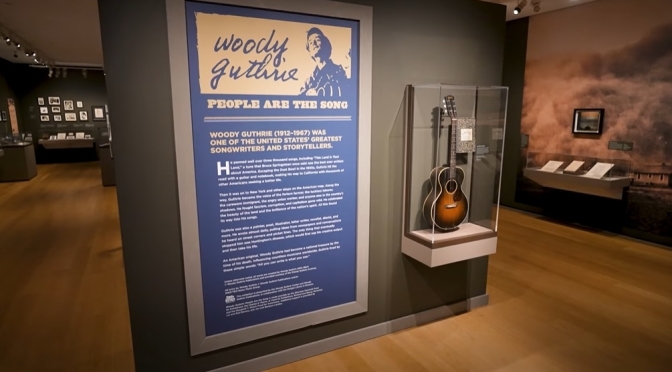
The author of more than three thousand folk songs, Woody Guthrie (1912–1967) is one of the most influential songwriters and recording artists in American history. He is an icon of the Depression era and wrote the world’s most famous protest song, “This Land Is Your Land.”
But he was not only a songwriter, and his subject matter extended well beyond labor politics. The full corpus of his creativity—including lyrics, poetry, artwork, and largely unpublished prose writings—encompassed topics such as the environment, love, sex, spirituality, family, and racial justice. Guthrie created a personal philosophy that has impacted generations of Americans and inspired musician-activists from Pete Seeger and Bruce Springsteen to Ani DiFranco and Chuck D. As Bob Dylan noted of Guthrie, “You could listen to his songs and actually learn how to live.”
This fascinating Japanese armour was part of the first diplomatic gift between Japan and Britain. It is over 400 years old and one of the first documented Japanese armours to have been seen on British soil.
Learn more about this amazing object in this short film. See the armour in our exhibition Japan: Courts and Culture at The Queen’s Gallery, London from 8 April 2022 – 26 February 2023.
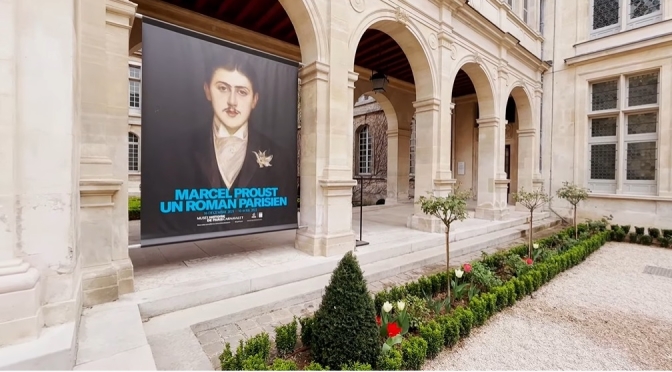
The Carnavalet Museum – History of Paris is celebrating the 150th anniversary of the birth of Marcel Proust (1871–1922).
Dedicated to the relationship between Marcel Proust and Paris, where he spent most of his life, the exhibition Marcel Proust, a Parisian novel will investigate the city’s place in Proust’s novel.
The first section of the exhibition will explore the world Marcel Proust inhabited in Paris. Having been born and died in Paris, Proust’s life unfurled in the very restricted area encompassed by Parc Monceau, Place de la Concorde, Auteuil, Bois de Boulogne and l’Étoile. Paris was of immense importance in the development of Marcel Proust’s literary vocation, from the time of his earliest writings in the late 1890s with his fellow-pupils at the Lycée Condorcet, to his entry into the city’s high society and encounters with people who would be decisive to his life.
The second part of the exhibition opens on the fictional Paris created by Marcel Proust. Following the architecture of the novel In Search of Lost Time and evoking emblematic places in the city, it offers a journey through the novel and the history of the capital, focusing on the book’s central characters. The city of Paris, represented poetically in the novel, is the setting for the quest of the narrator, the author’s alter ego, until the revelation of his vocation as a writer.
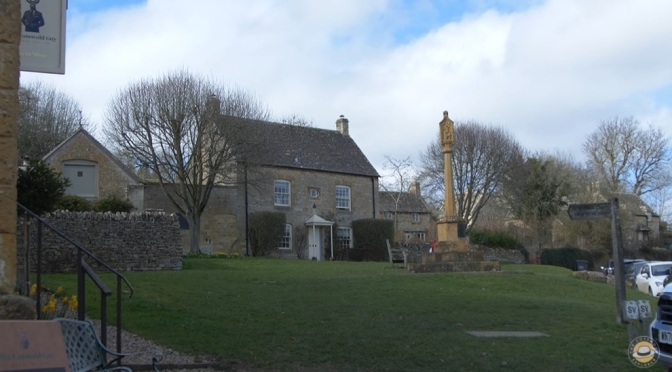
Guiting Power is one of the more famous hidden gems in the Cotswolds, nestling quietly in the English countryside.
The typical Cotswolds village of Guiting Power lies on a tributory of the river Windrush, its russet-coloured houses clustered round a sloping green. The buildings are restored by a self-help housing trust, initially set up for twelve cottages in 1934.
This delightful village is a fascinating example of the unconscious harmony created by Cotswold masons over the centuries. The cottages, shops and inns are all beautifully cared for. The Farmers Arms in the village and the Hollow Bottom Inn on the road leading to Winchcombe form welcome breaks on a number of glorious walks that can be taken in this area – north-westwards to Guiting Woods, south-eastwards down the Windrush Valley to Naunton, or south-westwards to Hawling.
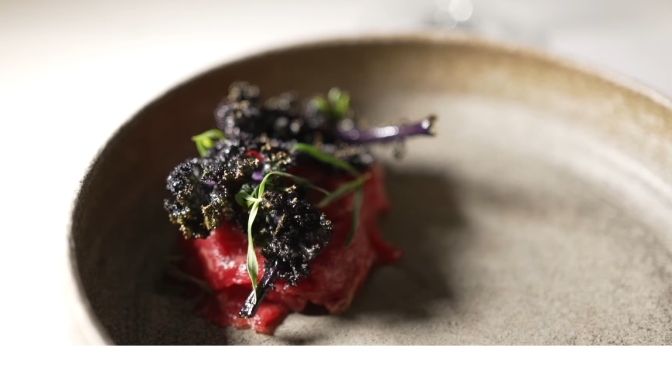
Visiting Den Røde Cottage (pronounced “roll” = red) a historic building from 1844 which has been a restaurant for a few decades now. The 8 course dinner can be ordered together with 8 glasses of wine which almost doubles the price of the dinner bringing it up to 2500 DKK (335 EUR) but it is highly recommended since the wine complements each dish greatly and the wisely chosen wine selection itself gives a nice overview of the diversity of the taste of wine.
Den Røde Cottage is a Michelin Guide restaurant and is located 10 minutes outside of Copenhagen in a town called Klampenborg.
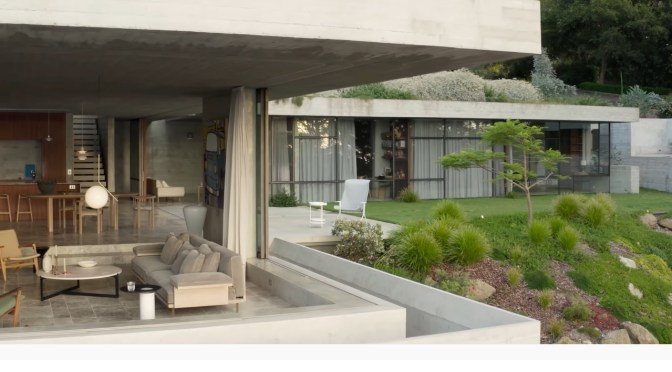
Crafted by James Stockwell Architect, Bunkeren could be the best modern house in the world. Considered more landscape than building, the concrete dwelling is a robust insertion within the surrounding natural context. Embedded into a rocky forest edge just south of Newcastle,
Video Timeline: 00:00 – Introduction to the Best Modern House in the World 00:40 – The Concept 01:30 – Designing for Family and the Landscape 02:09 – House Inspired by Danish Design 02:25 – Intimate Spaces 02:44 – Bunker within the Landscape 03:20 – Benefits of a Concrete Bunker House 04:20 – Bringing Natural Light into the House 04:55 – The Cellar 05:30 – Materiality 06:12 – Indoor-Outdoor Living 07:05 – Highlights of the House 07:28 – The Architect’s Favourite Part of the House
Bunkeren sits on the land of the Awabakal people. Externally, the building is reminiscent of the inspiring botanical garden that once occupied the location in the late 1800s; sprouting greenery covers the top of floating concrete platforms where, beneath, the internal spaces are held. A sense of architectural freedom is permitted by minimising necessary supporting columns and removing the need for load-bearing walls, lending structural significance and an impressive silhouette to what is considered the best modern house in the world.
A house tour of Bunkeren – named according to the Danish translation of ‘bunker’ – reveals the negotiated peaks and pitfalls of the bunker configuration. In materiality and position, the home expresses a reassuring invulnerability; partly shielded by the rocky landscape and comprised of concrete, Bunkeren can retain its structural integrity in the event of a bushfire or storm. Crafted by the architect to be low maintenance, the home does not require painting and cannot be eroded by mould or termites. The enveloping botanical element of the design supports the forest ecosystem and microclimates by interacting with natural species. James Stockwell Architect designs the interior to combat the limited natural light and ventilation associated with the architecture of a traditional bunker. Skylights and an internal garden draw light into the underground aspects of the home in an aesthetically engaging manner, whilst the elevated nature of the concrete platforms allows space for fresh air to travel through the dwelling. The interior design of Bunkeren contributes to its potential as the best modern house in the world. Whilst utilising the work of local artists, James Stockwell Architect also takes care to reflect the influence of Danish design culture in consideration of the homeowners’ lifestyle. In application of the Danish principle of proportion, all decoration is scaled to human level, emphasising the togetherness of the family unit. The design also champions the Danish furniture inherited by the homeowners. A restrained approach to styling sees each space defined by a sense of intimacy, with the absence of elaborate ornamentation establishing an unimposing, experientially gentle atmosphere. The most unique aspect of the home – through which James Stockwell Architects proposes Bunkeren as the best modern house in the world – is the cellar, situated at the lowest level. Inside the space, the rock into which the residence is settled within is left exposed, providing visual drama, natural tactility and a reflection of the external environment, blurring the line between the home and landscape. Warmed by the additional materials of wood, concrete and brass, the cellar exudes individuality. In 20 years, the foliage surrounding Bunkeren will have grown, until the building cannot be clearly distinguished from its natural context. It is this foresight that allows Bunkeren to be considered the best modern house in the world.
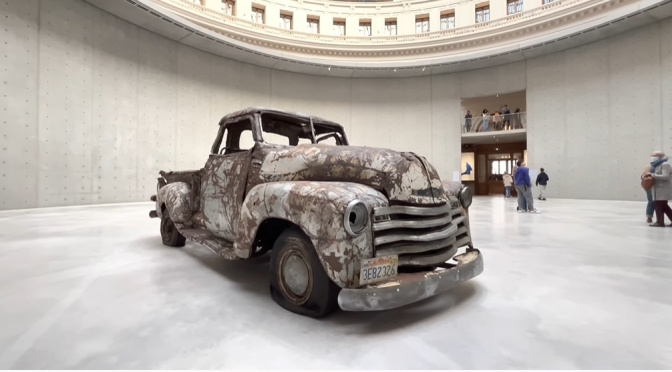
A major figure on the contemporary art scene, American sculptor Charles Ray (b. 1953) opens the cultural programme of the 2022, with an exhibition running until the spring.
Hoanib’s eight pale olive, luxury tented suites peak like whitecaps on an ocean of sand. Totally solar-powered, Hoanib has a fresh, contemporary design, with a colour palette reflecting the surrounding desert. The camp (suites, common areas, pool) looks out on a wide, rugged valley that slopes down to the usually dry Hoanib River. One of many highlights: dining under impossibly starry skies, perhaps perhaps at the firepit as a jackal cries, or a lion roars, punctuating the stillness of the inky night.
Explore the Namib Desert’s rust-coloured crags and arid plains in search of desert-adapted wildlife – elephants, lions, hyaenas, giraffes, oryxes among the regular sightings. Take a rollicking drive over the floodplain and dunes to the Skeleton Coast, a wild stretch of the Atlantic where the desert meets the sea, where white sand beaches are littered with whale bones and shipwreck remains. Fly back to camp for an aerial view of what seems uninhabitable, but is full of life. Walk with a guide to witness that life, including the smaller creatures, a fascinating variety of birds and unusual flora. Discover the remnants of Strandloper – Beachcomber – lifestyle from centuries past. Linger in the camp’s wildlife research centre to learn about the latest local conservation initiatives.
News, Views and Reviews For The Intellectually Curious





 Boomers Daily