A.M. Edition for Aug. 24. After six months of war in Ukraine, battlefield momentum is tilting against Russia even as the conflict shows few signs of slowing.
WSJ reporter Marcus Walker and Moscow bureau chief Ann Simmons explain how officials in Kyiv and Moscow view the current state of war and their respective paths to victory. Luke Vargas hosts.
For 1960, Ferrari built 46 of these race-prepared, aluminum-bodied Competizione SWBs, a model that is now commonly referred to as the Comp/60.
While many variations existed with regards to aesthetic and mechanical features, most Comp/60s can be identified by a few key visual characteristics: the more elegant front grille and side windows of the original design, a prominent external fuel filler on the rear deck, and a cockpit air vent at the top of the rear window.
The car presented here is a fascinating example of the 250 SWB Comp/60 Berlinetta; it claims a fantastic period-competition history, well-documented provenance, and recent, show-quality restoration.
Hey, batter batter! Michael Wyetzner of Michielli + Wyetzner Architects returns to AD, this time breaking down the architectural details found in baseball stadiums around North America. From some of the earliest homes of the national pastime to current multi-billion dollar behemoths, Michael offers up expert insight on what makes each of them distinct.
An architectural family house, The Way House stands steeped in history. Originally crafted by Darryl Way Architect, the renovated dwelling by vittinoAshe draws upon its architectural heritage in embracing its future.
Video timeline: 00:00 – Introduction to The Way House 00:28 – The History Behind The Way House 01:16 – The Benefits of Open Plan Living 02:01 – Architectural Features of The Way House 02:24 – Creating Space Through Glass 02:37 – A Tribute to the Original House 03:42 – Introducing Artedomus Products 05:26 – The Embodiment of Family
Settled in close proximity to Perth’s Freshwater Bay, The Way House represents a significant family legacy. Built in 1975 by the client’s father – an established architect – the home stands as a labour of love. As an architectural family house, it was important to respect the built narrative of the residence when executing the modern-day renovation. Internally,
The Way House indicates its status as an architectural family house, with old architectural elements effortlessly cohered with the new. The new studio pays homage to the original house through the replication of clean lines, materiality and finishes. Working with Artedomus – esteemed supplier of natural stone and ceramic tiles – DWA Architects highlights The Way House as an architectural family house. Artetech Ombra Carbone porcelain panels are used as a minimal means of ornamenting the kitchen, positioned in striking contrast to red recycled bricks.
In the bathroom, Artedomus INAX tiles communicate a minimal design language to foster a sense of serenity. Crafting a house that embodies a meaningful history, DWA Architects invests in an ongoing residential narrative. An architectural family house, The Way House articulates the important role that architecture plays in family life and provides an inviting space for the next generation.
A selection of three essential articles read aloud from the latest issue of The Economist. This week, will Donald Trump run again? Also, the future of the Visa-Mastercard payments duopoly (9:35) and, what kind of prime minister will Britain get? (21:45).
Tensions are rising at Europe’s largest nuclear-power station, which Russian forces are using as a military base. We ask what the risks are, and whether they can be headed off.
Britain’s summer heatwave was deadly—but figuring out how deadly was no easy task. And discovering the real value of the “social capital” outside family and work relationships.
Monocle 24’s Georgina Godwin, Quentin Peel and Alex von Tunzelmann unpack the weekend’s biggest talking points. Plus: our editorial director, Tyler Brûlé, joins us live from Stockholm.
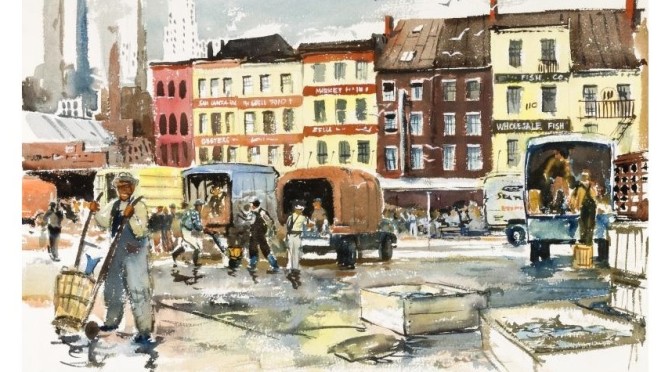
The Fulton Fish Market in New York is celebrating its 200th anniversary this year. Jeff Glor goes inside and takes a look at the market’s history.
Opened in 1822, New York City’s Fulton Fish Market is one of the oldest fish markets in the United States. Well before the Brooklyn Bridge was even built, the market at South Street Seaport thrived with fishing boats and fishmongers bartering and bantering over stalls heaving with fresh fish. Each night the colorful market would come to life with its cast of characters, eager chefs and curious tourists, all mingling over bushels of oysters, crates of lobsters and a kaleidoscope of sea creatures from near and far. Perhaps more than any other institution, the Fulton Fish Market captured the spirit and tradition of old New York.
News, Views and Reviews For The Intellectually Curious








 Boomers Daily