




From Wikipedia:
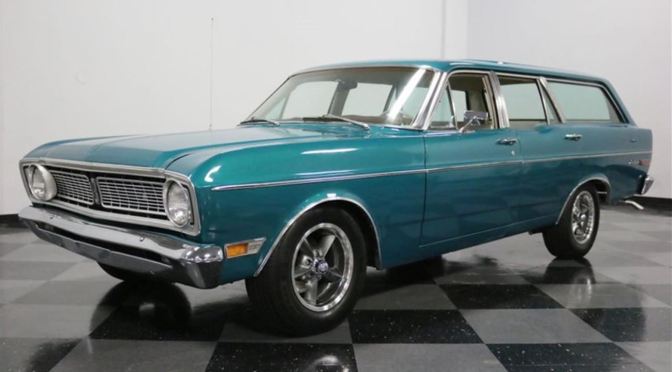
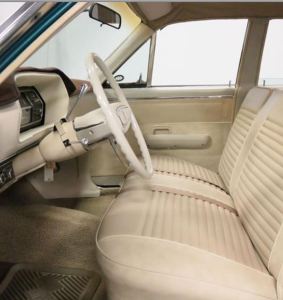 In late 1965, Ford launched the third generation Falcon, based on a shortened Fairlane platform with revised styling. At the top of the line was the highly-trimmed Futura Sports Coupe, which featured chrome side window frames, giving this two-door sedan the look of a hardtop. It also featured a premium all-vinyl interior. Large “Sports Coupe” script on the “C” pillar was borrowed from the 1964–1965 Fairlane Sports Coupe.
 The heater-defroster became standard.[22] Brakes were 9-in for six-cylinder Falcons, and 10-in for V8s.[23] The two-door hardtop and convertible were dropped, while the station wagon and Ranchero were moved to a larger platform shared with the contemporary Fairlane. The Ranchero left the Falcon line and adopted the Fairlane’s front sheet metal for 1967. The 1966 Falcon was used in the Trans-Am series. The 1967 models were mostly the same as the 1966 models, but more Federally-mandated safety equipment was added, including a dual-circuit brake system, energy-absorbing steering wheel with a large, padded center hub, 4-way flashers, soft interior panels, and mountings for front shoulder belts (which were available as an option). A reminder light was added for the seatbelts;[24] 1968 was the first model year for the square tail lights.[25]
1968 and 1969 Falcons got new side marker lights or reflectors, front outboard shoulder belts, and headrests for cars built after January 1, 1969. The basic body and mechanical specifications remained the same as 1966–1967 models.
 When Madame Clicquot, who had become the veuve (widow) Clicquot Ponsardin, inherited the house in 1805, she followed the motto “Only one quality, the finest” and created the first vintage and the riddling rack, two major innovations for champagne production. Centuries later, the brand behind the characteristic yellow label continues to make history, going beyond champagne to represent a complete lifestyle.
Veuve Clicquot Ponsardin has been pushing boundaries for the past 250 years. From inventing rosé champagne in 1775 to collaborating with innovators such as Andrée Putman and the Campana Brothers, with each passing century the legendary label goes above and beyond to challenge itself with new initiatives to energize and excite its enthusiasts.
 “Nikas combines extensive research into a previously unavailable and highly detailed archive of Donald Healey’s personal records with the author’s masterful ability to weave together an amazing level of detail while making it an eminently readable story. The result is a book that both seasoned automotive historians and anyone with an interest in the story of a life well lived will enjoy. Until you’ve read this book, you don’t know the true story of Donald Healey and his cars”
(Reid Trummel, Editor in Chief, Healey Marque)
Written in collaboration with Gerry Coker, the designer responsible for the iconic Austin-Healey 100 and Sprite, this volume represents the most complete account ever of the sports cars built at Warwick, Longbridge, Abingdon and West Bromwich. With unprecedented access to Donald and Geoffrey Healey’s private papers, diaries, scrapbooks and photo albums, corporate and financial records from BMC, Donald Healey Motor Company and Healey Automobile Consultants, the files of Jensen Motors and Nash-Kelvinator, dozens of personal interviews and exhaustive research into previously unavailable primary source material, this book provides a thorough account of the true story behind these automobiles and the individuals who created them.
From Wikipedia:
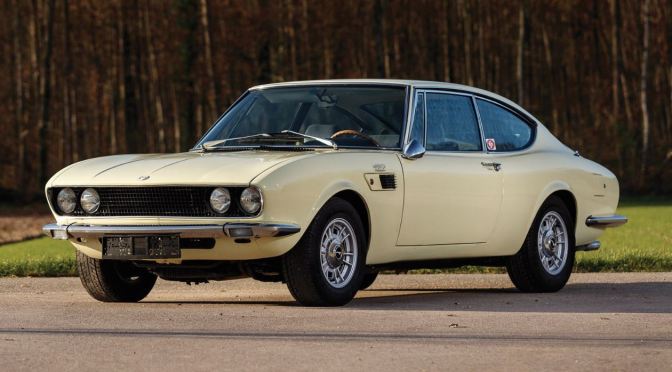
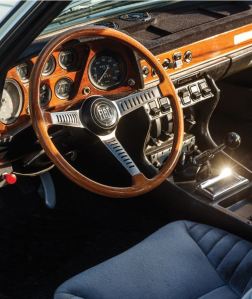 The Fiat Dino (Type 135) was a front-engine, rear-wheel-drive sports car produced by Fiat from 1966 to 1973. The Dino name refers to the Ferrari Dino V6 engine, produced by Fiat and installed on the cars to achieve the production numbers sufficient for Ferrari to homologate the engine for Formula 2 racing.
 Times Critics Talk About Their Year-End Lists
From the Iglhaut Allrad USA website:
Ighaut Allrad USA is the exclusive US partner for Iglhaut Allrad. Iglhaut Allrad has been converting Mercedes 2 wheel drive commercial vehicles into truly capable off-road vehicles for over 35 years. We take a 2 wheel drive Mercedes Sprinter or Metric and convert it into permanent all wheel drive with a perfect 50/50 front to rear power split.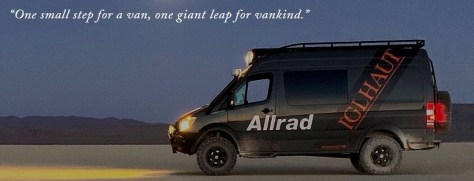
We can add three locking differentials, off-road high/low transfer case, suspension and brake upgrade, wheel well enlargement with fender flares to accommodate 18”light weight alloy wheels with up to 37” BF Goodrich KM3 Mud-Terrain tires, under body protection, rear door spare tire carrier, centrifugal snorkel, and 47.5 gallon fuel tank, for the most capable off-road van which retains all of its on road performance and handling characteristics.
Iglhaut Allrad is a World Wide Mercedes Van Partner and their conversion does not void the base vehicles warranty. Iglhaut Allrad USA facilitates the purchase of an Iglhaut converted vehicle for North American customers. All conversions are done in Germany at Iglhaut and turnaround time is about 6 month. Iglhaut Allrad USA takes care of all logistics and can help with the acquisition of the 2 wheel drive base vehicle.
Website: https://iglhautallradusa.com/?mc_cid=dce5bf23f0&mc_eid=c5f4960b01
 Along with the images of the band at work and play, Wyman includes remarkable images of those along for the ride, from John Lennon, Eric Clapton, David Bowie and Iggy Pop to John Belushi and Dan Aykroyd. To accompany his photographs, Wyman offers up wonderful insights, anecdotes and behind-the-photo stories, giving all us a front-row seat and backstage pass to what it was like to be there, as music history was made as a member of The Rolling Stones.
Known, unknown, rare and unseen images from former Rolling Stones bassist Bill Wyman, capturing life on-stage, backstage and on the road
In addition to this trade edition, there will also be a limited edition of 300 copies, which comes in a slipcase, with an open-edition A4 print
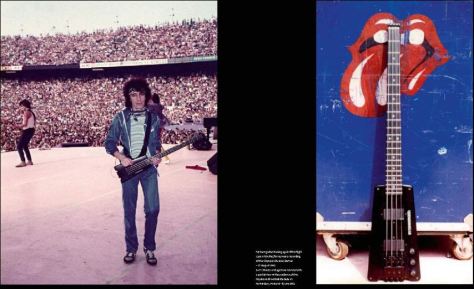
As soon as Bill Wyman was given a camera as a young boy, he quickly developed a passion for photography. After joining what would become the world’s greatest rock ‘n’ roll band, Wyman continued his hobby. When he didn’t have his bass, he had his camera. The result is an arresting, insightful and often poignant collection of photographs, showing his exclusive inside view of the band. From travelling to relaxing, backstage and on, Stones From the Inside is a unique view captured by a man who was there, every step of the way.
In a special Christmas edition, Sir Paul McCartney tells Nihal about persuading John Lennon to believe in himself, the one famous person that even he feels nervous around, and his new children’s book ‘Hey Grandude’ and how being a grandad inspires him.
From a New York Times online review:
 At the trial, experts analyzed and propounded, and he himself spoke lucidly and in apparent control. Yet Carrère, on hand to cover the proceedings for Le Nouvel Observateur, remarks that those in the courtroom “have had ample time to wonder, from the height of our clinical ignorance and flying in the face of four psychiatric experts, if he really belonged in a criminal court, and if what you felt on your nape wasn’t the cold wind of psychosis.” He ends his two-part article this way: “Behind his glass enclosure, Romand listens expressionless. No one knows what he’s thinking, not even him.”
“At dawn on Monday, Jan. 11, 1993, the fire brigade came to put out a fire in a house in Prévessin-Moëns, a small village in France’s Ain department, near the Swiss border. They found the partially charred bodies of a woman and two children, and a badly burned man, who was taken to the hospital in a critical state.”
So begins the first account by Emmanuel Carrère (now reprinted in “97,196 Words,” his new collection of essays) of the horrifying case of Dr. Jean-Claude Romand that galvanized France: No one had heard of anything like it; no one could understand it. Yet the facts were incontestable, the verdict and sentence assured: guilty, and life imprisonment, the death penalty being a thing of the past in France. (In fact, he was released from prison just this past spring, after serving 26 years.)






 Boomers Daily