

 At First Light chronicles twenty-six extraordinary artists of the last two hundred years who have lived and worked in Maine. Published to coincide with the state’s bicentennial in 2020, the volume considers the significant contributions artists have made to a deeper and more profound understanding of Maine’s history, its land and its peoples. Maine’s unique and breathtaking landscape–from its rugged coastline, quaint harbors, majestic mountains, and verdant forests–continues to have a powerful effect on the artists who are drawn to its shores.
Category Archives: Reviews

Medical: “Colonoscopies – What You Need To Know” (Cleveland Clinic Video)
A colonoscopy is a test that lets your healthcare provider look inside your colon and rectum. Here is a brief overview of what you need to know for your colonoscopy.

New Environment Books: “Koolhaas. Countryside, A Report” (Taschen, Apr 2020)
The rural, remote, and wild territories we call “countryside”, or the 98% of the earth’s surface not occupied by cities, make up the front line where today’s most powerful forces―climate and ecological devastation, migration, tech, demographic lurches―are playing out. Increasingly under a ‘Cartesian’ regime―gridded, mechanized, and optimized for maximal production―these sites are changing beyond recognition.

 In his latest publication, Rem Koolhaas explores the rapid and often hidden transformations underway across the Earth’s vast non-urban areas.Countryside, A Report gathers travelogue essays exploring territories marked by global forces and experimentation at the edge of our consciousness: a test site near Fukushima, where the robots that will maintain Japan’s infrastructure and agriculture are tested; a greenhouse city in the Netherlands that may be the origin for the cosmology of today’s countryside; the rapidly thawing permafrost of Central Siberia, a region wrestling with the possibility of relocation; refugees populating dying villages in the German countryside and intersecting with climate change activists; habituated mountain gorillas confronting humans on ‘their’ territory in Uganda; the American Midwest, where industrial-scale farming operations are coming to grips with regenerative agriculture; and Chinese villages transformed into all-in-one factory, e-commerce stores, and fulfillment centers.
This book is the official companion to the Guggenheim Museum exhibition Countryside, The Future. The exhibition and book mark a new area of investigation for architect and urbanist Rem Koolhaas, who launched his career with two city-centric entities: The Office for Metropolitan Architecture (1975) and Delirious New York (1978). It’s designed by Irma Boom, who drew inspiration for the book’s pocket-sized concept, as well as its innovative typography and layout, from her research in the Vatican library.
The book brings together collaborative research by AMO, Koolhaas, and students at the Harvard Graduate School of Design; the Central Academy of Fine Arts, Beijing; Wageningen University in the Netherlands; and the University of Nairobi. Contributors also include Samir Bantal, Janna Bystrykh, Troy Conrad Therrien, Lenora Ditzler, Clemens Driessen, Alexandra Kharitonova, Keigo Kobayashi, Niklas Maak, Etta Madete, Federico Martelli, Ingo Niermann, Dr. Linda Nkatha Gichuyia, Kayoko Ota, Stephan Petermann, and Anne M. Schneider.

Podcasts: The “Brilliance” Of Hilary Mantel’s Trilogy On Thomas Cromwell
 Robert Bound, John Mitchinson and Ted Hodgkinson review the final – and rather hefty – instalment of Hilary Mantel’s Thomas Cromwell trilogy.
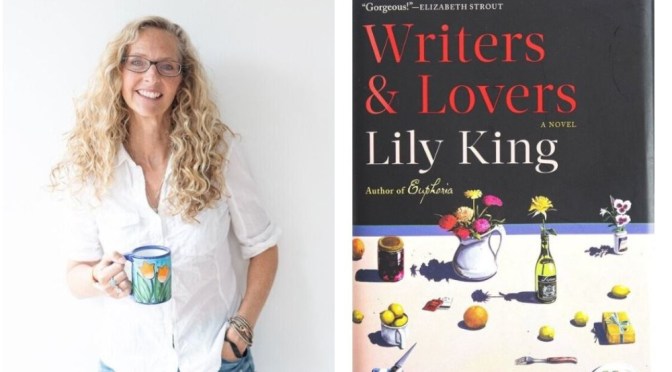
Best New Fiction Books: 57-Year Old Author Lily King’s “Writers & Lovers” – On The Road To Happiness
 Writers & Lovers follows Casey―a smart and achingly vulnerable protagonist―in the last days of a long youth, a time when every element of her life comes to a crisis. Written with King’s trademark humor, heart, and intelligence, Writers & Lovers is a transfixing novel that explores the terrifying and exhilarating leap between the end of one phase of life and the beginning of another.
Following the breakout success of her critically acclaimed and award-winning novel Euphoria,  Lily King returns with another instant New York Times bestseller: an unforgettable portrait of an artist as a young woman.
Lily King is the author of five award-winning novels. Her most recent novel, Writers & Lovers, will be published on March 3rd, 2020. Her 2014 novel Euphoria won the Kirkus Award, The New England Book Award, The Maine Fiction Award, and was a finalist for the National Book Critics Award. Euphoria was named one of the 10 Best Books of 2014 by The New York Times Book Review. It was included in TIME’s Top 10 Fiction Books of 2014, as well as on Amazon, NPR, Entertainment Weekly, Publishers Weekly, and Salon’s Best Books of 2014.
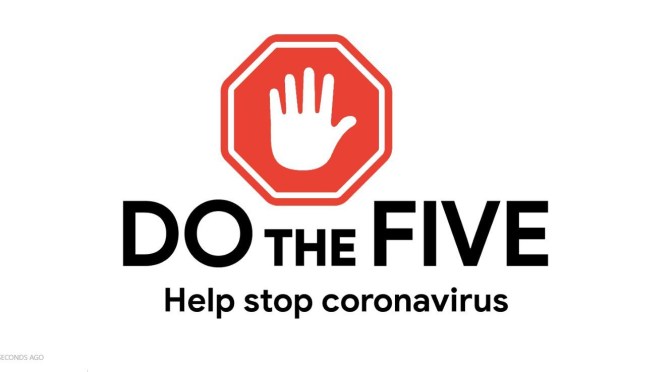
Health Facts: “Do The Five” – “Help Stop Coronavirus”

1. HANDS Wash them often
2. ELBOW Cough into it
3. FACE Don’t touch it
4. FEET Stay 3 ft from other people
5. FEEL sick? Stay home

Conservation Short Films: “Los Zanjeros – Follow The Water” On History Of Arizona Water Usage
Filmed produced by: Cooper Davis, Jared Reasy, Jake Kelly and Pete Burr
4 Brophy faculty members and native Phoenicians followed the Salt River via bicycle from its source to their faucets to better understand the history of water in Arizona and how to protect and advocate for its future.

Design Books: “Architizer – The World’s Best Architecture” (Phaidon)
 The Architizer A+Awards represent 2019’s best architecture and products, celebrated by a diverse group of influencers within and outside the architectural community. Entries are judged by more than 400 luminaries from fields as diverse as fashion, publishing, product design, real-estate development, and technology, and voted on by the public, culminating in a collection of the world’s finest buildings.
Each year, winners are honored in this fully illustrated compendium, and on Architizer.com, the largest online architecture community on the planet. Featuring select A+Award winners, this is the definitive guide to the year’s best buildings and spaces.
Architizer is the leading online resource for architecture. Through its vast building database, daily content, ‘Source’ marketplace, and A+Awards, it is revolutionizing the way architects connect with building-product manufacturers and the world beyond.

How China And South Korea Are Containing “Coronavirus / Covid-19”
Global health officials have praised China and South Korea for the success of their efforts to contain the coronavirus. What are those countries getting right — and what can everyone else learn from them?
Guest: Donald G. McNeil Jr., a science and health reporter for The New York Times. For more information on today’s episode, visit nytimes.com/thedaily.
Background reading:
- While world leaders are finally speaking out about the gravity of the pandemic, their response lacks unity with the United States absent from its traditional conductor role in managing global crises.
- Stocks tanked again as the outbreak was officially declared a pandemic and policies to address its impact proved lacking or ineffective.
- All flights to the U.S. have been suspended from Europe. Many schools announced they would close indefinitely, some nursing homes banned visitors, and workplaces across the country have urged their employees to work from home. Here are the latest updates.

Medical: “Elbow Pain” – Diagnosis And Treatments (Cleveland Clinic Video)
When is elbow pain an emergency? Can the elbow joint be replaced? What’s that weird feeling when you hit your funny bone? Orthopedic Surgeon, William Seitz Jr., MD, sits down to answer these questions and more.
 Boomers Daily