On this episode of Art Institute Essentials Tour, take a closer look at Nighthawks, painted by Edward Hopper in 1942. Inspired by “a restaurant on New York’s Greenwich Avenue where two streets meet,” Hopper’s painting, one of the best-known images of 20th-century art, has a timeless, universal quality that transcends locale.
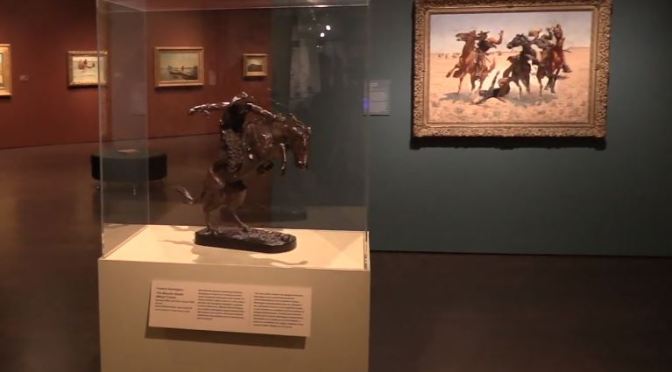
While the Denver Art Museum is temporarily closed, we are sharing this look at the Homer and Remington exhibition. Hear from DAM curators Thomas Brent Smith and Jennifer R. Henneman.
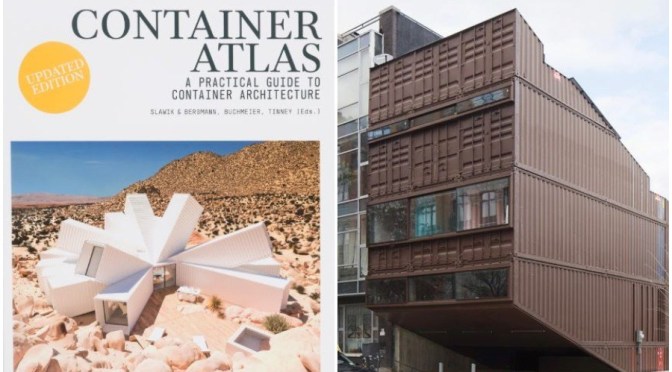
Container Atlas seeks out luxurious remote hideaways, urban dwellings, community centers, and more, all showing how the humble container can put the fab into pre-fab.
Container architecture has become an essential part of our twenty-first century surroundings, with it being used to create modular structures for pavilions, brand showrooms, retail premises, and even residential homes. Ten years after the first publication of Container Atlas, this eagerly anticipated follow-up charts how this movement has evolved into an essential part of today’s architectural vocabulary. Container Atlas serves as a practical and inspirational reference not only for architects and engineers, but also for all creatives eager to learn about the rich and diverse language of container architecture and modular building.
Architect and Professor Han Slawik and his team have established themselves as international experts in the field of container architecture. He is the author of the first edition of Container Atlas and has returned to the subject with refreshed insights into this burgeoning movement.
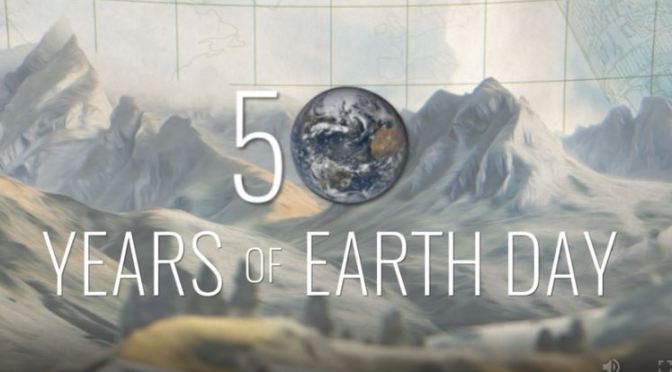
It’s been five decades since Apollo 8 astronaut William Anders photographed Earth peaking over the Moon’s horizon. The iconic image, dubbed Earthrise, inspired a new appreciation of the fragility of our place in the universe. Two years later, Earth Day was born to honor our home planet. As the world prepares to commemorate the 50th anniversary of Earth Day, NASA reflects on how the continued growth of its fleet of Earth-observing satellites has sharpened our view of the planet’s climate, atmosphere, land, polar regions and oceans.
In the summer of 1891, Claude Monet began to paint a row of poplar trees that lined the river Epte near his house at Giverny. The trees were auctioned off for timber shortly thereafter, but Monet made a deal with the purchaser to delay cutting them so he could continue to paint the trees through the autumn. Using a shallow rowboat that had slots in the bottom capable of holding several canvases at once, Monet painted twenty-four pictures of the poplars from his floating studio.
The resulting pictures reflect the view at different seasons and times of day and were known as the “Poplar Series” when they were exhibited in February 1892.
Donald G. McNeil Jr., a science and health reporter for The New York Times, discusses how the Coronavirus lockdown might end what it would look like.
While the economy is likely to reopen slowly, there is hope that society will adapt to manage the uncertainty of our new circumstances. Here’s what experts say the next year (or more) will look like.
The inside story of how the first confirmed COVID-19 patient in the U.S. was identified and treated in Washington State.
When a man returning from Wuhan, China in January 2020 exhibited symptoms of the novel coronavirus, public health officials in the Seattle area were already on alert.
“We had a game plan in place already,” says Dr. George Diaz, who treated patient one when he was admitted to Providence Regional Medical Center in Everett. Yet in spite of the state’s preparedness, it would soon become clear that the virus’s spread was already ahead of efforts to contain it.
“Patient One: Saving America’s First Known Coronavirus Patient” was drawn from FRONTLINE’s reporting for “Coronavirus Pandemic” – veteran science reporter Miles O’Brien and his team’s investigation of the U.S. response to COVID-19.
“Coronavirus Pandemic” premieres Tues., April 21. Stream it on the PBS Video App starting at 7/6c, or watch it on PBS or YouTube at 9/8c. Check local PBS listings.







 In the summer of 1891, Claude Monet began to paint a row of poplar trees that lined the river Epte near his house at Giverny. The trees were auctioned off for timber shortly thereafter, but Monet made a deal with the purchaser to delay cutting them so he could continue to paint the trees through the autumn. Using a shallow rowboat that had slots in the bottom capable of holding several canvases at once, Monet painted twenty-four pictures of the poplars from his floating studio.
 Donald G. McNeil Jr.
 When a man returning from Wuhan, China in January 2020 exhibited symptoms of the novel coronavirus, public health officials in the Seattle area were already on alert.
  Boomers Daily