
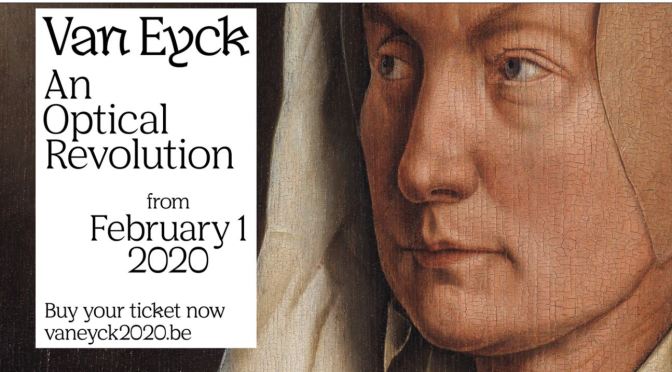
Worldwide, only approximately twenty works by Van Eyck have been preserved. Quite exceptionally, over half of these will travel to Ghent in 2020 for the exhibition ‘Van Eyck. An optical revolution’ at the Museum of Fine Arts (MSK). In what promises to be an unmissable, tour de force of an exhibition, the world of Van Eyck and his revolutionary gaze will be brought to life like never before.
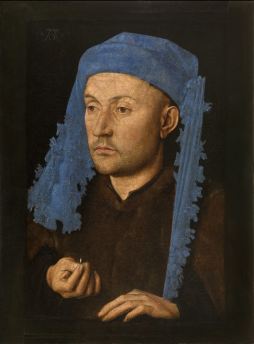
The pinnacle of Late Medieval art
Van Eyck distinguished himself from his peers and triggered an optical revolution. With his matchless technique, scientific knowledge and unrivalled observational skills, he elevated oil painting to unprecedented heights and determined the future course of Western art. Never before had a painter made reality so tangible: all that seems to be missing from his portraits is his subjects’ breath, while his landscapes reveal the world in all its facets. Van Eyck trained his eye on the tiniest details before casting it wide again to create unforgettable panoramas.
His masterpiece, ‘The Adoration of the Mystic Lamb’ (1432, St Bavo’s Cathedral, Ghent), bears witness to all three of these qualities. The restoration of the outer wings of the altarpiece will play a central role in the exhibition. Undertaken by the Royal Institute for Cultural Heritage (KIK), the project commenced at the Museum of Fine Arts Ghent in 2012. Visitors will have the opportunity to get close to the work and admire the spectacular results.
 In dialogue with Van Eyck’s contemporaries
In order to contextualise Van Eyck’s optical revolution, his paintings will be shown alongside works by his most talented contemporaries from Germany, France, Italy and Spain. These artists also moved in exalted circles and received prestigious commissions. The exhibition focuses on the artistic similarities and differences between their works, thus delving deeper into the historical context in which they were created.
‘Van Eyck. An optical revolution’ unravels the myths about the artist and considers his technique, his oeuvre and his influence from a fresh perspective. This exhibition will awaken a sense of wonder among visitors, comparable to that which people would have felt when they saw his works for the first time: a once-in-a-lifetime experience.
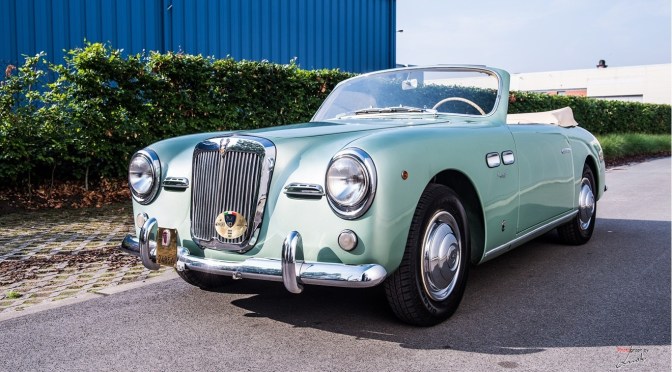
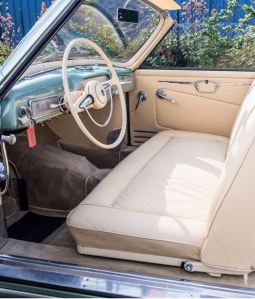 The Siata Daina is an Italian car produced by Siata from 1950-1958. The Daina was available as a coupé or a convertible and had custom bodies by Stabilimenti Farina, Bertone and other coach builders.
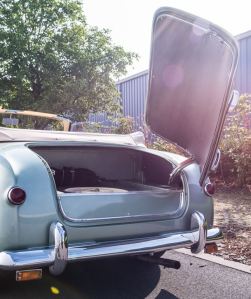 were made as well) but when they closed in 1953, Bertone took over production with a coupe model of their own design called the “Sport”.
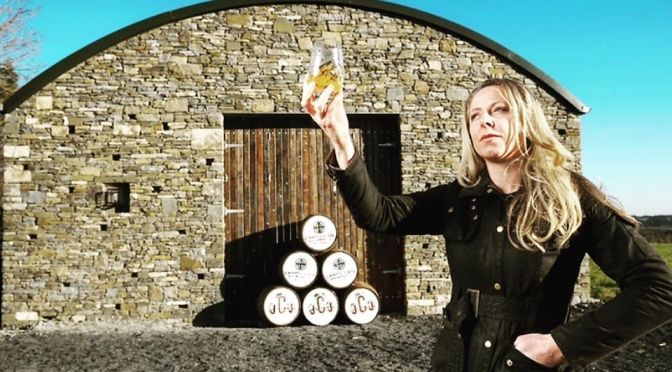
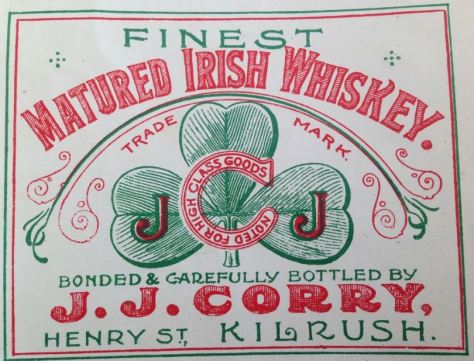
 Louise McGuane launched Irish-whiskey label JJ Corry in 2015 after spending more than 20 years working in marketing for premium drinks brands. She has revived the practice of whiskey bonding, a popular practice in Ireland before the industry was decimated in the 1930s. McGuane sources, matures and bottles her own blends and single malts from her family farm in County Clare.
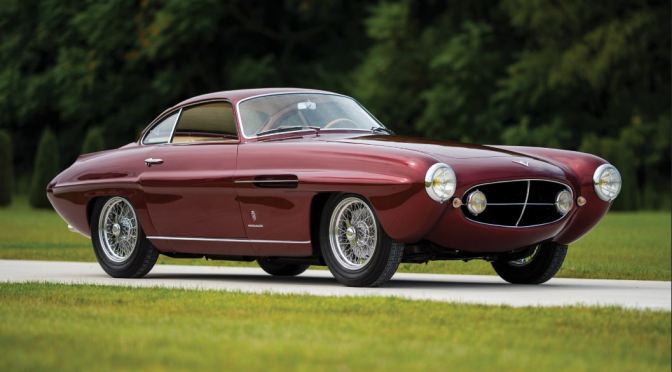
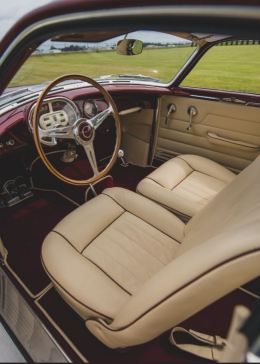 The Fiat 8V (or “Otto Vu”) is a V8-engined sports car produced by the Italian car manufacturer Fiat from 1952 to 1954. The car was introduced at the 1952 Geneva Motor Show. The Fiat 8V got its name because at the time of its making, Fiat believed Ford had a copyright on “V8”. With 114 made, the 8V wasn’t a commercial success, but did well in racing. Apart from the differential the car did not share any parts with the other Fiats (but many parts were made by Siata and they used them for their cars). The 8V was developed by Dante Giacosa and the stylist Luigi Rapi. The engine was a V8 originally designed for a luxury sedan, but that project was stopped.
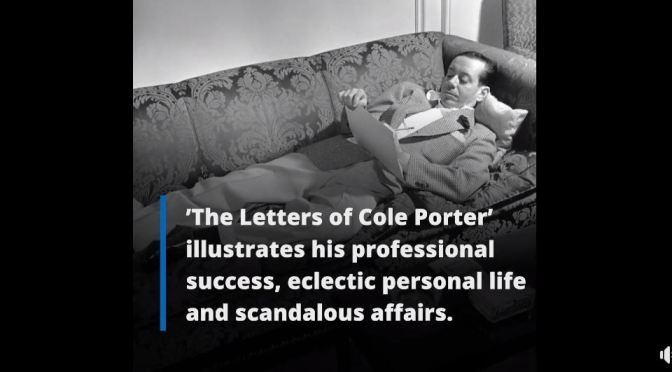
 Beneath his smooth, genial, almost inhumanly productive and evasive surface, there were turbulent waters. His very name, for all its air of Ivy League ease, represents a burdened legacy. The Porters were his difficult, scapegrace father’s family; the Coles were his mother’s rich and ambitious Indiana family. He was a Porter by birth but, if his mother had anything to do with it, would be a Cole for life.
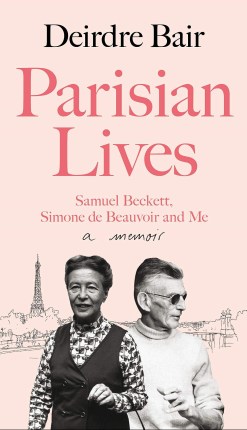 De Beauvoir and Beckett despised each other – and lived essentially on the same street. While quite literally dodging one subject or the other, and sometimes hiding out in the backrooms of the great cafés of Paris, Bair learned that what works in terms of process for one biography rarely applies to the next. Her seven-year relationship with the domineering and difficult de Beauvoir required a radical change in approach, yielding another groundbreaking literary profile.


 Boomers Daily