Alex Hillkurtz was born in England and grew up in California where he is a renowned storyboard artist for feature films, television, and commercials. His film credits include “Argo”, “Almost Famous”, “It’s Complicated”, and many others.
Alex currently lives in Paris with his film editor wife, Tiffany, and enjoys discovering the hidden corners of the city that sketching and plein air painting allow. He uses the language of cinema to inform his images, moving beyond what one sees, and depicting what he wants others to see. He believes that in our too-crowded lives, sketching and plein air painting invite us to move at a more deliberate pace… a true sense of place, and sometimes unexpected stories are revealed.
A person who is one of the great mentors of my career and my time in the entertainment industry was Kirk Douglas. He said to me many decades ago the words that became the most important, most valuable in my lifetime, and the ones that right now mean more today than they ever meant before. He said, “Jeffrey, you haven’t learned to live until you’ve learned how to give.” The wisdom of that and the importance of that has never meant more to me than now.
What’s it like to launch a $1.8 billion streaming platform in the middle of a pandemic? “Everything about it is upside down and inside out,” says Jeffrey Katzenberg, 69, who debuted the short-form video company Quibi on April 6. Katzenberg is the co-founder of the app along with CEO Meg Whitman, and originally envisioned mobile-based Quibi to fill the “in-between” moments of life—waiting in line, taking the subway—with episodes that wrap in 10 minutes or less.
“Undoubtedly, the most significant project that’s really propelled and changed my career is the National Museum of African American History and Culture on the Mall. I was a young architect, but I was given the task to design and deliver this project. That was my role and my office’s role in the project. I didn’t do many things between that time, because it consumed so much but I learned so much. And when it opened with Barack Obama, before he left the White House, it kind of felt like something had been achieved. It was a kind of euphoric moment for me”
This is the Life Story of Sir David Adjaye OBE RA
Adjaye Associates was established in June 2000 by founder and principal architect, Sir David Adjaye OBE. Receiving ever-increasing worldwide attention, the practice has studios in London, New York and Accra and completed work in Europe, North America, the Middle East, Asia, and Africa. Two of the practice’s largest commissions to date are the design of the Smithsonian Institution’s National Museum of African American History and Culture on the National Mall in Washington D.C. and the Moscow School of Management (SKOLKOVO). Further projects range in scale from private houses, exhibitions, and temporary pavilions to major arts centres, civic buildings, and masterplans. Renowned for an eclectic material and colour palette and a capacity to offer a rich civic experience, the buildings differ in form and style, yet are unified by their ability to generate new typologies and to reference a wide cultural discourse.
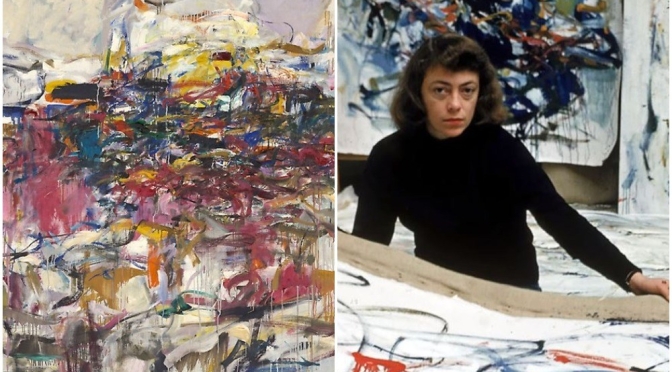
Peggy Cyphers has a persistent vision of nature that she translates into richly colored and textured quasi-abstract paintings. She pours and lightly brushes countless layers of paint and sand onto the canvas until she achieves luminous and sumptuous surface. Approaching each canvas as a kind of garden where organic and geometric elements intermingle with intense light, she nurtures elaborate hybrid forms. David Ebony, ArtNet Magazine
Peggy Cyphers (born 1954) is an American painter, printmaker, professor and art writer, who has shown her work in the U.S. and internationally since 1984. Since Cyphers’ move to New York City over 30 years ago, her inventive and combinatory approaches to the materials of paint, silkscreen and sand have developed into canvases that explore the “Politics of Progress” as it impacts culture and the natural world.
From a Rolling Stone Magazine Interview (April 22, 2020):
Well, in 1970, things were vastly more limited. We had three dominant television networks, and also public broadcasting. We had a handful of national newspapers and the wire services. News magazines were much more important than now. That was pretty much it.
Denis Hayes is the Mark Zuckerberg of the environmental movement, if you can imagine Mark Zuckerberg with a conscience and a lot less cash. Like Zuckerberg, Hayes dropped out of Harvard to start an eccentric and unpromising venture. Zuckerberg’s was called Facebook, which he launched in 2004; Hayes’ was called Earth Day, which he founded in 1970.
Hayes is a child of the Sixties. He grew up in a small town on the Columbia River in Washington state, where his father worked in a paper mill and Hayes saw firsthand the toxic consequences of the collision between industry and nature: dirty air, spoiled streams, dead fish. He drifted through college, bummed around in Asia and Africa, and thought deeply about the role of humans in the natural world.
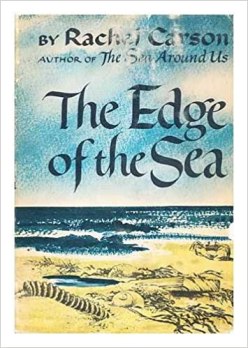
Before she published “Silent Spring,” one of the most influential books of the last century, Rachel Carson was a young aspiring poet and then a graduate student in marine biology. Although she couldn’t swim and disliked boats, Carson fell in love with the ocean. Her early books—including “The Sea Around Us,” “The Edge of the Sea” and “Under the Sea Wind”—were like no other nature writing of their time,
Jill Lepore says: Carson made you feel you were right there with her, gazing into the depths of a tide pool or lying in a cave lined with sea sponges. Lepore notes that Carson was wondering about a warming trend in the ocean as early as the 1940s, and was planning to explore it after the publication of “Silent Spring.” If she had not died early, of cancer, could Carson have brought climate change to national attention well before it was too late?
Excerpts from Carson’s work were read by Charlayne Woodard, and used with permission of Carson’s estate.
Rachel Louise Carson (May 27, 1907 – April 14, 1964) was an American marine biologist, author, and conservationist whose book Silent Spring and other writings are credited with advancing the global environmental movement.
Carson began her career as an aquatic biologist in the U.S. Bureau of Fisheries, and became a full-time nature writer in the 1950s. Her widely praised 1951 bestseller The Sea Around Us won her a U.S. National Book Award, recognition as a gifted writer, and financial security. Her next book, The Edge of the Sea, and the reissued version of her first book, Under the Sea Wind, were also bestsellers. This sea trilogy explores the whole of ocean life from the shores to the depths.
Late in the 1950s, Carson turned her attention to conservation, especially some problems that she believed were caused by synthetic pesticides. The result was the book Silent Spring (1962), which brought environmental concerns to an unprecedented share of the American people. Although Silent Spring was met with fierce opposition by chemical companies, it spurred a reversal in national pesticide policy, which led to a nationwide ban on DDT and other pesticides. It also inspired a grassroots environmental movement that led to the creation of the U.S. Environmental Protection Agency. Carson was posthumously awarded the Presidential Medal of Freedom by President Jimmy Carter.
I often find myself observing classic paintings that can inspire compositions, or fashion that can inspire the choice of a color palette. At a certain point everything is united in a very natural way in a creative concept. My artistic research is a constant blend between the worlds of architecture, painting, photography, graphic design, and fashion. At the base of my work, then, there is an artistic background very much linked to the Gestalt principles of visual perception. I try to avoid looking for inspiration only within the confines of my sector: I find that this often leads to a flattening of the creative result.
Having always been fascinated with sensational spaces, Cristina Lello now visualizes the most striking scenes that tell a clear story. As she describes herself, her studio “creates high-impact images from the intersection of interior styling, set design and 3D art.” After graduating with honors in Set Design at the Academy of Fine Arts of Venice, she also started a Master’s degree in Interactive Media for Interior Design while working for Elisa Ossino Studio.
From a Wall Street Journal article (April 18 2020)
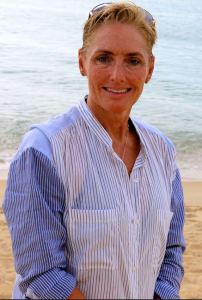
A physical therapist based in Santa Barbara, Calif., Ms. Godges is used to seeing injuries that result when swimmers start training on land. “We are great at cardio, but we aren’t used to pounding our joints. Gravity is not forgiving. We need to give our bodies time to adapt.”
With pools closed over concerns about coronavirus transmission, Arlette Godges is adapting to being a fish on land.
The 55-year-old U.S. Masters swimmer was in the pool five days a week training for the UANA Pan American Masters Championships in Medellín, Colombia. The June competition has been postponed. “I was feeling so strong,” she says. “Now I have to challenge myself with other things so I don’t become a slug and lose motivation.”
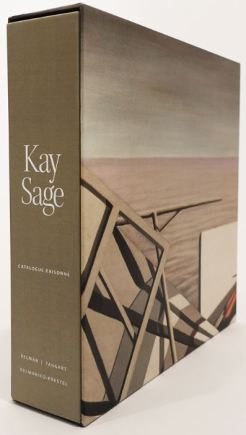
Sage is renowned for her empty, enigmatic, eerily lit landscapes. Human figures are markedly absent — their presence felt only by the monolithic, architectural structures and unidentifiable, draped objects they seem to have left behind. In this respect, 1945’s Other Answers is a quintessential Sage painting.
In 1939, with clouds of war hovering over Europe, Kay Sage returned to the United States after more than two decades away. Her lover and fellow Surrealist, Yves Tanguy, soon followed her across the Atlantic, despite the fact that both of them were married to other people. In Sage’s case to an Italian prince — her official title was La principessa di San Faustino.
In the summer of 1940, Sage had her first solo show, at the influential Pierre Matisse Gallery in Manhattan. Then, in early 1943, she was part of the landmark Exhibition by 31 Women, curated and staged by Peggy Guggenheim in her Art of This Century Gallery.

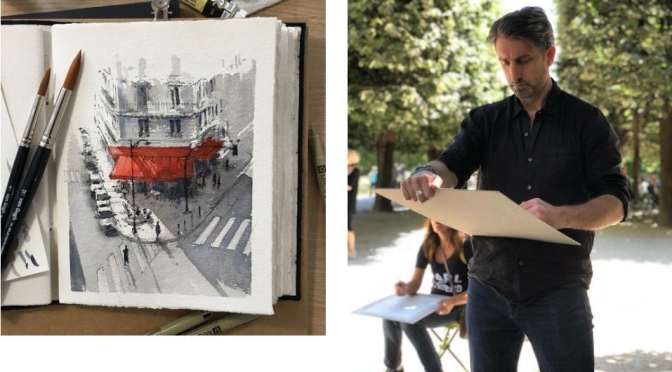
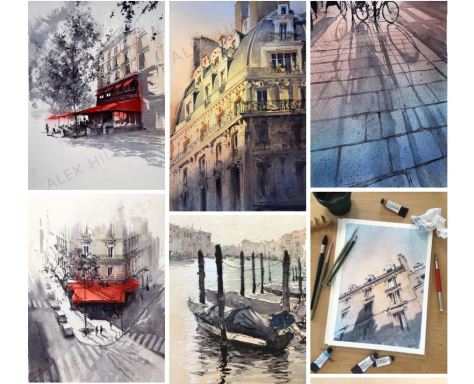 Alex currently lives in Paris with his film editor wife, Tiffany, and enjoys discovering the hidden corners of the city that sketching and plein air painting allow. He uses the language of cinema to inform his images, moving beyond what one sees, and depicting what he wants others to see. He believes that in our too-crowded lives, sketching and plein air painting invite us to move at a more deliberate pace… a true sense of place, and sometimes unexpected stories are revealed.
 A person who is one of the great mentors of my career and my time in the entertainment industry was Kirk Douglas. He said to me many decades ago the words that became the most important, most valuable in my lifetime, and the ones that right now mean more today than they ever meant before. He said, “Jeffrey, you haven’t learned to live until you’ve learned how to give.” The wisdom of that and the importance of that has never meant more to me than now.

 Peggy Cyphers has a persistent vision of nature that she translates into richly colored and textured quasi-abstract paintings. She pours and lightly brushes countless layers of paint and sand onto the canvas until she achieves luminous and sumptuous surface. Approaching each canvas as a kind of garden where organic and geometric elements intermingle with intense light, she nurtures elaborate hybrid forms. David Ebony, ArtNet Magazine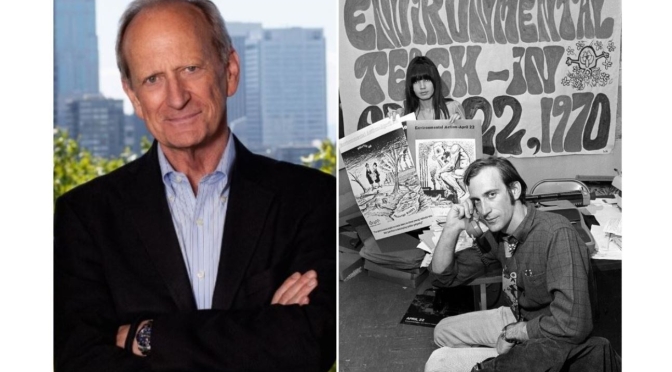
 Well, in 1970, things were vastly more limited. We had three dominant television networks, and also public broadcasting. We had a handful of national newspapers and the wire services. News magazines were much more important than now. That was pretty much it.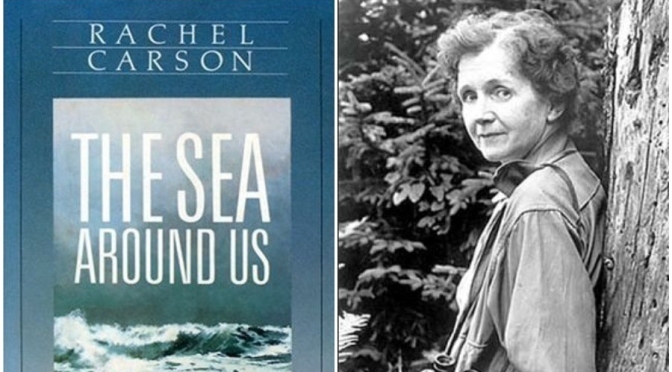
 Before she published “Silent Spring,” one of the most influential books of the last century, Rachel Carson was a young aspiring poet and then a graduate student in marine biology. Although she couldn’t swim and disliked boats, Carson fell in love with the ocean. Her early books—including “
 Jill Lepore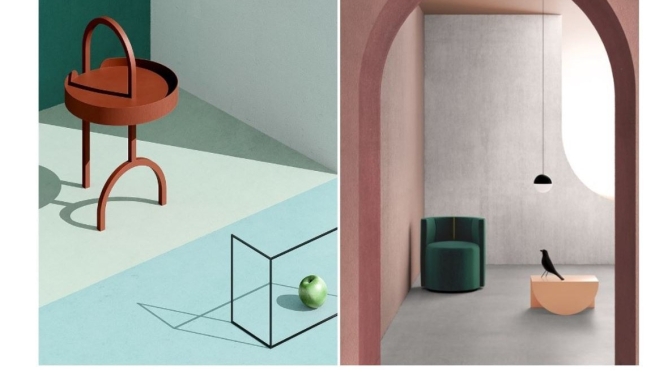
 is united in a very natural way in a creative concept. My artistic research is a constant blend between the worlds of architecture, painting, photography, graphic design, and fashion. At the base of my work, then, there is an artistic background very much linked to the Gestalt principles of visual perception. I try to avoid looking for inspiration only within the confines of my sector: I find that this often leads to a flattening of the creative result.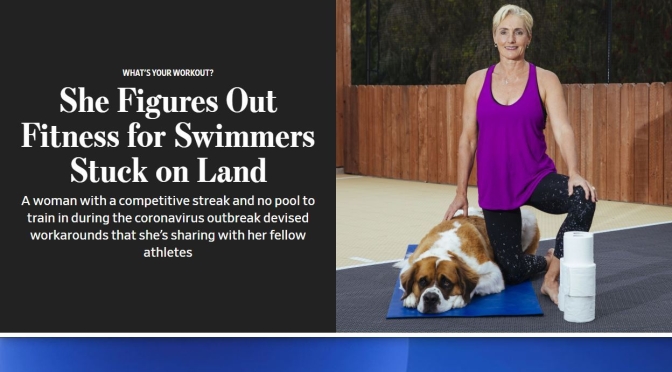
 A physical therapist based in Santa Barbara, Calif., Ms. Godges is used to seeing injuries that result when swimmers start training on land. “We are great at cardio, but we aren’t used to pounding our joints. Gravity is not forgiving. We need to give our bodies time to adapt.”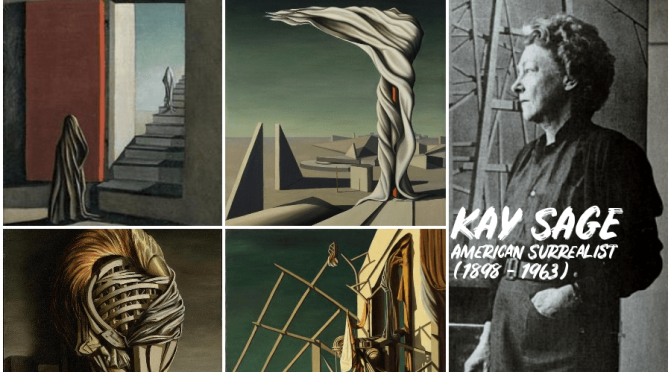
 Sage is renowned for her empty, enigmatic, eerily lit landscapes. Human figures are markedly absent — their presence felt only by the monolithic, architectural structures and unidentifiable, draped objects they seem to have left behind. In this respect, 1945’s Other Answers is a quintessential Sage painting.
 In the summer of 1940, Sage had her first solo show, at the influential Pierre Matisse Gallery in Manhattan. Then, in early 1943, she was part of the landmark Exhibition by 31 Women, curated and staged by Peggy Guggenheim in her Art of This Century Gallery.
 Boomers Daily