On this episode of Art Institute Essentials Tour, take a closer look at Nighthawks, painted by Edward Hopper in 1942. Inspired by “a restaurant on New York’s Greenwich Avenue where two streets meet,” Hopper’s painting, one of the best-known images of 20th-century art, has a timeless, universal quality that transcends locale.
Peggy Cyphers has a persistent vision of nature that she translates into richly colored and textured quasi-abstract paintings. She pours and lightly brushes countless layers of paint and sand onto the canvas until she achieves luminous and sumptuous surface. Approaching each canvas as a kind of garden where organic and geometric elements intermingle with intense light, she nurtures elaborate hybrid forms. David Ebony, ArtNet Magazine
Peggy Cyphers (born 1954) is an American painter, printmaker, professor and art writer, who has shown her work in the U.S. and internationally since 1984. Since Cyphers’ move to New York City over 30 years ago, her inventive and combinatory approaches to the materials of paint, silkscreen and sand have developed into canvases that explore the “Politics of Progress” as it impacts culture and the natural world.
The Museum’s gardens were originally set aside for future expansion of the building, but when money ran out they became an outside space for the public. They haven’t just been for show – over the years they’ve been a burial ground for whales, they’ve hosted a secret war bunker, and they’ve been converted to a farm complete with eight Sussex pigs.
The Natural History Museum in London is home to over 80 million specimens, including meteorites, dinosaur bones and a giant squid.
In the first episode of “Travels with a Curator,” Xavier F. Salomon, Peter Jay Sharp Chief Curator, transports us to Venice. He introduces us to the Ca’ d’Oro, a house museum which was lovingly restored around the same time that the Frick mansion was built in New York City.
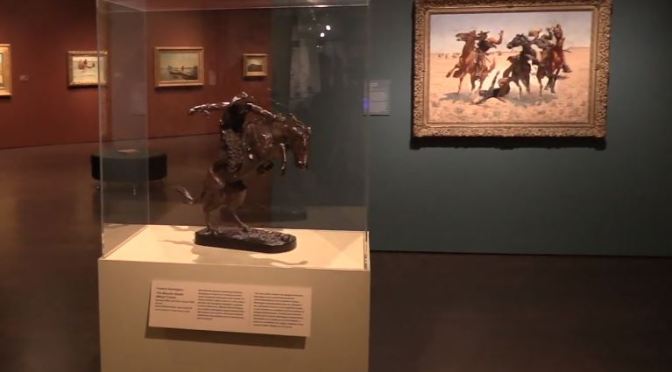
While the Denver Art Museum is temporarily closed, we are sharing this look at the Homer and Remington exhibition. Hear from DAM curators Thomas Brent Smith and Jennifer R. Henneman.
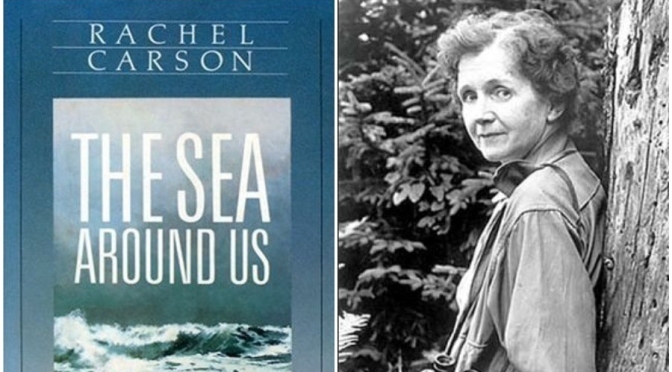
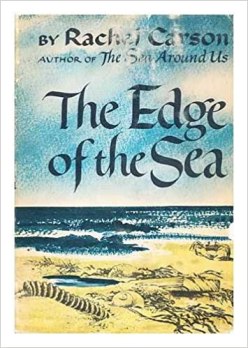
Before she published “Silent Spring,” one of the most influential books of the last century, Rachel Carson was a young aspiring poet and then a graduate student in marine biology. Although she couldn’t swim and disliked boats, Carson fell in love with the ocean. Her early books—including “The Sea Around Us,” “The Edge of the Sea” and “Under the Sea Wind”—were like no other nature writing of their time,
Jill Lepore says: Carson made you feel you were right there with her, gazing into the depths of a tide pool or lying in a cave lined with sea sponges. Lepore notes that Carson was wondering about a warming trend in the ocean as early as the 1940s, and was planning to explore it after the publication of “Silent Spring.” If she had not died early, of cancer, could Carson have brought climate change to national attention well before it was too late?
Excerpts from Carson’s work were read by Charlayne Woodard, and used with permission of Carson’s estate.
Rachel Louise Carson (May 27, 1907 – April 14, 1964) was an American marine biologist, author, and conservationist whose book Silent Spring and other writings are credited with advancing the global environmental movement.
Carson began her career as an aquatic biologist in the U.S. Bureau of Fisheries, and became a full-time nature writer in the 1950s. Her widely praised 1951 bestseller The Sea Around Us won her a U.S. National Book Award, recognition as a gifted writer, and financial security. Her next book, The Edge of the Sea, and the reissued version of her first book, Under the Sea Wind, were also bestsellers. This sea trilogy explores the whole of ocean life from the shores to the depths.
Late in the 1950s, Carson turned her attention to conservation, especially some problems that she believed were caused by synthetic pesticides. The result was the book Silent Spring (1962), which brought environmental concerns to an unprecedented share of the American people. Although Silent Spring was met with fierce opposition by chemical companies, it spurred a reversal in national pesticide policy, which led to a nationwide ban on DDT and other pesticides. It also inspired a grassroots environmental movement that led to the creation of the U.S. Environmental Protection Agency. Carson was posthumously awarded the Presidential Medal of Freedom by President Jimmy Carter.
In the summer of 1891, Claude Monet began to paint a row of poplar trees that lined the river Epte near his house at Giverny. The trees were auctioned off for timber shortly thereafter, but Monet made a deal with the purchaser to delay cutting them so he could continue to paint the trees through the autumn. Using a shallow rowboat that had slots in the bottom capable of holding several canvases at once, Monet painted twenty-four pictures of the poplars from his floating studio.
The resulting pictures reflect the view at different seasons and times of day and were known as the “Poplar Series” when they were exhibited in February 1892.
Sage is renowned for her empty, enigmatic, eerily lit landscapes. Human figures are markedly absent — their presence felt only by the monolithic, architectural structures and unidentifiable, draped objects they seem to have left behind. In this respect, 1945’s Other Answers is a quintessential Sage painting.
In 1939, with clouds of war hovering over Europe, Kay Sage returned to the United States after more than two decades away. Her lover and fellow Surrealist, Yves Tanguy, soon followed her across the Atlantic, despite the fact that both of them were married to other people. In Sage’s case to an Italian prince — her official title was La principessa di San Faustino.
In the summer of 1940, Sage had her first solo show, at the influential Pierre Matisse Gallery in Manhattan. Then, in early 1943, she was part of the landmark Exhibition by 31 Women, curated and staged by Peggy Guggenheim in her Art of This Century Gallery.
In this episode of “Cocktails with a Curator,” Xavier F. Salomon, Peter Jay Sharp Chief Curator, hosts us again for happy hour at his apartment. The subject of tonight’s presentation is the mysterious “Polish Rider ” by Rembrandt, and the complementary cocktail is the Szarlotka, a Polish drink made with Żubrówka (vodka infused with bison grass).
News, Views and Reviews For The Intellectually Curious


 Peggy Cyphers has a persistent vision of nature that she translates into richly colored and textured quasi-abstract paintings. She pours and lightly brushes countless layers of paint and sand onto the canvas until she achieves luminous and sumptuous surface. Approaching each canvas as a kind of garden where organic and geometric elements intermingle with intense light, she nurtures elaborate hybrid forms. David Ebony, ArtNet Magazine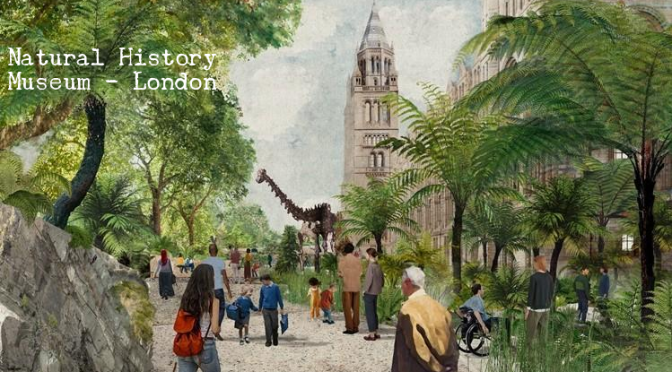



 Before she published “Silent Spring,” one of the most influential books of the last century, Rachel Carson was a young aspiring poet and then a graduate student in marine biology. Although she couldn’t swim and disliked boats, Carson fell in love with the ocean. Her early books—including “
 Jill Lepore
 In the summer of 1891, Claude Monet began to paint a row of poplar trees that lined the river Epte near his house at Giverny. The trees were auctioned off for timber shortly thereafter, but Monet made a deal with the purchaser to delay cutting them so he could continue to paint the trees through the autumn. Using a shallow rowboat that had slots in the bottom capable of holding several canvases at once, Monet painted twenty-four pictures of the poplars from his floating studio.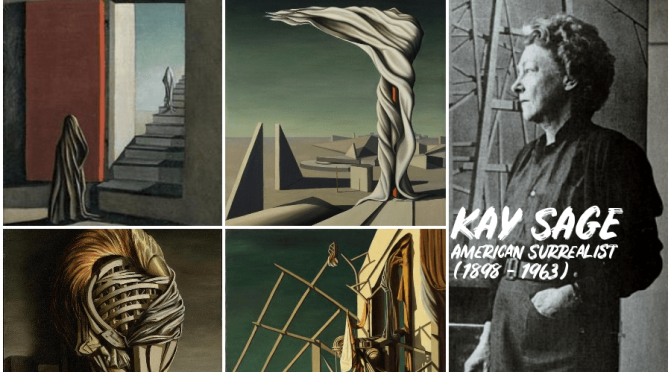
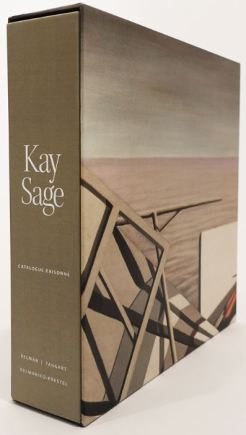 Sage is renowned for her empty, enigmatic, eerily lit landscapes. Human figures are markedly absent — their presence felt only by the monolithic, architectural structures and unidentifiable, draped objects they seem to have left behind. In this respect, 1945’s Other Answers is a quintessential Sage painting.
 In the summer of 1940, Sage had her first solo show, at the influential Pierre Matisse Gallery in Manhattan. Then, in early 1943, she was part of the landmark Exhibition by 31 Women, curated and staged by Peggy Guggenheim in her Art of This Century Gallery.
 Boomers Daily