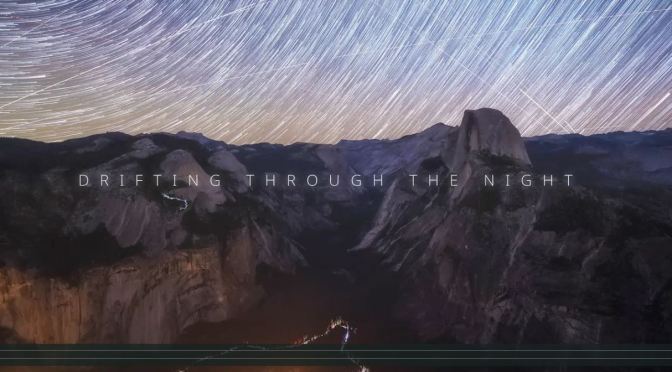
I am excited to share my new collection of night sky, startrail timelapses. These trails were created by blending hundreds of long exposure images for each individual timelapse.
Locations: Lone Pine, California; San Jose, California; Dolomites, Italy; Kauai, Hawaii; Malibu, California; Anza Borrego, California;Yosemite National Park, California; Bristlecone Pines, California; Sparks Lake, Oregon; Point Reyes, California
Painting Edo— the largest exhibition ever presented at the Harvard Art Museums — offers a window onto the supremely rich visual culture of Japan’s early modern era. Selected from the unparalleled collection of Robert S. and Betsy G. Feinberg, the more than 120 works in the exhibition connect visitors with a seminal moment in the history of Japan, as the country settled into an era of peace under the warrior government of the shoguns and opened its doors to greater engagement with the outside world. The dizzying array of artistic lineages and studios active during the Edo period (1615–1868) fueled an immense expansion of Japanese pictorial culture that reverberated not only at home, but subsequently in the history of painting in the West.
By the early 18th century, the new shogunal capital of Edo (present-day Tokyo) was the largest city in the world. After centuries of conflict and unrest, the growing stability and affluence of the period encouraged an efflorescence in the arts. Artists creatively juxtaposed past and present, eternal and contingent, elegant and vulgar in a wide range of formats and styles, from brilliant polychrome compositions to monochromatic inkwork. Painting Edo explores how the period, and the city, articulated itself by showcasing paintings in all the major formats—including hanging scrolls, folding screens, sliding doors, fan paintings, and woodblock-printed books—from virtually every stylistic lineage of the era, to tell a comprehensive story of Edo painting on its own terms.
From a New Yorker online review (February 11, 2020):
Wes Anderson’s new movie, “The French Dispatch,” which will open this summer, is about the doings of a fictional weekly magazine that looks an awful lot like—and was, in fact, inspired by—The New Yorker. The editor and writers of this fictional magazine, and the stories it publishes—three of which are dramatized in the film—are also loosely inspired by The New Yorker. Anderson has been a New Yorker devotee since he was a teen-ager, and has even amassed a vast collection of bound volumes of the magazine, going back to the nineteen-forties. That he has placed his fictional magazine in a made-up French metropolis (it’s called Ennui-sur-Blasé), at some point midway through the last century, only makes connecting the dots between “The French Dispatch” and The New Yorker that much more delightful.
Directed by: Wes Anderson
Screenplay by: Wes Anderson
Produced by: Wes Anderson, Steven Rales and Jeremy Dawson
Cast: Benicio del Toro, Adrien Brody, Tilda Swinton, Léa Seydoux, Frances McDormand, Timothée Chalamet, Lyna Khoudri, Jeffrey Wright, Mathieu Amalric, Stephen Park, Bill Murray and Owen Wilson
Beginning in the early 1960s, Peter Saul began to incorporate imagery borrowed from a range of pop-cultural sources into his exuberant, brightly colored paintings, adopting a style that has proven to be far ahead of its time. His work developed independently from concurrent art historical movements like Pop art, with which it shares some superficially similar concerns. Instead of the cool detachment of Andy Warhol and Roy Lichtenstein, however, Saul crafted his own unique blend of Surrealism, history painting, vernacular illustration, and the real-life shock and horror of current events.
Marking the artist’s first New York museum survey, this exhibition will bring together approximately sixty paintings from across his long career.
Saul’s earliest paintings, which he created in Paris, demonstrate a loose, gestural style of abstraction, yet he began to incorporate text, recognizable characters, and consumer products into his works as early as 1960. Around this time, he plucked figures like Donald Duck and Superman from the pages of comic books and deposited them into chaotic scenes representative of the avarice and violence of America. In the late 1960s and early 1970s, Saul created some of his most shocking and indelible works in response to the Vietnam War, with a series that captured the conflict’s grotesque brutality, racism, and destruction. A later group of paintings, which examines the chaotic sociopolitical fabric of urban life in California, reflects the dissolution of 1960s counterculture and the corruption, racism, and greed of US politics.
Saul extended his interrogation of American history in his portraits of infamous criminals like John Wayne Gacy, archetypes like cowboys and businessmen, and US presidents such as Ronald Reagan, George W. Bush, and Donald Trump, whom Saul depicts with disdain and condemnation. He has also looked further back to reimagine supposedly triumphant scenes from America’s past—including Columbus’s arrival in America, Washington crossing the Delaware, and Custer’s Last Stand—as moments of comical failure or disgrace. With a caustic sense of humor, Saul has continuously skewered America’s leaders, rendering their stretched, distorted bodies in Day-Glo colors. His disparate influences range from MAD magazine comics to Surrealist fantasies and American social realist painting from the 1930s.
Peter Saul is an American painter. His work has connections with Pop Art, Surrealism, and Expressionism. His early use of pop culture cartoon references in the late 1950s and very early 1960s situates him as one of the fathers of the Pop Art movement. He realised about 800 paintings during his career.
Hear the latest from the world of science, brought to you by Nick Howe and Shamini Bundell. This week, uncovering the structure of materials with useful properties, and quantum entanglement over long distances.
Every artist needs to learn and master the still life. Written by a well-known artist and expert instructor, The Art of Still Life offers a comprehensive, contemporary approach to the subject that instructs artists on the foundation basics and advanced techniques they need for successful drawing and painting.
In addition to Casey’s stunning paintings, the work of over fifty past and present masters is included, so that the book will do double duty as a hardworking how-to manual and a visual treasure trove of some of the finest still life art throughout history and being created today.
A Massachusetts native, TODD M. CASEY studied at art schools in Boston and San Francisco before embarking on the classical artistic education offered by Jacob Collins’s famed Water Street Atelier in New York City. A modern master of the still life genre, Casey teaches at several institutions, including the Art Students League of New York. He is represented by Rehs Contemporary Galleries, Inc., New York, and his paintings are held in numerous private collections worldwide. He lives with his wife and daughter in New York’s Hudson Valley. Visit his website at toddmcasey.com.
From a JAMA Network online study (February 11, 2020):
In this analysis of commercially insured patients who had undergone elective surgery with an in-network surgeon at an in-network facility, approximately 1 in 5 received an out-of-network bill, with a mean potential balance bill of $2011.
In this retrospective analysis of 347 356 surgical episodes among commercially insured patients who had undergone elective surgery with in-network primary surgeons and facilities, 20% of episodes involved out-of-network charges.
The patterns of out-of-network bills varied with the clinical scenario. Simpler ambulatory procedures that tend to involve 1 surgeon (arthroscopic meniscal repair, breast lumpectomy) had fewer out-of-network bills (13%-15% of cases), whereas inpatient procedures (hysterectomy, knee replacement, colectomy, CABG surgery) had more frequent out-of-network bills (24%-33% of cases). These more complex procedures were also associated with larger potential balance bills, in the range of $2000 to $4000.
Script: Iva Tasic
Music: Peter Nanasi
Narration: Graham Tracey
A philosophical journey passing through the stunning scenery of boundless European highlands, and leading to the heart of the deepest yearning of humankind.
Official selection in the following festivals: Maine Outdoor Film Festival, International Festival of Outdoor Films, Premio Leggimontagna – Cortomontagna, Nuovi Mondi Mountain Film Festival, Festival Gollut. Won 2nd prize in Short Documentary category at Finisterra Arrabida Film Festival.
The Hudson Italia is an automobile styling study and a limited production two-door compact coupé that was produced by the Hudson Motor Car Company of Detroit, Michigan, in cooperation with Carrozzeria Touring of Italy, and subsequently marketed by American Motors Corporation during the 1954 and 1955 model years. Designed by Frank Spring with input from Carlo Felice Bianchi Anderloni of Carrozzeria Touring, and introduced 14 January 1954,[3] the Italia was based on the Hudson Jet platform and running gear, but with a unique body and interior.
Lacking sufficient capital to develop a new model, Hudson reached an agreement for a prototype to be built in Milan by Carrozzeria Touring. A complete Hudson Jet was shipped to Italy. A new body design, based on sketches by Frank Spring, was formed over a steel tubular frame. This unibody system of aluminum panels was known as superleggera (equivalent to “very lightweight” in Italian), and “was expensive and fairly revolutionary in its day.” The work done by Carrozzeria Touring was under the supervision of Spring and Hudson’s vice-president, Stuart Baits.[12] The Italia (coupes and one four-door prototype) was the only project that Carrozzeria Touring undertook for a U.S. automaker.
While We All Know That You Shouldn’t Judge a Book by Its Cover, This is One Case in Which Evaluating Something on Its Appearance is Not Only Accepted, but Encouraged, These Libraries Are Known for Noteworthy Exteriors—think Soaring Architecture With Inspiring Interiors, and That’s Nothing Compared to the Millions of Books Housed Within Their Walls. So Whether You’re a Bookworm or an Architecture Lover, Start Adding These Beautiful Libraries to Your Must-visit List.
The Library of El Escorial, San Lorenzo De El Escorial, Spain Not Only is This Spanish Library a Work of Art, It’s Also Part of a Unesco World Heritage Site. Originally Commissioned by King Philip II, the Library’s Most Dazzling Feature is a Series of Seven Frescoes That Depict the Liberal Arts (Music, Rhetoric, Astronomy, and So on). The Town of San Lorenzo De El Escorial, Which is About 45 Minutes Outside of Madrid, Has Long Been a Favorite of Spanish Royals, and There’s Plenty More to See Here Beyond the Library, Including a Monastery, Gardens, and the Pantheons of Former Princes and Kings.
Austrian National Library, Vienna, Austria The Austrian National Library is the Largest Library in Austria, With More Than 12 Million Items in Its Various Collections. The Library is Located in the Neue Burg Wing of the Hofburg in Center of Vienna, One of the Austrian National Library’s Most Jaw-dropping Features is the Huge Fresco on the Ceiling, Which Was Created by Painter Daniel Gran. The Dome is Also Decorated With Statues by Sculptor Paul Strudel That Pay Tribute to the Habsburg Rulers, Among the Exhibits Are Two Exquisite Venetian Baroque Globes: One for the Earth and One for the Sky, Each With a Diameter of More Than One Meter.
George Peabody Library, Baltimore, Maryland The George Peabody Library (Part of Johns Hopkins University) Contains Over 300,000 Volumes Stacked in Five Decorative Tiers. The Books Are Impressive, Sure, but the Cathedral Like-atrium, Marble Floors, and Wrought-iron Details Are the Main Draw Here. Is It Any Wonder the Library Has Become One of the Most Popular Wedding Venues in Baltimore?
Strahov Monastery Library, Prague, Czech Republic The Strahov Monastery in Prague Was Originally Founded in 1143. Despite Wars, Fires, and Other Disasters, the Order Endured and Built Its Library in 1679. The Library’s Best-known Features Are Its Remarkable Ceiling, Which is Covered in Biblical Frescoes, and the “Compilation Wheel” That Can Turn and Rotate Shelves in Order to Make Books Easier to Find Without Knocking Any of Them Over.
Library of Alexandria (Bibliotheca Alexandrina), Egypt Alexandria Was Once Home to the Most Famous Library in the World. Now, Egypt Pays Homage to Its Biblio-heritage With This Sleek Granite Building. The Circular Structure, Designed by Norwegian Firm Snøhetta, is Covered in Carvings Done by Local Artists and Sits Next to a Large Reflecting Pool. Although There Are Plenty of Books in Three Languages (Arabic, French, and English), There Are Also Museums, a Planetarium, and a Lab Dedicated to Restoring and Preserving Ancient Manuscripts.


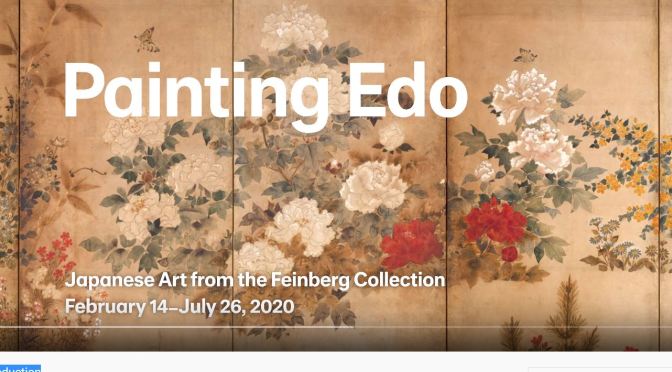
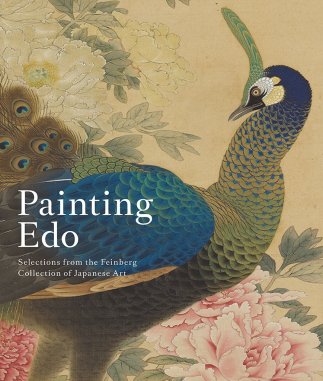 Painting Edo — the largest exhibition ever presented at the Harvard Art Museums — offers a window onto the supremely rich visual culture of Japan’s early modern era. Selected from the unparalleled collection of Robert S. and Betsy G. Feinberg, the more than 120 works in the exhibition connect visitors with a seminal moment in the history of Japan, as the country settled into an era of peace under the warrior government of the shoguns and opened its doors to greater engagement with the outside world. The dizzying array of artistic lineages and studios active during the Edo period (1615–1868) fueled an immense expansion of Japanese pictorial culture that reverberated not only at home, but subsequently in the history of painting in the West.
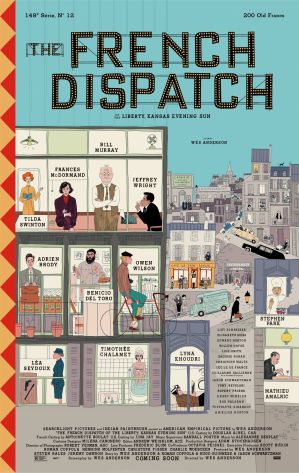 Wes Anderson’s new movie, “The French Dispatch,” which will open this summer, is about the doings of a fictional weekly magazine that looks an awful lot like—and was, in fact, inspired by—The New Yorker. The editor and writers of this fictional magazine, and the stories it publishes—three of which are dramatized in the film—are also loosely inspired by The New Yorker. Anderson has been a New Yorker devotee since he was a teen-ager, and has even amassed a vast collection of bound volumes of the magazine, going back to the nineteen-forties. That he has placed his fictional magazine in a made-up French metropolis (it’s called Ennui-sur-Blasé), at some point midway through the last century, only makes connecting the dots between “The French Dispatch” and The New Yorker that much more delightful.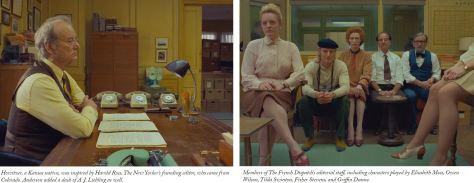
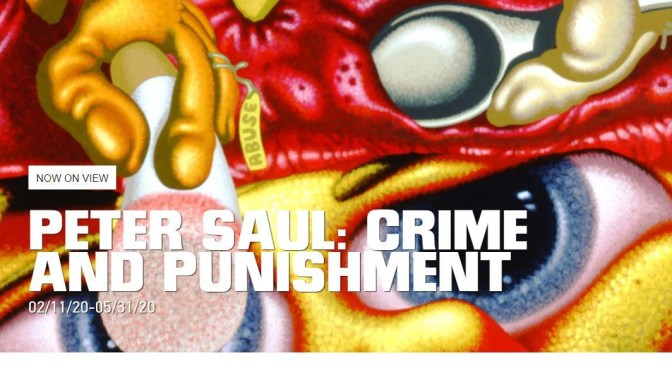
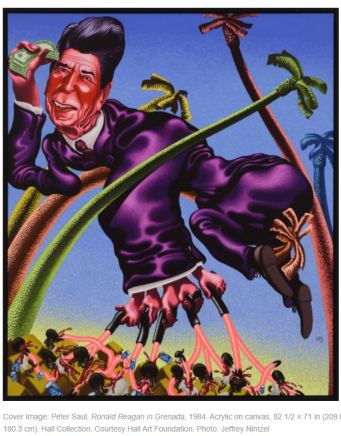 Beginning in the early 1960s, Peter Saul began to incorporate imagery borrowed from a range of pop-cultural sources into his exuberant, brightly colored paintings, adopting a style that has proven to be far ahead of its time. His work developed independently from concurrent art historical movements like Pop art, with which it shares some superficially similar concerns. Instead of the cool detachment of Andy Warhol and Roy Lichtenstein, however, Saul crafted his own unique blend of Surrealism, history painting, vernacular illustration, and the real-life shock and horror of current events.
 Hear the latest from the world of science, brought to you by Nick Howe and Shamini Bundell. This week, uncovering the structure of materials with useful properties, and quantum entanglement over long distances.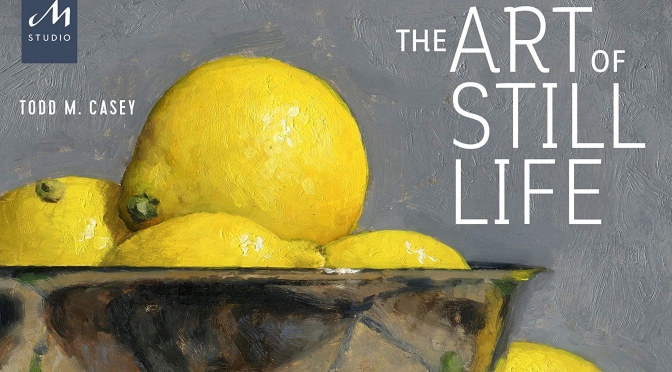
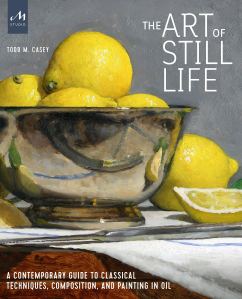 Every artist needs to learn and master the still life. Written by a well-known artist and expert instructor, The Art of Still Life offers a comprehensive, contemporary approach to the subject that instructs artists on the foundation basics and advanced techniques they need for successful drawing and painting.
 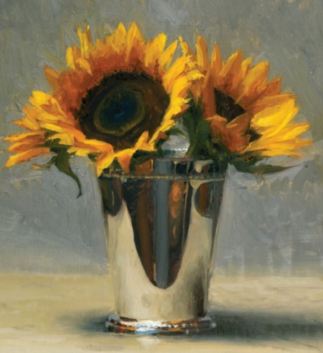 manual and a visual treasure trove of some of the finest still life art throughout history and being created today.
 In this analysis of commercially insured patients who had undergone elective surgery with an in-network surgeon at an in-network facility, approximately 1 in 5 received an out-of-network bill, with a mean potential balance bill of $2011.
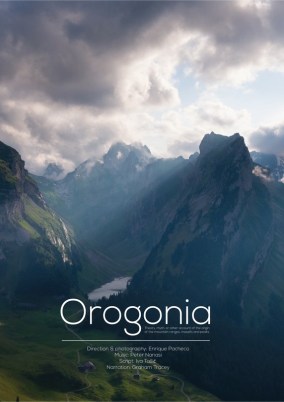 Script: Iva Tasic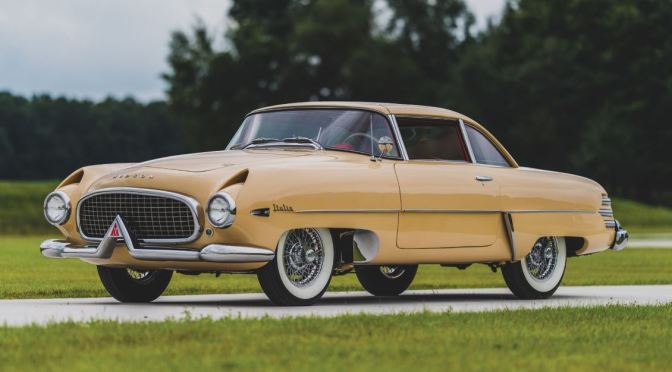
 The Hudson Italia is an automobile styling study and a limited production two-door compact coupé that was produced by the Hudson Motor Car Company of Detroit, Michigan, in cooperation with Carrozzeria Touring of Italy, and subsequently marketed by American Motors Corporation during the 1954 and 1955 model years. Designed by Frank Spring with input from Carlo Felice Bianchi Anderloni of Carrozzeria Touring, and introduced 14 January 1954,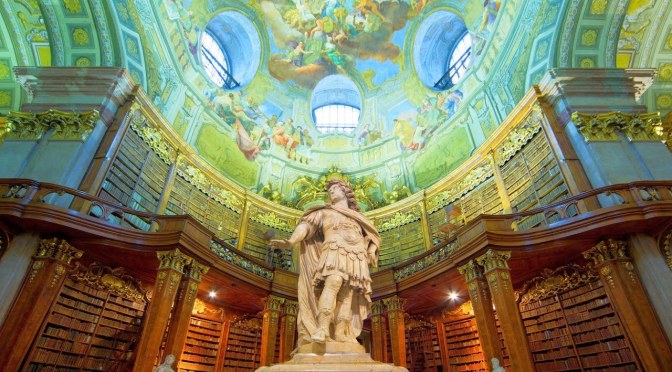

 Boomers Daily