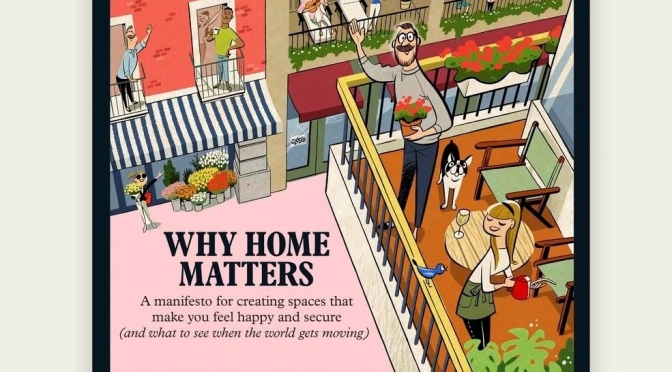
Monocle’s home-focused May issue goes beyond the dramatic headlines to look at how to create spaces that are apt to linger in.
We launch a manifesto for building better, look at the firms eyeing up the domestic market and profile a few elegant residences. Elsewhere, we examine the importance of keeping manufacturing onshore, decode the US political advertising industry and recommend the best media to hunker down with.
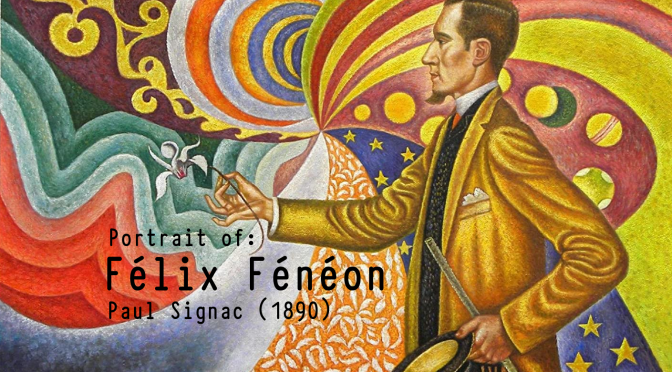
“It would not be a commonplace portrait at all, but a carefully composed picture, with very carefully arranged colors and lines. A rhythmic and angular pose. A decorative Félix, entering with his hat or a flower in his hand.”
With these words, in 1890, Paul Signac described to Félix Fénéon the extraordinary portrait he was dedicating to him. In it, Signac paid homage to Fénéon’s distinctive appearance, his generous but enigmatic personality, and his innovative approach to modernism.
This painting, a masterpiece in the Museum’s collection, will be the centerpiece of Félix Fénéon, the first exhibition dedicated to Fénéon (1861–1944). An art critic, editor, publisher, dealer, collector, and anarchist, Fénéon had a wide-ranging influence on the development of modernism in the late 19th and early 20th centuries.
In the late 1880s, he played a key role in defining the new movement known as Neo-Impressionism, a term he coined himself, whose artists, including Signac, used tiny dabs of color that would mix in the eye of the viewer. Over the next five decades, he championed the careers of artists from Georges-Pierre Seurat and Signac to Pierre Bonnard, Henri Matisse, and Amedeo Modigliani.
He amassed a renowned collection of paintings by these artists and many others, and he was also a pioneering collector of art from Africa and Oceania. The exhibition will feature some 130 objects, including major works that Fénéon admired, championed, and collected, as well as contemporary photographs, letters, and publications that trace key chapters in his biography. Together these works reveal the profound and lasting legacy of Fénéon’s keen eye and bold, forward-looking vision.
Travel to the Northern Hemisphere, where the spy creatures learn how animals move, feed and fight. “Spy in the Wild 2 – Episode 2: The North“ premieres Wednesday, May 6, at 8/7c.
The spy creatures infiltrate a hippo pod, a gorilla sanctuary and the world of pygmy elephants. “Spy in the Wild 2 – Episode 1: The Tropics“ premieres Wednesday, April 29, at 8/7c.
Scenes from a day of weirdness in quarantine in Paris, France as Parisians socially distance to avoid spreading the coronavirus. The city’s landmarks and streets appear eerily empty while residents have taken shelter at home to curb the outbreak of COVID-19.
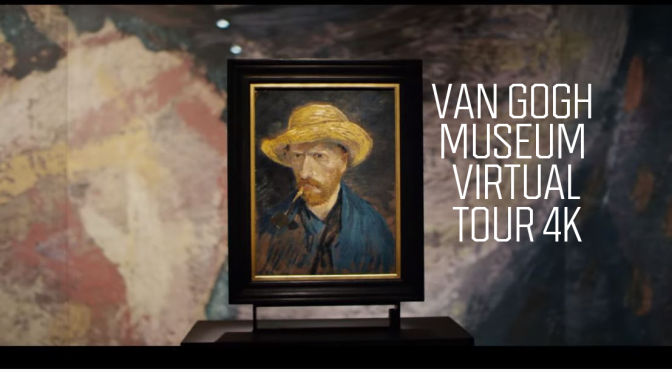
The Wheat Fields is a series of dozens of paintings by Vincent van Gogh, borne out of his religious studies and sermons, connection to nature, appreciation of manual laborers and desire to provide a means of offering comfort to others. The wheat field works demonstrate his progression as an artist from the drab Wheat Sheaves made in 1885 in the Netherlands to the colorful, dramatic paintings from Arles, Saint-Rémy and Auvers-sur-Oise of rural France.
From web post by Michael B. Edmond (April 11, 2020):
Our goal should be to have a face shield for every person in the country. It should be worn anytime a person leaves their home, while in any public place, and even at work. From news reports, it appears that face shields are already being more commonly worn in other nations, particularly in some Asian countries.
The advantages of face shields are their durability allowing them to be worn an indefinite number of times, the ability to easily clean them after use, their comfort, and they prevent the wearer from touching their face. Importantly, they cover all the portals of entry for this virus–the eyes, the nose, and the mouth. Moreover, the supply chain is significantly more diversified than that of face masks, so availability is much greater.
Some are critical of any strategy that isn’t perfect. But let’s think about the influenza vaccine. Although the effectiveness varies from year to year, on average it’s 40%. We push this vaccine hard in the hospital and in the community. Could we expect that face shields are at least 40% effective in reducing the transmission of COVID-19? I think so. Universal shielding would bend the curve more quickly and accelerate the ability to reduce social distancing and restrictions on movement.
.
Face shields are a simple solution that if implemented universally would have a major impact on public health. Until we have a vaccine, this may be our best intervention for preventing transmission in the community.
Michael B. Edmond, MD, MPH, MPA, MBA is the Chief Quality Officer and Associate Chief Medical Officer for University of Iowa Health Care and Clinical Professor of Infectious Diseases at the University of Iowa Carver College of Medicine. He previously served as the Richard P. Wenzel Professor of Internal Medicine, Chair of the Division of Infectious Diseases, and Hospital Epidemiologist at Virginia Commonwealth University in Richmond.
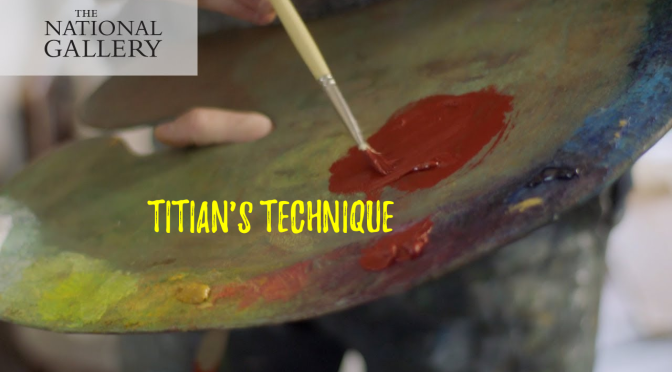
The way Titian painted was unlike other artists of his day. With little in the way of preliminary drawings, Titian worked very freely straight onto the canvas. Watch artist Andy Pankhurst show us how Titian would have worked.
Tiziano Vecelli or Vecellio, known in English as Titian, was an Italian painter during the Renaissance, considered the most important member of the 16th-century Venetian school. He was born in Pieve di Cadore, near Belluno. During his lifetime he was often called da Cadore, ‘from Cadore’, taken from his native region.
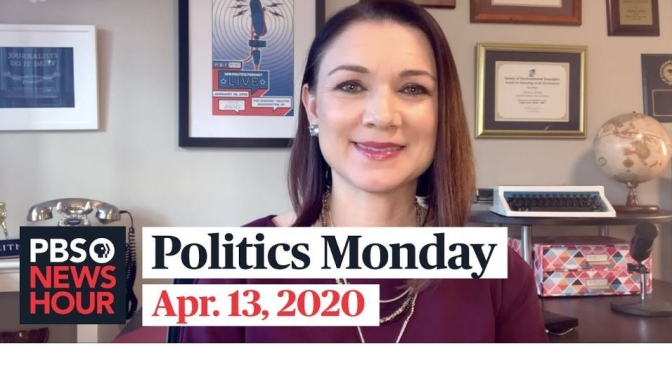
NPR’s Tamara Keith and Amy Walter of the Cook Political Report join Judy Woodruff to discuss the latest political news, including Sen. Bernie Sanders’ endorsement of former Vice President Joe Biden for the 2020 Democratic presidential nomination, how Sanders’ politics might influence his former rival and political fallout from the Trump administration’s reaction to COVID-19.
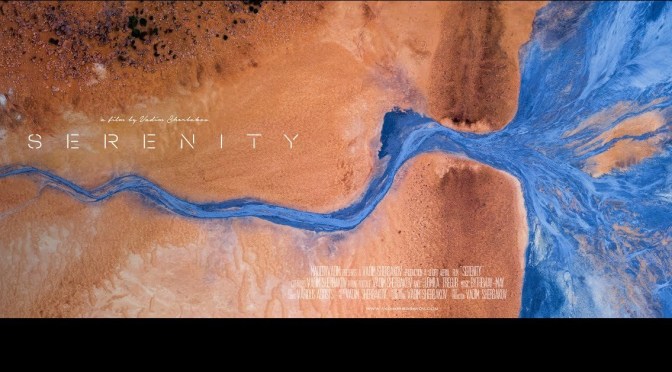
“Serenity” is a non-narrative short drone film, produced with the unique camera angle, facing straight down at -90º at the wonderful texture of earth landscapes. Because of this and the subjects it captures, you can watch this film both horizontally or vertically. Here is a horizontal version, but you can see the vertical one, on my Instagram or IGTV.
The film itself is a 3 minutes blend of total tranquility and calmness that allows you to escape reality for just a short while. Shot in different places on earth such as Iceland, Norway, Spain, Portugal, Belarus and Russia, it shows the unique and gorgeous landscape at an unusual angle. So bring up the volume or put on headphones and immerse in it.
Although our galleries are temporarily closed we wanted to share the Aubrey Beardsley exhibition at Tate Britain with you. Join Tate curators Caroline Corbeau-Parsons and Alice Insley as they discuss the iconic illustrator’s short and scandalous career.
Before his untimely death aged twenty-five, Beardsley produced over a thousand illustrations. He drew everything from legendary tales featuring dragons and knights, to explicit scenes of sex and debauchery. His fearless attitude to art continues to inspire creatives more than a century after his death.
Aubrey Vincent Beardsley (1872-1898) was an English illustrator and author. His drawings in black ink, influenced by the style of Japanese woodcuts, emphasized the grotesque, the decadent, and the erotic. He was a leading figure in the aesthetic movement which also included Oscar Wilde and James McNeill Whistler.
News, Views and Reviews For The Intellectually Curious




 Boomers Daily