Insider Business (July 22, 2023) – Once pierced, century-old maple trees drip sap referred to as liquid gold. It will take roughly 50 gallons of these drops to make one 1 gallon of 100% pure Grade A maple syrup.
Farms in the Hudson Valley, New York State, can sell that gallon for over $200, almost 29 times more than popular imitation syrup. Despite the price, Grade A maple syrup is incredibly sought-after. So much so that C$18 million worth of it was stolen in one of the largest heists in Canadian history.
But why is Grade A maple syrup worth so much? And why is it so expensive?
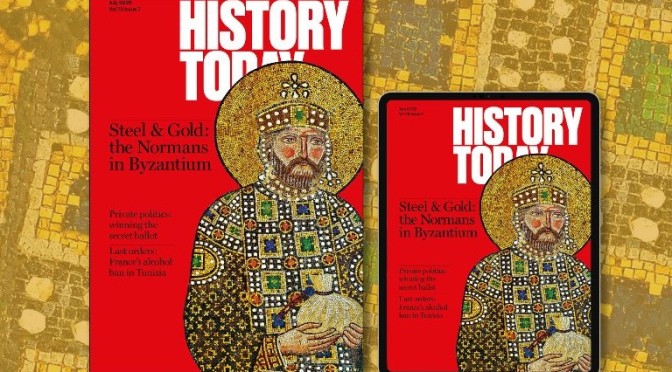
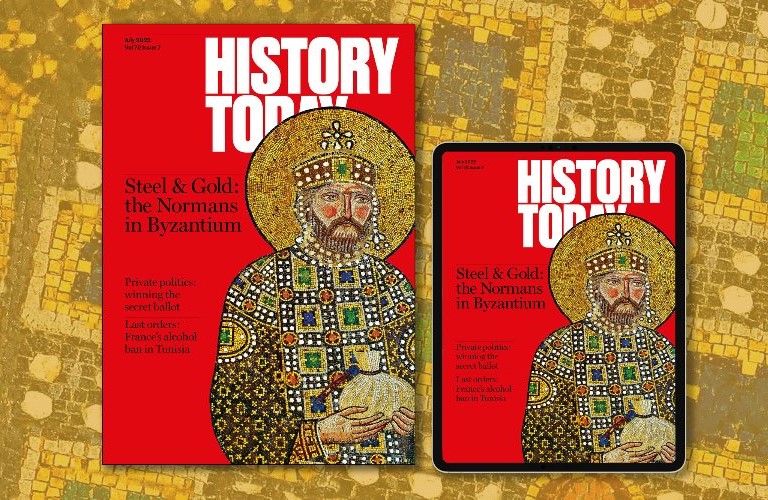
HISTORY TODAY MAGAZINE (AUGUST 2023) – Queens of the Crusades, What happened to the Lost Vikings of Greenland, When Hitler’s civilians fought the Red Army, and more…
FRANCE 24 English Films (July 18, 2023) – Known as the Wonder of the West, Mont-Saint-Michel looks as if it could have been plucked from a fairytale. The religious sanctuary on France’s Normandy coast turns 1,000 this year.
Since the first stone was laid in 1023, it has been home to monks, monarchs and prisoners; a historic pilgrimage site that welcomes 3 million visitors each year. In this edition we meet some of the people who preserve its magic.
The American Scholar (July 14, 2023):In his new book, ‘Under the Eye of Power’, Colin Dickey asks, “What if paranoia, particularly a paranoia of secret, subversive societies, is not just peripheral to the functioning of democracy, but at its very heart?”
The litany of contemporary conspiracy theories runs long: Pizzagate, QAnon, chemtrails, “jet fuel can’t melt steel beams,” “birds aren’t real.”
Some of these are funny—the rumor that Avril Lavigne and/or Paul McCartney have been replaced by doppelgängers—and some have deadly consequences, like the mass murders motivated by replacement theory or the Chronicles of the Elders of Zion.
We might like to think this is a recent phenomenon, but the first American president to espouse a conspiracy theory was actually George Washington, a freemason who believed that the Illuminati caused the French Revolution.
Thames & Hudson (July 11, 2023) – Organized chronologically, A History of the World in 500 Maps tells a clear, linear story, bringing together themes as diverse as religion, capitalism, warfare, geopolitics, popular culture and climate change.
Meticulously rendered maps chart the sequence of broad historical trends, from the dispersal of our species across the globe to the colonizing efforts of imperial European powers in the 18th century, as well as exploring moments of particular significance in rich detail.
• Visualizes 7 million years of human history. • Analyses cities and kingdoms as well as countries and continents. • Features major technical developments, from the invention of farming in the Fertile Crescent to the Industrial Revolution. • Charts the spread of major global religions, including Christianity and Islam. • Explores the increasing interconnectivity of our world through exploration and trade. • Investigates warfare and battles from across the ages, from Alexander the Great’s conquests to the D-Day offensive.
Insider Business (July 9, 2023) – The McIlhenny Company has made Tabasco sauce using the same recipe since 1868: red peppers, vinegar, and salt. Since the hot sauce is aged in bourbon barrels, it takes five years to fill just one bottle.
And most of this process still happens where it all began: Avery Island, Louisiana. Six generations of McIlhennys have lived on the island. But with disappearing marshes and more intense storms along the coast, the family is fighting to protect their, and the hot sauce’s, home.
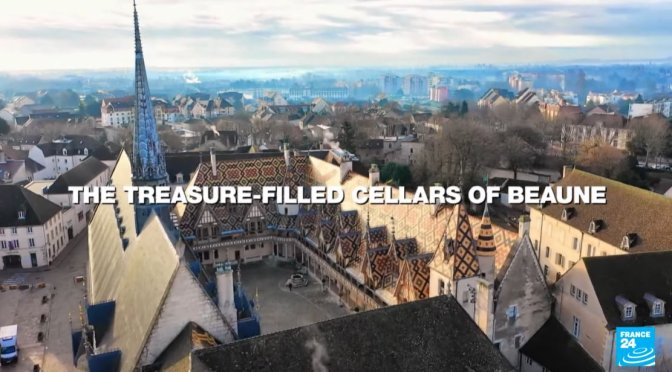
FRANCE 24 (July 6, 2023) – Beaune is the wine capital of France’s Burgundy region. Above ground, the old fortified city is already beautiful. But the real treasure is hidden below the surface, down in the cellars. They contain two million bottles of wine, in a total of five kilometres of galleries, all linked together.
One of the oldest cellars in Beaune has been occupied for four generations by the Maison Drouhin. It contains traces of the city’s ancient past. Meanwhile, the cellars of Maison Champy were once frequented by Louis Pasteur and Gustave Eiffel. The much more modern Jadot winery has an unexpected skylight.
In the 1970s and ’80s, geographer Ken Martis mapped every congressional district and color-coded them by political party, going all the way back to the first Congress.
In the captivating survey “Comparative Hell: Arts of Asian Underworlds,” the damned are boiled alive. Writhing in pain, they are skewered, mauled by dogs, and devoured by ink-black birds. But the show is dotted throughout by charming reprieves: a lush jade-green garden, creamy-white blossoms, and whirling clouds. This is a hell that delights as much as it punishes.
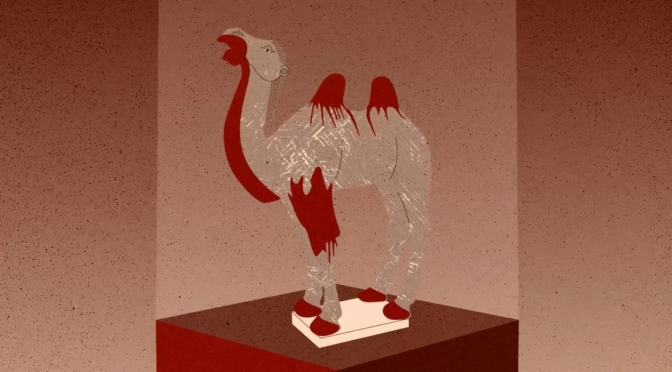
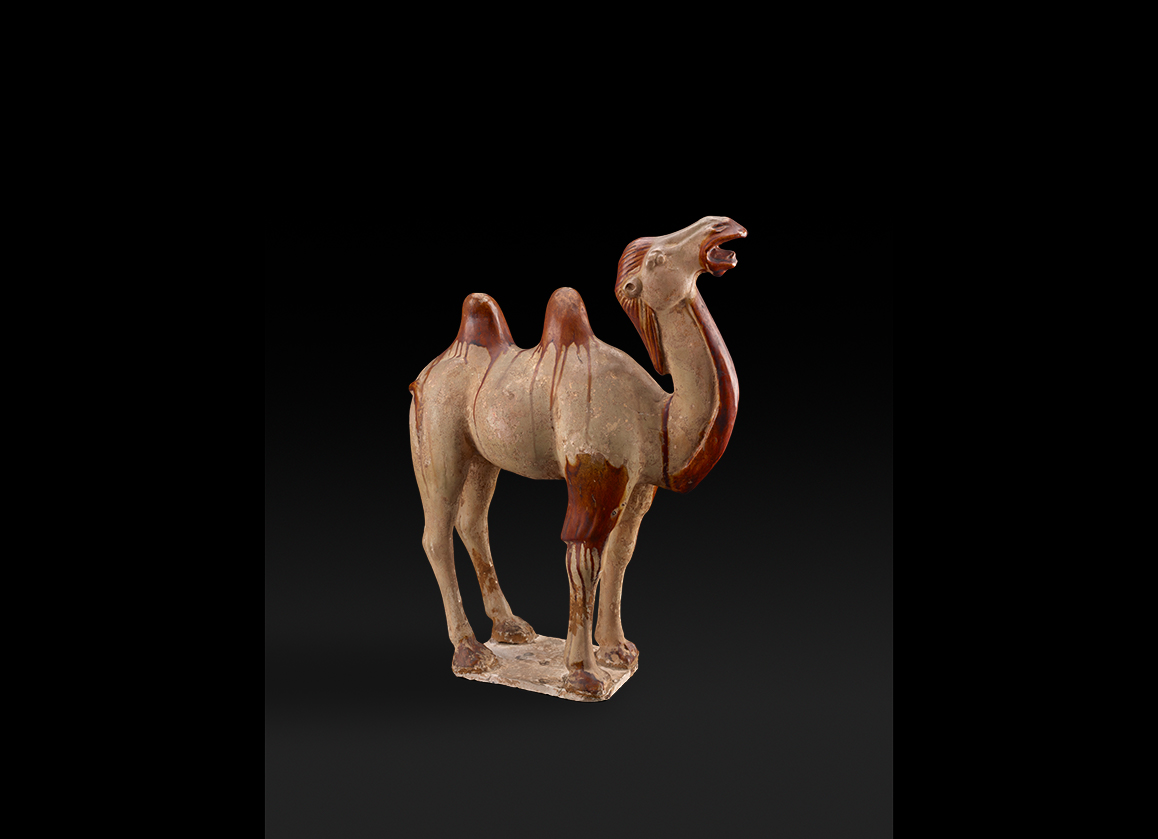
Ashmolean Museum (June 26, 2023): This short film by Carina Hanslik shares an insight into the incredible story behind an ancient ceramic camel.
The object that inspired this animation, a ceramic camel dating back to the Tang Dynasty (AD 618–907), helps us to tell the story of Paul Jacobsthal, a Jewish professor of Archaeology at the University of Marburg in the 1930s, who was forced to leave Germany.
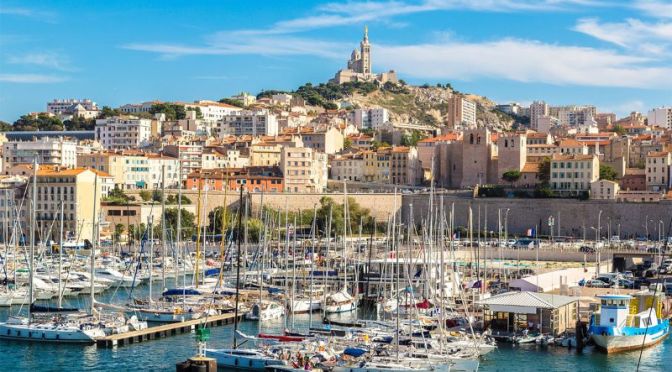
FRANCE 24 (June 23, 2023) – Bordering the French Riviera, Marseille is a one-of-a-kind place in France with a soul of its own. The colourful metropolis is famous for being the sunniest city in the country and a fascinating destination with a rich history.
The southern port city has been at the crossroads of trade and immigration since it was first founded in 600 BC. All this has made Marseille into a Mediterranean melting pot with a diverse cultural and gastronomic heritage.
News, Views and Reviews For The Intellectually Curious




 FRANCE 24 English



 Thames & Hudson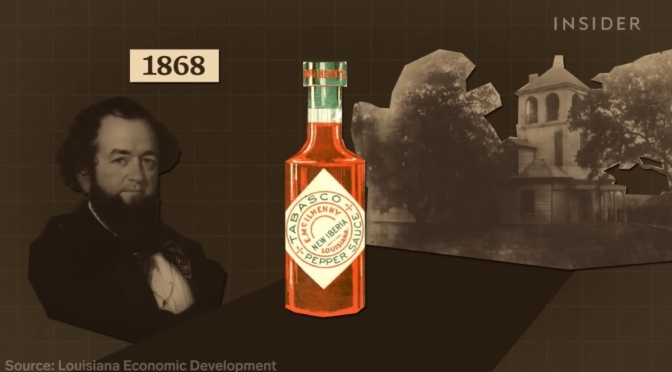






 Boomers Daily