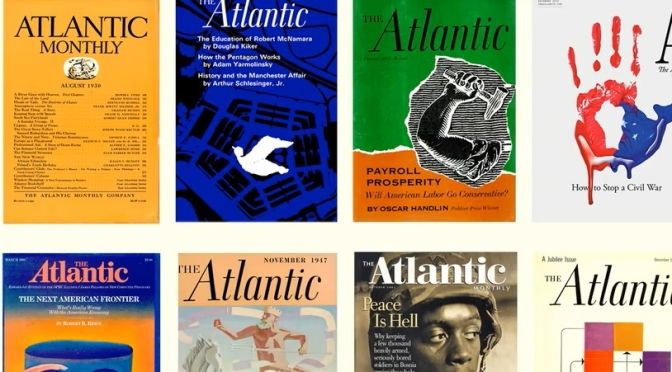
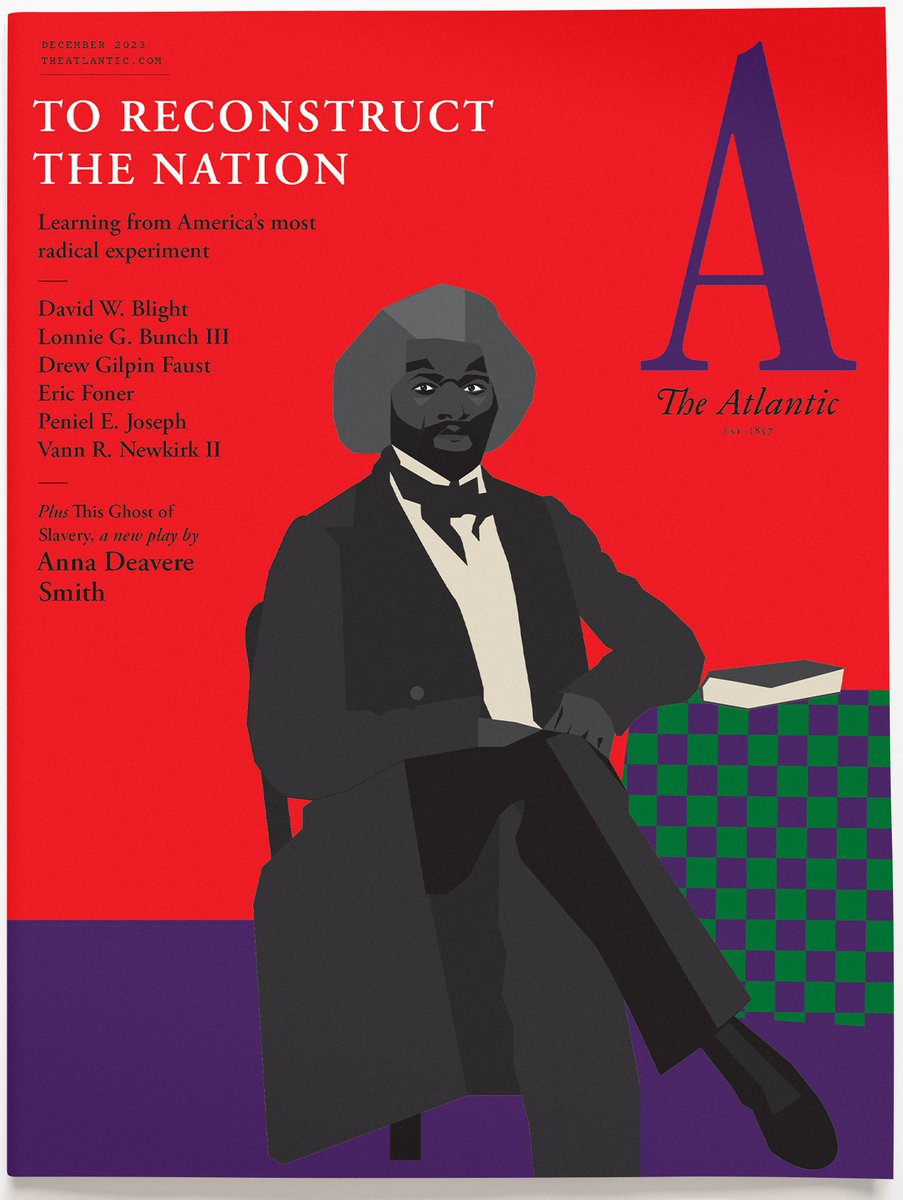
The Atlantic Magazine – December 2023 issue: For the first time since the publication of our first series of stories on Reconstruction, in 1901, The Atlantic is examining “the enduring consequences of Reconstruction’s tragic fall at a moment—yet another moment—when the cause of racial progress faces sustained pressure”…
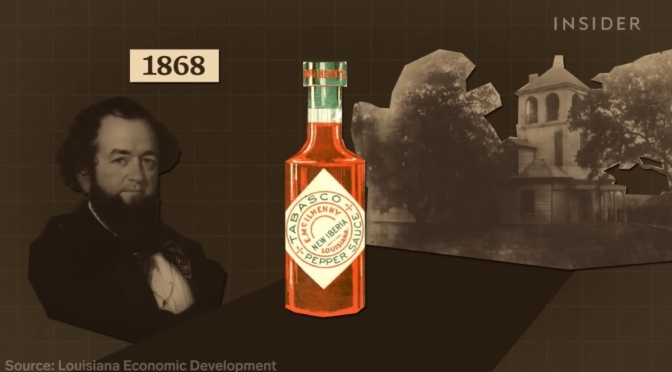
Insider Business (July 9, 2023) – The McIlhenny Company has made Tabasco sauce using the same recipe since 1868: red peppers, vinegar, and salt. Since the hot sauce is aged in bourbon barrels, it takes five years to fill just one bottle.
And most of this process still happens where it all began: Avery Island, Louisiana. Six generations of McIlhennys have lived on the island. But with disappearing marshes and more intense storms along the coast, the family is fighting to protect their, and the hot sauce’s, home.
Today on Architectural Digest, contractor Nick Schiffer from NS Builders returns to break down the renovation potential of an abandoned 1800’s-era chapel and museum in New York. Nick takes us through the gutted interior room by room, offering his renovation advice while pointing out the marvelous architectural details worth restoring.
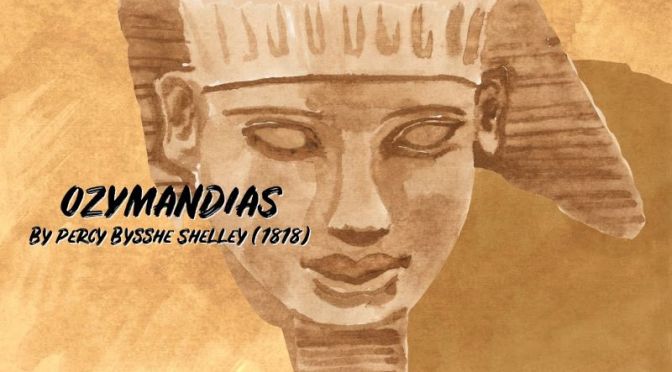
“OZYMANDIAS” is the animated 3D adaptation of a poem written by English poet Percy Bysshe Shelley in December 1817. It was created with a series of wash paintings animated with the Unreal Engine and EbSynth to test an experimental 3D animation pipeline.
Additional info: Using EbSynth, a texture synthesis / transfer tool created by Secret Weapon, we applied wash paintings to 3D scenes created in real-time with the Unreal Engine. The result is a unique look and a promising experimental pipeline which dramatically speeds up the production of 3D animation stylized with traditional 2D art.
About the poem: Written in 1817 by Percy Shelley, “Ozymandias” refers to pharaoh Ramesses II and was perhaps inspired by the acquisition of a large Ramesses statue by the British Museum the same year. References to this poem have often appeared in pop culture, though Shelley himself might not have considered it to be one of his major works.
It was first published in the 11 January 1818 issue of The Examiner of London.
Credits: Directed and animated by Alvaro Lamarche-Toloza Wash paintings by Estelle Chauvard Voice by Bryan Cranston, taken from the Breaking Bad Teaser Trailer “Menkaure colossal statue base” model by Zhejiang University “Ramses II” model by Taoetsia “Horse Skeleton” model by Diego Luján García
‘OZYMANDIAS’ By Percy Bysshe Shelley
I met a traveller from an antique land, Who said—“Two vast and trunkless legs of stone Stand in the desert. . . . Near them, on the sand, Half sunk a shattered visage lies, whose frown, And wrinkled lip, and sneer of cold command, Tell that its sculptor well those passions read Which yet survive, stamped on these lifeless things, The hand that mocked them, and the heart that fed; And on the pedestal, these words appear: My name is Ozymandias, King of Kings; Look on my Works, ye Mighty, and despair! Nothing beside remains. Round the decay Of that colossal Wreck, boundless and bare The lone and level sands stretch far away.”
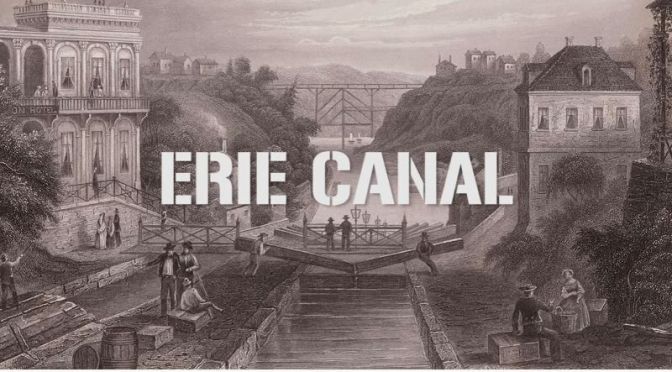
The Erie Canal is a 363-mile waterway that connects the Great Lakes with the Atlantic Ocean via the Hudson River in upstate New York. The channel, which traverses New York state from Albany to Buffalo on Lake Erie, was considered an engineering marvel when it first opened in 1825.
The Erie Canal provided a direct water route from New York City to the Midwest, triggering large-scale commercial and agricultural development—as well as immigration—to the sparsely populated frontiers of western New York, Ohio, Indiana, Michigan and points farther west. The canal transformed New York City into the young nation’s economic powerhouse, and in 2000 the U.S. Congress designated the Erie Canal a National Heritage Corridor.
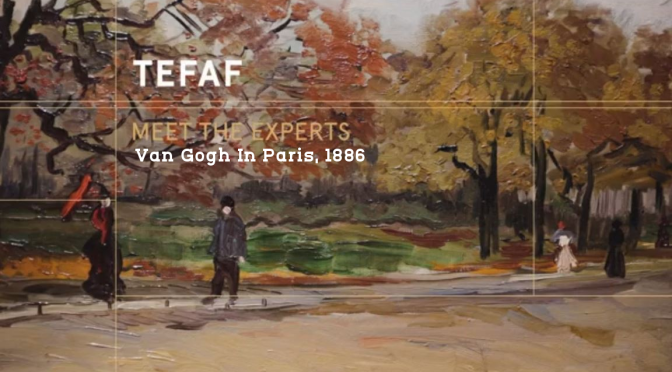
TEFAF’s Meet the Experts presents Howard Shaw from Hammer Gallery shares what Van Gogh would have most likely seen when he visited Paris in 1886. This period of Van Gogh’s life is pivotal to his works as an artist.
I have seen Naples from his vantage of a ship anchored offshore — one of the most sublime locations in the world, that sweep of coast stacked with apricot, carmine, azure and rose villas; the blue, blue U of the harbor; the emphatic Vesuvius anchoring the view.
Frances Mayes
In October of 1820, typhus raged in Naples. With his artist friend, Joseph Severn, the British poet John Keats rocked in the city’s harbor for 10 days, not nearly the quaranta giorni — 40 days — that give us our word quarantine.
Before this journey, Keats always felt intense melancholy. In “On Seeing the Elgin Marbles for the First Time,” he wrote “… mortality / Weighs heavily on me like unwilling sleep.” (And in the smooth pentameter of “Ode to a Nightingale”: “I have been half in love with easeful death.”) Not a holiday, this voyage out of England was a desperate trip to the sunny climate of Italy. His cough had grown steadily worse. Since the morning he’d seen a splotch of blood on his pillow, he knew he had little chance of surviving the consumption that had invaded his lungs. His last-ditch: Go to Rome. Meanwhile, exile at sea.
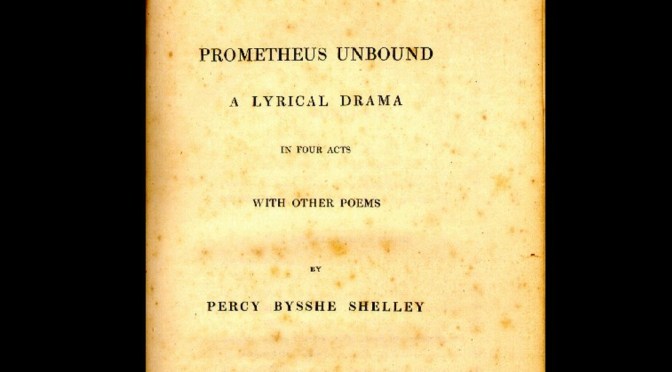
Prometheus Unbound is a four-act lyrical drama by Percy Bysshe Shelley, first published in 1820. It is concerned with the torments of the Greek mythological figure Prometheus, who defies the gods and gives fire to humanity, for which he is subjected to eternal punishment and suffering at the hands of Zeus. It is inspired by the classical Prometheia, a trilogy of plays attributed to Aeschylus. Shelley’s play concerns Prometheus’ release from captivity, but unlike Aeschylus’ version, there is no reconciliation between Prometheus and Jupiter (Zeus). Instead, Jupiter is abandoned by his supportive elements and falls from power, which allows Prometheus to be released.
Excerpt:
As you speak, your words Fill, pause by pause, my own forgotten sleep With shapes. Methought among these lawns together We wandered, underneath the young gray dawn, And multitudes of dense white fleecy clouds Were wandering in thick flocks along the mountains Shepherded by the slow, unwilling wind;
Political – Prometheus, then, is also Shelley’s answer to the mistakes of the French Revolution and its cycle of replacing one tyrant with another. Shelley wished to show how a revolution could be conceived which would avoid doing just that, and in the end of this play, there is no power in charge at all; it is an anarchist’s paradise.
Shelley finishes his “Preface” to the play with an evocation of his intentions as a poet:
My purpose has hitherto been simply to familiarize the highly refined imagination of the more select classes of poetical readers with beautiful idealisms of moral excellence; aware that, until the mind can love, and admire, and trust, and hope, and endure, reasoned principles of moral conduct are seeds cast upon the highway of life which the unconscious passenger tramples into dust, although they would bear the harvest of his happiness.


 Insider Business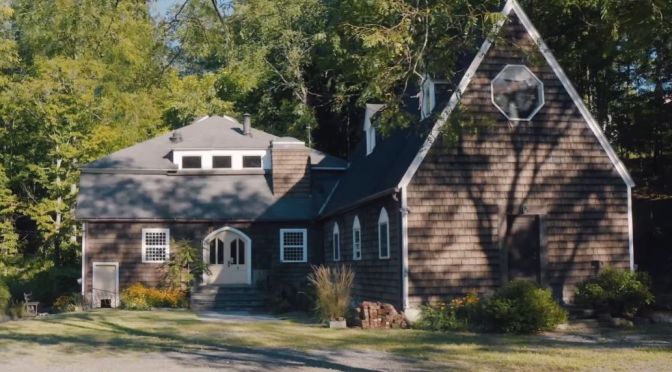


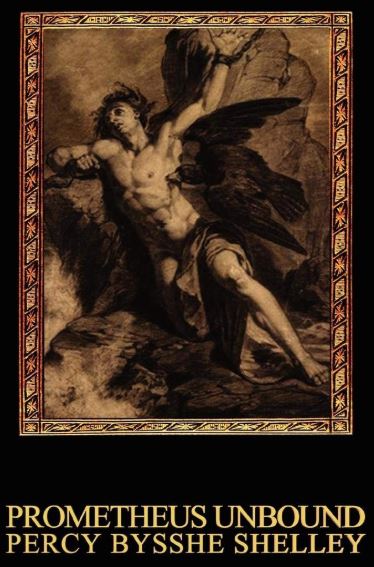 Prometheus Unbound is a four-act lyrical drama by Percy Bysshe Shelley, first published in 1820. It is concerned with the torments of the Greek mythological figure Prometheus, who defies the gods and gives fire to humanity, for which he is subjected to eternal punishment and suffering at the hands of Zeus. It is inspired by the classical Prometheia, a trilogy of plays attributed to Aeschylus. Shelley’s play concerns Prometheus’ release from captivity, but unlike Aeschylus’ version, there is no reconciliation between Prometheus and Jupiter (Zeus). Instead, Jupiter is abandoned by his supportive elements and falls from power, which allows Prometheus to be released.
 Boomers Daily