
From a VW media online news release December 26, 2019:
“The mobile charging robot will spark a revolution when it comes to charging in different parking facilities, such as multistorey car parks, parking spaces and underground car parks because we bring the charging infrastructure to the car 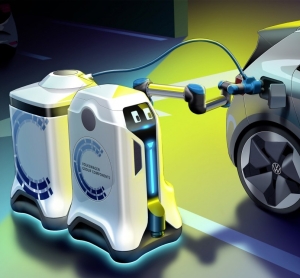 and not the other way around. With this, we are making almost every car park electric, without any complex individual infrastructural measures”, summarises Mark Möller, Head of Development at Volkswagen Group Components.
“It’s a visionary prototype, which can be made into reality quite quickly, if the general conditions are right”, Möller continues. Volkswagen Group Components is researching different approaches to the assembly of charging infrastructure and has already developed several successful products. The flexible quick charging station and DC wall boxes are already part of a future charging family. Customer-oriented, intelligent and flexible approaches to charging are at the centre of the research. Other innovative products such as the charging robot are currently being developed.
- Volkswagen Group Components presents a new and visionary charging concept
- Mobile robots will charge electric vehicles completely autonomously in future
- Every parking space can become a charging point
Volkswagen provides a glimpse into the future in which the search for charging stations for electric cars comes to an end. Volkswagen Group Components’ mobile charging robot takes over this task – and drives to the electric car completely autonomously.

 The real California, though, the California of immigrant dreams that break and get reborn, of lives as they turn out not as they are planned, is the California of the eucalyptus.
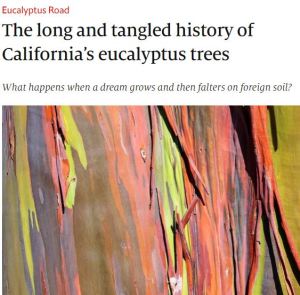 Like his friend John Muir, Lukens believed that California desperately needed more forests. Since the mid-19th century forests, and their loss, had been the principal focus of conservationist thought in America. According to Jared Farmer, who traces the history of the eucalyptus in California in “Trees in Paradise” (2013), Lukens and Muir were particularly keen on growing forests as a way to provide water—always a key to power in the state. Trees brought rain and captured fog and moisture; without forests, the men feared the state’s great cities would dry up.
 During this year’s Monterey Car Week, all four of Bugatti’s hallowed Type 59s were reunited for the first time since 1935. We spoke to the man who pulled off arguably the most historically significant automotive rendezvous of the decade…
 driving forces behind the introduction of the twin-cam engine, Ettore Bugatti created the ultimate expression of his jewel-like Grand Prix car.
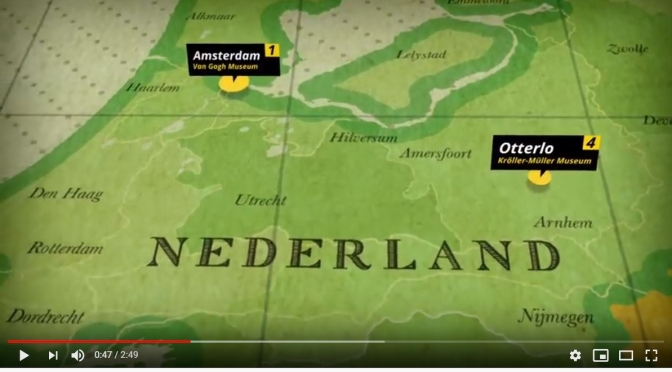
 Vincent van Gogh (1853-1890) is one of the world’s most loved artists. His paintings, drawings and letters inspire people of all ages. His work can be admired in numerous museums around the world. Many places where the artist lived and worked can be visited, from the Netherlands to the South of France. About 25 organisations and museums in the Netherlands, Belgium and France have joined forces under the name Van Gogh Europe. Together they are actively engaged in maintaining and promoting Van Gogh’s heritage.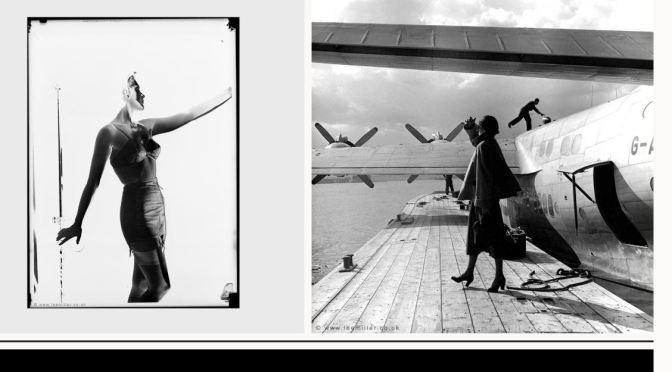
 The Surrealist eye informed everything Miller did, and her work presents the world in a way that encourages us to view it in a different manner. Written and collected by her son Antony, Surrealist Lee Miller amasses more than one hundred full-page images from throughout the artist’s life as an attestation to her wonderful way of seeing.
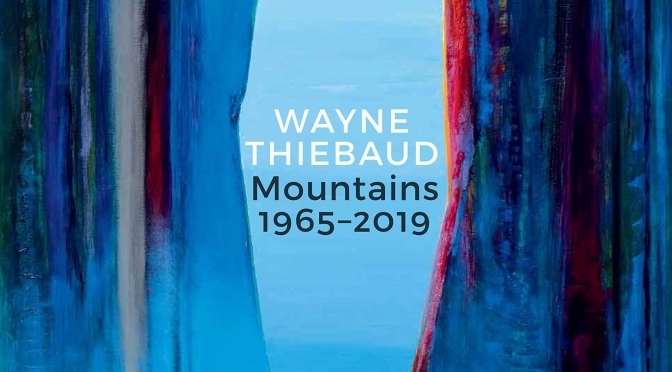
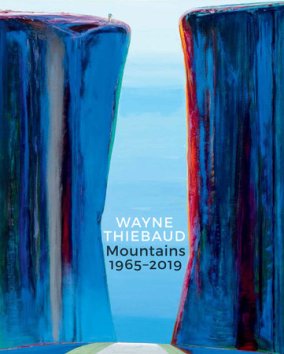 In the 2000s, California-based painter Wayne Thiebaud began focusing on a series of mountain paintings, a subject he had first addressed in the 1960s and 1970s. Rendered in his signature confectionary palette, these colorful works combine memories of mountains he had seen in childhood and observations of the summits of the Sierra Nevada Range in Yosemite. With their heroic, exaggerated proportions and unusual perspectives, these paintings seem to combine fiction and reality. Conveying a sense of the sublime and the vast magnitude of our surroundings, they draw upon the history of landscape painting of the American West.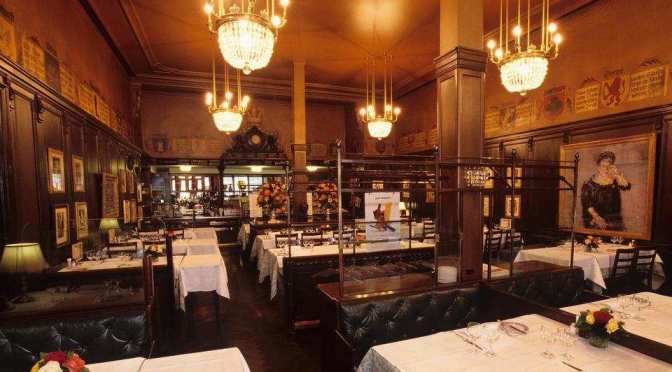
 In 1924, Hulda and Gottlieb Zumsteg took over the erstwhile “Hôtel de la Couronne” on Rämistrasse 4, at the corner of Bellevue in Zurich. They reopened as the Restaurant Kronenhalle. Under the skilled management of restaurateur Hulda Zumsteg it soon became the meeting point of writers and artists.
 The restaurant became popular with the local establishment and names such as Coco Chanel, Yves Saint Laurent, Pablo Picasso, Alberto Giacometti, James Joyce, Richard Strauss, Max Frisch and Friedrich Dürrenmatt also graced the guest list. The Kronenhalle owes as much to its renowned guests as to Gustav Zumsteg, Hulda’s son, who followed in his mother’s footsteps, while putting his own inimitable stamp on it. His passion for art contributed to the Kronenhalle’s considerable prominence. Since 2005, his estate is being administered by the Hulda und Gustav Zumsteg foundation according to his last will.
 Boomers Daily