As the US Democratic party takes steps towards choosing who will attempt to win the presidency, Andrew Mueller discusses the candidates’ strengths and weaknesses and asks if they are up to the job.
Andrew is joined by Kara Voght, Asma Khalid, Jacob Parakilas, Olivia Nuzzi, Ryan Williams and Brian Klaas.
Huey Lewis and the News are in the mood to celebrate, joking about their age as they prepare for the release of what is almost certainly their last album, titled “Weather.” At 69, Lewis, who has performed in bands for most of his life, had no intention of slowing down, but his diagnosis of Meniere’s Disease – a hearing disorder which has affected his voice – has made the decision for him. John Blackstone reports.
Listen to a chat with Julia Adler-Milstein, the author of an editorial that comments on a recent Annals of Internal Medicine study detailing the amount of time clinicians typically spend hunched over their EHRs during a patient visit.
Why aren’t you able to navigate your electronic health record (EHR) as easily as you can find a recipe on, say, Google?
And, what about those requirements for documenting everything?
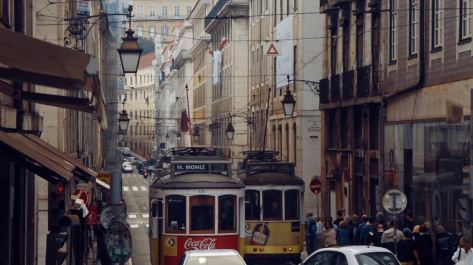
Another chapter about charming and vibrant capital of Portugal. Relaxed vibe of Lisbon, which is something you may don’t get in many other capital cities, makes you back there. Walk around, take the tram and be ready to find beauty in every corner. This is Lisboa.
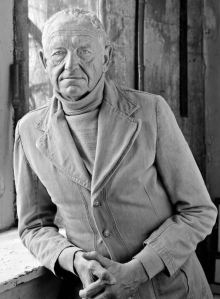
Photo of Andrew Wyeth by Peter Ralston In the Studio Courtesy of Ralston Gallery
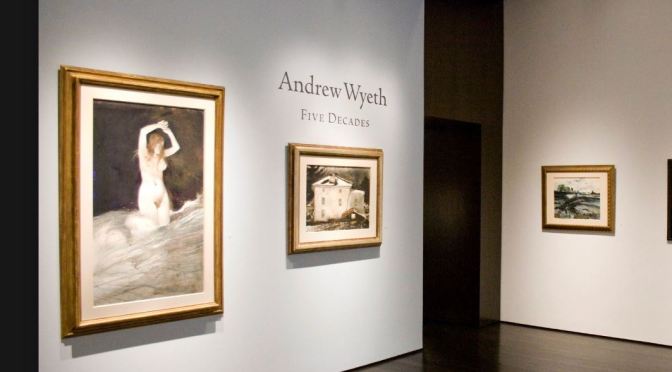
Forum Gallery, New York, presents an exhibition of works by Andrew Wyeth (1917-2009), who set the standard for American figurative art in the second half of the Twentieth Century. Working in pencil, watercolor, egg tempera and his much-beloved personal medium of drybrush, Wyeth, throughout his life, was a resolute champion of the universal life force of each person he chose to paint, and of the unique, difficult, ever-changing rural American world in which he chose to live. His art was controversial as it was popular, and he remains one of very few living artists to be celebrated by important single-person exhibitions at The Metropolitan Museum of Art in New York (1976) and the National Gallery of Art, Washington, DC (1987).
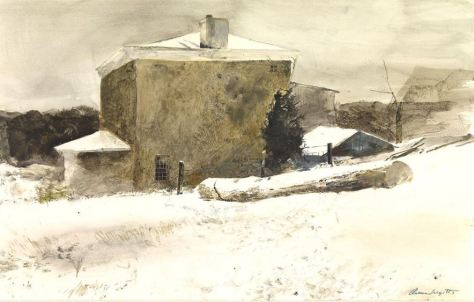
Firewood Study for Groundhog Day 1959 Andrew Wyeth (The Forum Gallery NYC)
“Andrew Wyeth: Five Decades” at Forum Gallery features paintings dated from 1940 through 1994, including landscapes that imply personal struggle and portray great beauty; and provocative figurative works, including examples from The Helga Pictures.
Ambiente is comprised of 40 cubed-shaped guest Atriums that are elevated above the ground by steel piers and constructed using floor-to-ceiling, bronze-tinted glass and matte-charcoal and rusted metal.
At dusk, the tinted glass reflects the nature around it creating stunning, mirrored silhouettes. The Atriums’ sleek and contemporary design embodies elegant minimalism and the utmost in luxurious accommodations.
Designed by award-winning, Scottsdale-based ASUL Architects, Ambiente will be constructed around the natural vegetation and topography, requiring less cut and fill, which better meets today’s expectations of being responsible land stewards. The pier-method to building Ambiente’s Atriums basically eliminates the need to grade the land. During construction, this pier technique allows each Atrium to be rotated and individually hand-placed at very specific angles to fit, as best as possible, within the existing trees and flora, thereby maximizing the views.
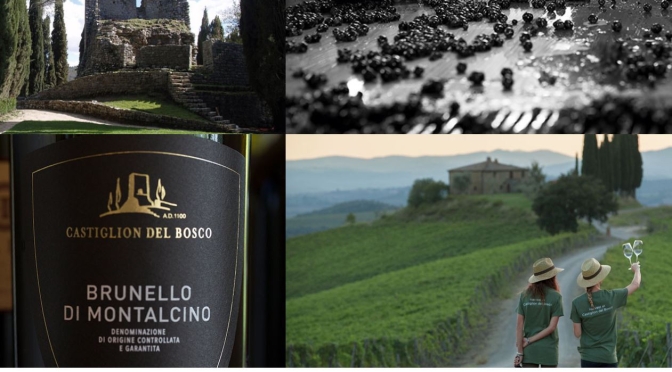
Wines by Massimo Ferragamo: How Salvatore Ferragamo’s youngest son is succeeding in the wine industry.
24 January 2020: Episode 432 of “The Menu” Monocle 24
“I arrived at Castiglion del Bosco one cool, sunny morning in 2001. I was so incredibly moved by the limitless views, by the Brunello vineyards as well as the scenery that can only be found in the Val d’Orcia: I had no idea that such a beautiful corner of Tuscany still existed. It was love at first sight.”
– Massimo Ferragamo
Tuscany is a region whose countryside never ceases to amaze for its captivating beauty. Castiglion del Bosco also knows how to charm. Nature’s voice is heard loud and clear here, while man’s hand has always respected its verdant spaces and fine balance. The name itself revelas its character: the bosco, (wood), surrounding the Castiglion (walled castle), is the domain of deer, boars and pheasants. And of Sangiovese.
Tech ownership among older adults is growing with no signs of slowing down.
• For many devices, adoption among adults ages 50 and older is comparable to younger generations. Adults ages 50
and older are adopting smartphones, wearables, home assistants/smart speakers, and smart home technology at
nearly the same rate as adults ages 18–49.
• Younger adults have abandoned tablets, but older adults are adopting tablets at an increasing rate: More than half
(52%) of adults ages 50 and older own a tablet.
• Once adopted, usage of smartphones, wearables, tablets, home assistants/smart speakers, and smart home
technology is high with most owners using their technology daily.
While older adults are highly engaged with their devices, many are not using the technology to its full potential.
• Adults ages 50 and older are using smartphones and tablets to maintain social connections, find information, and for
entertainment, but only a few are using their device to automate their home or conduct transactions.
• Engaging in social media is one of the most common uses of a tech device (e.g., computer, tablet, or smartphone).
• Though 49% claim to own a smart TV, only 42% are using streaming or online options to watch shows.
• Nearly half (46%) of all smart home assistant/smart speaker owners do not use their device daily.
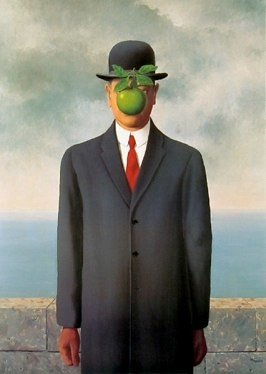
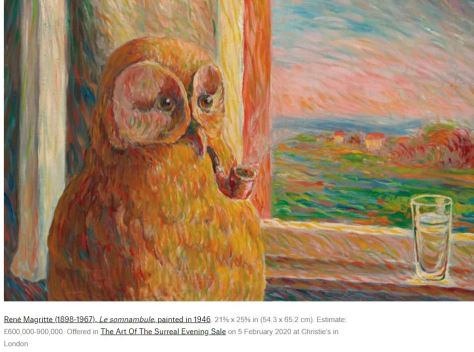
‘The creation of new objects, the transformation of known objects; a change of substance in the case of certain objects: a wooden sky, for instance; the use of words in association with images; the misnaming of an object… the use of certain visions glimpsed between sleeping and waking, such in general were the means devised to force objects out of the ordinary, to become sensational, and so establish a profound link between consciousness and the external world.’
René François Ghislain Magritte (1898-1967) was born in Lessines, Belgium. His father was a tailor and textile merchant; his mother committed suicide in 1912, drowning herself in the River Sambre.
From the 1930s, Magritte sought to find ‘solutions’ to particular ‘problems’ posed by different types of objects, a method that enabled him to challenge and reconfigure the most ubiquitous and commonplace elements of everyday life. These problems obsessed him until he was able to conceive of an image to solve them.
This philosophical method had come to him after waking from a dream in 1932. In his semi-conscious state, he looked over at a birdcage that was in his room but saw not the bird that inhabited the cage, but instead an egg. This ‘splendid misapprehension’ allowed him to grasp, in his own words, ‘a new and astonishing poetic secret.’
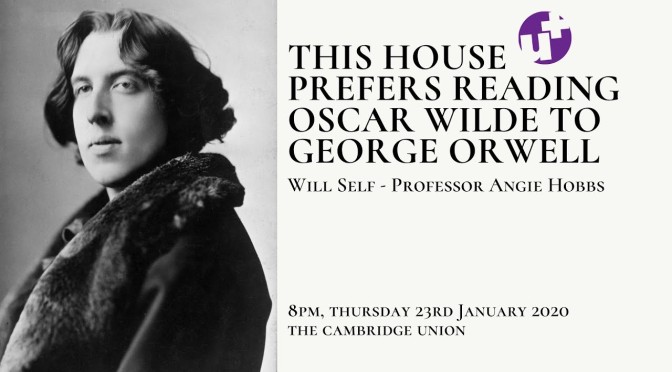
ABOUT THE MOTION: This House Prefers Reading Oscar Wilde to George Orwell Do we prefer satire or comedy? Do we take refuge in the serious or the frivolous? Do we understand the importance of being earnest or would we rather be in room 101? These two authors demonstrate well two powerful traditions in British literature, the comic and the satirical. They both of course share in each other’s art. Some would argue that during our present global crises we should look to Orwell more than ever, others would reach for the escapism of Oscar Wilde. In a new enterprise for the Cambridge Union, we are beginning our cultural debates – and this is our first. At least for a while.
ABOUT OUR SPEAKER (Closing for the Proposition) Will Self is the author of 25 books, some of which have been translated into 25 languages. His Dorian: An Imitation is an adaptation of Oscar Wilde’s The Picture of Dorian Gray set during the AIDS crisis. He holds the Chair in Contemporary Thought at Brunel University, and lives in South London.
ABOUT OUR SPEAKER (Closing for the Abstention) Professor Angie Hobbs graduated in Classics and then a Ph.D. in Ancient Philosophy at the University of Cambridge. After a Research Fellowship at Christ’s College, she moved to the Philosophy Department at the University of Warwick. She was a judge of the Man Booker International Prize 2019 and is on the World Economic Forum Global Future Council 2018-9 for Values, Ethics and Innovation
News, Views and Reviews For The Intellectually Curious


 As the US Democratic party takes steps towards choosing who will attempt to win the presidency, Andrew Mueller discusses the candidates’ strengths and weaknesses and asks if they are up to the job.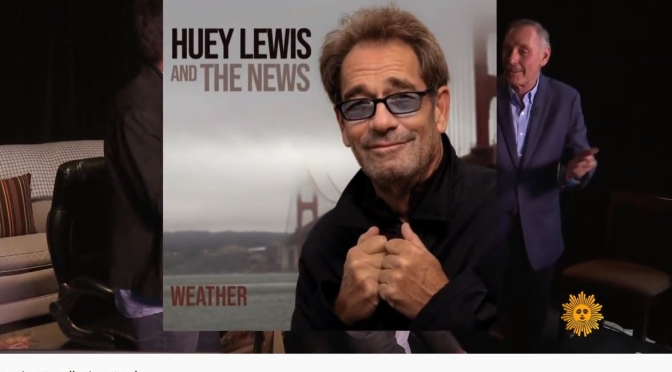
 Listen to a chat with Julia Adler-Milstein, the author of an editorial that comments on a recent Annals of Internal Medicine study detailing the amount of time clinicians typically spend hunched over their EHRs during a patient visit.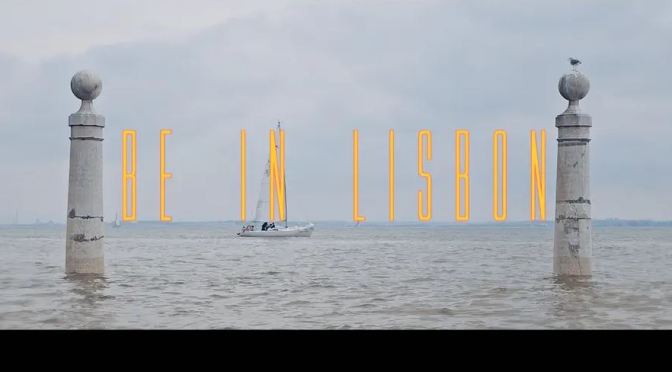



 Wines by Massimo Ferragamo: How Salvatore Ferragamo’s youngest son is succeeding in the wine industry.

 • For many devices, adoption among adults ages 50 and older is comparable to younger generations. Adults ages 50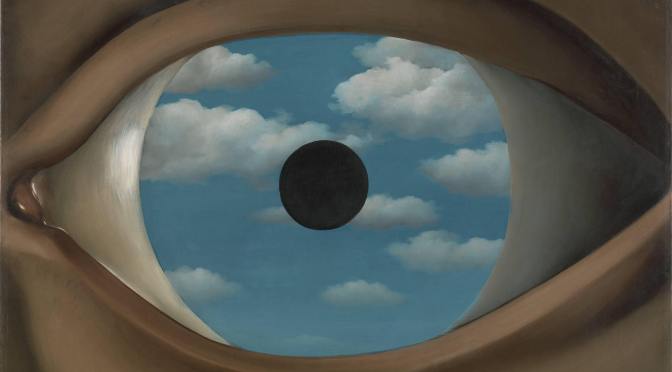
 ABOUT THE MOTION: This House Prefers Reading Oscar Wilde to George Orwell Do we prefer satire or comedy? Do we take refuge in the serious or the frivolous? Do we understand the importance of being earnest or would we rather be in room 101? These two authors demonstrate well two powerful traditions in British literature, the comic and the satirical. They both of course share in each other’s art. Some would argue that during our present global crises we should look to Orwell more than ever, others would reach for the escapism of Oscar Wilde. In a new enterprise for the Cambridge Union, we are beginning our cultural debates – and this is our first. At least for a while.
 Boomers Daily