Dr. Paul Krugman is a Nobel Prize-Winning economist, and a regular commentator for the New York Times. Though academically recognised for his contributions to international trade theory, he writes about a wide range of economic issues, and is well known for making economic theory accessible to non-academics through his columns and numerous popular books. A liberal, Dr. Krugman is a fierce opponent of the modern Republican party, though he previously served as an economic advisor in Reagan’s White House.
ABOUT THE OXFORD UNION SOCIETY: The Oxford Union is the world’s most prestigious debating society, with an unparalleled reputation for bringing international guests and speakers to Oxford. Since 1823, the Union has been promoting debate and discussion not just in Oxford University, but across the globe.
Syndicated columnist Mark Shields and New York Times columnist David Brooks join Judy Woodruff to discuss the latest political news, including a surreal week in which much of American daily life shut down, bright spots of people helping each other in a time of need, President Trump’s handling of the crisis, the ongoing issue of political polarization and how government should respond.
To celebrate the launch of “The Woods”, the third album from acclaimed musician Hamish Napier Music, we’ve teamed up to bring you an audio-visual treat.
The Woods was commissioned by #CairngormsConnect to celebrate the ancient forests that make the project area so special.
Hamish has used the Scottish Gaelic alphabet, which is centred around Scotland’s native trees, to explore the folklore, natural and social heritage of Strathspey.
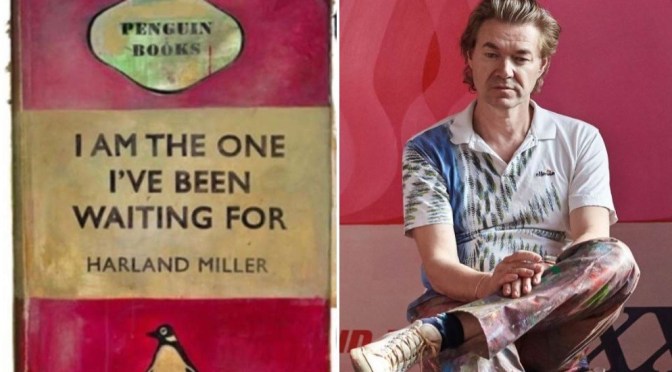
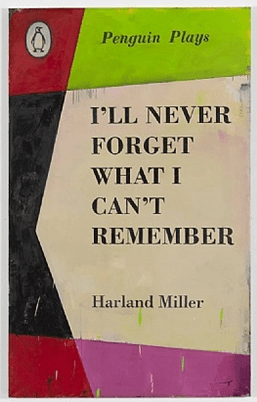
Miller’s Penguin book covers and ironic titles catch the art world’s eye
These covers are closer to still life studies, rather than two-dimensional posters. Experimenting with different paper sizes and angles, he occasionally shows their spines, and the shadows they cast. It is a celebration of books as treasured objects. His drawings – in particular his studies for his large-scale oil paintings with their notes scribbled down the margins – are some of his most intimate works to date.
The ensuing images are humorous, sardonic and nostalgic at the same time, while the painting style hints at the dog-eared, scuffed covers of the Penguin classics themselves.
Starting with Jay Jopling in 1996, when Miller exhibited in a group show at London’s Institute of Contemporary Art, his works have garnered many a famous fan. Amongst which are AC/DC’s guitarist Angus Young, David Bailey, and Elton John – whose work amusingly, if a little painfully, bears the title ‘International Lonely Guy.’
George Michael, with his Harland Miller piece ‘Incurable Romantic Seeks Dirty Filthy Whore‘ commanded £237,500 in the posthumous auction of his art collection last year.
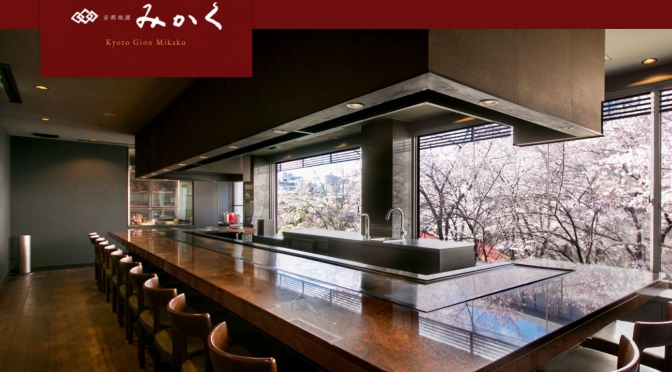
Gion Mikaku, founded 1929: – 2 different cuts of beef: Tajima beef filet mignon and Kobe beef rump steak with just the right amount of marbling (intra-muscular fat) and no extra-muscular fat – 400g in total. Steak cutting behind a window in their kitchen, friendly, dedicated service, pleasant view, extra hot griddle for proper searing, right timing and handling of the steaks: they certainly know what they are doing – This restaurant meal included garlic rice (between steak and dessert).
Savage Beauty light installation in Connemara Ireland (Lough Nafooey) March 2020. Savage Beauty by Kari Kola commissioned by Galway 2020 European Capital of Culture.
Music: Lawrence Hodge
Connemara’s Islands
Flung out into the Atlantic and shaped by the sheer force of the sea, Connemara’s islands are spectacular remnants of life long lost in other parts of Ireland. Staunchly proud of their traditions and as famous for their culture as their dramatic landscapes, Inishbofin and the Aran Islands are a patchwork of tiny, tightly packed fields, rambling stone walls, pristine beaches and craggy shores.
The islands’ relative isolation has fostered a profound sense of peace and protected a rich traditional heritage. They’re wonderful places to walk or cycle, and famous for their live music and traditional dances.
Situated in the choppy waters of Galway Bay, the three Aran Islands in the Gaeltacht region. The largest and most developed island is Inis Mór, a place blanketed in fissured limestone and snaking stone walls. The island’s most famous sight is Dún Aonghasa, a breathtaking semi-circular stone fort perched dramatically on top of a 100m cliff. Other prehistoric forts dot the island, as well as numerous early Christian remains. The heritage centre, Ionad Árann, gives a great insight into the island’s history and traditions but you’ll also see them first hand in the nightly music sessions, regular dances and impromptu storytelling.
Discover Alabama’s rich history as we reveal the vast discoveries that forged a path to equality for millions. The story of the Cotton State has as many dramatic turns as the tracks of the Talladega Superspeedway.
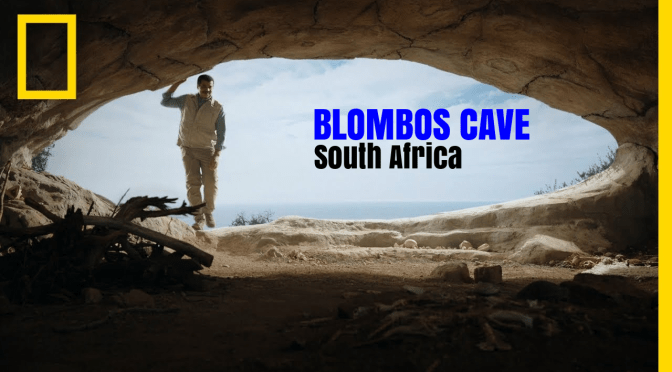
See the first laboratory on Earth – Blombos Cave. Here our ancestors conducted the first chemistry experiments.
Blombos Cave is an archaeological site located in Blomboschfontein Nature Reserve, about 300 km east of Cape Town on the Southern Cape coastline, South Africa. The cave contains Middle Stone Age (MSA) deposits currently dated at between c. 100,000 and 70,000 years Before Present (BP), and a Late Stone Age sequence dated at between 2000 and 300 years BP. The cave site was first excavated in 1991 and field work has been conducted there on a regular basis since 1997, and is ongoing.
The excavations at Blombos Cave have yielded important new information on the behavioural evolution of anatomically modern humans. The archaeological record from this cave site has been central in the ongoing debate on the cognitive and cultural origin of early humans and to the current understanding of when and where key behavioural innovations emerged among Homo sapiens in southern Africa during the Late Pleistocene. Archaeological material and faunal remains recovered from the Middle Stone Age phase in Blombos Cave – dated to ca. 100,000–70,000 years BP – are considered to represent greater ecological niche adaptation, a more diverse set of subsistence and procurements strategies, adoption of multi-step technology and manufacture of composite tools, stylistic elaboration, increased economic and social organisation and occurrence of symbolically mediated behaviour.
The most informative archaeological material from Blombos Cave includes engraved ochre, engraved bone ochre processing kits, marine shell beads, refined bone and stone tools and a broad range of terrestrial and marine faunal remains, including shellfish, birds, tortoise and ostrich egg shell and mammals of various sizes.[20][21][22] These findings, together with subsequent re-analysis and excavation of other Middle Stone Age sites in southern Africa, have resulted in a paradigm shift with regard to the understanding of the timing and location of the development of modern human behaviour.



 Miller’s Penguin book covers and ironic titles catch the art world’s eye


 Boomers Daily