
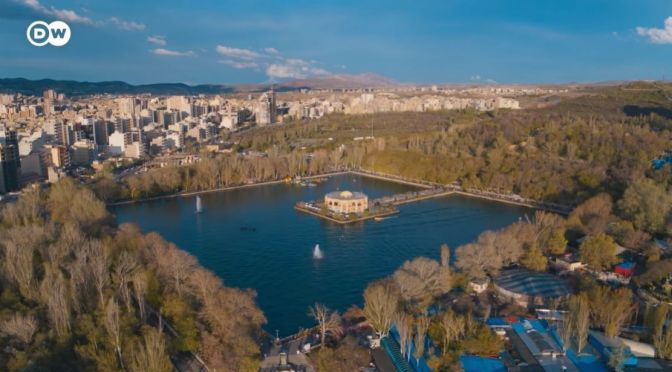
Iran’s mountainous terrain has always been an important part of people’s lives. Years ago, these mountains were populated by legendary horsemen. Today, they are the subject of scientific investigation. This film provides the viewer with stunning arial views of these mountains. It unfurls the rich tapestry of Iran’s history, from the legendary Order of the Assassins to the Mongol invasions. We also get to know Iran by meeting some of the fascinating people who live there. Take Ali, a world champion of mounted archery. Despite its waning popularity, the sport has endured in Iran due the importance of horses throughout Iranian history. We get to explore the historic Tabiz bazaar, which is still a bustling market and kaleidoscope of cultures today. There, we meet Dschebrael, a stall owner who speaks Azeri, the official language of Azerbaijan. In fact, Azeri can be heard throughout the market, which serves as a meeting place for Iran’s many ethnic groups, and thus as a microcosm of the country’s cultural diversity. The film introduces us to beekeepers and violinmakers, as well as young people living in Iran who want to travel and express themselves freely on social media — even though it is forbidden.
Category Archives: Stories

Views: American Heritage Magazine – September 2022
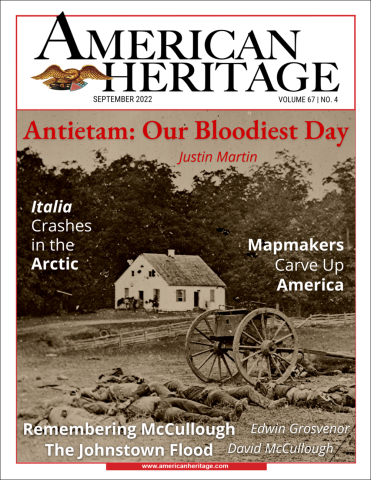
Antietam, America’s Bloodiest Day
In September 1862 the South hoped to end the war by invading Maryland just before the mid-term elections. But its hopes were dashed after the bloodiest day in American history. By Justin Martin
Johnstown: “Run For Your Lives!”
In the hills above Johnstown, the old South Fork dam had failed. Down the Little Conemaugh came the torrent, sweeping away everything in its path. By David McCullough
Remembering David McCullough
He became the dean of American historians after learning his craft working for five years on the staff of American Heritage. By Edwin S. Grosvenor
Carving Up the Americas
By artfully illustrating the boundaries of colonial powers, mapmakers in the 1700s helped define what our New World would become. By Neal Asbury, Jean-Pierre Isbouts
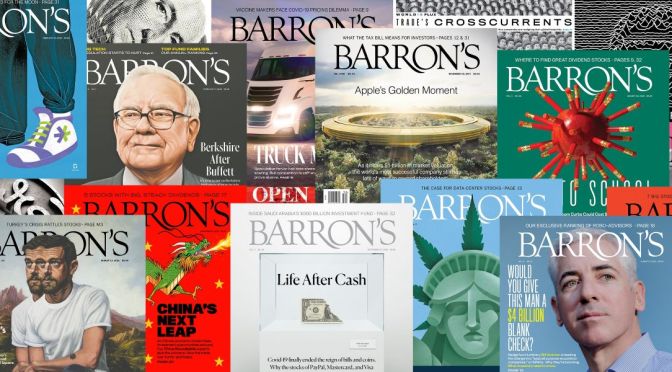
Cover Previews: Barron’s Magazine – Sept 19, 2022
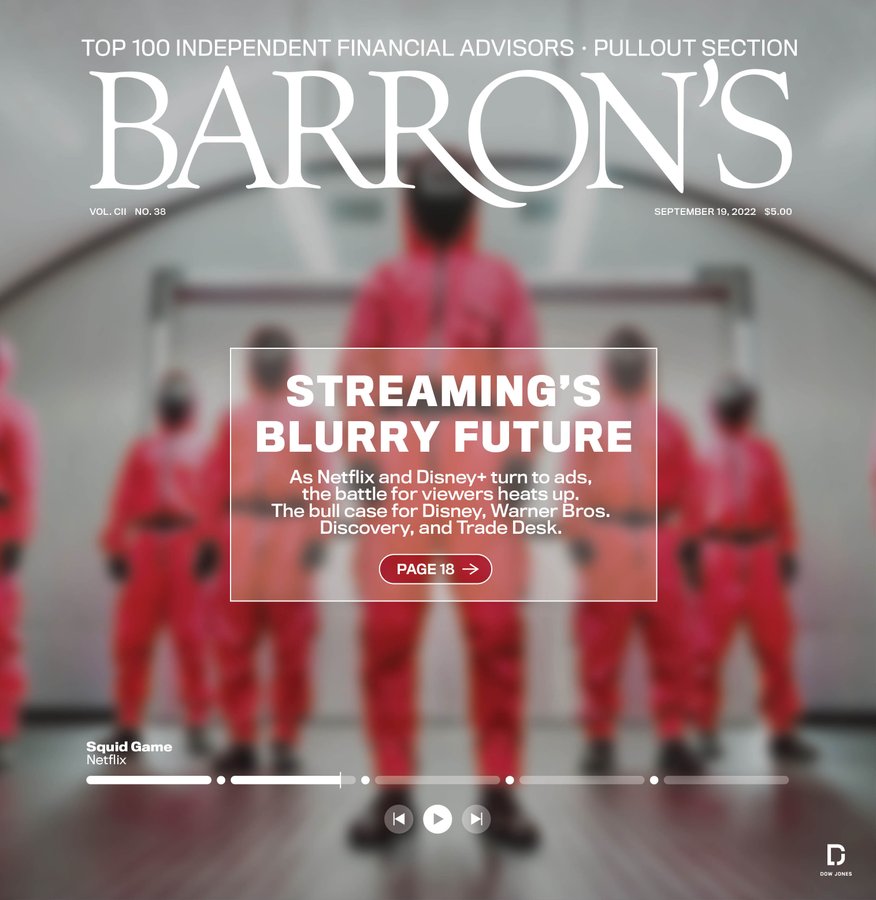
Bulls Get Scorched by FedEx. Don’t Expect The Fed to Help.
Randall W. Forsyth
The Stock Market Finally Understands What’s Coming
Ben Levisohn
Some Consumer-Staples Stocks Might Not Be as Safe as They Look
Ben Levisohn
Workers Resist a Return to the Office. That’s Bad News for REITs and Their Investors.
Jack Hough
Forget a Fed Pivot. Rates Will Stay High as Inflation Persists.
Lisa Beilfuss
IBM, CVS, and 10 Other Stocks That Are Too Cheap Now
Al Root

Saturday Morning: News And Stories From London
Georgina Godwin and cultural historian Gavin Plumley review the day’s papers, Andrew Tuck’s weekend column and Andrew Mueller takes a look at some of the week’s weirder stories.
Queue to see Queen’s coffin carries on after brief attempt to pause entry
Gates to Southwark Park reopen minutes after announcement that 14-hour line was at capacity
The announcements were clear: the queue to see the Queen lying in state had reached capacity and was being paused for six hours.
The message went out over the public address system at train stations across the capital, on official government Twitter accounts and across the media shortly before 10am on Friday.
There was just one problem: the queue carried on. And on. In fact, just after 5pm on Friday the government announced that the wait time was over 24 hours, and warned that “overnight temperatures will be cold”.
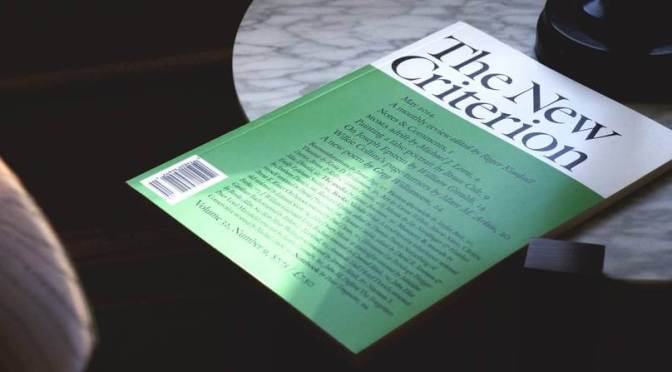
Covers: The New Criterion Magazine – October 2022

The New Criterion
October 2022
Affirmative action & the law a symposium
The American affirmative-action regime by Frank Resartus
An agenda for Congress by Gail Heriot
The Voting Rights Act after six decades by James Piereson
Facially neutral, racially biased by Wen Fa & John Yoo
Democracy & the Supreme Court by Glenn Harlan Reynolds
New poems by William Logan, Jessica Hornik & Peter Vertacnik
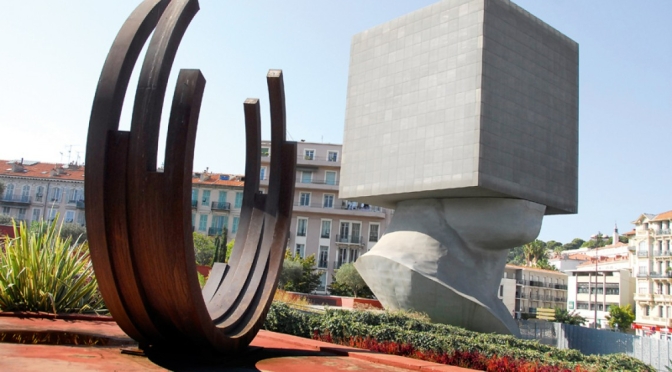
French Architecture: La Tête Carrée Library In Nice
Approached to design the new municipal office in Nice, architect Sasha Sosno had a clear vision: a giant building shaped like the bust of a man with a solid box for a head. How to actually build it would require a brilliant blend of architectural innovation and improvisation.
La Tête Carrée Library, is a massive sculpture that stands at a staggering 85ft (or 28m) in height and was designed by French artist Sacha Sosno and made by two architects – Francis Chapus and Yves Bayard – for the Central Library in Nice. Entitled “Thinking Inside the Box,” the work is an accusatory and clear metaphor and hasn’t always been the most beloved work in the city, with locals often citing it as “ugly”. However, in spite of this, the building remains a fascinating tourist attraction and extraordinary structure, housing four storeys of offices and three storeys of book shelves.
Sosno, a sculptor and peer of other famous local artists such as Henri Matisse and Yves Klein, had long held hope to build such an unusual construction-sculpture but only got a chance to do so in 1997 when his idea was chosen for an administrative office of Louis Nucéra Library. Inaugurated in 2002, it was the first inhabited monumental sculpture in the world.
Located on the corner of Promenade des Arts, La Tête Carrée looks out over Place Yves Klein from the Jardin Maréchal Juin, a small public garden full of colourful flowers and a few more (albeit far, far smaller) sculptures. During the day, it simply looks like a massive sculpture of a head but, if you’re passing La Tête Carrée at night, it is lit from within by a lighting scheme devised by French light artist Yann Kersalé and you can make out the floors of the library inside.

Analysis: How Taiwan Is Facing Threat From China
Taiwan is a democracy with a strong human rights record and a high standard of living. But despite the country’s economic strength and elected government, the island state struggles to receive international recognition. Even in terms of corruption, Taiwan’s track record is better than that of some European states.
The problem is that Beijing regards democratic Taiwan, which seceded from the mainland in 1949, as a renegade province rather than an independent state. China is trying to isolate it internationally. Many fear that China has plans to attack Taiwan in the near future: The President of the People’s Republic of China, Xi Jinping, has made it clear that his country is prepared to claim the island by military means. Beijing has been adopting this threatening stance for decades.
Thus far, the goal has been to annex the island to the mainland at some undefined point in the future. China’s historically questionable worldview would see this as reunification; from Taiwan’s perspective, it would be annexation. Both countries are highly armed – a war would inevitably cost many people their lives.
The film throws open a window on a nation that has been in a state of existential threat for decades; a country that is home to people who will defend their freedom at all costs – and also those who yearn for an imminent annexation with China.

Architectural Remodels: North Adelaide House
With calming detail and considered materiality, Williams Burton Leopardi transforms the heritage listed North Adelaide Residence into a modern home. Through the new expansions, different moods are evoked from room to room, seeing the modern home uplifted into a refined contemporary context.
Video timeline: 00:00 – Subscribe to The Local Projects Print Publication 00:13 – Introduction to North Adelaide Residence 00:38 – Single Fronted Cottages 01:07 – Bringing Grandness into A Workers Cottage 01:38 – Working with An Unusual Brief 02:13 – Creating Different Moods Throughout The Home 02:46 – The Separation of Old and New 03:17 – The Impact of A Narrow Site 04:00 – The Handmade Aspect to A Heritage Home 04:33 – The Materials Palette 05:18 – Subtle but Beautiful Details 06:02 – The Architects Favourite Aspects of The Home 06:49 – The Local Projects Print Publication
The infusion of muted natural light demarks the old from the new whilst material choices reference the original worker’s cottage. Inspired by a desire for simplicity and quality detail, the redesign of the modern home mirrors the original fabric of the residence. The choice to remove the third bedroom allows for an extra living area, whilst elongating the structure into the garden ensures the home aligns with the lifestyle of its occupants. The residence provides a visual experience with increased access to sunlight through integrated skylights and the introduction of natural materials.
The use of oak wood references the heritage sandstone exterior and grounds the modern home. Further echoing the outdoors is joinery toned to match the washed oak flooring and the Turco Argento limestone kitchen benchtops. By establishing an indoor-outdoor connection, a natural flow between the garden and the modern home is seamlessly achieved. Through folded doors and a large picture window, the inviting garden helps to enhance the liveability of North Adelaide Residence – where an intentional quality resonates through each material choice.
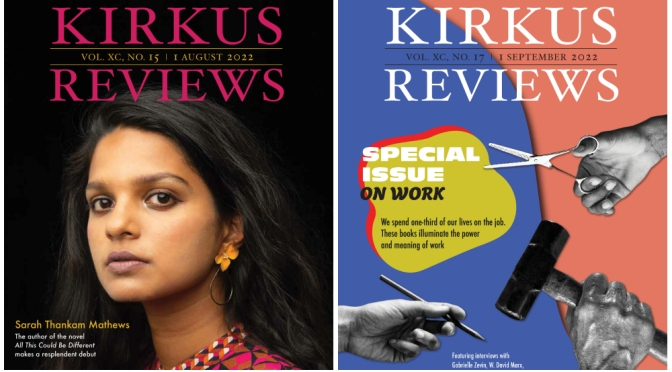
Books: Kirkus Reviews – September 15, 2022 Issue

An Athlete and Activist Shares His Story With Kids
Here is the truly amazing thing that few people besides Tommie Smith remember about his gold medal–winning 200-meter run in the 1968 Olympics: He broke the world record in just under 20 seconds on one good leg.
‘The Rushdie Affair,’ Back in the News
As we were editing our Sept. 15 issue in mid-August, news broke that author Salman Rushdie had been attacked at a lecture in western New York state. The story sent shock waves through the literary community—a stark reminder that violence can lurk in the corners of literary debate. Rushdie is the author of many works of fiction and nonfiction and is most celebrated for his 1981 novel, Midnight’s Children, a kaleidoscopic epic of Indian life after independence that won the Booker Prize as well as two subsequent honors, the Booker of Bookers in 1993 and the Best of the Booker in 2008.

News: Jinping’s ‘Concerns’ Regarding Putin’s War & U.S.-Australia-U.K. Alliance
The Globalist heads to Uzbekistan for the latest on the meeting between Xi Jinping and Vladimir Putin. Plus: the Aukus security pact, one year on; how the EU plans to manage big tech; and Andrew Mueller’s round-up of the week’s news.
 Boomers Daily