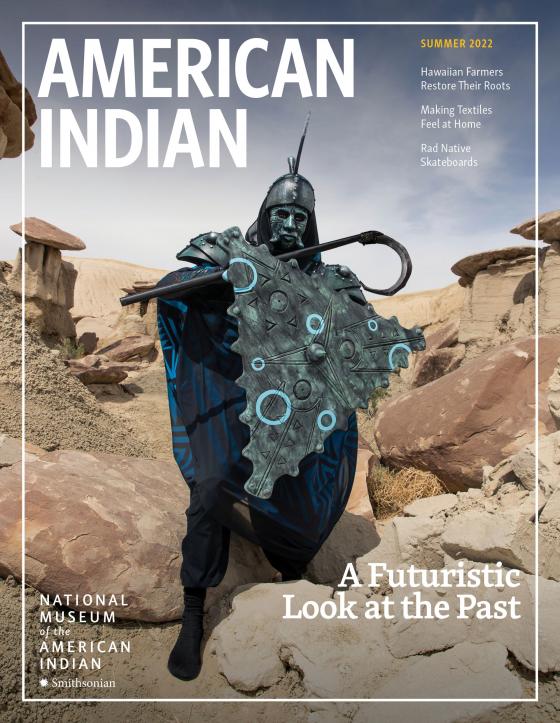
Watching Over the Past: Virgil Ortiz’s Futuristic Creations Are Perpetuating Cochiti Pueblo Pottery-Making Traditions
Virgil Ortiz still remembers the outings he took as a 6-year-old boy with his mother to creeks throughout their Pueblo of Cochiti in New Mexico. There, they would gather clay to mold into pots and storytellers—seated comical human or animal figures. His father was a drum maker and his mother and grandmother were both potters. He remembers giving prayers of thanks to Mother Earth for providing clay, a medium through which they could express themselves. “I was surrounded by art every day,” says Ortiz.
We’ve rounded up 40 of our favorite antiques stores, vintage shops, flea markets, and more along four winding antiques trails. Treasure hunters, it’s road-trip time.
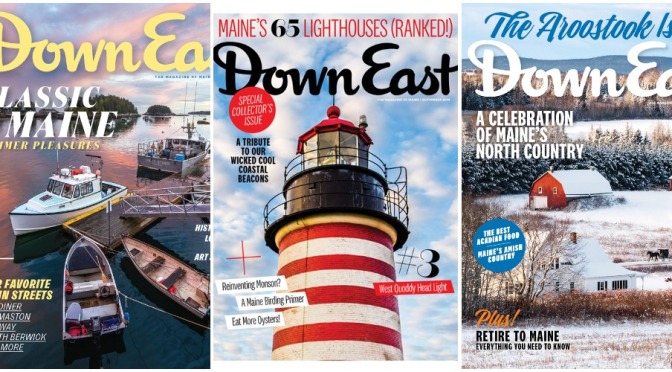
Down East Americana
In the easternmost counties in the country, fragments of a nostalgic American aesthetic linger along the byways and back roads.
A holiday home with a dual focus, Clifftop House maximises coastal views whilst maintaining a sense of privacy. Created by Ponting Fitzgerald Architects with appliances from Fisher & Paykel, the holiday house has a surprising relationship to its context.
Chapters: 00:00 – Introduction to the Holiday House 00:39 – The Client Brief 01:12 – Entering the House 02:16 – Designing the Kitchen 03:09 – The Master Bedroom 03:25 – Design Inspired by Context 04:21 – Connection to Nature 04:59 – A Unique Perspective
Settled into a coastal community on the Coromandel Peninsula, Clifftop House sits on a ledge overlooking Hahei Beach. While the holiday house has access to striking vistas, including views to Mercury Islands, the unusual topography also leaves the home within eyeshot of other properties. To foster a sense of privacy, Ponting Fitzgerald Architects purposefully restricts access to the surrounding context in some parts of the home.
The atmospheric interior of the holiday house distinctly contrasts the coastal scene outside – however, the top floor of the residence sees a large, covered deck flow out to the view, re-establishing the connection to nature in dramatic fashion. As an interior element of the design, the kitchen of Clifftop House contributes to the feeling of retreat from the outdoors. Dark American oak cabinetry establishes a modest and unimposing space, complemented by the seamless insertion of appliances by Fisher & Paykel.
The result sees the internal architecture play a dominant role in the holiday house, guiding occupants through the home and towards the view. A gentle imposition on its context, Clifftop House is defined by its architectural discretion. Ponting Fitzgerald Architects ensures that, despite having access to incredible views, the holiday house appears as a mere canopy from the perspective of the beach.
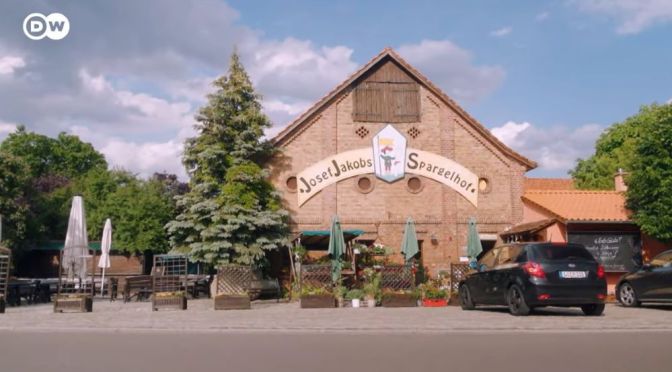
Even the ancient Greeks, wealthy Romans and Emperor August were big asparagus fans. Presumably, the Romans with their expansionist campaigns were behind its quick spread in Europe, including in Germany.
Today, Germany is one of the leading producers of asparagus in Europe. But why are Germans so crazy about the “white gold”? Our reporter Brant Dennis visits an asparagus farm during harvest, to see what exactly makes this funny-looking vegetable so popular.
The House Jan. 6 committee reconvenes for another public hearing. Russia appears close to capturing a key Ukrainian city in the eastern part of the country. And crypto-currency could be vulnerable to security threats.
Published six times a year, every issue of Scotland showcases its stunning landscapes and natural beauty, and delves deep into Scottish history. From mysterious clans and famous Scots (both past and present), to the hidden histories of the country’s greatest castles and houses, Scotland‘s pages brim with the soul and secrets of the country. Scotland magazine captures the spirit of this wild and wonderful nation, explores its history and heritage and recommends great places to visit, so you feel at home here, wherever you are in the world.
The artist discusses urban spaces and classic Russian children’s books.
New York may be a city where a person can, for the amount one might reasonably expect to pay for a month’s rent in many parts of this country, partake in an hours-long omakase experience featuring toro topped with osetra caviar and uni served with white truffle. Its temples of art may house some of the most renowned—and well-insured—art in the world. But it is also a city that embraces the epicure of the hot dog and the patron of the sidewalk artist. I recently spoke to this week’s cover artist, Victoria Tentler-Krylov, about city planning and sketching people on the subway.
Thomas Hardy’s depictions of a fictional Wessex and his own dear Dorset are more accurate than they may at first appear, says Susan Owens.
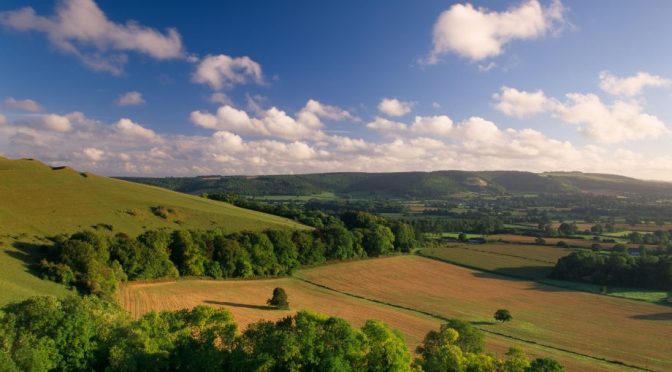
We feel a frisson when a real place plays a key part in a novel. The Cobb at Lyme Regis will always be associated with silly Louisa Musgrove and her tumble in Jane Austen’s Persuasion and Knole in Kent with Virginia Woolf’s hero-heroine Orlando. Thomas Hardy, however, took the use of known locations to another level. He may have invented the characters in his novels, but he made them walk along actual roads, look across valleys at real views and live in recognisable villages and towns — sometimes, even in identifiable buildings.
For all its operatic symbolism, Tess of the d’Urbervilles (1891) is a novel in which practical footwear matters. Among its heart-breaking moments is when Tess’s walking boots are discovered stuffed in a hedge where she had hidden them, mistaken for a tramp’s pair and taken away, forcing her to walk many miles back home along a rough road in pretty, but thin-soled, patent-leather ones.
A map depicting Hardy’s Wessex by Emery Walker, drawn for Tess of the d’Urbervilles. Credit: BBC / Album
Those who live in the country come to know land by ear as much as by eye. Hardy’s characters are expert in this — even in the dark and when drunk, as in Desperate Remedies (1871): ‘Sometimes a soaking hiss proclaimed that they were passing by a pasture, then a patter would show that the rain fell on some large-leafed root crop, then a paddling plash announced the naked arable.’
News, Views and Reviews For The Intellectually Curious












 Boomers Daily