CBS Sunday Morning – Since opening its doors in 1884, New York City’s Chelsea Hotel has welcomed artists, writers and cutting-edge thinkers who shaped America’s cultural landscape. Today, the storied landmark is being developed into a luxury boutique hotel.
Correspondent Alina Cho talks with residents, and with “Inside the Dream Palace” author Sherill Tippins, about the Chelsea’s unique history; and with developer Sean MacPherson about his determination to approach the Hotel Chelsea’s restoration with reverence.
A selection of three essential articles read aloud from the latest issue of The Economist. This week, Europe’s crisis of energy and geopolitics, how crypto goes to zero (10:19) and the consequences of America’s success against organised crime (16:32).
Butler to the World: How Britain Became the Servant of Tycoons, Tax Dodgers, Kleptocrats and Criminals by Oliver Bullough
Britain, according to this damning book, is a land of dirty money. It has become the country of choice for dictators wanting to hide their cash, and oligarchs wishing to launder their reputations. Yet instead of waging war on this illicit finance, we’re helping it to propagate. Our national debasement is a sordid story, but Oliver Bullough canters through it with wit and such a colourful set of case studies that it is at least a little easier to stomach. His account begins with the Suez crisis in 1956, which Bullough pinpoints as the moment when Britain’s imperial power crumbled and the nation searched for a new role in the world. The job we chose? Playing Jeeves to kleptocrats. Since the Brexit vote there has been a lengthy debate about what kind of country Britain should strive to be; Bullough argues convincingly that we haven’t spent enough time scrutinising what it has already become. Ros Urwin Profile, £20 Buy a copy of Butler to the World here
Megathreats: The Ten Trends that Imperil Our Future, and How to Survive Them by Nouriel Roubini
Nouriel Roubini is not known as “Dr Doom” for nothing, and this book from the economist who predicted the 2008 financial crisis is a bleak look at some of the horrible threats facing our survival on Earth, from economic collapse to a new cold war and the rise of artificial intelligence. But it is also an important wake-up call to how fragile modern civilisation is. Roubini lucidly lays out the challenges we face. Maybe save reading this until after the festive period. TK John Murray, £20 Buy a copy of Megathreats here
A Pipeline Runs Through It: The Story of Oil from Ancient Times to the First World War by Keith Fisher
In this epic, deeply researched history of oil, Keith Fisher, who spent 15 years on the book, takes us from the Byzantine era to the US oil boom of the 19th century and the rise of barons such as John D Rockfeller, and ends with the First World War. He unsparingly shows what a great but terrible industry oil exploration has been. No one comes out well, but the brutality involved in clearing indigenous communities to open up areas for exploitation are harrowing, especially the cruelty from what would become Royal Dutch Shell. TK Allen Lane, £35 Buy a copy of A Pipeline Runs Through It here
A new biography by Brigitta Olubas is the first to examine the life of the Australian novelist celebrated for her refined poetic fiction and acute moral vision.
Juan Villoro, who spent over two decades perfecting one book about Mexico City, recommends reading on the city he loves. “Mexico is too complex,” a visitor said. “It needs to be read.”
This week: as the exhibition Velvet Terrorism: Pussy Riot’s Russia opens at the Kling & Bang gallery in Reykjavik, Ben Luke talks to Masha Alekhina, one of the founding members of Pussy Riot, and the artist Ragnar Kjartansson, one of the co-curators of the show.
As protests continue across Iran, Aimee Dawson, The Art Newspaper’s acting digital editor, speaks to Shirin Neshat, the artist whose work expressing solidarity with women in Iran was recently installed outside the Neue Nationalgalerie in Berlin.
And this episode’s Work of the Week is by the Puerto Rican artist Gabriella Torres-Ferrer. Their 2018 sculpture—called Untitled (Value Your American Lie)—is part of a major new show at the Whitney Museum in New York, exploring art in Puerto Rico in the five years since the devastation wreaked by Hurricane Maria in 2017.
Velvet Terrorism: Pussy Riot’s Russia, Kling & Bang, Reykjavik, until 15 January 2023. Pussy Riot: Riot Days, National Theatre of Iceland, Reykjavik, 25 November. Proceeds from the concert and the exhibition go to supporting Ukraine. You can hear an in-depth interview with Ragnar Kjartansson from 2020 on our sister podcast A brush with… on the usual podcast platforms.No existe un mundo poshuracán: Puerto Rican Art in the Wake of Hurricane Maria, Whitney Museum of American Art, New York, until 23 Apr 2023.
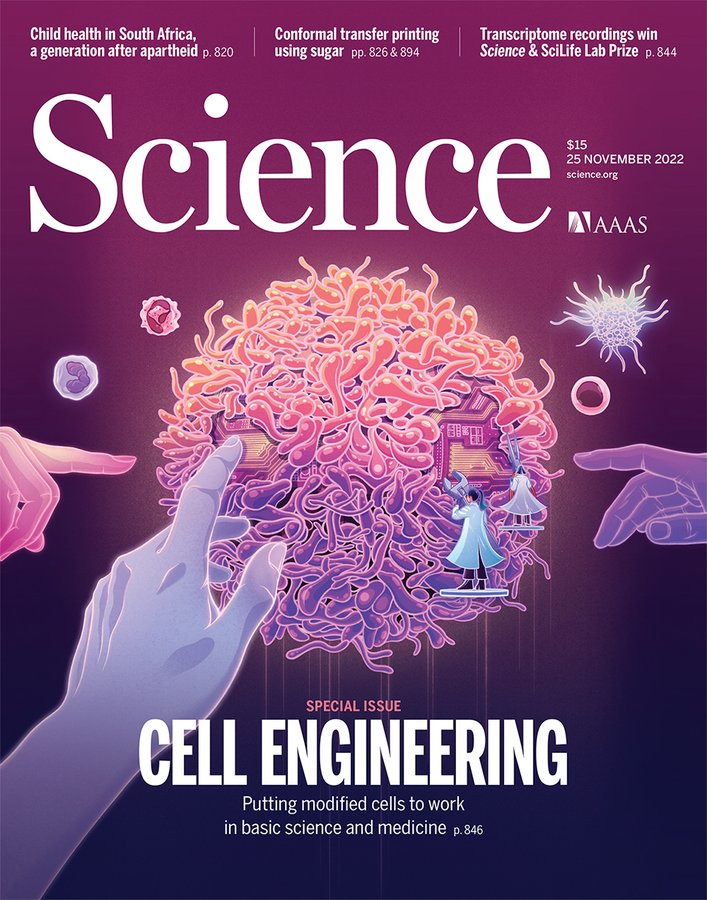
The successful use of engineered white blood cells (cells that are removed from the human body, modified with receptors that allow them to recognize cancer cells, and then returned to the body) to fight and eliminate tumor cells has frequently been called revolutionary and has even allowed researchers the rare opportunity to refer to a cure for certain cancers.
Financial Times – The FT’s Daniel Garrahan and food critic Tim Hayward visit Silo, a ‘zero waste’ restaurant in Hackney, which rejects the bin, makes ice cream from waste bread, turns seaweed into pendant lighting and ‘upcycles’ used wine bottles
SILO BEGAN IN AUSTRALIA IN 2011 WITH ARTIST JOOST BAKKER WHO PROPOSED THE IDEA OF ‘NOT HAVING A BIN’… FROM THAT POINT SILO’S CHEF AND OWNER HAS BUILT THE BUSINESS UP TO BEING THE WORLD’S FIRST ZERO WASTE RESTAURANT.
SILO IS A RESTAURANT CONCEIVED FROM A DESIRE TO INNOVATE THE FOOD INDUSTRY WHILST DEMONSTRATING RESPECT: RESPECT FOR THE ENVIRONMENT, RESPECT FOR THE WAY OUR FOOD IS GENERATED AND RESPECT FOR THE NOURISHMENT GIVEN TO OUR BODIES. THIS MEANS WE CREATE EVERYTHING FROM ITS WHOLE FORM, CUTTING OUT FOOD MILES AND OVER-PROCESSING, WHILST PRESERVING NUTRIENTS AND THE INTEGRITY OF THE INGREDIENTS IN THE PROCESS.
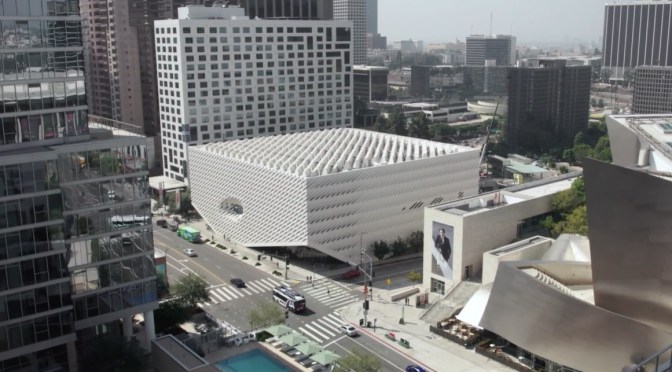
Dezeen – Architect Elizabeth Diller explains how The Broad Museum in Los Angeles was designed to feel “extremely welcoming” in the next instalment of Dezeen’s Concrete Icons series produced in collaboration with Holcim.
The video features The Broad in Los Angeles designed by Diller’s studio Diller Scofidio + Renfro, a three-storey museum that houses an expansive collection of contemporary and post-war artworks. Speaking to Dezeen in an exclusive video interview filmed at the Diller, Scofidio + Renfro office in New York City, Diller explained how the building was designed to feel inviting to visitors with a porous facade that allows light to be gently diffused into the gallery.
“It doesn’t really feel like a traditional museum,” Diller said. “There’s no sense of authority. When you step off the street, no one tells you where to go. There’s no information desk, there’s no admissions desk. You don’t pay, it’s free. It feels extremely welcoming.”



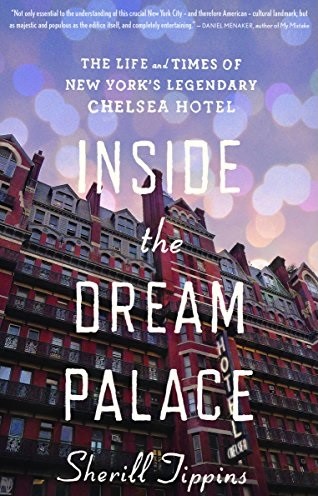


 Illustration by Eleanor Taylor





 Boomers Daily