From a Harvard Gazette online article (March 10, 2020):
 There’s a symptom review, there’s a travel review, and there’s an exposure review. And if the answer to any of those questions is yes, then you’re asked to not come in. And so far people have been compliant and have left. So that is a good thing.
If you have a cough and a fever, if you’ve got respiratory symptoms and you’re short of breath, if you’ve traveled to a place of concern or if you may have been exposed to someone who did — especially if you’re symptomatic — then I would definitely ask, “Do I really need to visit my grandma today? Can I wait and can I Skype her? Can I do FaceTime?”
I know that’s hard for some of our older adults who aren’t technologically savvy, but maybe now is the time to get them hooked up. It really would be heartbreaking if, in wanting to do something positive for someone’s emotional or mental health, you ended up infecting them.
Harvard-affiliated Hebrew SeniorLife offers a continuum of care for 3,000 elderly people daily, with a range of services including residential assisted living, short-term rehabilitation, outpatient services, and long-term care for those with chronic illness. In a Q&A interview aimed at understanding the challenges involved, Harvard Medical School Assistant Professor Helen Chen, Hebrew SeniorLife’s chief medical officer, discussed steps the facility has taken to combat the virus and the outlook going forward.
Read full article




 On this week’s show, freelance writer Christa Lesté-Lasserre talks with host Sarah Crespi about the scientists working on the restoration of Notre Dame, from testing the changing weight of wet limestone, to how to remove lead contamination from four-story stained glass windows.

 A central strategy for health care surge control is “forward triage” — the sorting of patients before they arrive in the emergency department (ED). Direct-to-consumer (or on-demand) telemedicine, a 21st-century approach to forward triage that allows patients to be efficiently screened, is both patient-centered and conducive to self-quarantine, and it protects patients, clinicians, and the community from exposure.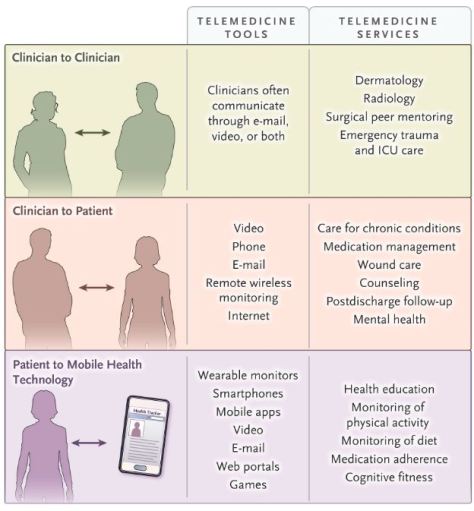


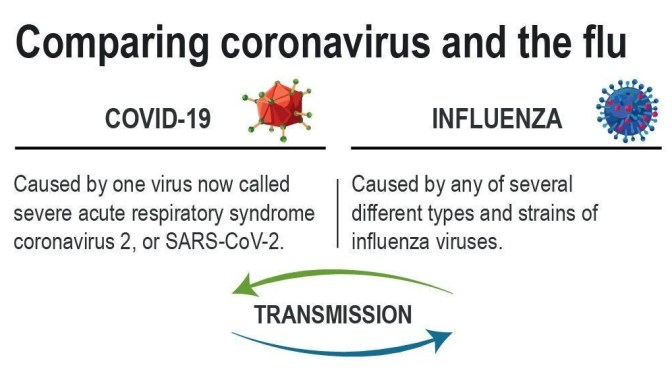
 Coronavirus appears to spread more slowly than the flu. This is probably the biggest difference between the two. The flu has a shorter incubation period (the time it takes for an infected person to show symptoms) and a shorter serial interval (or the time between successive cases). Coronavirus’s serial interval is around five to six days, while flu’s gap between cases is more like three days, the WHO says. So flu still spreads more quickly.
 Don’t blame snotty kids—adults are passing coronavirus around.

 Hear the latest science news, brought to you by Shamini Bundell and Nick Howe. This week, a newly discovered bird species from the time of the dinosaurs, and microbes hundreds of metres below the ocean floor.
 Boomers Daily