Category Archives: History

French Views: The Lasting Legacy Of King Louis XIV

Louis XIV embodies absolute monarchy more than any other French king. The Sun King, who ruled from 1643 to 1715, left his mark on many places in France, from Versailles to Saint-Jean-de-Luz and the Gobelins tapestry factory in Paris. Even today, his legacy lives on in all of them. FRANCE 24 takes you on a tour.

Views: France Honors 150th Anniversary Of Marcel Proust’s Birth

#France is marking the 150th anniversary of the birth of famed #novelist Marcel #Proust. He penned much of his greatest work, the seven-volume saga “In Search of Lost Time”, along the shores of Cabourg, in Normandy. Under the fictional name of Balbec, the town was put on the literary map. To find out more about Cabourg’s Proustian legacy, and Proust’s short but hugely influential career, we take you to The Villa of Time Found, whose immersive exhibit takes visitors on a sensory trip back in time. 

Cocktails With A Curator: Bruegel The Elder’s “The Three Soldiers” (Video)

n this week’s episode of “Cocktails with a Curator,” Deputy Director and Peter Jay Sharp Chief Curator Xavier F. Salomon discusses “The Three Soldiers” by Pieter Bruegel the Elder, one of only a few works by the artist outside Europe. Bruegel is best known for his lively and often comical peasant scenes, but here he takes as his subject three landsknechts, or German mercenary foot soldiers.

Currently on view on the second floor of Frick Madison, this grisaille painting shows a drummer, a standard-bearer, and a fifer outfitted in flamboyant costume (and presumably urging their fellow soldiers into battle). This week’s complementary cocktail is the Radler, a mixture of lemonade and lager favored in German-speaking lands north of the Alps.

To view this painting in detail, please visit our website: https://www.frick.org/bruegel3soldiers

Views: History Of Angkor Wat In Cambodia (Video)

Angkor Wat, located in northwest Cambodia, is the largest religious structure in the world by land area, measuring 162.6 hectares. At the centre of the temple stands a quincunx of four towers surrounding a central spire that rises to a height of 65 m above the ground.

The cause of the Angkor empire’s demise in the early 15th century long remained a mystery. But researchers have now shown that intense monsoon rains that followed a prolonged drought in the region caused widespread damage to the city’s infrastructure, leading to its collapse.

Medical History: The Discovery Of Insulin

Nearly 100 years since insulin was first used in the treatment of diabetes, Professor Chantal Mathieu, Professor of Medicine at the Katholieke Universiteit Leuven, Belgium, takes us through the history, development and future of this life saving drug. Read more in https://www.nature.com/articles/d4285…

Village View: Clerkenwell In Northern London

‘Clerkenwell was right outside the London city walls, but close enough to it, so was ideal for monasteries. With four or five in the area, people came to serve them, shops opened and you had quite a nice little village.’

Carla Passino June 14, 2021

A medieval well lies hidden inside a brick office block on Farringdon Lane. It may look a little more than a hole in the ground, but it’s from there that Clerkenwell came to life.

‘The parish clerks from the City of London would come to perform plays and read from the Bible and, because they gathered around this particular well, it became known as the well of the Clerks,’ explains Mark Aston, local-history manager for Islington Council, under which authority Clerkenwell falls. ‘It’s not only water that sprung from it, but Clerkenwell’s name itself.’

Read full article in Country Life Magazine

Podcast: Historian Mary Beard On Emperor Nero

This week: Mary Beard on Nero, one of the most infamous Roman emperors. Was he the sadistic murderer of legend, the emperor who fiddled as Rome burned, or has he been a victim of spin and myth? 

As well as getting Mary’s take on this infamous figure and Nero: the man behind the myth, the exhibition about him that’s just opened at the British Museum in London, Ben Luke also talks to the exhibition’s curator Thorsten Opper.

Also this week, as the first London Gallery Weekend begins—with 140 galleries from Mayfair to Mile End taking part—The Art Newspaper‘s editor-at-large Georgina Adam speaks to Jeremy Epstein, co-founder of Edel Assanti gallery and one of the founders of London Gallery Weekend initiative. And in this episode’s Work of the Week, we talk to the artist Nina Katchadourian about a very personal piece of embroidery, created by her adopted grandmother, which has inspired a new work by the artist in her show at Pace in New York.

The Cotswolds: History Of Village Of Ablington

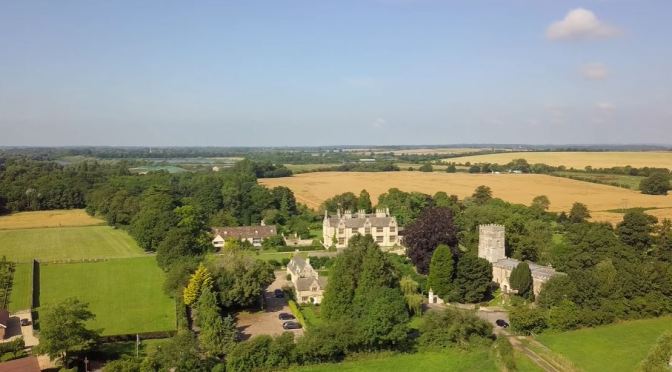
Ablington is a village in the county of Gloucestershire, England. It is located in the Coln Valley and is part of the Bibury civil parish, 6 miles north-east of Cirencester. Ablington is in the Cotswolds which has been designated by Natural England as an Area of Outstanding Natural Beauty.

Here, the book ‘A Cotswold Village’ was written, by J. Arthur Gibbs in the early 1900s. We explore the manor house he lived in, and compare the book to how times have changed.

Culture & Design: The ‘Chinatown’ Style In Cities

From London, to Manila, to Melbourne, Chinatowns in cities around the world share similar design elements. And that’s on purpose. Their distinct “Chinatown” style can be traced back to a single event: the 1906 San Francisco earthquake, which came on the heels of decades of violence and racist laws targeting Chinese communities in the US. The earthquake devastated Chinatown. But in the destruction, San Francisco’s Chinese businessmen had an idea for a fresh start: a way to keep their culture alive, by inventing a completely new one. Chinatown carved out a place for itself under the threat of hate and violence. Today, that legacy is staring us in the face.