With our current food systems accounting for about a quarter of all greenhouse gas emissions, a growing number of companies are producing an alternative to meat produce. From lab-engineered burgers to fake fish, vegan dining and bug cafes, which ideas could actually help reduce climate change and keep consumers happy.
Category Archives: Economics
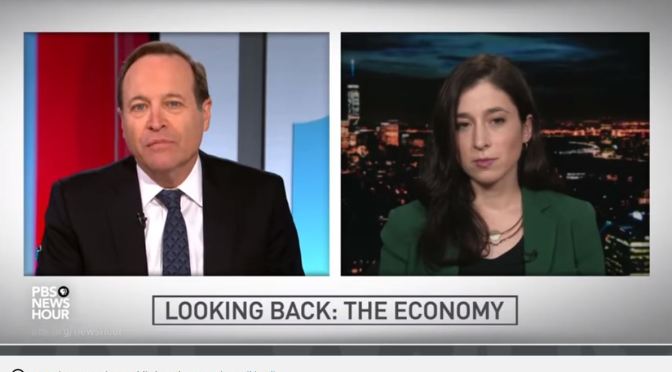
Economics: A Review Of The U.S. Economy Over The Decade Of The 2010’s (PBS)
As the year comes to a close, we look back at the past decade in the American economy — the first without a recession since record-keeping began in the 1950s. While unemployment remains at a historic low, wage growth has been sluggish, and inequality continues to divide the country. David Wessel of the Brookings Institution and The Washington Post’s Catherine Rampell join Jeffrey Brown.
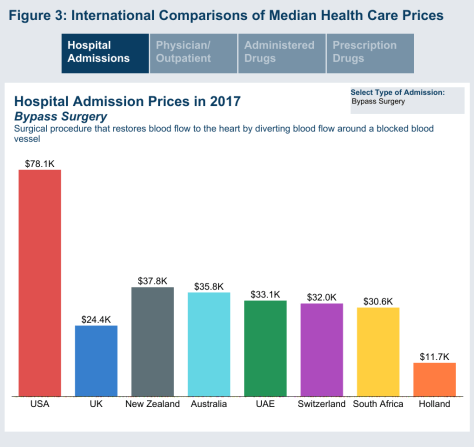
Healthcare: U.S. “Bypass Surgery” Costs Were $78.1K In 2017, Up To 6 Times The Cost In Europe (Chart)
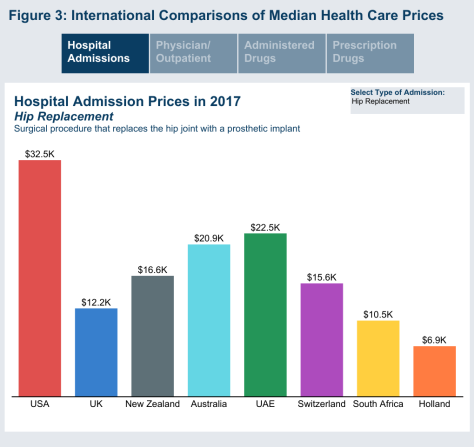
Healthcare: U.S. “Total Hip Replacement” Costs Were $32.5K In 2017, Up To 4 Times The Cost In Europe (Chart)
From a Health Care Cost Institute (HCCI) release (12/17/19):

- Holland had the lowest prices for hip and knee replacements with prices less than 25% of the US price. Prices for hip and knee replacements in the United Arab Emeritus (UAE) were the closest to the US at 71% of the price.
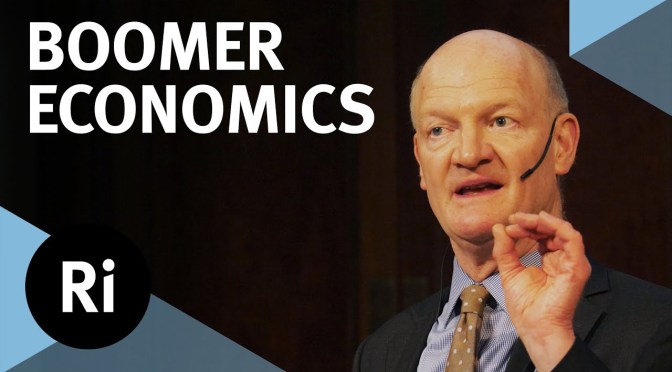
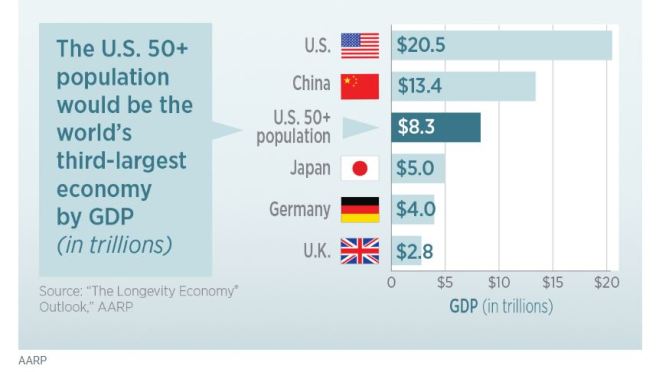
Baby Boomer Economics: American 50+ Population Would Be World’s Third Largest Economy (AARP)
From an AARP.org online article:
“As the number of people over 50 grows, that age cohort is transforming markets and sparking new ideas, products and services across our economy,” AARP CEO Jo Ann Jenkins says. “And as people extend their work lives, they are fueling economic growth past the traditional retirement age.

Americans age 50 and up contribute so much to the U.S. economy that they’d constitute the world’s third-largest economy if they were counted as their own country, a major new AARP study finds.
The economic contributions of 50-plus Americans totaled $8.3 trillion last year, which puts them just behind the U.S. and China when measured by gross domestic product.
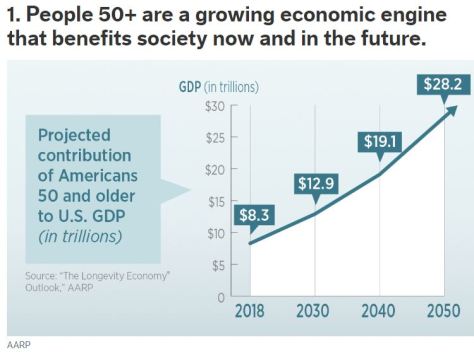
And that economic impact will grow significantly in decades to come, tripling to more than $28 trillion by 2050 as millennials and Generation Z begin to turn 50 in 2031 and 2047, respectively, the report finds.
Economics & Finance: “Economics For People” With Cambridge Author & Professor Ha-Joon Chang (New INET Video Series)
In the new series “Economics For People” from the Institute for New Economic Thinking (INET), University of Cambridge economist and bestselling author Ha-Joon Chang explains key concepts in economics, empowering anyone to hold their government, society, and economy accountable.

Lecture 1.1: The Nature of Economics
Lecture 1.2: Five Reasons Why Economics Is Political
Lecture 2: What Is Wrong With Globalization?
To view more videos: https://www.ineteconomics.org/perspectives/videos/economics-for-people
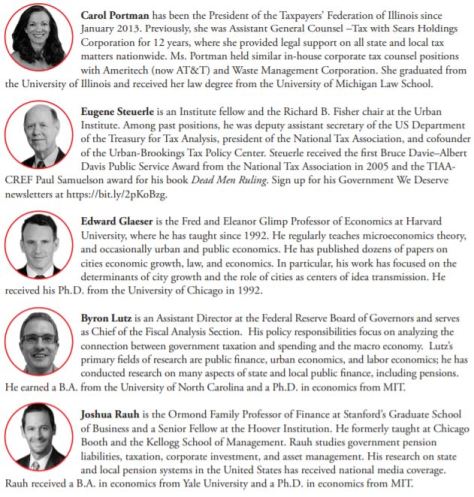
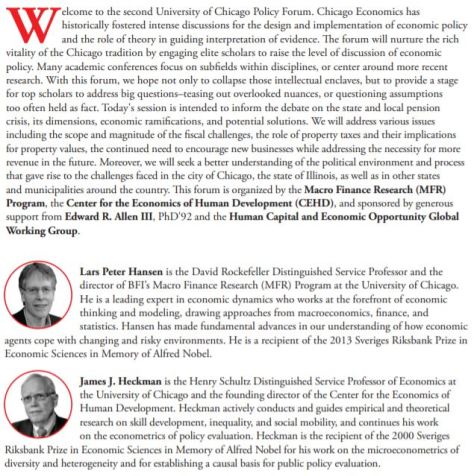
Economic Debates: “The Pension Crisis – State And Local Challenges” (Univ. Of Chicago Video)


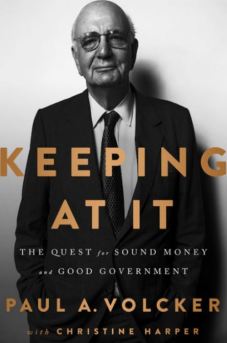
1970’s & 80’s Economics : Former Chairman Of Federal Reservce Paul Volcker Dies At 92
From a Wall Street Journal online article:
He became one of the most unpopular Fed chairmen in history for pushing interest rates as high as 20% to break the soaring inflation that consumed the U.S. economy in the 1970s. But his actions succeeded in bringing inflation, making Mr. Volcker one of the most successful central bankers in history.
Paul Volcker, who defeated runaway inflation as Federal Reserve chairman in the 1980s, establishing the importance to the economy of an independent central bank, and whose “Volcker Rule” became a controversial element of postcrisis banking regulation in the Obama administration, has died at 92 years old.
Mr. Volcker died Sunday at his home following a long illness, his family said.
Mr. Volcker served in government across Democratic and Republican administrations for almost three decades in roles guiding monetary policy and overseeing the nation’s financial system.