Category Archives: Economics

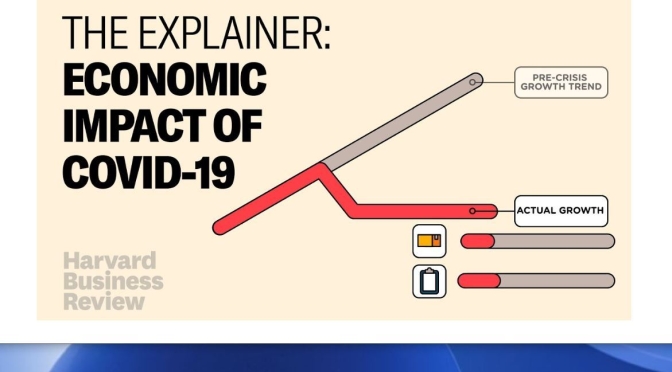
Business: “Understanding The Economic Impact Of Covid-19” (Harvard)


Predicting the path ahead has become nearly impossible, but we can speculate about the size and scale of the economic shock. Economic contagion is now spreading as fast as Covid-19 itself. Social distancing, intended to physically disrupt the spread, has severed the flow of goods and people, stalled economies, and is in the process of delivering a global recession.

Predicting the path ahead has become nearly impossible, as multiple dimensions of the crisis are unprecedented and unknowable. Pressing questions include the path of the shock and recovery, whether economies will be able to return to their pre-shock output levels and growth rates, and whether there will be any structural legacy from the coronavirus crisis.

This Explainer explores several scenarios to model the size and scale of the economic shock and the path ahead.

Based on the HBR article by Philipp Carlsson-Szlezak, Martin Reeves and Paul Swartz
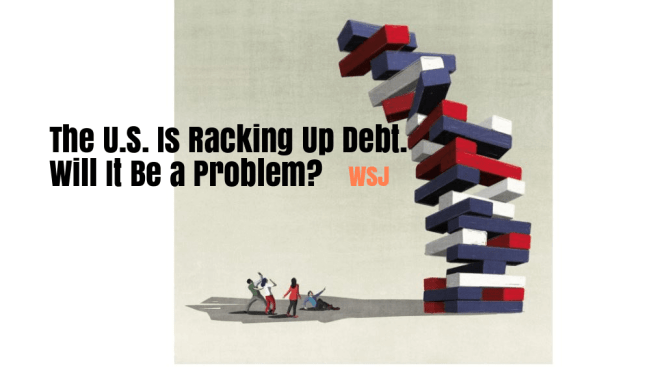
Economy: “The U.S. Is Racking Up Debt. Will It Be a Problem?” (WSJ Podcast)

The Journal WSJ PodcastsThe federal government is spending big to combat the economic damage of the coronavirus crisis, and federal debt has climbed to record levels. 
WSJ’s Jon Hilsenrath explains the debate over the impact of all that debt.


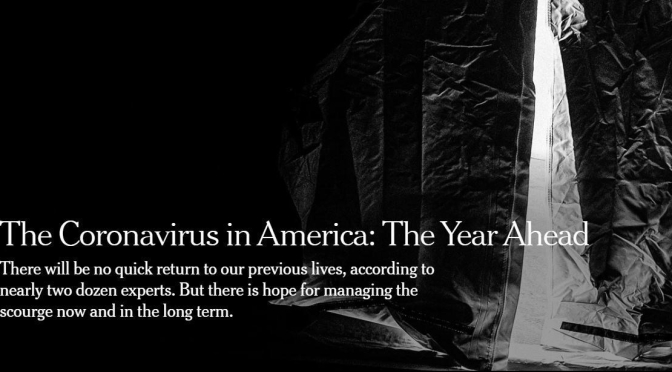
Reopening The Economy: “What The Year Ahead Might Look Like” (NY Times)

The Daily - New York Times podcastDonald G. McNeil Jr., a science and health reporter for The New York Times, discusses how the Coronavirus lockdown might end what it would look like.

While the economy is likely to reopen slowly, there is hope that society will adapt to manage the uncertainty of our new circumstances. Here’s what experts say the next year (or more) will look like.

Global News: China And The Pandemic, Saudi Arabia & Britain’s Glossy Mags (The Economist Podcast)

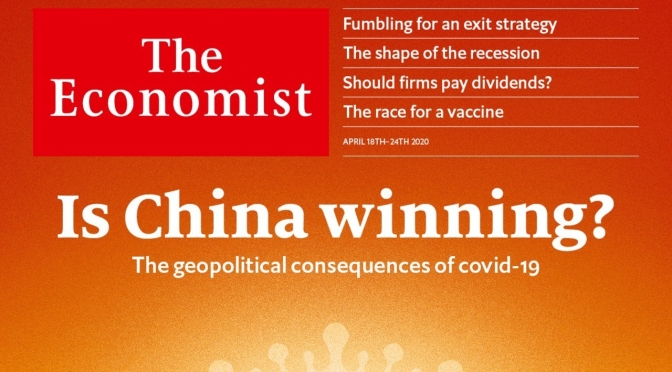
The Economist Editors Picks Podcast logoA selection of three essential articles read aloud from the latest issue of The Economist. This week, is China the pandemic’s big geopolitical winner? (8:30) Saudi Arabia has declared a ceasefire in Yemen, but the Houthis are fighting on. (14:13) And, how Britain’s glossy magazines are adjusting to a gloomy world.
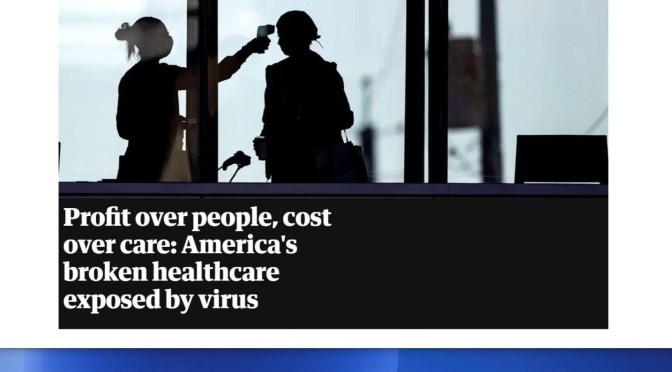
Medical Economics: Virus Exposes America’s “Broken Healthcare System” (2020)

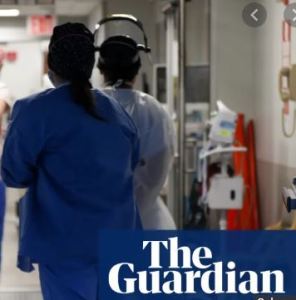
From The Guardian (April 16, 2020):

The Guardian Healthcare“As this epidemic makes clear, at any moment, any of us could become sick, could become hospitalized, could be on a mechanical ventilator,” said Adam Gaffney, an ICU doctor in Boston. “And that, in the United States, could mean potentially ruinous healthcare costs.”
With over 21,000 people dead and more than a 547,000 infected with the coronavirus in the US the last question on a person’s mind should be how they will pay for life-saving treatment.

There were 27.9 million people without health insurance in 2018, and record-high unemployment will increase that figure by millions

But as the death toll mounted, a patient who was about to be put on a ventilator in one of New York City’s stretched to capacity intensive care units had a final question for his nurse: “Who’s going to pay for it?”

Read full article

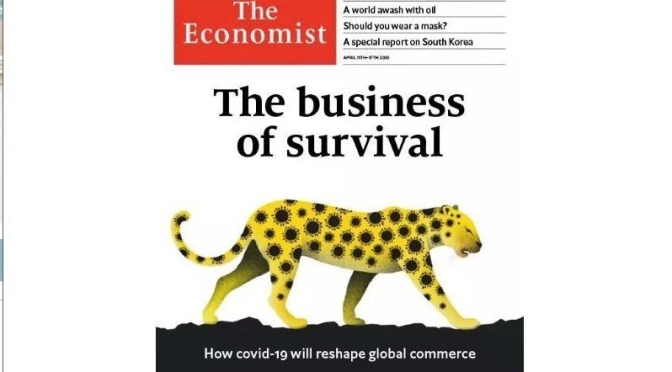
Post-Pandemic: Reopening Companies Into The New Reality (The Economist)

The Economist Editors Picks Podcast logoA selection of three essential articles read aloud from the latest issue of The Economist. This week, the business of survival—those companies that survive the coronavirus crisis will need to master a new environment. Plus, how to reopen factories after covid-19 (9:23) and Venezuela’s navy battles a cruise ship, and loses (17:41).

Coronavirus & The World: Grim Choices, Lockdowns & Ventilator Innovation

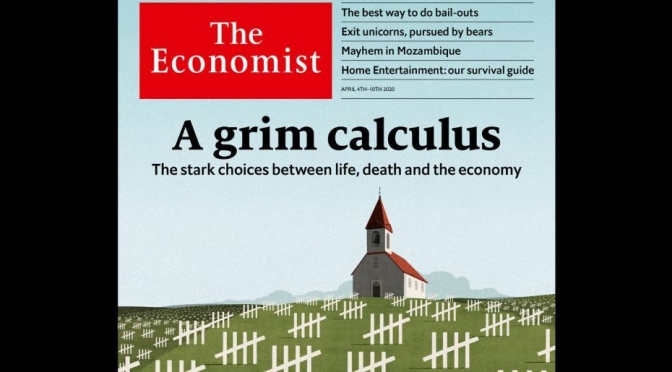
The Economist Editors Picks Podcast logoA selection of three essential articles read aloud from the latest issue of The Economist. This week, covid-19 presents grim choices between life, death and, ultimately, the economy (11:02), lockdowns in Asia have sparked a stampede home (17:52) And, Formula 1 comes up with a breathing machine for covid-19 patients.

Political News: “Brooks & Marcus” On $2.2 Trillion Economic Relief Package, Coronavirus Crisis (PBS)

New York Times columnist David Brooks and Washington Post columnist Ruth Marcus join Judy Woodruff to discuss the week in politics, including whether Americans are ready for the mounting coronavirus crisis, why the U.S. government wasn’t better prepared for the pandemic, the significance of the $2.2 trillion economic relief package and the status of the 2020 Democratic presidential primary.

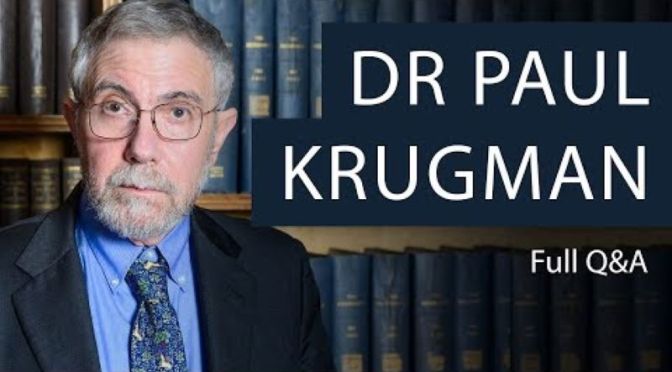
Video Interviews: Nobel Prize Economist Paul Krugman (Oxford Union)

Dr. Paul Krugman is a Nobel Prize-Winning economist, and a regular commentator for the New York Times. Though academically recognised for his contributions to international trade theory, he writes about a wide range of economic issues, and is well known for making economic theory accessible to non-academics through his columns and numerous popular books. A liberal, Dr. Krugman is a fierce opponent of the modern Republican party, though he previously served as an economic advisor in Reagan’s White House.

ABOUT THE OXFORD UNION SOCIETY: The Oxford Union is the world’s most prestigious debating society, with an unparalleled reputation for bringing international guests and speakers to Oxford. Since 1823, the Union has been promoting debate and discussion not just in Oxford University, but across the globe.

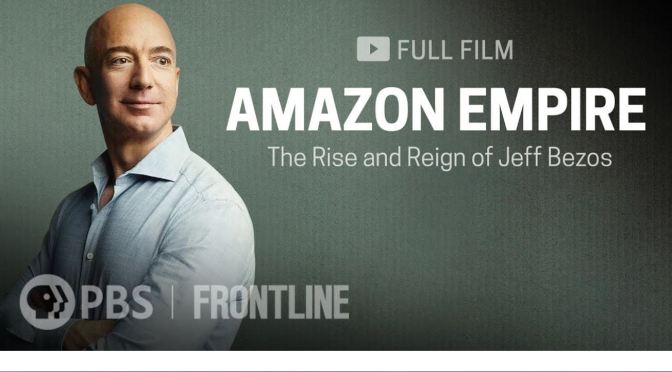
Technology: “Amazon Empire” (Frontline Video)

An inside look at how Amazon CEO Jeff Bezos built one of the largest and most influential economic forces in the world — and the cost of Amazon’s convenience.

Jeff Bezos is not only the richest man in the world, he has built a business that is without precedent in the history of American capitalism. His power to shape everything from the future of work to the future of commerce to the future of technology is unrivaled. As politicians and regulators around the world start to consider the global impact of Amazon — and how to rein in Bezos’ power — FRONTLINE investigates how he executed a plan to build one of the most influential economic and cultural forces in the world.