Gion Mikaku, founded 1929: – 2 different cuts of beef: Tajima beef filet mignon and Kobe beef rump steak with just the right amount of marbling (intra-muscular fat) and no extra-muscular fat – 400g in total. Steak cutting behind a window in their kitchen, friendly, dedicated service, pleasant view, extra hot griddle for proper searing, right timing and handling of the steaks: they certainly know what they are doing – This restaurant meal included garlic rice (between steak and dessert).
Savage Beauty light installation in Connemara Ireland (Lough Nafooey) March 2020. Savage Beauty by Kari Kola commissioned by Galway 2020 European Capital of Culture.
Music: Lawrence Hodge
Connemara’s Islands
Flung out into the Atlantic and shaped by the sheer force of the sea, Connemara’s islands are spectacular remnants of life long lost in other parts of Ireland. Staunchly proud of their traditions and as famous for their culture as their dramatic landscapes, Inishbofin and the Aran Islands are a patchwork of tiny, tightly packed fields, rambling stone walls, pristine beaches and craggy shores.
The islands’ relative isolation has fostered a profound sense of peace and protected a rich traditional heritage. They’re wonderful places to walk or cycle, and famous for their live music and traditional dances.
Situated in the choppy waters of Galway Bay, the three Aran Islands in the Gaeltacht region. The largest and most developed island is Inis Mór, a place blanketed in fissured limestone and snaking stone walls. The island’s most famous sight is Dún Aonghasa, a breathtaking semi-circular stone fort perched dramatically on top of a 100m cliff. Other prehistoric forts dot the island, as well as numerous early Christian remains. The heritage centre, Ionad Árann, gives a great insight into the island’s history and traditions but you’ll also see them first hand in the nightly music sessions, regular dances and impromptu storytelling.
It’s springtime at the Central Garden. Birds are singing, the azaleas are glowing, and burgundy tulips and blue irises line the paths. However, the crowds are gone—the Getty Center has closed temporarily to minimize the spread of coronavirus.
A view back toward the Getty Center from the furthest point of the Central Garden. Photo by Sarah Waldorf
The quiet comes at a time of transition for the garden. Spring always brings change and renewal, but this year Getty’s new horticulturist, Jackie Flor, has been trying to channel the vision of the garden’s creator, artist Bob Irwin, as she brings the garden back to his original intent
Does the new Golden Celebration rose with its rich, sweet scent honor Irwin’s intentions for that spot? How about the trio of new Redbuds ready to pop? And how would he feel about her attempts to curtail the wildly proliferating Madeira Island Geranium? Yes, they were his favorite plant, but they have run rampant.
“I’m not heartless,” she said a few weeks ago about the robust plants with pink flowers. “But they need to be tucked back into their proper place.”
On this week’s show, host Joel Goldberg talks with science journalist Andrew Curry about archaeological finds from thousands of years ago along the shores of Northern Europe. Curry outlines the rich history of the region that scientists, citizen scientists, and energy companies have helped dredge up.
Also this week, from a recording made at this year’s AAAS annual meeting in Seattle, host Meagan Cantwell speaks with Elizabeth Margulis, a professor at Princeton University, about musical memory. Margulis explains what research tells us about how our brains process music, and dives into her own study on how Western and non-Western audiences interpret the same song differently.
Discover Alabama’s rich history as we reveal the vast discoveries that forged a path to equality for millions. The story of the Cotton State has as many dramatic turns as the tracks of the Talladega Superspeedway.
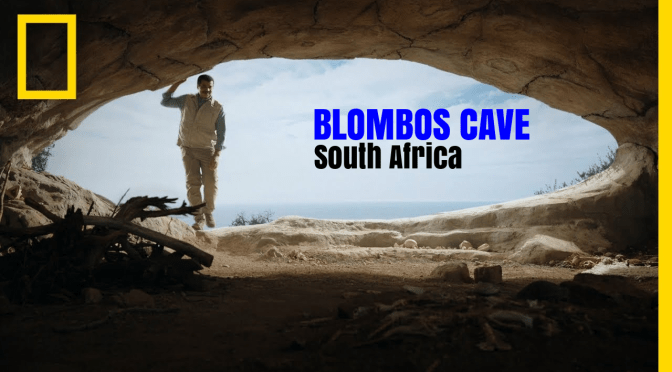
See the first laboratory on Earth – Blombos Cave. Here our ancestors conducted the first chemistry experiments.
Blombos Cave is an archaeological site located in Blomboschfontein Nature Reserve, about 300 km east of Cape Town on the Southern Cape coastline, South Africa. The cave contains Middle Stone Age (MSA) deposits currently dated at between c. 100,000 and 70,000 years Before Present (BP), and a Late Stone Age sequence dated at between 2000 and 300 years BP. The cave site was first excavated in 1991 and field work has been conducted there on a regular basis since 1997, and is ongoing.
The excavations at Blombos Cave have yielded important new information on the behavioural evolution of anatomically modern humans. The archaeological record from this cave site has been central in the ongoing debate on the cognitive and cultural origin of early humans and to the current understanding of when and where key behavioural innovations emerged among Homo sapiens in southern Africa during the Late Pleistocene. Archaeological material and faunal remains recovered from the Middle Stone Age phase in Blombos Cave – dated to ca. 100,000–70,000 years BP – are considered to represent greater ecological niche adaptation, a more diverse set of subsistence and procurements strategies, adoption of multi-step technology and manufacture of composite tools, stylistic elaboration, increased economic and social organisation and occurrence of symbolically mediated behaviour.
The most informative archaeological material from Blombos Cave includes engraved ochre, engraved bone ochre processing kits, marine shell beads, refined bone and stone tools and a broad range of terrestrial and marine faunal remains, including shellfish, birds, tortoise and ostrich egg shell and mammals of various sizes.[20][21][22] These findings, together with subsequent re-analysis and excavation of other Middle Stone Age sites in southern Africa, have resulted in a paradigm shift with regard to the understanding of the timing and location of the development of modern human behaviour.




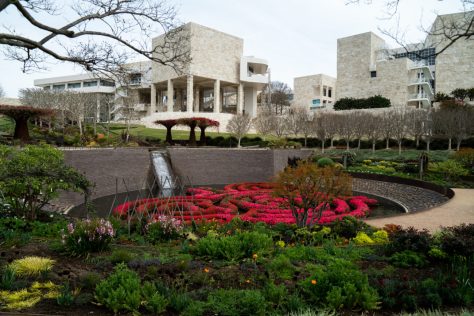
 The quiet comes at a time of transition for the garden. Spring always brings change and renewal, but this year Getty’s new horticulturist, Jackie Flor, has been trying to channel the vision of the garden’s creator, artist Bob Irwin, as she brings the garden back to his original intent
 On this week’s show, host Joel Goldberg talks with science journalist Andrew Curry about archaeological finds from thousands of years ago along the shores of Northern Europe. Curry outlines the rich history of the region that scientists, citizen scientists, and energy companies have helped dredge up.


 Boomers Daily