

All posts by She Seeks Serene

My Journey of Reimagining Life, Love and Education

Podcast Interviews: Alexander Vreeland On His Fashion Journalist Grandmother “Diana”

The StackAlexander Vreeland, grandson of fashion journalist Diana Vreeland, tells us about his new book, ‘Bon Mots: Words of Wisdom from the Empress of Fashion’.
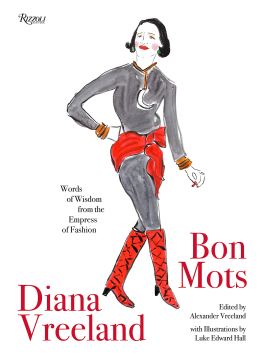
81vcK3Ok10LDiana Vreeland’s insightful edicts and evocative aphorisms remain her strongest legacy. She looked at life as a romantic and lived through dreams and imagination. Showing leadership, vision, and timeless wit, this book celebrates her visionary words that not only transformed the world of fashion, but also gave us sage advice to live by.

Sourced and edited by her grandson Alexander, Diana Vreeland: Bon Mots covers Vreeland’s incisive views of subjects such as allure, fashion, and style (“I mean, a new dress doesn’t get you anywhere; it’s the life you’re living in the dress”); beauty (“The neck is the beginning and end of looking like anybody”); age (“The quickest way to show your age is to try to look young”); color (“Black is the hardest color to get right–except for gray”); and her powerfully creative way of thinking (“I’m looking for the suggestion of something I’ve never seen”) Brought to life by illustrator Luke Edward Hall, Bon Mots vividly displays Mrs. Vreeland’s original thought and speech, which is equally as inspiring and relevant now as it was then.

About the Author

Diana Vreeland (1903-1989) joined Harper’s Bazaar as fashion editor in 1936; was the editor in chief of Vogue from 1962 to 1971; and later oversaw the Costume Institute at the Metropolitan Museum of Art. Alexander Vreeland has had an extensive career in fashion and beauty and is the president of the Diana Vreeland Estate and the author of Diana Vreeland Memos (Rizzoli, 2013) and Diana Vreeland: The Modern Woman (Rizzoli, 2015). Luke Edward Hall is a London-based artist and designer.

Art Profiles: 99-Year Old American Painter Wayne Thiebaud’s “Classic Pop”

From Christie’s (June 27, 2020):

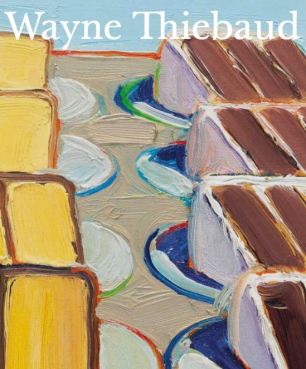
Wayne Thiebaud - American PainterOne of the largest canvases from Thiebaud’s groundbreaking early period, it depicts a row of arcade machines, decorated in a vibrant mix of oranges and yellows…With their foreshortened bodies, the machines press towards the picture plane like the cakes and hot dogs in Thiebaud’s other works, inviting the viewer to reach in and taste.

It’s a classic of Pop art, a masterful reflection of the post-war boom in consumerism.

In November 2020, Wayne Thiebaud — the American artist best-known for his still lifes of pies, pastries and other tempting treats — turns 100.

Thiebaud also had a lot of fun with the backglasses: instead of cartoons and flashing lights, he decorated them with the ghostly, geometric forms of Frank Stella’s Concentric Squares, Jasper Johns’ Targets and Ellsworth Kelly’s Colors for a Large Wall.

Read full article

Cocktails With A Curator: “Stubb’s ‘Portrait Of Warren Hastings’ (Frick)

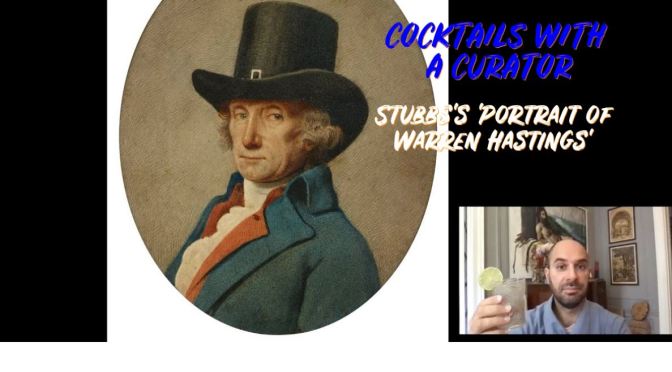
In this week’s episode of “Cocktails with a Curator,” join Deputy Director and Peter Jay Sharp Chief Curator Xavier F. Salomon as he considers the life of statesman Warren Hastings, who is depicted in a small watercolor from about 1791 by the prominent British artist George Stubbs. Explore the tumultuous career of Hastings, from his tenure as governor-general of India to a decade-long trial in Westminster Hall upon his return to England. This week’s complementary cocktail is a gin and tonic garnished with a slice of lime.

Political News: “Shields & Brooks” On The 2020 Presidential Race (PBS)


Syndicated columnist Mark Shields and New York Times columnist David Brooks join Judy Woodruff to discuss the week in politics, including new polls on the 2020 presidential race and President Trump’s job performance, the federal response to a surging coronavirus pandemic, the administration’s effort to strike down the Affordable Care Act, congressional divergence on police reform and whether Washington, D.C., will become a state.

Interviews: Richard Haass – “The World – A Brief Introduction” (Podcast)

The Book Review Podcast“The whole lesson of this pandemic, and the whole lesson of 9/11, is we can’t ignore the world, or if we do ignore the world, it’s at our peril,” Haass says. “These oceans that surround us are not moats. We’ve got to pay attention to the world and we’ve got to fix things here at home.”

The ambition of Richard Haass’s new book is clear from its title: “The World: A Brief Introduction.” In just 400 pages, Haass, who has been the president of the nonpartisan Council on Foreign Relations since 2003, offers a primer on world affairs. On this week’s podcast, Haass talks about why he wrote it. (Read more)

Richard Nathan Haass is an American diplomat. He has been president of the Council on Foreign Relations since July 2003, prior to which he was Director of Policy Planning for the United States Department of State and a close advisor to Secretary of State Colin Powell.

Coronavirus Update: State Of The Pandemic After Six Months (Nature Podcast)

Coronapod ReportWe take a look back over the past six months of the pandemic, and discuss how far the world has come. It’s been a period of turmoil and science has faced an unprecedented challenge. What lessons can be learned from the epidemic so far to continue the fight in the months to come?
Also in this episode:

12:55 Unanswered questions

After months of intensive research, much is known about the new coronavirus – but many important questions remain unanswered. We look at the knowledge gaps researchers are trying to fill.

Nature Medicine: Real-time tracking of self-reported symptoms to predict potential COVID-19

20:36 How has lockdown affected fieldwork?

The inability to travel during lockdown has seriously hampered many researchers’ ability to gather fieldwork data. We hear from three whose work has been affected, and what this means for their projects.

Diet Studies: Benefits Of “Time-Restricted Eating” (TRE) Improve With Greater Time Restriction

From iScience / Cell.com (June 26, 2020):

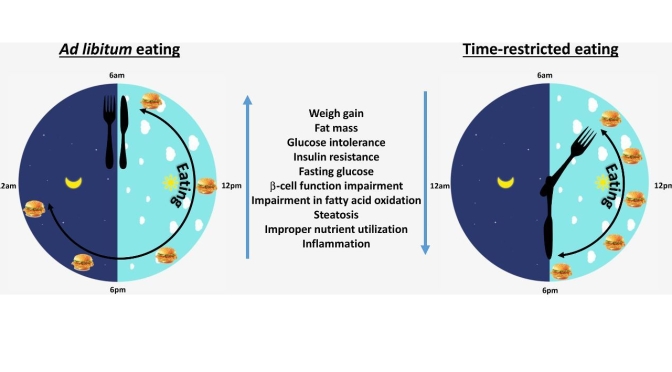
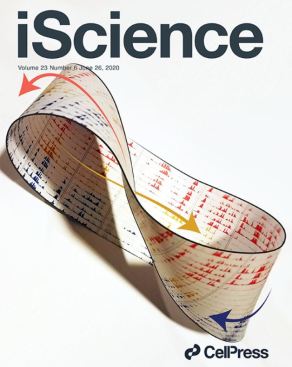
iScience June 26 2020…the beneficial effects of TRE are dose dependent, with greater reductions in body weight, fat mass, and improvement in glucose tolerance when a 9-h protocol was implemented versus 12 and 15 h. The optimal TRE time frame to recommend for people has not been tested. Clear improvements have been noted after 6-, 8-, 9-, and 10-h protocols. It is likely that the greater time restriction would result in greater weight losses, which may maximize the metabolic benefits.
Eating out of phase with daily circadian rhythms induces metabolic desynchrony in peripheral metabolic organs and may increase chronic disease risk. Time-restricted eating (TRE) is a dietary approach that consolidates all calorie intake to 6- to 10-h periods during the active phase of the day, without necessarily altering diet quality and quantity.

Time-Restricted Eating

TRE reduces body weight, improves glucose tolerance, protects from hepatosteatosis, increases metabolic flexibility, reduces atherogenic lipids and blood pressure, and improves gut function and cardiometabolic health in preclinical studies. This review discusses the importance of meal timing on the circadian system, the metabolic health benefits of TRE in preclinical models and humans, the possible mechanisms of action, the challenges we face in implementing TRE in humans, and the possible consequences of delaying initiation of TRE.

Read full study

Top New Books: “The Language Of Butterflies” By Wendy Williams (2020)

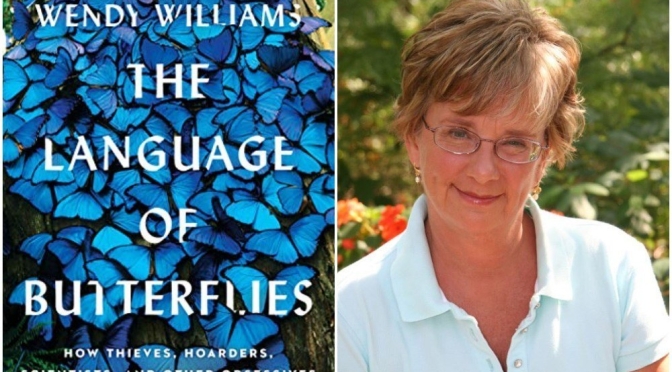
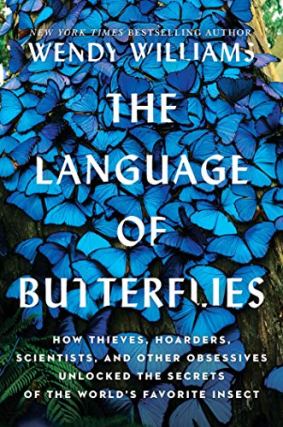
The Language of ButterfliesButterflies are one of the world’s most beloved insects. From butterfly gardens to zoo exhibitions, they are one of the few insects we’ve encouraged to infiltrate our lives. Yet, what has drawn us to these creatures in the first place? And what are their lives really like? In this groundbreaking book, New York Times bestselling author and science journalist Wendy Williams reveals the inner lives of these “flying flowers”—creatures far more intelligent and tougher than we give them credit for.
In this fascinating book from the New York Times bestselling author of The Horse, Wendy Williams explores the lives of one of the world’s most resilient creatures—the butterfly—shedding light on the role that they play in our ecosystem and in our human lives.

Monarch butterflies migrate thousands of miles each year from Canada to Mexico. Other species have learned how to fool ants into taking care of them. Butterflies’ scales are inspiring researchers to create new life-saving medical technology. Williams takes readers to butterfly habitats across the globe and introduces us to not only various species, but to the scientists who have dedicated their lives to studying them.

Coupled with years of research and knowledge gained from experts in the field, this accessible “butterfly biography” explores the ancient partnership between these special creatures and humans, and why they continue to fascinate us today. Touching, eye-opening, and incredibly profound, The Language of Butterflies reveals the critical role they play in our world.

Read more

Top New Travel Videos: “Cycling In Portugal”

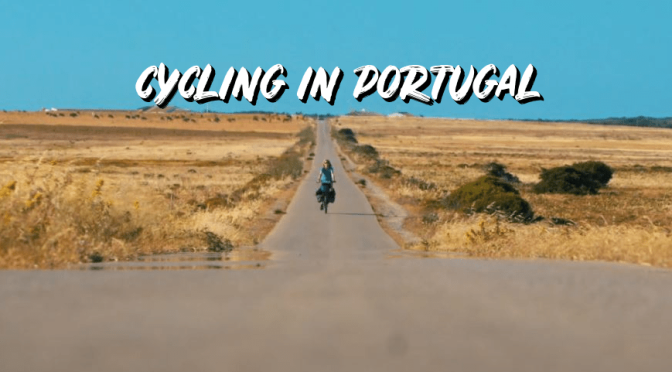
From East to West, EuroVelo 1 crosses the Algarve in its entirety, from the Spanish border to Sagres; following over 200 kilometres of coastline! EuroVelo 1 – Atlantic Coast Route in Portugal has something to suit everybody; from sheltered dunes to rocky coves; from tiny bays to vast stretches of open sandy beach; from shallow lagoons to the wild crashing surf of the Atlantic Ocean. Blessed with over 300 days of sunshine a year, the Algarve also offers the perfect climate to complement its spectacular shoreline.

Website

Travel & Driving Videos: A “1961 Ferrari 250 GT SWB Berlinetta” In Swiss Alps

Ferrari 250 GT Berlinetta SWB 1961

One of the most notable GT racers of its time, the 1959 250 GT Berlinetta SWB used a short (2,400 mm (94.5 in)) wheelbase for better handling. Of the 176 examples built, both steel and aluminum bodies were used in various road (“lusso”) and racing trims. Engine output ranged from 240 PS (177 kW; 237 hp) to 280 PS (206 kW; 276 hp). The “lusso” road car version was originally fitted with 185VR15 Pirelli Cinturato (CA67).

Development of the 250 GT SWB Berlinetta was handled by Giotto BizzarriniCarlo Chiti, and young Mauro Forghieri, the same team that later produced the 250 GTODisc brakes were a first on a Ferrari GT, and the combination of low weight, high power, and well-sorted suspension made it competitive. It was unveiled at the Paris Motor Show in October and quickly began selling and racing. The SWB Berlinetta won Ferrari the GT class of the 1961 Constructor’s Championship. Also won 1960, 1961 and 1962 Tour de France Automobile before giving ground to the GTO’s.

In 2004, Sports Car International placed the 250 GT SWB seventh on a list of Top Sports Cars of the 1960s, and Motor Trend Classic placed it fifth on a list of the ten “Greatest Ferraris of all time”.

Read article