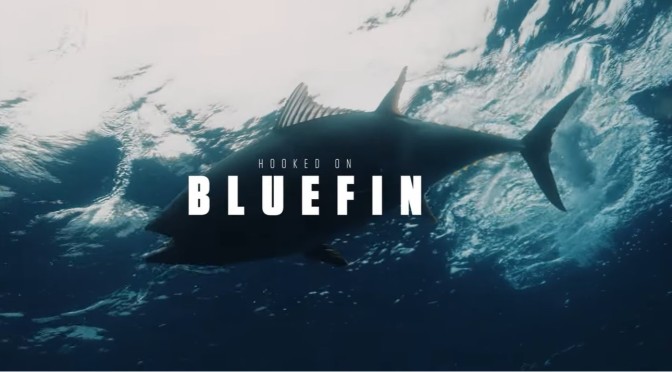
“They’re the biggest, baddest fish in the ocean. They will break your heart, they will break your soul, they will break your back, they’ll break your gear. It’s an emotional rollercoaster.”
Costa Films’ “Hooked on Bluefin” unpacks the centuries-old culture of fishing for bluefin tuna — one of the most highly-valued gamefish on the planet. A coast-to-coast adventure, this film explores everything it takes to bring one of these mighty fish from ocean to table.
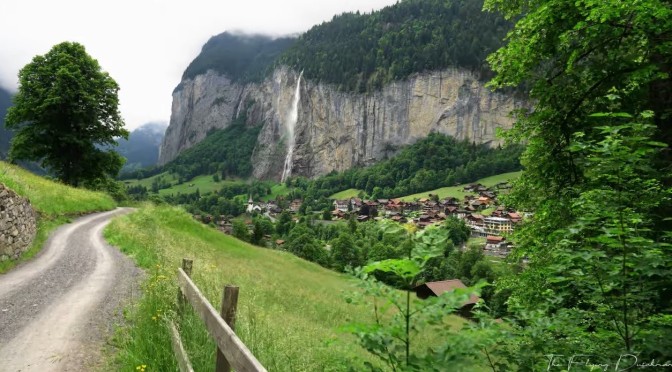
Lauterbrunnen is situated in one of the most impressive trough valleys in the Alps, between gigantic rock faces and mountain peaks. With its 72 thundering waterfalls, secluded valleys, colourful alpine meadows and lonely mountain inns, the Lauterbrunnen Valley is one of the biggest nature conservation areas in Switzerland.
– Description The very name ‘Lauter Brunnen’ (‘many fountains’) suggests the magnificence of this landscape. There are 72 waterfalls in the Lauterbrunnen Valley, the most famous being the Staubbach Falls. Plunging almost 300 metres from an overhanging rock face, they are one of the highest free-falling waterfalls in Europe.
In 1779, Johann Wolfgang von Goethe visited the valley, and was inspired by the roaring waters to write his well-known poem ‘Spirit song over the waters’.
Another deafening natural phenomenon are the Trümmelbach Falls in the ‘Black Monk’ mountain, hidden behind mighty rock faces. Up to 20,000 litres of water per second cascade over the ten glacier falls from a total height of about 200 metres. This spectacle can only be reached in summer by tunnel lift.
This week The World Economic Forum are highlighting 4 top stories:
What is hyperinflation,
the impact of climate change on the Alps,
a record breaking super computer and
the world’s first autonomous ship.
The World Economic Forum is the International Organization for Public-Private Cooperation. The Forum engages the foremost political, business, cultural and other leaders of society to shape global, regional and industry agendas. We believe that progress happens by bringing together people from all walks of life who have the drive and the influence to make positive change.
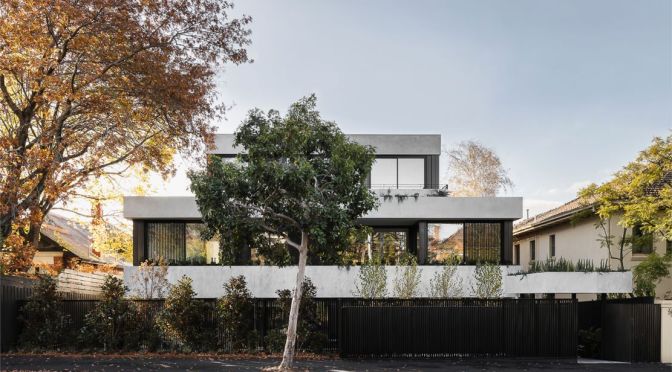
The exact sum of its parts, The Gallery House features spaces both grand and small, each expressing their own narrative. Crafted by Workroom, the super house stands as an exemplary piece of interior design and architecture. Situated in the well-established suburb of Toorak,
00:00 – The Local Project Print Publication 00:10 – Introduction to the Super House 01:27 – Creating Continuity with Materials 02:30 – Use of Stone in the House 02:47 – Landscape Design 03:21 – Natural Light 03:50 – A Sense of Timelessness 04:27 – What the Architect is Most Proud Of
The Gallery House sits amongst other large family homes and gardens. Despite its spatial openness, the super house is designed in allusion to experiences yet to come, flowing towards other aspects of itself and its context. A house tour of the property reveals the extent of its size. A true super house, the residence contains 4 bedrooms, 2 lounge rooms and vast, double-height voids. Workroom purposely conceals the size of the home from the street, creating anticipation and intrigue, using a curved concrete wall to the entry as a reveal of what is to come. The modern materials of concrete, terrazzo, timber and stone feature consistently in the super house. Subverting expectations, Workroom uses the characteristically heavy concrete to craft an elegant staircase that appears effortlessly lightweight, whilst timber and green stone facilitate an open connection to the lush landscaping. Embracing a raw materiality, Workroom creates a super house that will gracefully express the passage of time. With the capacity to visually evolve with age, The Gallery House is a successful interpretation of modern refinement.
This week: why is Tate rejecting an archive of material relating to Francis Bacon, 18 years after acquiring it?
Our London correspondent Martin Bailey tells us about his recent scoop that Tate is returning a thousand documents and sketches said to have come from the studio of Francis Bacon to Barry Joule, a close friend of the artist, who donated them to Tate in 2004. We then discuss the material with Martin Harrison, the pre-eminent Bacon scholar and editor of the catalogue raisonné of Francis Bacon’s work published in 2016, and to Sophie Pretorius, the archivist at the Estate of Francis Bacon, who went through the Barry Joule archive item by item. Victoria Munro, the director of the Alice Austen House Museum in New York, discusses this still too-little-known photographer, and her documentation of immigration to the United States and the lives of queer women in the 19th and early 20th centuries. And this episode’s Work of the Week is Weißes Bild (1994), a painting by the late Luxembourg-born artist Michel Majerus, now on view at Art Basel—Aimee Dawson, acting digital editor, is at the fair and talks to Giovanni Carmine, curator of the Unlimited section, in which the painting appears.
Sophie Pretorius’s essay Work on the Barry Joule Archive is in the book Francis Bacon: Shadows published by the Estate of Francis Bacon and Thames and Hudson.
For more on the Alice Austen House Museum, visit aliceausten.org. The podcast My Dear Alice is out in the autumn.
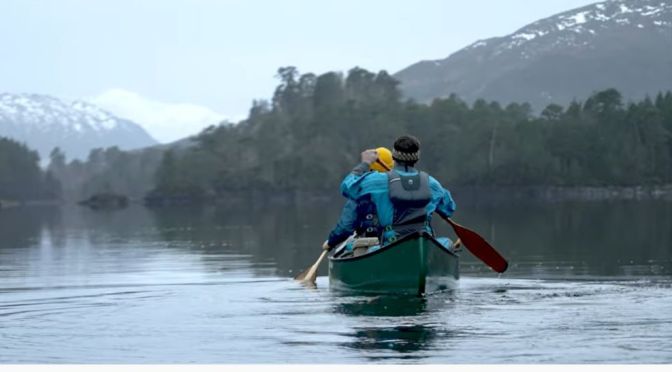
In February 2022, the British Isles were hit by three consecutive storms, some of the strongest seen in decades. In the days before the storms arrived, we decided to change the plan for our canoeing expedition whilst we were already on our way to Scotland. Instead of paddling the exposed lochs along the west coast, we opted for a more sheltered location. A glen tucked away right in the heart of the highlands. This film showcases the highlights of our journey.
What’s on the agenda of this year’s “Russian Davos”? Plus: we speak with the head of the Latin America desk at Reporters Without Borders and give you the latest art and culture news.
In its third public hearing to lay out its findings, the House committee investigating the Jan. 6 attack showed evidence that the president knew his order to the vice president was unlawful.
A previously unidentified population of polar bears documented on the southeast coast of Greenland uses glacier ice to survive despite limited access to sea ice.
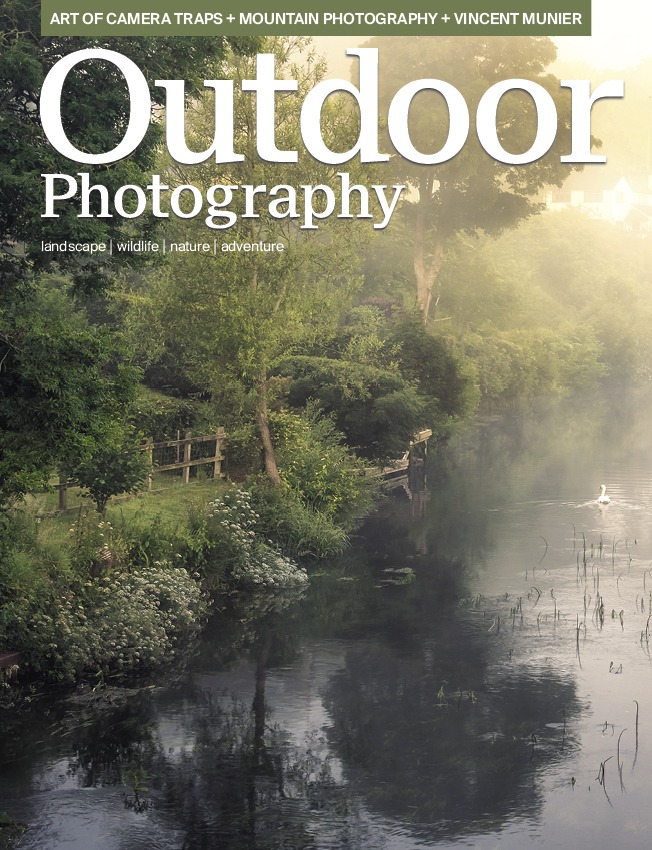
Chris Frost captures the magic of Dorset’s hidden woods Essential tips for successful mountain photography James Roddie introduces the art of camera trapping Vincent Munier discusses his stunning new nature film
+
News, Views and Reviews For The Intellectually Curious




 Boomers Daily