

 Nordic citizens experience a high sense of autonomy and freedom, as well as high levels of social trust towards each other, which play an important role in determining life satisfaction.
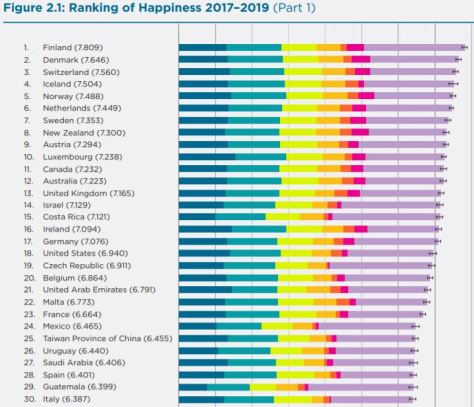
From 2013 until today, every time the World Happiness Report (WHR) has published its annual ranking of countries, the five Nordic countries – Finland, Denmark, Norway, Sweden, and Iceland – have all been in the top ten, with Nordic countries occupying the top three spots in 2017, 2018, and 2019. Clearly, when it comes to the level of average life evaluations, the Nordic states are doing something right, but Nordic exceptionalism isn’t confined to citizen’s happiness.
No matter whether we look at the state of democracy and political rights, lack of corruption, trust between citizens, felt safety, social cohesion, gender equality, equal distribution of incomes, Human Development Index, or many other global comparisons, one tends to find the Nordic countries in the global top spots.


 BBC Radio 4 speaks to Petina Gappah on her new book, “Out of Darkness, Shining Light”.


 There is a sadness as I witness the loss of our last wild places. My paintings are an attempt to keep alive those places and offer my audience a sanctuary in which to reflect.
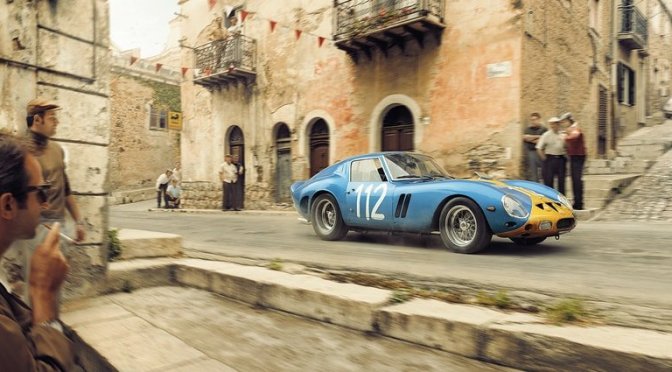
 The Targa Florio was an open road
  The race was created in
  One of the toughest competitions in Europe, the first Targa Florio covered 3 laps equalling 277 miles (446 km) through multiple hairpin curves on treacherous mountain roads, at heights where severe changes in climate frequently occurred. Alessandro Cagno won the inaugural 1906 race in nine hours, averaging 30 miles per hour (50 km/h).

 Boomers Daily