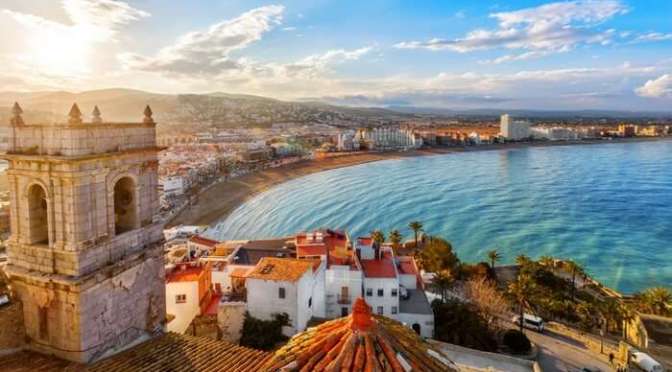
Our Valencia travel guide! Never before has a city taken me quite like Valencia did. A weekend break to this Spanish gem inspired me to return just two weeks later to film an episode in Valencia.
Spain has a lot of great cities but there’s something about Valencia that just makes me…happy. The weather maybe? Or perhaps the food? Or the friendly people? Most likely it’s that elusive combination of all three. Valencia is one of those cities that has something to offer all year round.
The port city of Valencia lies on Spain’s southeastern coast, where the Turia River meets the Mediterranean Sea. It’s known for its City of Arts and Sciences, with futuristic structures including a planetarium, an oceanarium and an interactive museum. Valencia also has several beaches, including some within nearby Albufera Park, a wetlands reserve with a lake and walking trails.
We gave interior designers Noz Nozawa, Darren Jett, and Joy Moyler a photo of the same loft – then asked each of them to create a design for it in their particular style, however they pleased. Three artists, one canvas, each bringing something different to space. See which designer comes closest to creating your dream studio apartment.
Why is Winslow Homer a household name in the USA? And what makes his art so important? Follow Homer’s journey, at a time of great upheaval in American history, from magazine illustrator to sought-after artist in oil and watercolour.
Winslow Homer: Force of Nature Ground Floor Galleries Until 8 January 2023
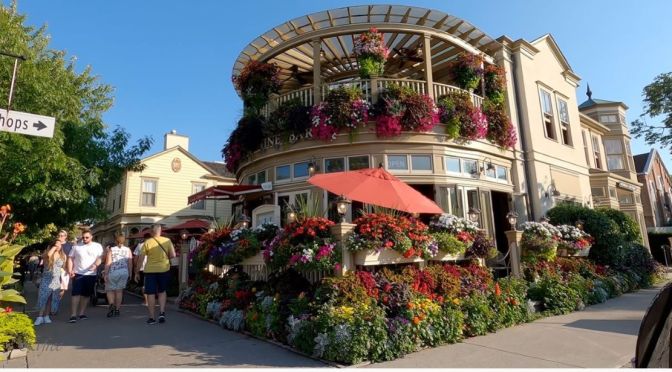
Niagara-on-the-Lake is a town in southern Ontario. It sits on the shores of Lake Ontario, at the mouth of the Niagara River. It’s known for its wineries and the summer Shaw Festival, a series of theatre productions. The flower-filled, tree-lined old town features 19th-century buildings, mainly along Queen Street. Near the river, 19th-century Fort George was built by the British to defend against American attacks.
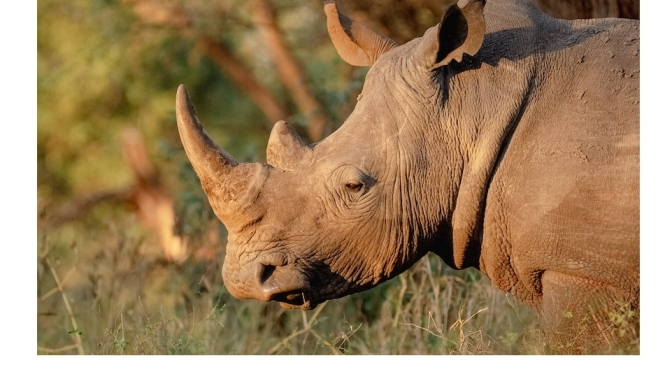
In Zimbabwe, the mighty rhino is making a comeback. In southern Africa, the animal was poached to near extinction in recent decades. We visit a wildlife sanctuary, with an elite anti-poaching team, to see how the animal is being bought back from the brink.
It’s one of the most successful rhino conservation projects in Africa. In south-eastern Zimbabwe, a private wildlife sanctuary is working hard to bring endangered rhinos back from the brink. In decades past, the mighty Black Rhino was poached to near extinction in southern Africa. Its horn, almost worth its weight in gold, makes it a target for organised poaching gangs.
In 1998, the privately-funded Malilangwe Trust had a population of 28 white and 28 black rhinos, imported from South Africa. Today its rhino population numbers in the hundreds. Reporter Michael Davie, an Australian born in Zimbabwe, returns home to witness this extraordinary wildlife success story. He spends time with the sanctuary’s highly trained anti-poaching team, the Malilangwe Scouts, the tip of the spear against the ever present poaching threat.
“Individually you can’t win against poaching and we need every one of us to fight against poachers,” says Patrick, a Sergeant in the Scouts. “You have to be a team, a strong one.” Davie captures all the incredible action of the hectic “rhino ops” where specialists dart the animals from helicopters then move in on 4WDs as they dash across the park. Led by ecologist Sarah Clegg, the rhino ops team collect vital data on the herd.
“They’ve got this reputation of being bad-tempered and dangerous and they are, but I think it’s mostly that they’re just such emotional creatures,” says Sarah, who’s studied the animal for more than two decades. “They’re just insecure, you know? And so they need more love.” Malilangwe increased its rhino population to such an extent that last year, it relocated some of its Black Rhino herd to nearby Gonarezhou National Park — a former killing ground for rhinos.
“It’s what we all aim for in our careers as conservationists,” says Sarah. “It’s a wild park, so being able to put the rhino back into that park is like waking it up again.” This visually stunning story has a powerful message of hope. “Everyone needs to know the rhino is special,” says Patrick.
Amazon ships more U.S. smart home devices than any other company and says Alexa is now compatible with 140,000 devices, far beyond the Echo and Fire TV. But privacy advocates are concerned by all the data these devices collect, and are calling on the Federal Trade Commission to block Amazon’s latest smart home expansion.
Chapters:1:41 First to market 4:27 Acquiring iRobot 7:41 How it uses the data 9:45 Privacy concerns 11:33 Ambient home of the future
After acquiring video doorbell maker Ring in 2018 and mesh WiFi system Eero a year later, Amazon’s now looking to buy Roomba smart vacuum maker iRobot. In a rare move, the FTC is asking for more information before approving the $1.7 billion deal. Ahead of Amazon’s annual smart home event, we talked to Amazon’s VP of privacy to find out what really happens to all the data collected by its devices – and sat down with the head of smart home to hear the strategy behind Amazon’s race to dominate the internet of things.
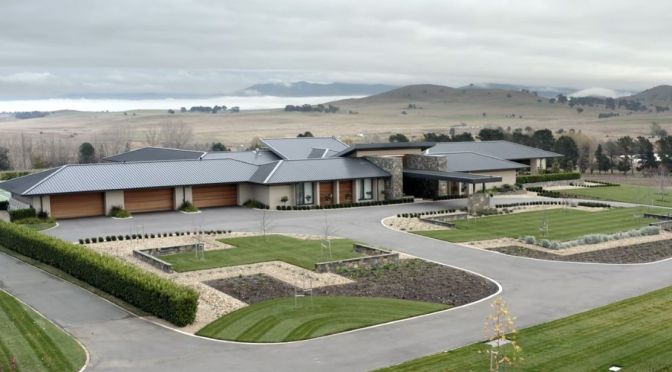
In touch with a vast rural landscape, Wallaroo Residence rises from atop one of Canberra’s many slopes. Crafted by DNA Architects, the modern farmhouse gently weaves natural elements into its modern expression, emerging as a place of retreat.
Video timeline: 00:00 – Introduction to theModern Farmhouse 00:35 – Hitting The Brief 01:10 – A Walkthrough of the House 01:47 – The Key Architectural Features 02:23 – Navigating The Weather Elements 02:44 – Separation Between The Family and The Entertaining Areas 02:55 – The Contemporary Kitchen 03:41 – A Focus On Sustainability 04:24 – The Modern Farmhouse Aesthetic 04:52 – The Architects Favourite Part of The Home
Settled on the edge of Canberra, Wallaroo Residence follows a design brief readily assigned to DNA Architects. The luxury home presents as a modern farmhouse, a concept first proposed by its traditional pitched roof and then explored within an interior of considered materials maturely applied. Aggrandising the entrance of the modern farmhouse, a floating porte-cochère leads on to an impressive set of glass doors. Internally, a timber-clad kitchen sits to the east of the arrival space, beyond which lies the family living room.
From there, the residence separates into the laundry room and master suite which offers unobstructed southern views. Along the back wall of the kitchen, Fisher & Paykel DishDrawers are effortlessly integrated into both the wall itself and the adorning joinery. On the kitchen island, a Full Surface Fisher & Paykel Induction Hob satisfies the desire for sustainable living and enables multiple pans to be warmed at once.
In the laundry room, large capacity Fisher & Paykel Washer Dryers inject a sense of efficiency into the modern farmhouse. Embracing its unique perspective, Wallaroo Residence testifies to the ongoing appeal of a city escape. With inhered functionality and a contemporary aesthetic, the modern farmhouse represents a distinguished interpretation of rural luxury.
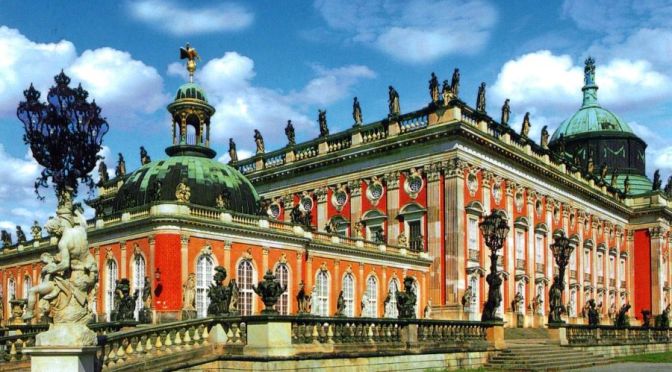
How does this sound: A picturesque little castle palace surrounded by wine terraces and a romantic park – and you right in the middle of it all! Join DW reporter Hannah Hummel for a relaxing day in Potsdam. She visits Sanssouci, the pleasure palace of King Frederick the Great. Hannah immerses herself in the atmosphere of the place, very much in the spirit of the Prussian king, who indulged in the good life here, far away from his court. Here he could indulge in nature, music and philosophy without worry – sans souci.
Potsdam, city, capital of BrandenburgLand (state), eastern Germany. Lying on the southwest border of Berlin, it is sited where the Nuthe River flows into the Havel River, the confluence becoming a series of lakes.
First mentioned in 993 as a Slavic settlement known as Poztupimi, it received its charter in 1317. It became Brandenburg’s electoral residence in 1640 under Frederick William (the Great Elector) and the Prussian royal residence under Frederick II (the Great), during whose reign (1740–86) it was an intellectual and military centre and virtual capital of Prussia. In the 18th century a colony of Dutch immigrants gave their quarter of the city, and some other parts as well, a distinctly Dutch flavour. Potsdam suffered severe damage in World War II, but many monuments survived and others have been restored. The Cecilienhof Palace was the scene (July 17–August 2, 1945) of the Potsdam Conference of the Allied leaders; it now houses a museum and a memorial, as well as a hotel. From 1952 to 1990 the city was capital of the Potsdam Bezirk (district) of East Germany.
Musée d’Orsay, (French: “Orsay Museum”) national museum of fine and applied arts in Paris that features work mainly from France between 1848 and 1914. Its collection includes painting, sculpture, photography, and decorative arts and boasts such iconic works as Gustave Courbet’s The Artist’s Studio (1854–55), Édouard Manet’s Le Déjeuner sur l’herbe (1863; Luncheon on the Grass), and Pierre-Auguste Renoir’s Dance at Le Moulin de la Galette (1876; Bal du moulin de la Galette).
The Musée d’Orsay is housed in the former Gare d’Orsay, a railway station and hotel that was designed by Victor Laloux and located on the Left Bank of the Seine River opposite the Tuileries Gardens. At the time of its completion in 1900, the building featured an ornate Beaux Arts façade, while its interior boasted metal construction, passenger elevators, and electric rails.
Because of changes in railway technology, however, the station soon became outdated and was largely vacant by the 1970s. Talks to transform the builing into an art museum began early in the decade and were finalized in 1977 through the initiative of Pres. Valéry Giscard d’Estaing. With government funds, the building was restored and remodeled in the early 1980s by ACT architecture group.
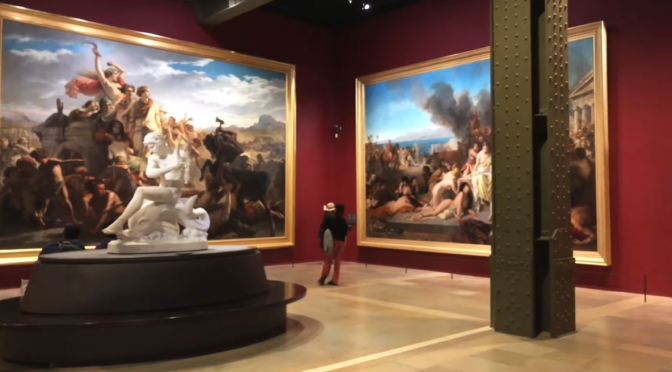
The interior was designed by Gaetana Aulenti, who created a complex layout of galleries that occupied three main levels surrounding the atrium beneath the building’s iconic iron-and-glass barrel vault. On the ground floor, formerly the building’s train platforms, extensive stone structures broke up the cavernous space and created a central nave for the sculpture collection and gallery spaces for painting and decorative arts.
News, Views and Reviews For The Intellectually Curious




 Boomers Daily