Tag Archives: Videos

Timelapse Travel Views: ‘Magnificent Japan’ (4K)

“雄大 (YUDAI)” means magnificent in Japanese. The film is a Timelapse and Hyperlapse depiction of magnificent Japan.

Japan, island country lying off the east coast of Asia. It consists of a great string of islands in a northeast-southwest arc that stretches for approximately 1,500 miles (2,400 km) through the western North Pacific Ocean. Nearly the entire land area is taken up by the country’s four main islands; from north to south these are  Hokkaido  (Hokkaidō),  Honshu  (Honshū),  Shikoku, and Kyushu (Kyūshū). Honshu is the largest of the four, followed in size by Hokkaido, Kyushu, and Shikoku. In addition, there are numerous smaller islands, the major groups of which are the Ryukyu (Nansei) Islands (including the island of Okinawa) to the south and west of Kyushu and the IzuBonin (Ogasawara), and  Volcano  (Kazan) islands to the south and east of central Honshu. The national capital, Tokyo (Tōkyō), in east-central Honshu, is one of the world’s most populous cities.

Filmed and Edited by: Daisuke Shimizu

Exhibits: Peter Alexander ‘Echoes Of Perception’ At Museum Of California Art

Langson IMCA in Irvine, CA – September 24, 2022 – January 14, 2023

In 2019, artist Peter Alexander was invited by Langson IMCA Museum Director Kim Kanatani to curate an exhibition of California Impressionism from the Museum’s collections.

Prior to his untimely death in 2020, Alexander had begun identifying works that he felt exemplified the California Impressionists’ profound connection to the light, space, and natural phenomena of California and the similar influence they had on his own work.

In honor of Alexander’s commitment to the project, a team of curators consisting of Kevin Appel, Julianne Gavino, Kim Kanatani, Curt Klebaum, Claudia Parducci, and Bruce Richards expanded the exhibition into a dialogue between the early modernist painters and Alexander’s own work, forming a fluid exchange between generations equally influenced by the atmospheric light of the Golden State.

The passages in this exhibition follow phenomena experienced over the course of a day from dawn, to dusk, to the depths of night. From mountain peaks to the ocean floor, Alexander and these California Impressionist painters echo one another in their pursuit of capturing the ineffable sensibility of place and space.

With works spanning from 1896 to 2020, Echoes of Perception: Peter Alexander and California Impressionism includes 14 Impressionist works from Langson IMCA’s collection along with 11 of Alexander’s resin sculptures, canvases, works on paper, and a painting on velvet that offer an alternative way to engage with California Impressionism through the eyes of this pioneering contemporary artist.

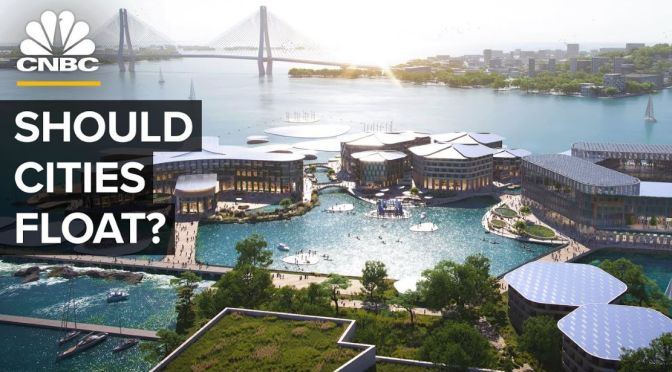
Urban Planning: Will The Cities Of The Future Float?

A new industry of floating infrastructure is emerging to help adapt to rising sea levels. There are two distinct approaches that are being put forth as possible solutions: retrofitting homes to be amphibious and building floating cities.

Amphibious homes can preserve the accessibility of the house and maintain the congenial front porch culture in places like Louisiana, said Elizabeth English, founder and director of The Buoyant Foundation Project. English’s design places a steel frame beneath a house, and then below that, in the crawl space, buoyancy elements. Her team then recommends adding elements to prevent lateral movement so the home will not float away while on the surface of floodwaters.

She estimated that a contractor could do such a retrofit for about $20 to $30 per square foot, but cautioned the Federal Emergency Management Agency currently discourages this type of building practice. Modern floating cities are the brainchild of architect Bjarke Ingels. He told CNBC he hopes his Oceanix City, which is currently slated to be built in the harbor near Busan,

South Korea, will be “a city that is the most resilient city you can imagine, but at the same time, the most enjoyable city that you can imagine.” “We really hope that it will be a successful project and we would like to replicate it in other parts of the world,” Maimunah Mohd Sharif, executive director of the United Nations Human Settlements Programme, told CNBC of the Oceanix development.

She said the world must look more into adaptation and hopes that the project can help mitigate or even solve the problem of sea-level rise. Would you live in a floating city or retrofit your home so it floats during floods? Watch the video above to learn more about what life could be like in these innovative climate change adaptations.

Reviews: The Top 12 Biking Cities In The U.S. & Canada

Cities in Europe, particularly the Netherlands, are known for their amazing bicycle infrastructure. Can a city in the top one percent of all bike cities in the United States compete with the best in Europe? And how much better are these top US bike cities when compared to the worst in the US?

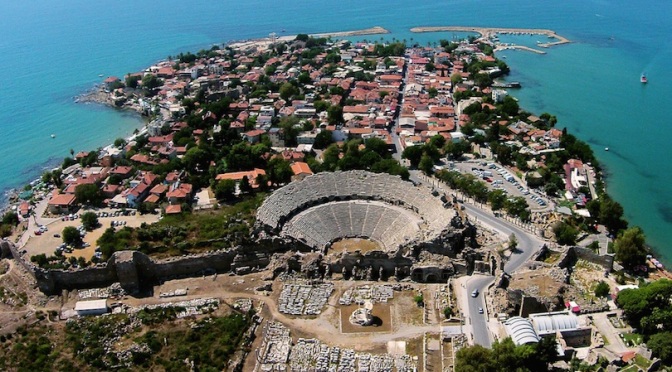
Walking Tours: Side In Southern Turkey (4K)

Side is a resort town on Turkey’s southern Mediterranean coast. An ancient port city, it’s known for long beaches and Greco-Roman ruins. In the center are the remains of the 2nd-century Antique Theater, which seated up to 15,000. The white marble columns of the Hellenistic Temple of Athena stand near the harbor. Other sites are sprinkled throughout, with finds housed at the Side Museum, a restored Roman bath complex. 

Wildlife: A Chameleon Birthing On Mount Kenya

In these frozen peaks, a chameleon gives birth to live young as it is too cold to lay eggs out in the open.

 In East Africa, during the day, on the high slopes of Mount Kenya the tropical sun keeps the cold at bay – but at night the frost descends. During this cycle of freeze and thaw, a pregnant high casqued chameleon must choose the right time to give birth, if her new-borns are to escape the deadly night freeze.

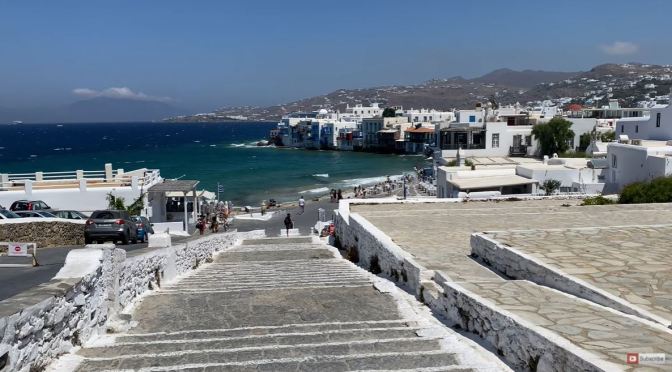
Island Views: A Walking Tour In Mykonos, Greece

Mýkonos, also spelled Míkonos, island, dímos (municipality), and perifereiakí enótita (regional unit), South Aegean (Modern Greek: Nótio Aigaío) periféreia (region), southeastern Greece. Mýkonos is one of the smaller of the eastern Cyclades (Kykládes) group of Greek islands in the Aegean Sea.

According to legend, it is the piece of rock thrown by Heracles to destroy the Giants. It is a rugged granite mass, about 33 square miles (85 square km) in area, lying next to Delos (Dílos) and between Tínos to the northwest and Náxos (Náchos) and Páros to the south. Mýkonos has several beaches, and on the north coast the Gulf of Pánormos forms a deep indentation. Located on the west side of the island is its capital, Mýkonos town; the town is the centre of a thriving tourism industry and is renowned for its nightlife.

Filmed in September 2022.

Tours: 25 Most Beautiful Small Towns In Europe

When planning a vacation to Europe, some of the first destinations that come to mind will be the teeming cities of Paris, London or Rome. Each of these metropolises is incredible, but they are far from all that Europe has to offer.

By exploring some of the smaller towns across the continent, it is possible to see a more authentic, traditional side to Europe. If you’re planning an upcoming getaway to the continent, here are just a few of the most beautiful small towns in Europe.

Views: The Sunflower Fields Of South Dakota

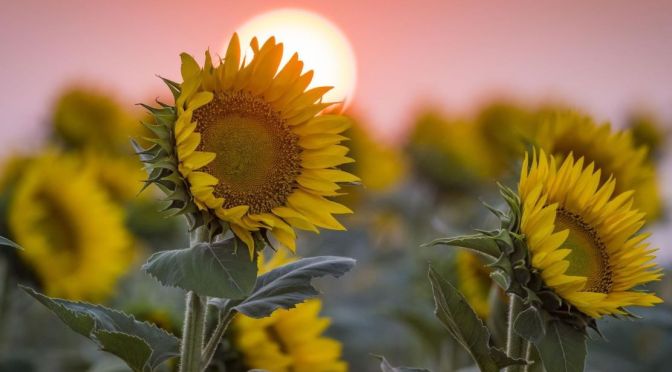
“Sunday Morning” takes us to field aglow in central South Dakota. Videographer: Kevin Kjergaard.

South Dakota consistently ranks as one of the world’s top sunflower producers. This makes late summer an amazing time to experience gorgeous yellow fields that seem to stretch forever. 

Depending on the growing season, sunflowers begin to bloom sometime in late July or early August and stay brilliant for approximately 30 days. Young pre-bloom plants track the sun throughout the day and turn back to the east overnight, putting them in position to catch the morning sunlight. As they bloom and the heads become heavier, the flowers stay facing the east. 

City Views: A Walking Tour Of Old Havana In Cuba (4K)

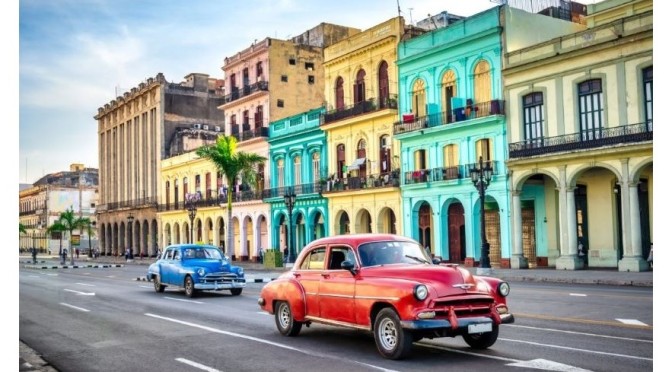
La Habana Vieja (Old Havana), declared a World Heritage Site by UNESCO in 1982, is the historic center of the city of Havana. It is formed by a harbor and the official center, the Plaza de Armas. There you will find all kinds of picturesque monuments, fortresses, churches, palaces, etc. It is full of authentic architectural treasures from different periods and offers one of the most comprehensive collections of urban buildings in all America. This area of the city alone is home to more than a thousand buildings of historical importance with various examples of distinguished architecture ranging from Baroque to Art Deco.

Unlike typical colonial cities, Havana was developed on not one, but four main plazas: the Plaza de Armas, which was the military and defensive center as it had a fortress and a large courtyard used for military parades; the Plaza de la Catedral, which with its cathedral was used as the religious center; the Plaza Vieja, which was the commercial hub as it housed important markets; and the Plaza de San Francisco de Asís, which was the main point of exportation and importation as it had a port where Spanish ships docked.