Tag Archives: Reviews

Travel In Turkey: What To See, Do And Eat In Istanbul

The Blue Mosque and Hagia Sophia

The Times and The Sunday Times (September 11, 2023) – No exaggeration, Turkey’s rambling former capital, unspooling either side of the broad Bosphorus strait, is up there among the friendliest places you could visit for a long Euro-style weekend. Hospitality is in the Turks’ DNA, whatever you might think about the politics. The weather will always deliver too: midwinter has a snowy, Soviet chill that is super atmospheric, while spring and late summer into autumn turn the city into a giant urban resort, with bars, cafés and pool-trimmed hotels lining the endless waterfronts on Asian and European banks.

Karabatak
Karabatak

What to do

● What was founded as the Byzantine emperor Justinian’s 6th-century church has ballooned over aeons into the Hagia Sophia. Now a mosque, it’s a gargantuan spectacle. Enter and in the spiritual gloom a magnificence develops, daylight angling through windows in the galactic dome light years above. Remarkably there is even runic graffiti, carved by a mercenary from the Viking age (free; muze.gen.tr).

The Anadolu Kavagi village on the Bosphorus

● Allocate a day to explore Topkapi Palace, home of the Ottoman sultans built in 1459 by Mehmet the Conqueror, who grabbed Constantinople from the fading Byzantines. Chamber after chamber reveals military regalia and priceless gifts from dynasties as far away as China. The Bosphorus views are magnificent and the emerald lawns are made for lounging on (£20, includes harem access; muze.gen.tr).

● The Ecumenical Patriarch, spiritual leader of Eastern Orthodox Christians worldwide, resides at the Patriarchate of Constantinople, a serene neoclassical complex in Fener district, above the waters of the Golden Horn creek. Join global pilgrims in the glittery cathedral aisles and witness, perhaps, the divine liturgy or, later, vespers — black-clad, scented and seductively mystic (free; ec-patr.org).

● We associate art nouveau with Paris and Budapest, but in the twilight years of the Ottomans it flourished in Istanbul. Casa Botter (originally Botter Apartmani), built on Istiklal Caddesi at the turn of the 20th century for a tailor to Sultan Abdul Hamid, was the city’s first example. After decades of neglect it’s now a must-visit art gallery and, façade-wise, a real kooky looker, chiselled and Viennese-ornate (free; Instagram @casabotter).

READ MORE

Previews: The New Yorker Magazine – Sept 18, 2023

R. Kikuo Johnsons “Bodega Cat”

The New Yorker – September 18, 2023 issue: The new issue features R. Kikuo Johnson’s “Bodega Cat”, where the the artist discusses pivotal moments and his relationship to pets.

Ross Douthat’s Theories of Persuasion

Ross Douthat photographed by Adam Pape.

At a time of distrust and polarization, the conservative Times columnist seeks to bridge the worlds of the Christian right and the secular left.

By Isaac Chotiner

This summer, Ross Douthat, liberal America’s favorite conservative commentator, wrote a piece about liberal America’s least favorite Democrat, Robert F. Kennedy, Jr. Douthat argued in his New York Times column that an unwillingness to debate Kennedy—who has claimed that childhood vaccines cause autism, that 5G networks are part of a mass-surveillance system, and that covid was designed to spare Jewish and Chinese people—was an insufficient response to voters who are increasingly distrustful of the establishment. 

What Kate DiCamillo Understands About Children

Painting of Kate DiCamillo.

Her books for young readers have sold more than forty-four million copies. They are full of yearning, loneliness, ambivalence, and worry.

By Casey Cep

Three winters in a row, Kate DiCamillo went into the hospital, never sure if she would come home and always a little scared to do so. One of those winters, when she was four years old and the air outside was even colder than the metal frames of the oxygen tents she’d grown accustomed to having above her bed, her father came to see her. He was wearing a long black overcoat, which made him look like a magician. “I brought you a gift,” he said, pulling something from his pocket as if from a top hat.

Climate Change: Can Cities Be Sustainable Solutions?

DW Documentary (September 9, 2023) – The race against climate change is in full swing. Can cities be a solution? The UN says that by the year 2050, some 70 per cent of all people will be urban dwellers. But how can cities sustainably accommodate as many people as possible and still offer a good quality of life?

“Urban living must save the planet!” says Xuemei Bai, an Australian professor for sustainability research. But is it really possible to live more sustainably in the city than in the countryside? What about the suburbs? “The suburbs are a climate killer,” says climate economist Gernot Wagner. In the classic suburb – large plots of land with detached or semi-detached properties – CO2 emissions are two to three times as high as in city centers or rural areas. So, why are cities so crucial for the climate?

The answer is simple: Because they are growing exponentially. The UN says that by the year 2050, more than two thirds of the world’s population will be living in cities. Density is one reason cities have so much potential. In a city, measures such as home redevelopments or electric bus routes impact far more people than they would in rural areas.

So, should we all live in megacities to save the Earth? In Europe, many people are turning their backs on urban life in favor of a home in the suburbs or the countryside. So what should the cities of the future look like, if they are to sustainably accommodate as many people as possible while still offering a good quality of life? After all, skyscrapers aren’t necessarily a good choice. Urban planner Dita Leyh compares a city of high-rise buildings with an asparagus field: “They’re like asparagus tips everywhere.

The spaces in between aren’t really useable. That’s not an interesting public space,” she says. So, what should a city look like then? There’s no single blueprint, because every city has its own challenges, as well as different climactic and social conditions. Can cities really save us? #documentary #dwdocumentary

Finance Preview: Barron’s Magazine – Sept 11, 2023

Image

BARRON’S MAGAZINE – SEPTEMBER 11, 2023:

More Americans Are Working Into Their 80s. The Future of Labor.

More Americans Are Working Into Their 80s. The Future of Labor.

As the baby boomers age, it’s becoming more common for people to remain employed into their 70s and 80s. These octogenarians tell us why they still aren’t ready to retire.

Food Stocks Have Gotten Hit Hard. 6 to Buy Now.

Food Stocks Have Gotten Hit Hard. 6 to Buy Now.

Kraft Heinz, Kellogg, General Mills, and other leading snack makers could serve up gains of 20% or more. Their healthy dividends are a plus.

Almost All Workers Should Contribute to Roth Accounts. Here’s Why.

Almost All Workers Should Contribute to Roth Accounts. Here's Why.

No matter what your current income, saving part of your retirement money in a Roth after-tax account will give you more flexibility down the road.

The New York Times Book Review – Sept 10, 2023

Image

THE NEW YORK TIMES BOOK REVIEW (September 10, 2023): The new issue features Zadie Smith’s very Dickensian new novel, “The Fraud,” In nonfiction, the extremely different romantic lives of George Orwell and George Eliot are reviewed, and a biography of the con man who paved the way for all those “Nigerian prince” email scams.

Zadie Smith Makes 1860s London Feel Alive, and Recognizable

In this illustration, a serpent with maroon and gold bands and wearing a gold crown sits inside a delicate filigreed teacup, with its body coiled around the bottom of the cup and the saucer. The cup rests next to a sugar cane plant, and a London tower looms in the distance.

Her new novel, “The Fraud,” is based on a celebrated 19th-century criminal trial, but it keeps one eye focused clearly on today’s political populism.

By Karan Mahajan

All over the dorm in California glinted pale-orange and tabasco-red and steel-blue copies of Zadie Smith’s “White Teeth,” with their hard white bright lettering. The year was 2001, and “White Teeth” had been assigned as incoming reading for my freshman dorm. I remember loving the sprawling, rude, funny, slapdash narration, the magical way in which Smith brought it all together in the figure of a genetically engineered mouse.

Lauren Groff’s Latest Is a Lonely Novel of Hunger and Survival

A color illustration of a girl wearing a torn blue coat and boots with a bag strapped around her back, looking back toward a coastal settlement as she enters the woods, covered in snowfall.

“The Vaster Wilds” follows a girl’s escape from a nameless colonial settlement into the unforgiving terrain of America.

By Fiona Mozley

Jamestown, Va., the first permanent English settlement in the Americas, very nearly didn’t survive. A few years into its existence, in the early 1600s, the majority of the population had succumbed to famine and disease. The period known as the Starving Time has taken on allegorical status. Jamestown is the colony that tried too much too soon; that underestimated the harsh climate, the foreign land, its existing, Indigenous population. Pilgrims went in search of heaven and found hell.
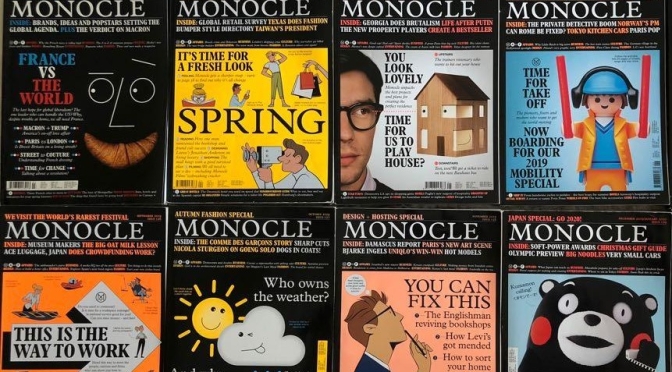
Views: The New York Times Magazine – Sept 10, 2023

Image

THE NEW YORK TIMES MAGAZINE (September 10, 2023): The Education Issue features Americans Are Losing Faith in the Value of College. Whose Fault Is That?; Affirmative Action Is Still in Effect. For Men, and more….

Americans Are Losing Faith in the Value of College. Whose Fault Is That?

For most people, the new economics of higher ed make going to college a risky bet.

By Paul Tough

A decade or so ago, Americans were feeling pretty positive about higher education. Public-opinion polls in the early 2010s all told the same story. In one survey, 86 percent of college graduates said that college had been a good investment; in another, 74 percent of young adults said a college education was “very important”; in a third, 60 percent of Americans said that colleges and universities were having a positive impact on the country. Ninety-six percent of parents who identified as Democrats said they expected their kids to attend college — only to be outdone by Republican parents, 99 percent of whom said they expected their kids to go to college.

Affirmative Action Is Still in Effect. For Men.

The scene outside a bar that is popular among Tulane students.

Declining male enrollment has led some colleges to adopt an unofficial policy that many find objectionable: “We need to admit men, and women are going to suffer.”

By Susan Dominus

In the spring of 2021, about 2,000 students on the campus of Tulane University in New Orleans received an email they were expecting. They had filled out an elaborate survey provided by Marriage Pact, a matchmaking service popular on many campuses, and the day had come for each of them to be given the name of a fellow student who might be a long-term romantic partner. When the results came in, however, about 900 straight women who participated were surprised by what the email offered: a friend match instead of a love interest. 

Views: Favorite Birds Of Wildlife Photographers

Anna’s Hummingbird
A male Anna’s hummingbird in Newport, Oregon. A 19th-century French naturalist named the species after the French courtier Anna Masséna, Duchess of Rivoli. Gretchen Kay Stuart

Anna’s Hummingbird, Calypte anna

Hummingbird Map
U.S. range of the Anna’s hummingbird Guilbert Gates

Photograph by Gretchen Kay Stuart

“I’ve always been enchanted by hummingbirds,” Stuart says. “Their tiny size and iridescent plumage make them seem as though they are born out of fairy tales.”

Evening Grosbeak
A member of the finch family, this bird, photographed in Ithaca, New York, has a large beak useful for crushing seeds. Early English colonists mistakenly thought it came out only after sunset. Melissa Groo

Evening Grosbeak, Coccothraustes vespertinus

Photograph by Melissa Groo

Evening Grosbeak Map
U.S. range of the evening grosbeak Guilbert Gates

The evening Grosbeak tends to hover north of Groo’s home in Central New York State. So she was delighted when a flock of them recently appeared outside her house. “When they roam further south in winter in search of food, I’ve been blessed with their presence, sometimes over months,” she says. “This past winter and into very early spring, I had a flock of up to 15 visiting my platform bird feeder daily, hoovering up black oil sunflower seeds.”

Northern pygmy-owl
Dinner is served in Portland, Oregon, as this adult northern pygmy-owl returns to the nest cavity clutching a vole. These owls often store food inside their trees or hang it on thorns for later. Gerrit Vyn

Northern Pygmy-Owl, Glaucidium gnoma

Photograph by Gerrit Vyn

Northern pygmy-owl Map
U.S. range of the northern pygmy owl Guilbert Gates

In Western Oregon where Vyn lives, the tooting of the northern pygmy-owl is the sound of spring. “Even when you don’t see them, while hiking through the forest or sitting in a lush patch of sword ferns on the forest floor and looking up into the canopy, just knowing they are somewhere up there, watching, deepens the experience and magic of place,” he says.

SEPTEMBER 8, 2023

Read more:

Reviews: ‘The Week In Art’

The Week In Art Podcast (September 7, 2023): It’s our 250th podcast, and in this special episode we focus on the future. We ask leading figures across the art world to tell us about their hopes and concerns for the visual arts. Among them are Max Hollein, the director of the Metropolitan Museum of Art in New York,

Bénédicte Savoy, the co-author of the Saar-Savoy report into the restitution of cultural heritage, Shanay Jhaveri, the head of visual arts at the Barbican, the Berlin-based curator Bonaventure Soh Bejeng Ndikung, Kymberly Pinder, the dean of Yale School of Art, and the artist Tomás Saraceno. Host Ben Luke is then joined by three core members of The Art Newspaper’s team and regular guests in the first 249 episodes of this podcast: editors-at-large Cristina Ruiz and Georgina Adam and our contemporary art correspondent Louisa Buck discuss the present and future of museums and heritage, art and artists and the art market.

Research Preview: Science Magazine – Sept 8, 2023

Image

Science Magazine – September 8, 2023: Reducing single-use cutlery with green nudges: Evidence from China’s food-delivery industry; Anatomy of a volcanic eruption undersea, and more…

Anatomy of a volcanic eruption undersea

Submarine flows from the Hunga Tonga–Hunga Ha‘apai eruption decimated seafloor cables

In December 2021, an undersea volcano in the southern Pacific Ocean, the Hunga Tonga–Hunga Ha‘apai (hereafter called the Hunga volcano) began erupting. In January 2022 the eruption reached a powerful climax, triggering atmospheric waves that traveled around the globe and a tsunami that swept across the Pacific Ocean. An estimated 75% of Earth’s volcanoes are underwater, and 20% of all fatalities caused by volcanic eruptions since 1600 CE have been associated with underwater volcanism (3).

Reducing single-use cutlery with green nudges: Evidence from China’s food-delivery industry

China’s high demand for online food delivery resulted in an increase in the use of disposable, single-use cutlery. Disposable cutlery increases plastic pollution, and paper napkins and wooden chopsticks contribute to environmental degradation that endangers wildlife and marine species and compromises human health. Informed by the literature on “green nudges, ” which are prompts to promote environmentally friendly behaviors, He et al. collaborated with Alibaba to use its mobile food delivery platform, Eleme, in a longitudinal field study across China.

Analysis: Argentina’s Dysfunctional Economy

The Economist (September 7, 2023) – Rampant inflation, a booming black market for US dollars and crippling debt – welcome to Argentina, one of the world’s most dysfunctional economies. How did it end up like this?

Video timeline: 00:00 – Argentina’s economy is in crisis 01:21 – What is happening now? 04:16 – Why is this happening? 05:52 – Overspending 07:00 – Printing money 08:03 – Borrowing money 08:51 – Trade controls 11:06 – What are the solutions?