Tag Archives: Museums

Arts & Travel Videos: “Odunpazari Modern Museum” Is The New Cultural Center In Turkey

Monocle 24 Films logoWe visit a Kengo Kuma-designed art museum in Eskisehir that’s set to become Turkey’s new cultural hotspot.

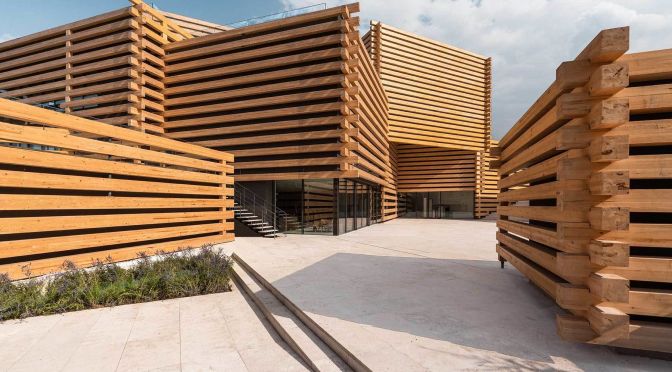
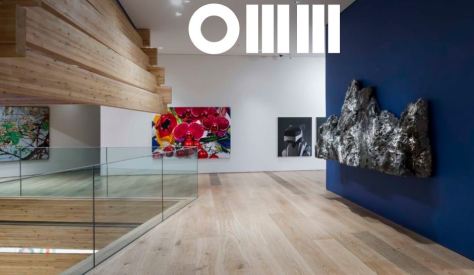
Odunpazarı Modern Museum is designed by the internationally acclaimed Japanese architecture firm Kengo Kuma and Associates.

Odunpazarı Modern Museum in Turkey

Kengo Kuma and Associates describes its philosophy as “Amalgamating nature and architecture in a manner that creates a strong bond between the ‘building’ and its ‘location’.” In his design of the OMM building, the architect thus reinterprets the historic fabric of the Odunpazarı district with a contemporary perspective. Paying homage to the local architecture of Odunpazarı, Ottoman dome architecture, and traditional Japanese architecture, OMM’s design is highlighted by four major components: geometry, light, stacking, and timber. Breaking away from conventional design through the transformation of simple geometric lines into complex images, the high-quality light entering the building, and the non-linear forms, the architectural stacking and the timber construction system alluding to the historic fabric of Odunpazarı constitute the sources of inspiration for the architecture of the museum building.

OMM – Odunpazarı Modern Art Foundation was founded in 2019 with the aim of contributing towards the development of cultural, social, and artistic life through events and activities centered on the familiarization and popularization of culture and arts in society, the advancement of art education, the support for artistic and cultural production, and the transmission of cultural values to future generations. OMM – Odunpazarı Modern Museum operates under the auspices of this foundation.

Website

New Exhibitions: “El Greco – Ambition And Defiance” (Art Institute Of Chicago)

March 7 – June 21, 2020

This major exhibition charts the career of the artist known simply as El Greco. Over 57 works from across the world trace not only the development of his distinctive style but also the astounding ambition that drove him to relentlessly pursue success.


Portrait of Fray Hortensio Felix Paravicino El Greco 1609Born in Crete as Domenikos Theotokopoulos (1541–1614), El Greco trained in the traditional manner of Byzantine icon painting. He moved to Venice in 1567 to learn a new artistic approach, absorbing developments in Venetian Renaissance painting through the lens of artists such as Titian and Tintoretto. The works El Greco painted during his time in Venice, however, reveal both his embrace of and struggles to fully adapt to this manner of painting.

Art Institute of Chicago logoFollowing this transformative period, El Greco went to Rome, probably in an attempt to attract patronage within the papal circle. There his acceptance into the elevated circle of Cardinal Alessandro Farnese brought a close association with the painter Giulio Clovio and the erudite historian and collector Fulvio Orsini. El Greco’s portraits, allegories, and religious paintings between 1570 and 1577 reflect these relationships as well as his complicated engagement with Michelangelo and other artistic luminaries of the 16th century.

Website

Exhibitions: 88-Year Old Gerhard Richter “Painting After All” – Landscape As A Site Of Memory (The Met)

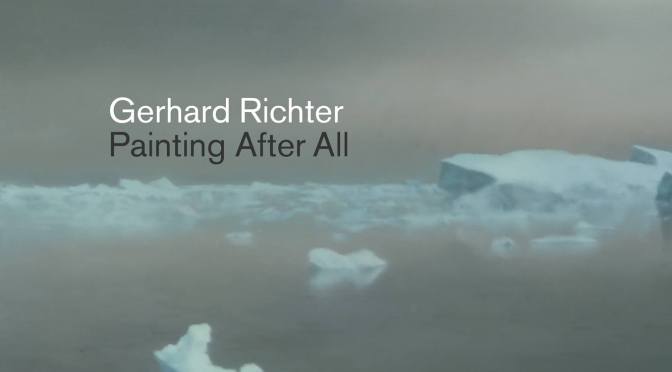
Gerhard Richter Painting After All March 2020Over the course of his acclaimed 60-year career, Gerhard Richter (b. 1932) has employed both representation and abstraction as a means of reckoning with the legacy, collective memory, and national sensibility of post–Second World War Germany, in both broad and very personal terms.

This handsomely designed book features approximately 100 of his key canvases, from photo paintings created in the early 1960s to portraits and later large-scale abstract series, as well as select works in glass.

Gerhard Richter Paintings Facebook

Metropolitan Museum Of ArtNew essays by eminent scholars address a variety of themes: Sheena Wagstaff evaluates the conceptual import of the artist’s technique; Benjamin H. D. Buchloh discusses the poignant Birkenau paintings (2014); Peter Geimer explores the artist’s enduring interest in photographic imagery; Briony Fer looks at Richter’s family pictures against traditional painting genres and conventions; Brinda Kumar investigates the artist’s engagement with landscape as a site of memory; André Rottmann considers the impact of randomization and chance on Richter’s abstract works; and Hal Foster examines the glass and mirror works. As this book demonstrates, Richter’s rich and varied oeuvre is a testament to the continued relevance of painting in contemporary art.

Metropolitan Museum of Art website

Gerhard Richter was born in Dresden on 9th February 1932, the first child of Horst and Hildegard Richter. A daughter, Gisela, followed four years later. They were in many respects an average middle-class family: Horst worked as a teacher at a secondary school in Dresden and Hildegard was a bookseller who liked to play the piano.1 In an interview with Robert Storr, Richter described his early family life as “simple, orderly, structured – mother playing the piano and father earning money.”2

In 1935, Horst accepted a teaching position at a school in Reichenau, a town which today is known as Bogatynia in Poland, at the time located in the German province Saxony. Settling in Reichenau was a drastic change for the family, which was accustomed to the vivid cultural life of the larger Dresden.3 Yet, it was also a move which would keep the family largely safe from the coming war. In the late 1930s Horst was conscripted into the German army, captured by Allied forces and detained as a prisoner of war until Germany’s defeat. In 1946, he was released and returned to his family, who had again relocated, this time to Waltersdorf, a village on the Czech border.

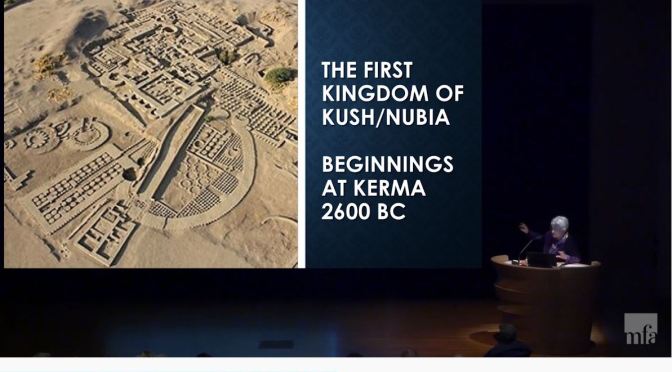
History: “Discovering Ancient Nubia: Kings and Pyramids in the Sudan”

Take a close look at the tombs of the Napatan kings who conquered and ruled Egypt from the late 8th century to 666 BCE, using objects that the MFA excavated from 1913 to 1932 with archeologist George Reisner.

MFA Museum of Fine Arts Boston logoNapatan kings later held sway over the kingdom of Kush in the northern Sudan, and built pyramids for themselves and their wives in cemeteries at Kurru and Napata. Studying these lavishly decorated pyramids, and the mortuary rites that took place in the attached chapels, makes clear some of the differences between ancient Egyptian and Napatan beliefs and priorities.
Susan K. Doll, Nubian scholar

Wednesday, October 30, 2019

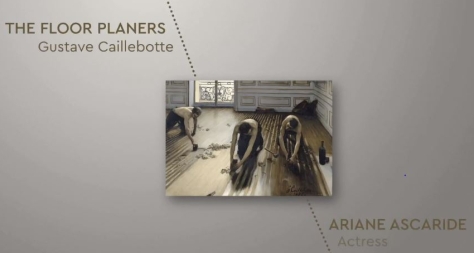
Art Review: “The Floor Planers” By Impressionist Gustave Caillebotte (1875) (Musée d’Orsay Video)

For her performances in over sixty films and forty theatrical productions, Ariane Ascaride has notably been awarded the César for best actress in Marius and Jeannette (1998) and the Coppa Volpi for lead actress at the Venice mostra for Gloria Mundi (2019), two films directed by Robert Guédiguian. She is also a director and a screenwriter.

The Floor Planers by Gustave Caillebotte 1875 video by Musée d'Orsay Januaary 2020

Les raboteurs de parquet (English title: The Floor Scrapers) is an oil painting by French Impressionist Gustave Caillebotte. The canvas measures 102 by 146.5 centimetres (40.2 in × 57.7 in). It was originally given by Caillebotte’s family in 1894 to the Musée du Luxembourg, then transferred to the Musée du Louvre in 1929. In 1947, it was moved to the Galerie nationale du Jeu de Paume, and in 1986, it was transferred again to the Musée d’Orsay in Paris, where it is currently displayed.

Musée d’Orsay website

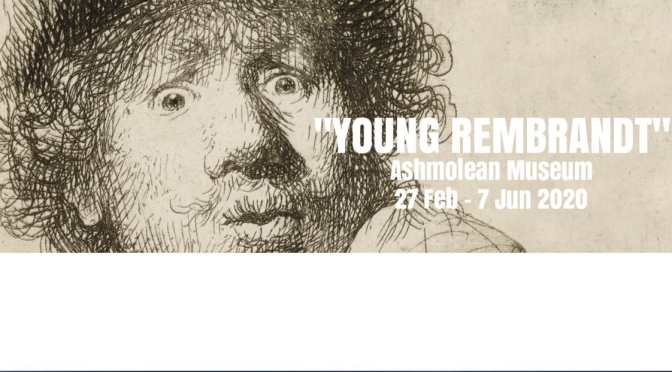
Top New Museum Exhibits: “Young Rembrandt” At The Ashmolean (Feb 27 – Jun 7)

Witness the meteoric rise of Rembrandt, from his first tentative works as a teenager in his home town of Leiden, to the sublime masterpieces he produced in Amsterdam ten years later.

This landmark show explores the early years of the career of the most famous of all Dutch artists, Rembrandt van Rijn (1606–1669). Beginning with his earliest known paintings, prints and drawings made in the mid-1620s, and ending at the moment he rockets to stardom in Amsterdam in the mid-1630s, this exhibition charts an astonishing transformation.

ashmolean-logo-with-text-12x3.25

This is the largest collection of works devoted to the young Rembrandt and includes over 30 of his paintings, and 90 drawings and prints from international and private collections. On display for the first time is the newly discovered painting Let the Little Children Come to Me.

Don’t miss this unprecedented opportunity to examine young Rembrandt’s work and observe his remarkable metamorphosis from insecure teenager to the greatest Dutch painter of all time.

Website

Exhibitions: “Envisioning 2001: Stanley Kubrick’s Space Odyssey” (MOMI NYC)

From a New York Times online review:

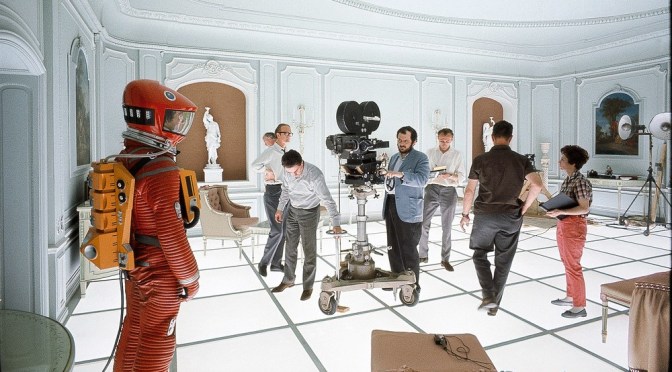
“Envisioning 2001” shows Kubrick as a director in command of all aspects of filmmaking, and it suggests that he and Clarke were no small obsessives when it came to understanding their subject matter. One of the first items in the exhibit is a request form from 1964, with Clarke’s name and address, sent to the United States Air Force. He sought information on a sighting — which turned out to be a satellite — that he and Kubrick, then developing the story for the movie, had seen in the sky over New York.

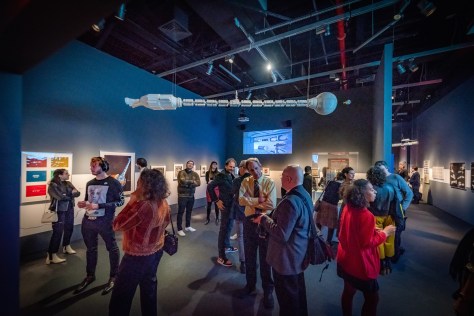
Some of the first visitors to see the exhibition Envisioning 2001 Stanley Kubrick's Space Odyssey. Photo by Thanassi Karageorgiou Nas Karas Studios Jan 16, 2020 at Museum of the Moving Image
Some of the first visitors to see the exhibition Envisioning 2001: Stanley Kubrick’s Space Odyssey. Photo by Thanassi Karageorgiou Nas Karas Studios Jan 16, 2020 at Museum of the Moving Image

As it approaches its 52nd birthday, “2001: A Space Odyssey” remains one of the most inventive and enduring of all movies. But from the vantage point of 2020, it can be difficult to appreciate the sheer breadth of imagination involved in its making.

Enter “Envisioning 2001: Stanley Kubrick’s Space Odyssey,” a new exhibit at the Museum of the Moving Image in Astoria, Queens, that runs through July 19. The show brings together original correspondence, sketches, storyboards, props, video clips and much more to illustrate how Kubrick, the film’s director, and Arthur C. Clarke, the science fiction author who collaborated with him on the screenplay, set about bringing the future to the screen.

Read full article

Photography: History Of Instant Photos At “The Polaroid Project” (PBS)


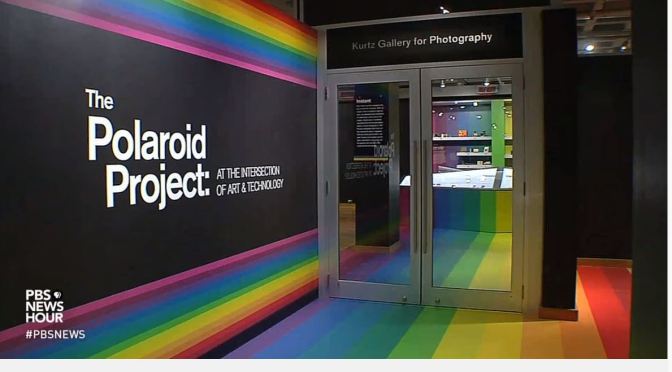
The Polaroid camera bypassed the entire process of film development, thus providing photographers an immediate look at their work. Released for sale in 1948, the first version was an “instant” hit. Now, the museum at the Massachusetts Institute of Technology is showcasing the intersection of technology and art. Special correspondent Jared Bowen of WGBH reports.

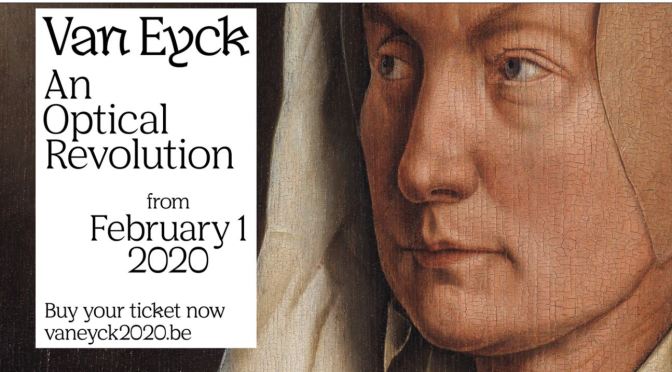
New Museum Exhibitions: “Van Eyck – An Optical Revolution” At MSK Ghent

Worldwide, only approximately twenty works by Van Eyck have been preserved. Quite exceptionally, over half of these will travel to Ghent in 2020 for the exhibition ‘Van Eyck. An optical revolution’ at the Museum of Fine Arts (MSK). In what promises to be an unmissable, tour de force of an exhibition, the world of Van Eyck and his revolutionary gaze will be brought to life like never before.

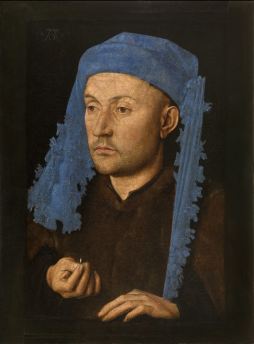
Jan van Eyck, Portrait of a Man with a Blue Chaperon, c. 1428-30 (Muzeul National Brukenthal, Sibiu, Romania)

The pinnacle of Late Medieval art
Van Eyck distinguished himself from his peers and triggered an optical revolution. With his matchless technique, scientific knowledge and unrivalled observational skills, he elevated oil painting to unprecedented heights and determined the future course of Western art. Never before had a painter made reality so tangible: all that seems to be missing from his portraits is his subjects’ breath, while his landscapes reveal the world in all its facets. Van Eyck trained his eye on the tiniest details before casting it wide again to create unforgettable panoramas.

His masterpiece, ‘The Adoration of the Mystic Lamb’ (1432, St Bavo’s Cathedral, Ghent), bears witness to all three of these qualities. The restoration of the outer wings of the altarpiece will play a central role in the exhibition. Undertaken by the Royal Institute for Cultural Heritage (KIK), the project commenced at the Museum of Fine Arts Ghent in 2012. Visitors will have the opportunity to get close to the work and admire the spectacular results.


MSK Kent LogoIn dialogue with Van Eyck’s contemporaries
In order to contextualise Van Eyck’s optical revolution, his paintings will be shown alongside works by his most talented contemporaries from Germany, France, Italy and Spain. These artists also moved in exalted circles and received prestigious commissions. The exhibition focuses on the artistic similarities and differences between their works, thus delving deeper into the historical context in which they were created.

‘Van Eyck. An optical revolution’ unravels the myths about the artist and considers his technique, his oeuvre and his influence from a fresh perspective. This exhibition will awaken a sense of wonder among visitors, comparable to that which people would have felt when they saw his works for the first time: a once-in-a-lifetime experience.

Read more

Fine Art: Paris Musées Makes Public Over 100,000 Images Including Monet, Cézanne And Courbet

Paris Musées Releases over 100,000 Images of Artworks for Unrestricted Public Use

Website

Setting Sun on the Seine at Lavacourt” by Claude Monet (1880)
Portrait of Ambroise Vollard by Paul Cézanne (1899)
Portrait of Juliette Courbet by Gustave Courbet (1844)
“Portrait of Juliette Courbet” by Gustave Courbet (1844)