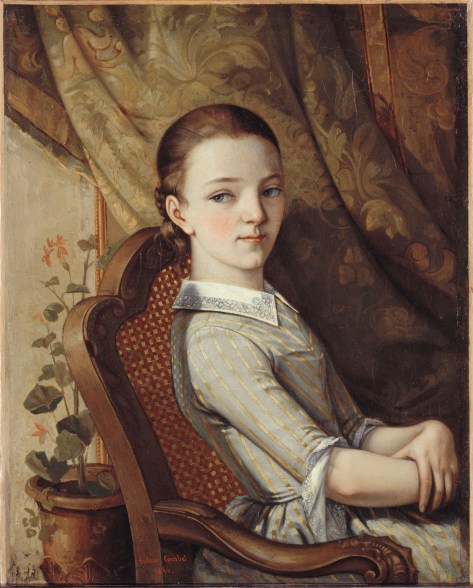

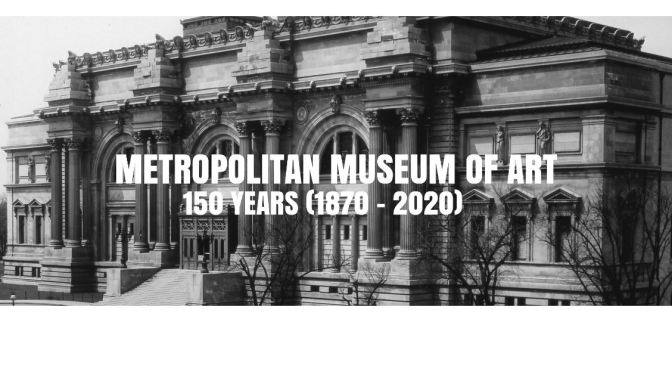
 Watch Episode 1, “Looking back to look forward,” in which Met image archivist Stephanie Post, educator and former-Project Runway host Tim Gunn, and New York City Ballet dancer Silas Farley share how their encounters with history and the Museum inform their sense of self and their creative practices.
As part of The Met’s 150th anniversary, Met Stories is a new video series and year-long social media initiative that shares unexpected and compelling stories gathered from the many people who visit The Met, whether artists, teachers, curators, actors, museum staff, designers, thought-leaders, or public figures.
From a CityLab.com online article:
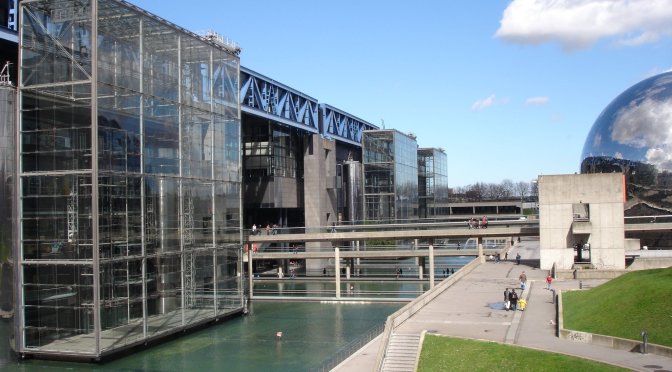
The first of these urban amenities arose in the 1960s, but it was in the 1980s and ‘90s that the construction of science centers truly boomed. Inspired by historic World’s Fair exhibitions, industrial and natural history museums, and the sci-fi dreams of their early founders, science centers had a hands-on mission distinct from that of most museums—to engage rather than display. They offered levers you could pull, gyroscopes you could spin, lab experiments you could conduct.
 The science center is an adolescent among museum types, one whose main growth spurt was in recent memory. Over the past 40 years, they went from a sparse to a ubiquitous presence, now found in almost every major city. Their emergence stretched the ontological essence of the museum: They present not objects, but concepts. Many science centers define themselves explicitly this way and possess slim to no permanent collections.
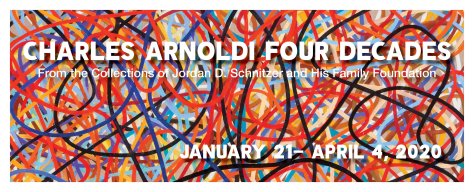
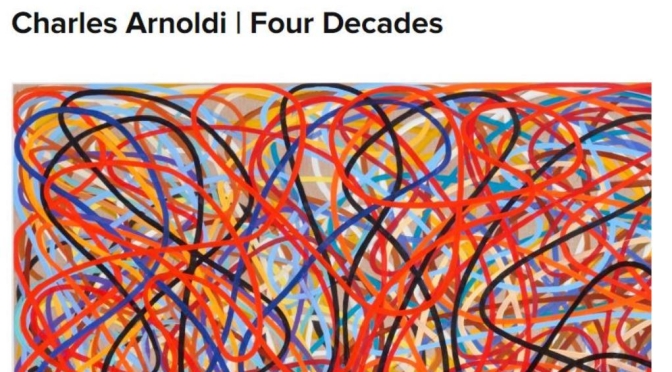
USC Fisher Museum of Art proudly presents Charles Arnoldi | Four Decades, a survey of the versatile and prolific Venice Beach artist, which traces the evolution 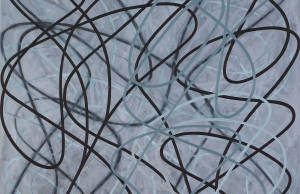 of the artist’s expansive and materials-focused practice from the 1970s to the present.
USC Fisher Museum of Art proudly announces Charles Arnoldi | Four Decades from the Collection of Jordan D. Schnitzer and His Family Foundation, a survey of Venice Beach artist Charles (Chuck) Arnoldi. The exhibition, organized by the USC Fisher Museum of Art with the generous support of the Jordan Schnitzer Family Foundation and curated by Bruce Guenther, author of Charles Arnoldi: Paper (2017), opens January 21, 2020 and runs through April 4, 2020.
 Charles Arnoldi was a young man from Dayton, Ohio who had seen little of the world when he arrived in Southern California in the mid 1960s. Following stints at a local community college and Chouinard Art Institute, Arnoldi won LACMA’s New or Young Talent Award in 1969 and thus began his ever-evolving career which continues to this day in his sprawling Venice studio.
For close to 50 years, Arnoldi’s work has reflected a passion for the material world, a commitment to experimentation, and a tireless focus on studio production. Charles Arnoldi | Four Decades is drawn from the holdings of the collector Jordan D. Schnitzer and His Family Foundation.
 Hailed as “a towering figure in the world of experimental theater” by the New York Times Waco, Texas-born Robert Wilson has created singular works in the realms of opera, performance, video art, glass, architecture, and furniture design since 1963. Prolific yet exacting in his approach to staging, light, and direction, Wilson has been honored with numerous awards for excellence including a Pulitzer Prize nomination, the Golden Lion of the Venice Biennale, and an Olivier Award. He is also the founding director of The Watermill Center, a laboratory for the arts and humanities in Water Mill, New York.
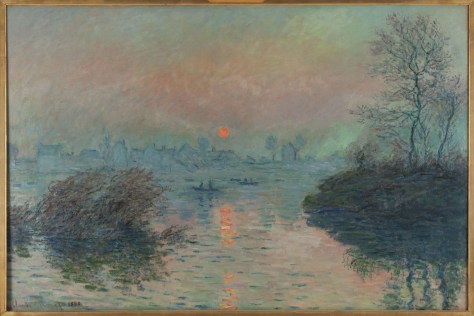
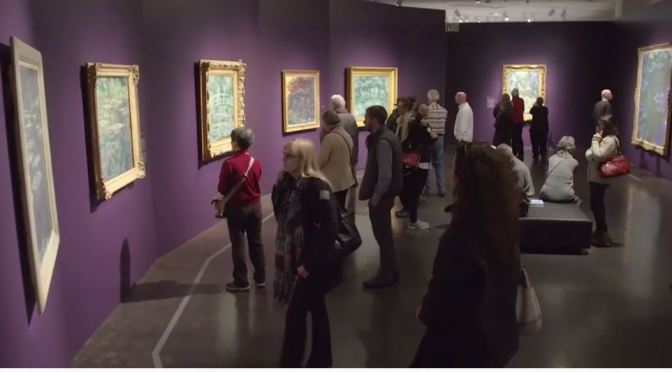
Visitors to the Denver Art Museum can currently see 120 different paintings by Claude Monet from all over the world. But how did they get there — like, literally get there?
 To find out, I talked with Sarah Cucinella-McDaniel, chief registrar at the Denver Art Museum. She’s sort of like a travel agent for art — and for this exhibition she booked the itineraries for artworks from more than 70 lenders around the world: museums, as well as private collectors. (One of her recent days started unexpectedly, around 1:45 a.m., when one of her nine Monet shipments for the day arrived at the museum hours ahead of schedule.)
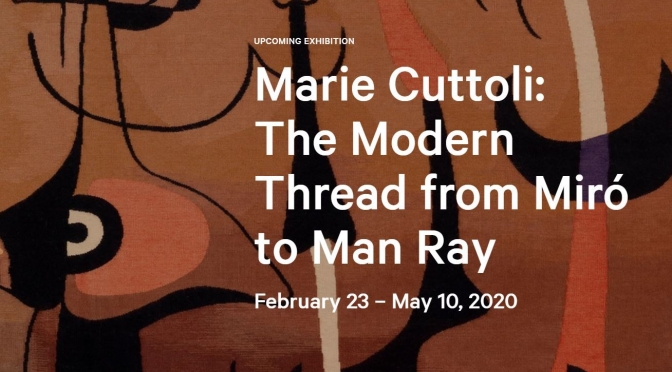
In 1930s Paris, leading modern artists experimented with tapestry design, thanks to pioneering entrepreneur Marie Cuttoli (1879–1973). Cuttoli lived between Algeria 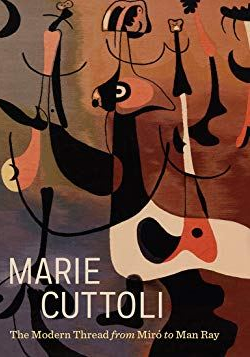 and Paris and collected work by artists such as Pablo Picasso, Joan Miró, and Georges Braque.
This exhibition traces her career, from her early work in fashion and interiors to her revival of the French tapestry industry. She commissioned the most celebrated artists of her time—Rouault, Léger, Picasso, Braque, Le Corbusier, Man Ray, and Miró, among others—to create designs for the historic tapestry workshops in Aubusson. By uniting these important paintings and drawings with the resulting tapestry, this exhibition shows their true purpose, revealing modernism’s profound dialogue with the decorative arts.
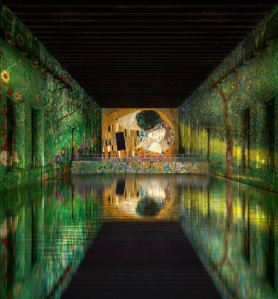 Located in Bordeaux’s former submarine base, the BASSINS DE LUMIÈRES will present monumental immersive digital exhibitions devoted to the major artists in the history of art and contemporary art. The submarine base’s surface area is three times the size of that of the Carrières de Lumières in Les Baux-de-Provence and five times that of the Atelier des Lumières in Paris.
The digital exhibitions will be perfectly adapted to the monumental architecture of the submarine base and will be reflected in the water of the four enormous basins, thereby adding a new dimension to the immersive experience. Visits will be conducted on gangways above the water and along the quays of the enormous basins.
On 17 April 2020, Culturespaces will open the largest digital art centre in the world: the Bassins de Lumières. France’s leading private operator in the management and promotion of monuments, museums, and art centres, Culturespaces is pursuing the creation of digital art centres and immersive exhibitions.
 Boomers Daily