Tag Archives: History

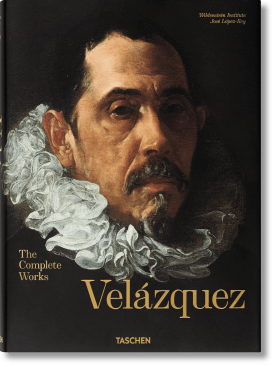
Art Books: “Velázquez – The Complete Works”

Velázquez The Complete Works Taschen 2020Manet called him “the greatest painter of all.” Picasso was so inspired by his masterpiece Las Meninas that he painted 44 variations of it. Francis Bacon painted a study of his portrait of Pope Innocent X. Monet and Renoir, Corot and Courbet, Degas and Dalí…for so many champions of art history, the ultimate soundboard was—and remains—Diego Rodríguez de Silva y Velázquez (1599-1660).

Velazquez The Complete Works
Las Meninas – Diego Velázquez (1656)

This updated catalog raisonné brings together Velázquez’s complete works, jaw-droppingly reproduced in extra-large format, with a selection of enlarged details and brand new photography of recently restored paintings, achieved through the joint initiative of TASCHEN and Wildenstein. The book’s dazzling images are accompanied by insightful commentary from José López-Rey on Velázquez’s interest in human life and his equal attention to all subjects, from an old woman frying eggs to a pope or king, as well as his commitment to color and light, which would influence the Impressionists over two centuries later.


Taschen Logo

The authors

José López-Rey (1905–1991) taught Italian Renaissance at the University of Madrid and worked as an art advisor for the Spanish Ministry of Education. Before the end of the Spanish Civil War, he emigrated to the USA, where he resumed his teaching career at the Institute of Fine Arts, New York. In 1973 he was awarded emeritus status. López-Rey was a corresponding member of the Hispanic Society of America and a consultant and contributor to several international art journals, including the Gazette des Beaux Arts and Art News.

Odile Delenda, graduate of the École du Louvre, served as professor there, and then as deputy head of the department of paintings at the Musée du Louvre until 2007. She has collaborated on several exhibitions of old master paintings. A research fellow at the Wildenstein Institute in Paris since 1990, she has continued her study of Spanish art from the Siglo de Oro. She is, among other works, the author of Vélasquez, peintre religieux (1993) and, under the auspices of the Wildenstein Institute, the first critical catalogue raisonné of the painted oeuvre of Francisco de Zurbarán and his studio (2009/10).

Read more or purchase

Art History: “Félix Fénéon: The Anarchist And The Avant-Garde” (MoMA)

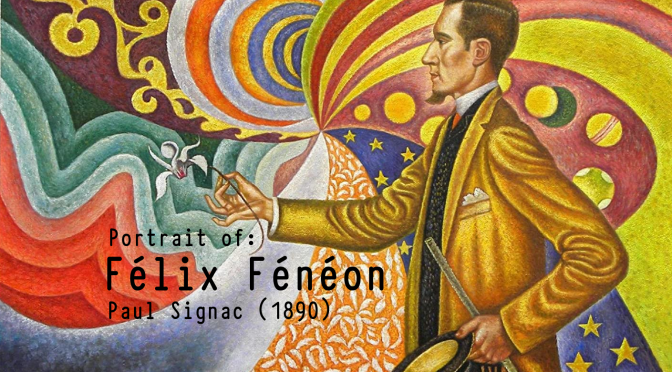
“It would not be a commonplace portrait at all, but a carefully composed picture, with very carefully arranged colors and lines. A rhythmic and angular pose. A decorative Félix, entering with his hat or a flower in his hand.”

With these words, in 1890, Paul Signac described to Félix Fénéon the extraordinary portrait he was dedicating to him. In it, Signac paid homage to Fénéon’s distinctive appearance, his generous but enigmatic personality, and his innovative approach to modernism.

This painting, a masterpiece in the Museum’s collection, will be the centerpiece of Félix Fénéon, the first exhibition dedicated to Fénéon (1861–1944). An art critic, editor, publisher, dealer, collector, and anarchist, Fénéon had a wide-ranging influence on the development of modernism in the late 19th and early 20th centuries.

In the late 1880s, he played a key role in defining the new movement known as Neo-Impressionism, a term he coined himself, whose artists, including Signac, used tiny dabs of color that would mix in the eye of the viewer. Over the next five decades, he championed the careers of artists from Georges-Pierre Seurat and Signac to Pierre Bonnard, Henri Matisse, and Amedeo Modigliani.

He amassed a renowned collection of paintings by these artists and many others, and he was also a pioneering collector of art from Africa and Oceania. The exhibition will feature some 130 objects, including major works that Fénéon admired, championed, and collected, as well as contemporary photographs, letters, and publications that trace key chapters in his biography. Together these works reveal the profound and lasting legacy of Fénéon’s keen eye and bold, forward-looking vision.

Art History: “Emotional Expression” In Artwork Of Venetian Painter “Titian” (National Gallery Video)

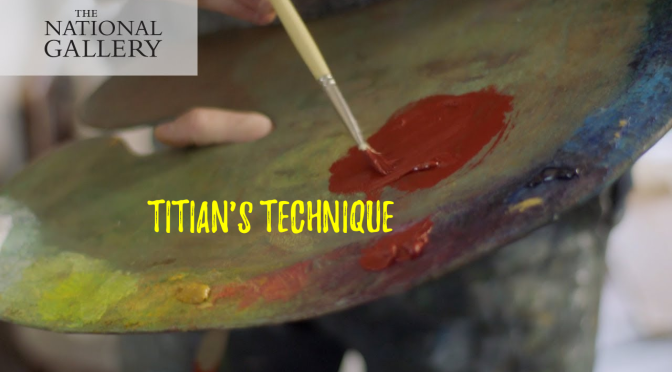
The way Titian painted was unlike other artists of his day. With little in the way of preliminary drawings, Titian worked very freely straight onto the canvas. Watch artist Andy Pankhurst show us how Titian would have worked.

Website

Tiziano Vecelli or Vecellio, known in English as Titian, was an Italian painter during the Renaissance, considered the most important member of the 16th-century Venetian school. He was born in Pieve di Cadore, near Belluno. During his lifetime he was often called da Cadore, ‘from Cadore’, taken from his native region.

Top Travel Videos: “Aerial America – Maryland / Delaware” (Smithsonian)


Maryland and Delaware are two small states of great historical significance. Highlighted by the great bays of the eastern seaboard: Chesapeake and Delaware, both states are defined by the legacies of their colonial pasts. This aerial journey reveals their giant stature in the history of America.

Website

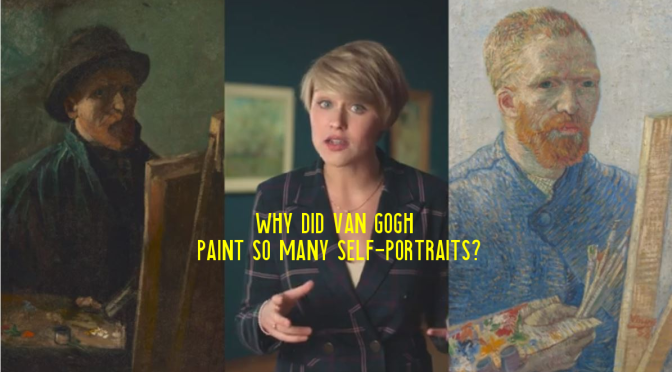
Art History: “Rembrandt’s Self Portraits” – Oxford Ashmolean Museum (2020)

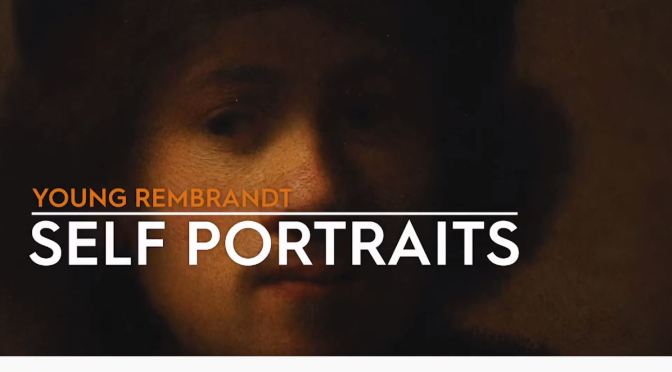
Curator An Van Camp tells us about Rembrandt’s obsession with self portraits and how he improved his skill throughout his life.

Website

Rembrandt Harmenszoon van Rijn; 15 July 1606 – 4 October 1669) was a Dutch draughtsman, painter, and printmaker. An innovative and prolific master in three media, he is generally considered one of the greatest visual artists in the history of art and the most important in Dutch art history. Unlike most Dutch masters of the 17th century, Rembrandt’s works depict a wide range of style and subject matter, from portraits and self-portraits to landscapes, genre scenes, allegorical and historical scenes, and biblical and mythological themes as well as animal studies. His contributions to art came in a period of great wealth and cultural achievement that historians call the Dutch Golden Age, when Dutch art (especially Dutch painting), although in many ways antithetical to the Baroque style that dominated Europe, was extremely prolific and innovative and gave rise to important new genres. Like many artists of the Dutch Golden Age, such as Jan Vermeer of Delft, Rembrandt was also an avid art collector and dealer.

From Wikipedia

Top Travel Videos: “Aerial America – Colorado” (Smithsonian Channel)

Get ready for a Rocky Mountain adventure over the state that boasts some of the highest peaks, tallest sand dunes and largest single-site brewery in America. Every year Colorado attracts music lovers, ski buffs, and sports fans drawn to its Red Rocks, Aspen slopes and the Broncos’ Mile High Stadium. But it is also a state with a history, marked by war, a gold rush and legendary bank robberies. Through it all, Colorado remains a feast for the eyes.

Website

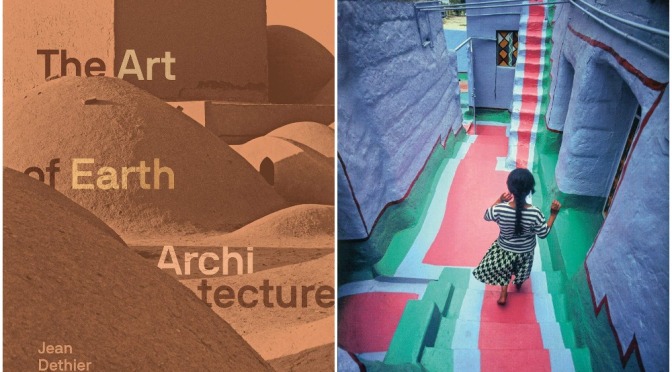
Top New Books: “The Art Of Earth Architecture – Past, Present, Future” (Mar 2020)

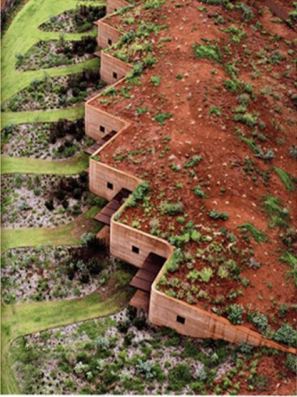
The Art of Earth Architecture Past, Present, Future Jean Dethier March 2020The Art of Earth Architecture demonstrates the wide-ranging applications and sustainability of this building material, while presenting a manifesto for its ecological significance. Featuring raw-earth masterpieces, monumental structures, and little known works, the book includes the temples and palaces of Mesopotamia, the Great Wall of China, large-scale urban developments in Tenochtitlan in Mexico, the medinas of Morocco, and housing in Marrakech and Bogota.
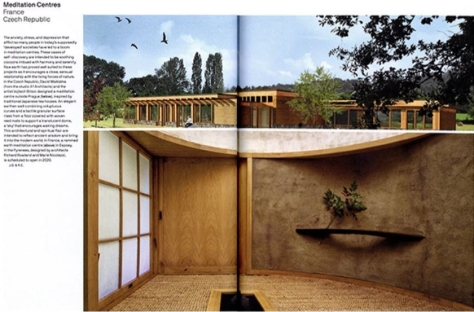

For almost ten thousand years, unbaked earth has been used to build remarkable structures, from simple dwellings to palaces, temples, and fortresses both grand and durable. Jean Dethier spent fifty years researching this landmark global survey, which spans five continents and 250 sites.

This definitive reference features many UNESCO World Heritage sites and contains essays on the historical, technical, and cultural aspects of raw-earth construction from twenty experts in the field, as well as hundreds of photographs, illustrations, and architectural drawings.

The Art of Earth Architecture Past, Present, Future Jean Dethier March 2020

Jean Dethier has dedicated his life to the research, safeguarding, and development of earth structures around the world. Dethier worked at the Centre Pompidou as a curator of influential architectural exhibits for thirty years. Winner of the prestigious Grand Prix national de l’architecture, he sat on the jury of the 2016 Terra Award, the first international prize for contemporary earthen structures.

Read more

Travel & Surrealism: “Jungle Xanadu – The Story Of Las Pozas” (2020)

Filmed, Edited and Written by: Bob Krist

Narrated by: Fabiola Stevenson

Jungle Xanadu - The Story of Las Pozas Short Film by Bob Krist March 26 2020

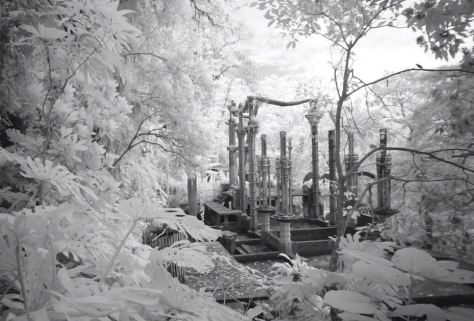
Edward James, a rich eccentric and patron of artists Salvador Dali and Rene Magritte, built a surreal sculpture park in the jungles of the Sierra Gorda in Xilitla, Mexico. The project took 35 years, spreads over 80 acres, and is accessible to the public. This piece is filmed in black & white infrared, a technique that reacts to heat as well as visible light.

Website

History: “European Castle Ruins” Digitally Restored By NeoMam Studios

From AtlasObscura.com (March 26, 2020):

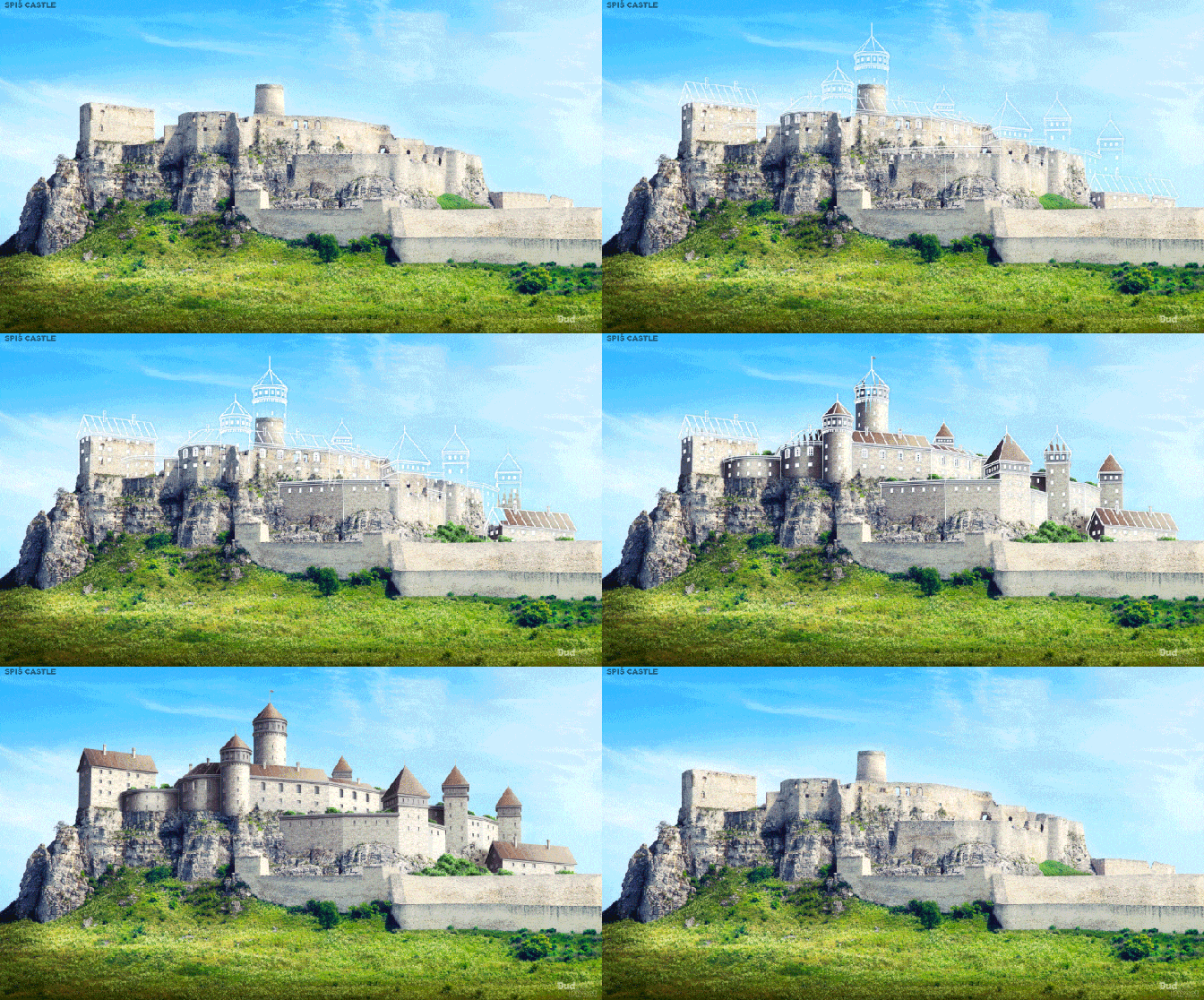
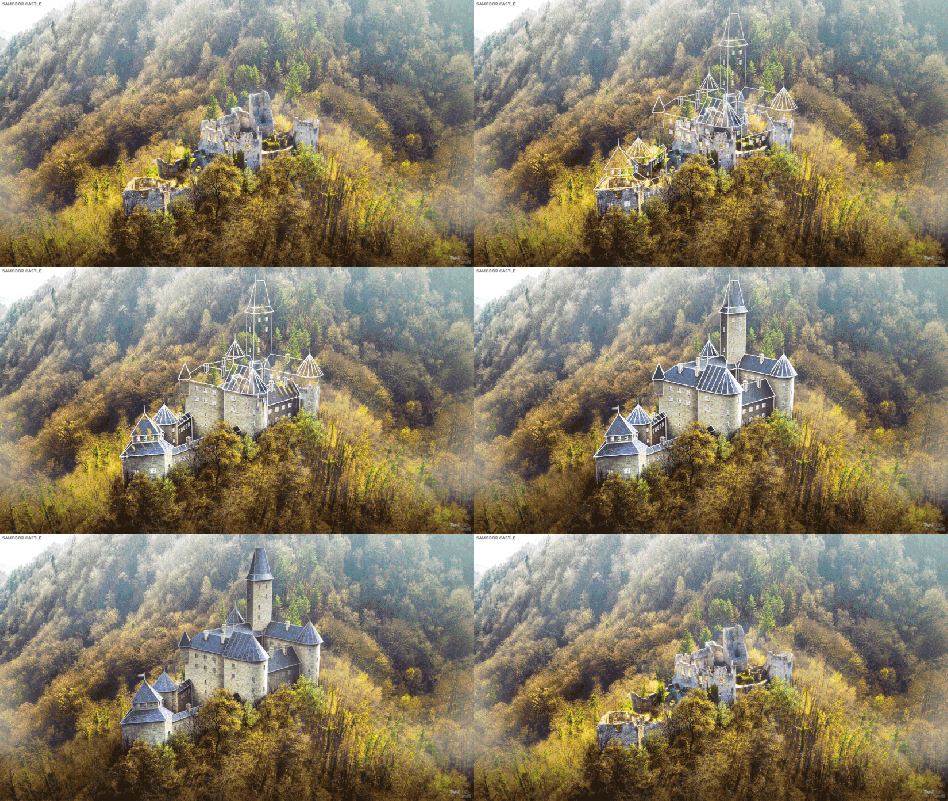
…a team of designers recently looked at the now-ruined castles of Middle Ages Europe, lifting the fortifications up from their dilapidated states and digitally reimagining the structures as they were in their heyday.

Samobor Castle Croatia - Digital Enhancement by NeoMam Studios March 2020

Seven European castles were virtually rebuilt, restoring them from their keeps to their baileys. Architects pored over old paintings, blueprints, and other research documents that describe the strongholds, then offered their opinions to the NeoMam Studios design team, which digitally revived the structures from the ground up.

NeoMam Studios website

Read full article