Tag Archives: Architecture

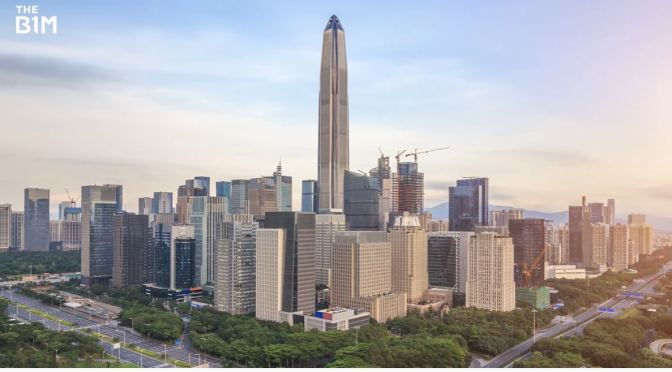
The Future Of Cities: “BiodiverCity” In Malaysia – “Urban Lilypad Islands”

BiodiverCity is conceived as an Urban Mosaic of three diverse islands, and a set of urban design guidelines for mixing programs, addressing pedestrian and mobility networks, building sustainably and harvesting resources. The three islands bring together mixed-use districts, establishing habitat connectivity and supporting edge ecologies in reserves, parks, corridors and urban plazas.

The Channels, BiodiverCity’s first island, is constructed in three complementary phases: in Phase 1, Active Destinations include a wave pool and technology park; in Phase 2, a Civic Heart establishes governance and research institutions in the area; and in Phase 3, a Cultural Coast builds upon the heritage and vibrant creative energy of Penang’s George Town to create a regional and international draw.

As the heart of the district, the Channels’ 500-acre digital park includes spaces for research, development and local business opportunities. The Mangroves, BiodiverCity’s second and central island dedicated to businesses, is organized around a network of sheltered urban wetlands, creating suitable environments for its namesake Mangrove forests—an important natural infrastructure that doubles as effective powerhouses for sequestering more than four times as much carbon as a typical forest.

At the center of the Mangroves, the Bamboo Beacon hosts meetings, conferences and major events—broadcasting the knowledge developed in BiodiverCity out to the world. The buildings in BiodiverCity will be designed to perform efficiently and will to a large extent be constructed by low-carbon materials such as bamboo and Malaysian timber in combination with green concrete, a sustainable alternative comprised of industrial waste and recycled materials. By encouraging green roofs, facades, public and private open spaces, the islands can form a nearly continuous habitat mosaic feeding back into the forests, beaches, riparian zones and estuaries at the island’s edges.

The Laguna, BiodiverCity’s westernmost island, is an oasis for ecological living, organized around a central marina. Eight smaller islands form a miniature archipelago, where floating, stilted and terraced housing takes advantage of the natural setting of Tanjung Gertak Sanggul.

Source by BIG – Bjarke Ingels Group.
Nostalgia: “Gas And Glamour” In Los Angeles

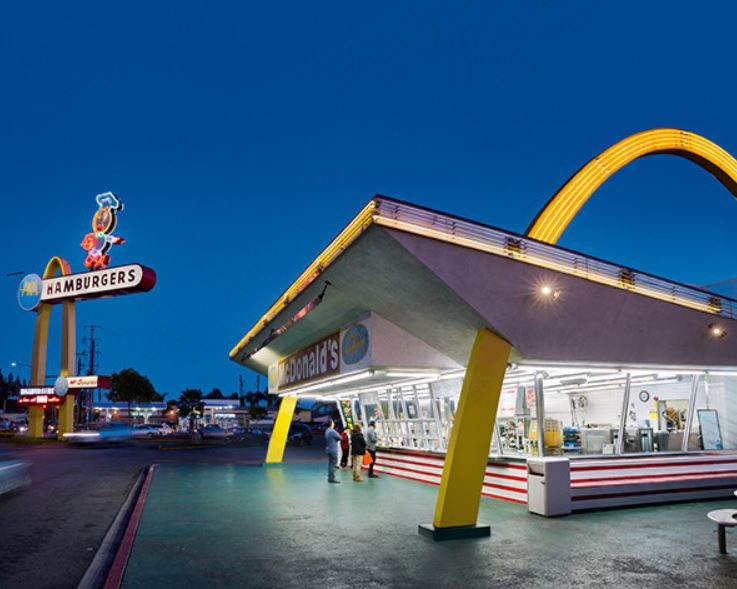
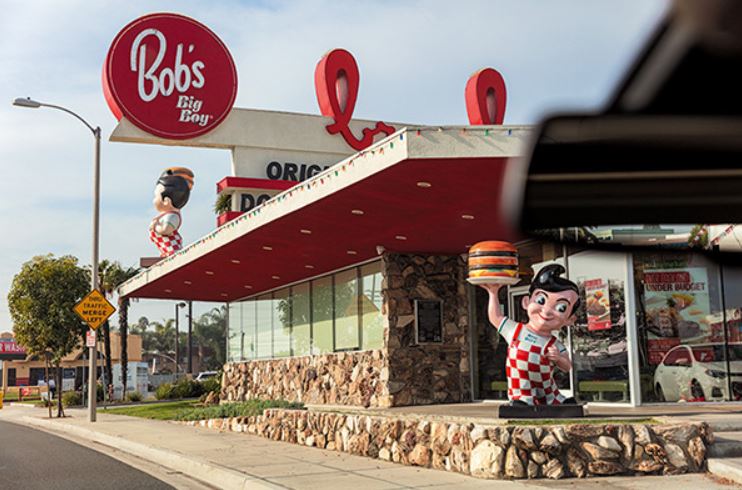
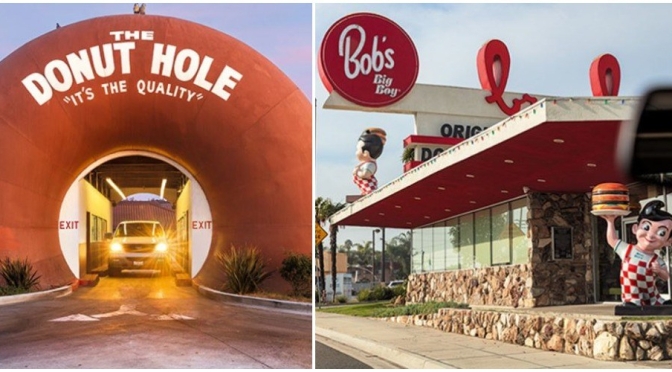
I love cars and I love Los Angeles for being a city of cars. Over the last decade or so, I have been intrigued by L. A.’s love affair with the automobile, tracing back to a time when cars themselves were objects of beauty.

“Those cars are no longer on the streets today but the buildings from that era remain. As an architectural photographer, I wanted to capture L. A.’s car-culture-induced optimism and ambition reflected in polychromatic, starspangled coffee shops, gas stations, and car washes, that once lured the gaze of passing motorists.” (Ashok Sinha)

Ashok Sinha is an architectural and fine art photographer whose large-scale photographs capture a sense of place tied to both natural landscapes and built environments. His photographs have been published by editorial outlets such as The New York Times, Architectural Digest, Interior Design, and exhibited at The Museum of the City of New York, the International Center of Photography, and The Royal Photographic Society.

Website

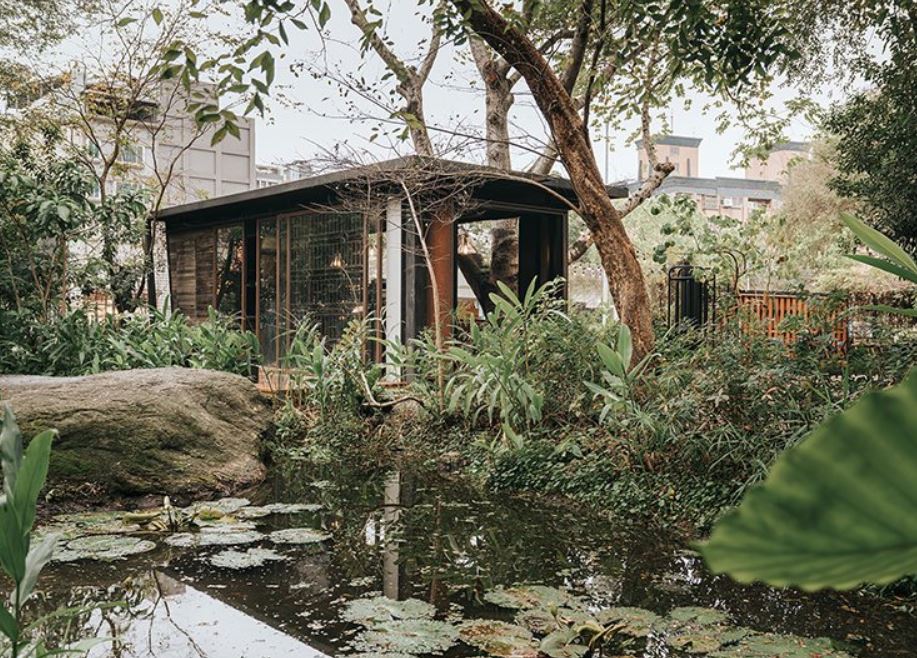
Urban Design: Shipping Container Turned Into Rustic Cafe In Taiwan

Imagination of walking towards nature——

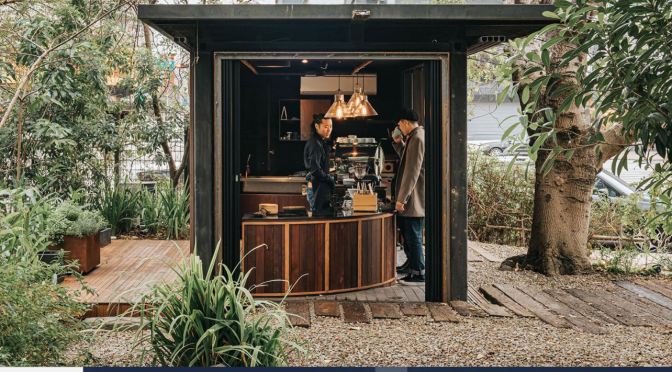
From the edge of the city as a starting point, an invisible path is created that stretches to the forest, along the sleepers, passing by the trees, and winding in freely in accordance with the original terrain, because of the old container buildings opened by this path The body, the ambiguity of the boundary instantly permeates with the surrounding environment, and people, sunlight and air flow in the natural place like this.

This is a single but not monotonous space. The coffee shop is converted from old containers. It uses rusty iron that echoes the original material as a contrast. The logs that change the quality of the space are used as sections to provide a coffee shop. Representing the soul, the continuously extending bar fully presents the barista’s posture, and the linear free flow also gives this store its exclusive posture and appearance.

Through the formation of individual terrain and the creation of tiny corners, it produces freedom like walking in nature, and develops a rich and diverse space experience. In this rare urban corner, take a breather, take your own way, or Stop or go and find your own place.

Website

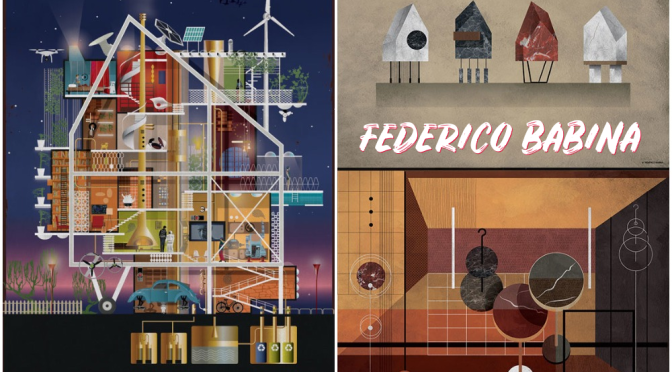
Profiles: Italian Architect & Illustrator Federico Babina – “Abstract Stories”

I am an Italian ( since 1969)
architect and graphic designer (since 1994)
that lives and works in Barcelona (since 2007)
but mostly I’m a curious person (since ever).

Every day I try to rediscover a way to observe the world as through the eyes of a child. Children are able to have a vision of things totally
uninhibited and without the conditioning of the experience. The children’s drawings are always amazing and beautiful in their spontaneous simplicity and clarity.

I like trying to explain the world I see through different techniques of expression. I like the richness of the language and the diversity of its forms. I do not want to confine me in a prison of a style or shape.

Drawing and illustration are for me one of the ways to recount and photograph the thoughts, feelings and emotions. Every picture has a story and every picture is a witness of a story.

Website

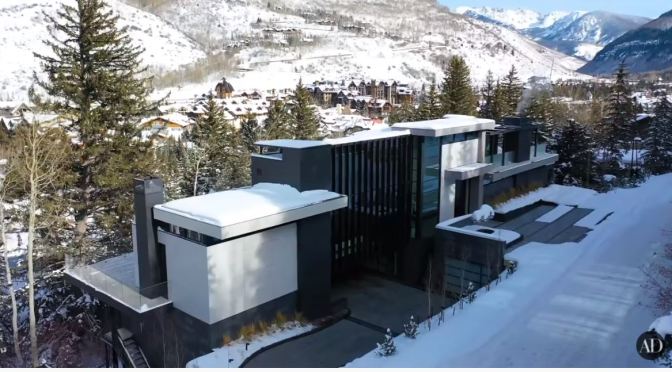
Home Tour Videos: Ultra-Modern Colorado Rocky Mountain Ski Mansion (AD)

Today AD brings you to Vail, Colorado to tour 165 Forest Avenue, a massive ultra-modern AD Architectural Digest Logomansion nestled in the Rocky Mountains. From the linear fireplace in the living room, to Italian marble surfaces in the kitchen, each space in the home is an invigorating expression of timeless luxury. The interior elegance is only surpassed by the natural beauty seen through the home’s glass walls, which slide apart granting access to over 6,500 sq. ft. of heated exterior space.
New Architecture Books: “Beyond The West” (2020)

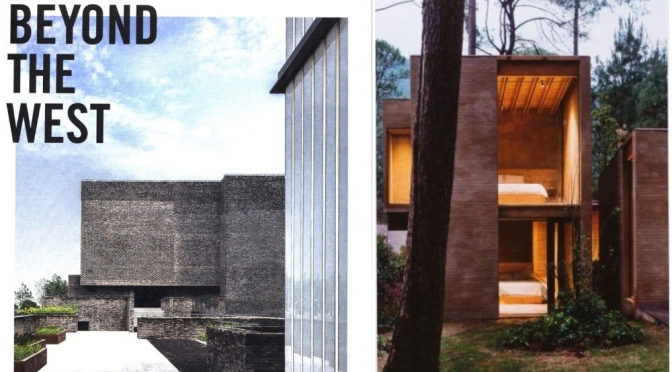
Beyond The West inspires a fresh understanding of global contemporary architecture beyond the Western Countries.

This slideshow requires JavaScript.

Architects throughout the world work against a backdrop of rapidly growing cities, changing societies and climate, and emerging economies. But while Western architecture has largely dominated the discourse, architecture firms from non-Western countries have been establishing local and global -recognition for themselves, often finding strikingly different solutions to local requirements, including sustainability, transportation and migration, construction materials, and traditions. Beyond The West journeys across Asia, Africa, and the Americas to under-stand how local architects respond to a changing world, and focuses its wide lens on inspiring and truly global architecture.

Read more or purchase

Top Modern Home Tours: “Devon Passivhaus” – East Devon, England (Video)

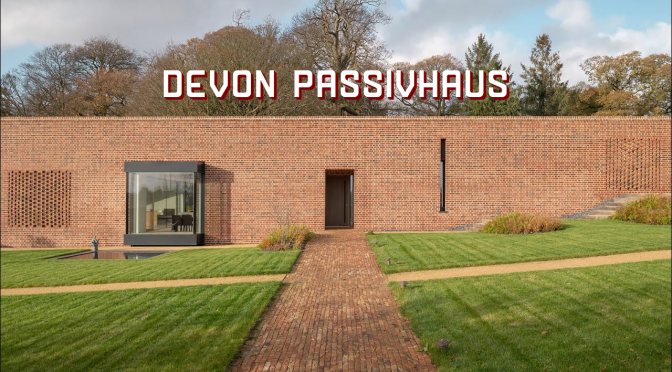
A linear red-brick wall obscures the textured interiors and art-filled courtyard hidden inside McLean Quinlan’s low-rise Passivhaus home in Devon, UK. The energy-efficient dwelling, aptly named Devon Passivhaus, nestles into a sloped walled garden that was once owned by an old English country house that fell into a state of disrepair.

The overall design is simple and clean. An elegant brick front complements the brickwork of the old garden wall and a discrete front door opening references the gate in the garden wall. Further down, an oriel window breaks through, hinting at what is behind. Elsewhere, external surfaces are dark render, designed to recede visually in deference to the surrounding garden.

Tucked within, the house has a glass roofed courtyard at its centre, a winter garden flooding light into the interior. Spaces are arranged around this central core so the building functions both as a home and a gallery for our clients, great collectors of pottery and art, with spaces to display and curate.

Comfortable and serene interior spaces are punctuated with tactile and textured materials: reclaimed terracotta, rough sawn oak and clay plaster, to ensure that internally the building feels connected to the garden that inspired it.

Website

Renovation Architecture: “House Inside A Ruin” In Czechoslovakia (2020)

ORA Architects CZIt was ruin to the bone. All that was left of the original house was a brick envelope with a roof. Together with the building owners, we asked ourselves whether the house had a place to return to. Any attempt at a traditional repair would mean losing the original character of the ruin. Relatively soon, therefore, we rejected a speculative reconstruction of the original state, as well as any other imitations. We proposed to fix the current state of the romantic ruins and enter the house anew. House to house, house inside a ruin.

This slideshow requires JavaScript.

We proposed to tear down the inner parts of the building and return its original layout with two floors instead of three, as well as the original scale. Related to this is a return to the original division of the facade. Without sentiment and depending on the needs of the layout, we opened other large openings where needed. We have built a new, insulated house into the existing staged ruin, a one that can meet all current energy standards. We reused the structurally sound wooden beams as elements of ceilings and truss replacements. Most of the material remained in place, just rearranged.

Website