

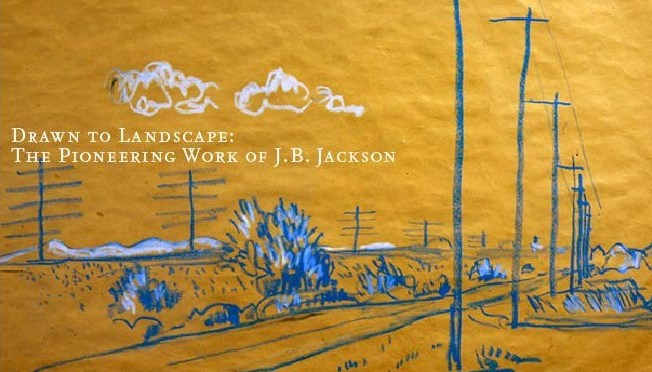
New Architecture Books: “Traces of J. B. Jackson – The Man Who Taught Us to See Everyday America”
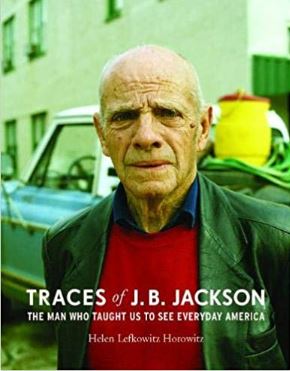 After a varied life of traveling, writing, sketching, ranch labor, and significant service in army intelligence in World War II, Jackson moved to New Mexico and single-handedly created the magazine Landscape. As it grew under his direction throughout the 1950s and 1960s, Landscape attracted a wide range of contributors. Jackson became a man in demand as a lecturer and, beginning in the late 1960s, he established the field of landscape studies at Berkeley, Harvard, and elsewhere, mentoring many who later became important architects, planners, and scholars.
J. B. Jackson transformed forever how Americans understand their landscape, a concept he defined as land shaped by human presence. In the first major biography of the greatest pioneer in landscape studies, Helen Horowitz shares with us a man who focused on what he regarded as the essential American landscape, the everyday places of the countryside and city, exploring them as texts that reveal important truths about society and culture, present and past. In Jackson’s words, landscape is “history made visible.”
Read Harvard Design Magazine article
Horowitz brings this singular person to life, revealing how Jackson changed our perception of the landscape and, through friendship as well as his writings, profoundly influenced the lives of many, including her own.
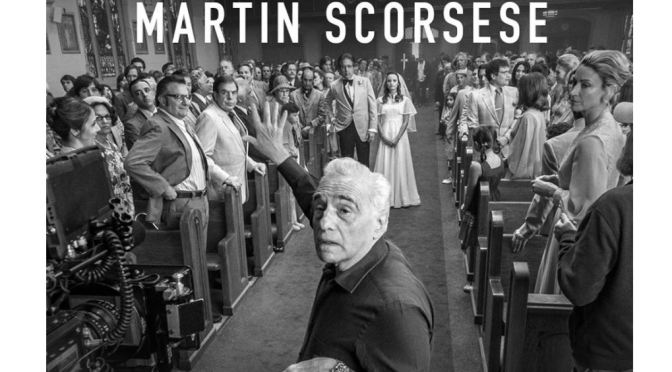
Interviews: Director Martin Scorsese On Filmmaking & Death (NYT)
From a New York Times online article (01/02/20):
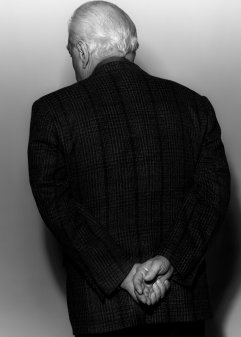
In ways both subtle and substantial, Scorsese sees the world changing and becoming less familiar to him. He gratefully accepted a deal with Netflix, which covered the reported $160 million budget for “The Irishman.” But the bargain meant that, after the movie received a limited theatrical release, it would be shown on the company’s streaming platform.
Scorsese has other aspirations but they have nothing to do with moviemaking. “I would love to just take a year and read,” he said. “Listen to music when it’s needed. Be with some friends. Because we’re all going. Friends are dying. Family’s going.”
Martin Scorsese is the most alive he’s been in his work in a long time, brimming with renewed passion for filmmaking and invigorated by the reception that has greeted his latest gangland magnum opus, “The Irishman.”
And what he wants to talk about is death.
Just to be clear, he’s not talking about the deaths in his movies or anyone else’s. “You just have to let go, especially at this vantage point of age,” he said one Saturday afternoon last month.
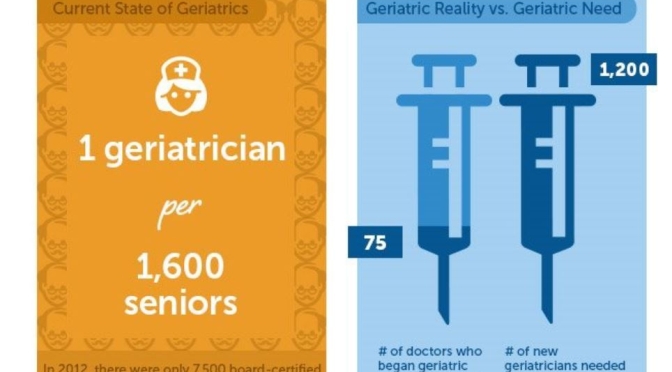
Health And Aging: U.S. Will Need 33,000 Geriatricians By 2025, Only Has 7,000 Now
From a New York Times online article:
 If one geriatrician can care for 700 patients with complicated medical needs, as a federal model estimates, then the nation will need 33,200 such doctors in 2025. It has about 7,000, only half of them practicing full time. (They’re sometimes confused with gerontologists, who study aging, and may work with older adults, but are not health care providers.)
Geriatrics became a board-certified medical specialty only in 1988. An analysis published in 2018 showed that over 16 years, through academic year 2017-18, the number of graduate fellowship programs that train geriatricians, underwritten by Medicare, increased to 210 from 182. That represents virtually no growth when adjusted for the rising United States population.
“It’s basically stagnation,” said Aldis Petriceks, the study’s lead author, now a medical student at Harvard.
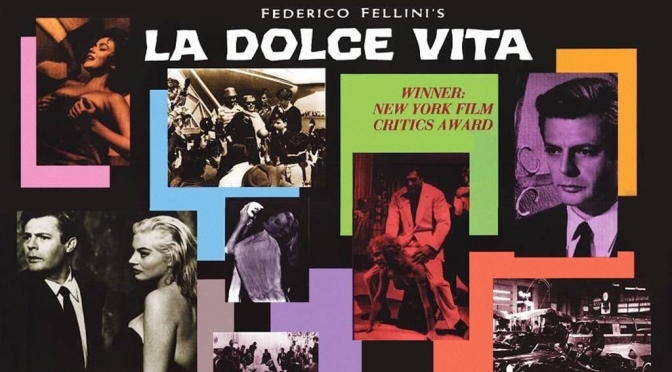
Film History: Federico Fellini’s “La Dolce Vita” (1960) At 60 Years (Video)
La Dolce Vita (“the sweet life” or “the good life”) is a 1960 comedy-drama film directed and co-written by Federico Fellini. The film follows Marcello Rubini (Marcello Mastroianni), a journalist writing for gossip magazines, over seven days and nights on his journey through the “sweet life” of Rome in a fruitless search for love and happiness. La Dolce Vita won the Palme d’Or (Golden Palm) at the 1960 Cannes Film Festival[ nd the Oscar for Best Costumes. The film was a worldwide box-office success.
From Wikipedia
Food & Drink: Prosecco – A Very “Sophisticated” Sparkling Wine These Days
From a UK The Week online article:
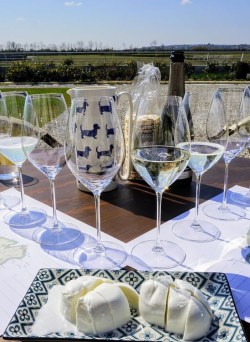 While all their Proseccos are exceptional, it’s their Brut that blows everyone away. It recaptures a tantalising hint of the yeast I so loved from the Rifermentato in Bottiglia, all sharp apples and sourdough.
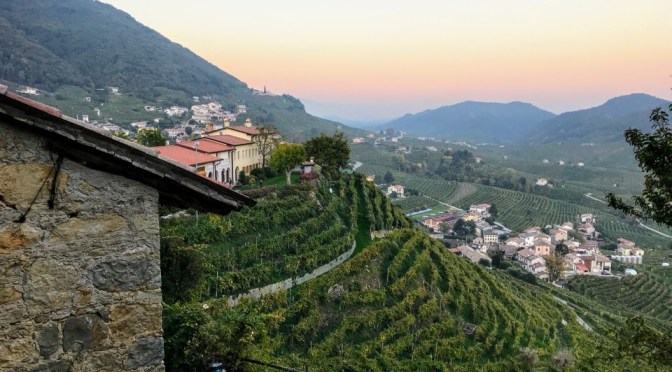
Tucked between the formidable fingers of the Dolomites and the enduring opulence of Venice is an overlooked area of Italian countryside. Its steep verdant hills and serene cobble-stone towns won’t be found on any tourist maps – but you will find their handiwork on just about every menu in the UK.
This is Prosecco country: the land that gave us all-you-can-sip sparkle. It’s easy to forget between the 6th and 7th bottomless brunch glass that someone, somewhere actually crafted this world-conquering wine. But craft it they do – carefully, consistently and often quickly – and what the UK sees is a mere price-prioritised glimpse of Prosecco’s true scope.

Air Travel: Electric Planes From “Eviation” Could Be Flying In UK In 2 Years
Electric planes could soon fly commuters from city to city, a transport minister has disclosed. George Freeman, minister for transport and innovation, told The Telegraph’s “Chopper’s Brexit Podcast” that there was “a whole opportunity for short-haul transport at low altitude” that the country was yet to grasp.

In an episode of 2020 predictions, Mr Freeman said: “This will be the year where we begin to see a whole new world of low level aviation, Velocopters, electric planes. We already run the world’s first commercial electric plane service and Boris and I have been looking at how we can develop UK leadership in electric plane technology.” Mr Freeman said the planes could take eight passengers and fly at 2,500ft and could be used for “short hops between cities that take you an hour or two in the car, pumping out carbon monoxide.”
“At the moment the electric plane seats eight. But you know what the aerospace industry is like – eight soon becomes 18, and that soon becomes 28. We are determined to lead in the revolution of clean transport.”
To listen to the podcast in full, head here: https://www.telegraph.co.uk/politics/…

2020 Auto Trends: “VinFast” Electric Cars From Vietnam Will Start At $17K
Even in the U.S., VinFast faces stiff competition from Toyota, Ford and Hyundai. VinFast hopes its low prices — starting at $17,000 — will give it an edge.
Medicine: “Is It An Art Or Science?” (The Lancet)
From a The Lancet online article:
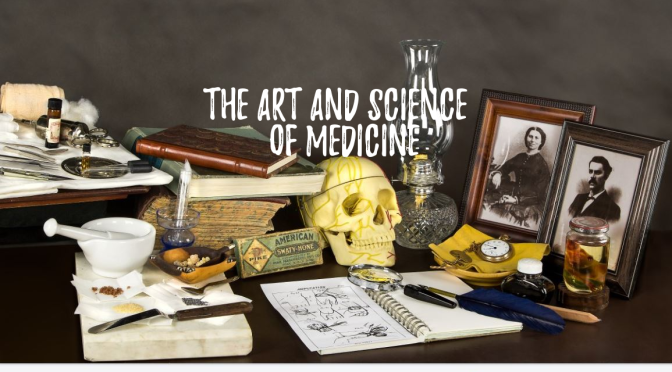
Effective physicians interrogate their patients’ choice of words as well as their body language; they attend to what they leave out of their stories as well as what they put in. More than 2000 years after Hippocrates, there remains as much poetry in medicine as there is science.
 WHO’s definition of health is famously “a state of complete physical, mental, and social well-being and not merely the absence of disease or infirmity”. One of the oldest medical texts we know of, The Science of Medicine attributed to Hippocrates, sets out the goal of medicine in comparable terms: “the complete removal of the distress of the sick”.
In my working life as a physician, I’ve never found the distinction between arts and sciences a particularly useful one. In the earliest ancient Greek texts, medicine is described as a techne—a word better translated as “know-how”. It conveys elements of science, art, and skill, but also of artisanal craft. The precise functions of medicine may have subtly shifted over the ages, but our need as human beings for doctors remains the same; we go to them because we wish to invoke some change in our lives, either to cure or prevent an illness or influence some unwelcome mental or bodily process. The goal of medicine is, and always has been, the relief of human suffering—the word patient, from the Latin patientem, means sufferer. And the word physician is from the Greek phusis, or nature: to be engaged in clinical work is to engage oneself with the nature of illness, the nature of recovery, the nature of humanity.

Top New Science Podcasts: Latest Trends In Research, Carnivorous Plant Traps
 We start our first episode of the new year looking at future trends in policy and research with host Joel Goldberg and several Science News writers. Jeffrey Mervis discusses upcoming policy changes, Kelly Servick gives a rundown of areas to watch in the life sciences, and Ann Gibbons talks about potential advances in ancient proteins and DNA.
In research news, host Meagan Cantwell talks with Beatriz Pinto-Goncalves, a postdoctoral researcher at the John Innes Centre, about carnivorous plant traps. Through understanding the mechanisms that create these traps, Pinto-Goncalves and colleagues elucidate what this could mean for how they emerged in the evolutionary history of plants.
 Boomers Daily