The greatest roles of her life were behind the scenes. Natalie Wood: What Remains Behind is an intimate portrait of actor Natalie Wood’s life and career, told through the eyes of her daughter Natasha Gregson Wagner and others who knew her best. The film celebrates the woman behind the iconic imagery and explores the compelling details of Wood’s personal life and illustrious career that are often overshadowed by her tragic death.
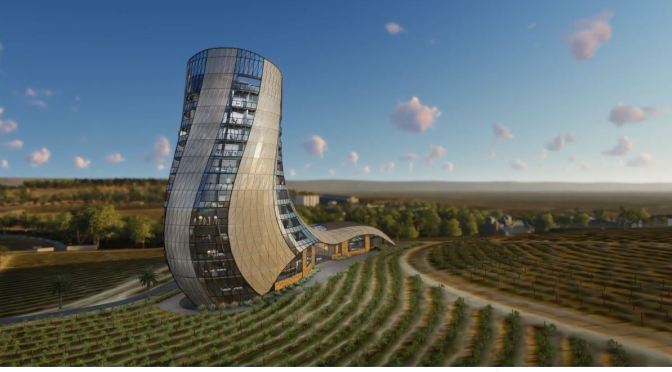
The 12-storey Oscar Seppeltsfield hotel will have 70 rooms, each with a private balcony. The design of the building, which was conceived by Intro Architecture, is said to be inspired by the history of the winery and the wine barrels in its Centennial Cellar, which contains barrels of fortified wine dating back to 1878.
It will be constructed in the middle of Seppeltsfield’s Great Terraced Vineyard, which contains 60 to 80-year-old Grenache bush vines.
The hotel is named after winemaker and viticulturalist Oscar Benno Seppelt (1873-1963), a member of the family that founded the winery.
From a BBC.com article by Jessica Brown (April 6, 2020):
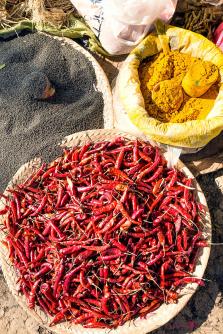
Red chili, black pepper and turmeric.
“The major findings were that higher intake of spicy foods is related to a lower risk of mortality, particularly deaths due to cancer, heart disease, and respiratory diseases,” says researcher Lu Qi, professor of nutrition at Harvard’s school of public health.
Many researchers believe the health benefits of spices actually come from what we eat them with. For example, there’s a tendency to use them to replace salt, says Lipi Roy. “Spices make food delicious and flavourful, and they can be a healthier alternative to salt,” she says.
Spices have been a part of our diets for thousands of years – it’s second nature to sprinkle our chips with pepper, sip on ginger tea and add chillies to our meals. But recently, some spices have been unofficially promoted from everyday culinary staples to all-healing superfoods.
Saint-Malo is a historic French port in Ille-et-Vilaine, Brittany on the English Channel coast.
The walled city had a long history of piracy, earning much wealth from local extortion and overseas adventures. In 1944, the Allies heavily bombarded Saint-Malo, which was garrisoned by German troops. The city changed into a popular tourist centre, with a ferry terminal serving the Channel Islands of Jersey and Guernsey, as well as the Southern English settlements of Portsmouth, Hampshire and Poole, Dorset.
Founded by Gauls in the 1st century BC, the ancient town on the site of Saint-Malo was known as the Roman Reginca or Aletum. By the late 4th century AD, the Saint-Servan district was the site of a major Saxon Shore promontory fort that protected the Rance estuary from seaborne raiders from beyond the frontiers. According to the Notitia Dignitatum, the fort was garrisoned by the militum Martensium under a dux (commander) of the Tractus Armoricanus and Nervicanus section of the litus Saxonicum. During the decline of the Western Roman Empire, Armorica (modern-day Brittany) rebelled from Roman rule under the Bagaudae and in the 5th and 6th centuries received many Celtic Britons fleeing instability across the Channel. The modern Saint-Malo traces its origins to a monastic settlement founded by Saint Aaron and Saint Brendan early in the sixth century. Its name is derived from a man said to have been a follower of Brendan the Navigator, Saint Malo or Maclou, an immigrant from what is now Wales.
Saint-Malo is the setting of Marie de France’s poem “Laüstic,” an 11th-century love story. The city had a tradition of asserting its autonomy in dealings with the French authorities and even with the local Breton authorities. From 1590 to 1593, Saint-Malo declared itself to be an independent republic, taking the motto “not French, not Breton, but Malouin.
NPR’s Tamara Keith and Amy Walter of the Cook Political Report join Lisa Desjardins to discuss the latest political news, including the fallout from postponing so many 2020 primary elections, a phone call between President Trump and former Vice President Joe Biden about coronavirus response and the fallout from Trump’s firing of the intelligence community inspector general.
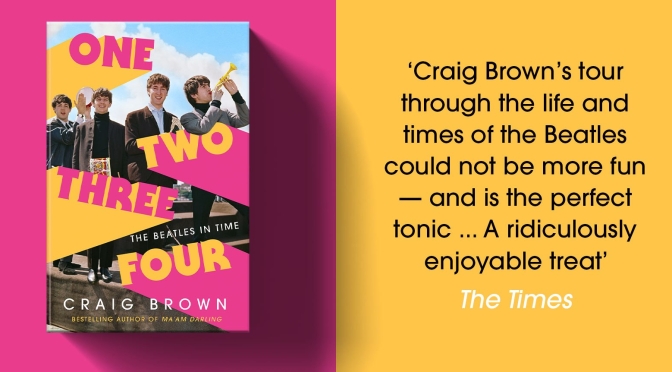
Robert Bound speaks to writer Craig Brown about his new biography of the Beatles, called ‘One Two Three Four: The Beatles in Time’. How do you say something fresh about one of the most written-about bands in history?
John Updike compared them to ‘the sun coming out on an Easter morning’. Bob Dylan introduced them to drugs. The Duchess of Windsor adored them. Noel Coward despised them. JRR Tolkien snubbed them. The Rolling Stones copied them. Loenard Bernstein admired them. Muhammad Ali called them ‘little sissies’. Successive Prime Ministers sucked up to them. No one has remained unaffected by the music of The Beatles. As Queen Elizabeth II observed on her golden wedding anniversary, ‘Think what we would have missed if we had never heard The Beatles.’
One Two Three Four traces the chance fusion of the four key elements that made up The Beatles: fire (John), water (Paul), air (George) and earth (Ringo). It also tells the bizarre and often unfortunate tales of the disparate and colourful people within their orbit, among them Fred Lennon, Yoko Ono, the Maharishi, Aunt Mimi, Helen Shapiro, the con artist Magic Alex, Phil Spector, their psychedelic dentist John Riley and their failed nemesis, Det Sgt Norman Pilcher.
From the bestselling author of Ma’am Darling comes a kaleidoscopic mixture of history, etymology, diaries, autobiography, fan letters, essays, parallel lives, party lists, charts, interviews, announcements and stories. One Two Three Four joyfully echoes the frenetic hurly-burly of an era.
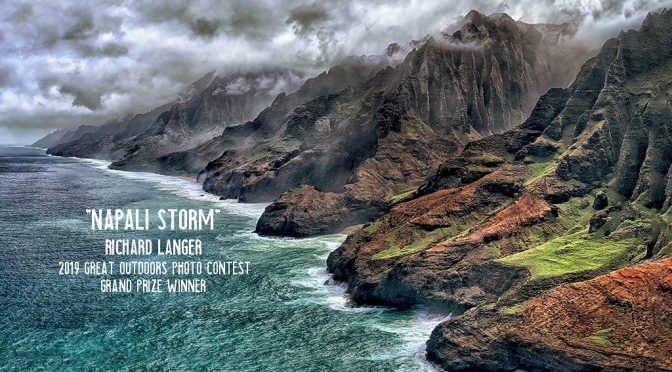
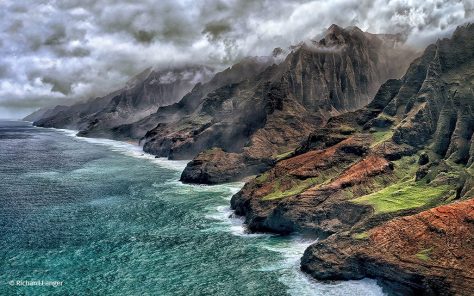
The grand prize in the 2019 Great Outdoors Photo Contest goes to Richard Langer for the image, “Napali Storm.”
“This photograph was taken from a small helicopter over the Napali cliffs on the island of Kauai, Hawaii,” explains Langer. “To avoid the distortions that would result from photographing through the helicopter’s dome, I selected one that had no doors. This was fine for photography, but it let the rain and wind in on my wife and me. Though the weather had been stormy and rainy throughout the flight, it lifted a little as we flew over the ocean. By the end of the trip, we were drenched and shaken, but knew that we had witnessed an amazing sight.”
Rupert Beale talks again to Thomas Jones about his work at the Francis Crick Institute, where he’s helping to set up a testing lab for Covid-19.
He talks about the challenges of creating a scalable process, explains why a successful antibody test could be hard to achieve, and finds some reasons to be hopeful.
You can find a full transcript of this episode HERE.



 Spices have been a part of our diets for thousands of years – it’s second nature to sprinkle our chips with pepper, sip on ginger tea and add chillies to our meals. But recently, some spices have been unofficially promoted from everyday culinary staples to all-healing superfoods.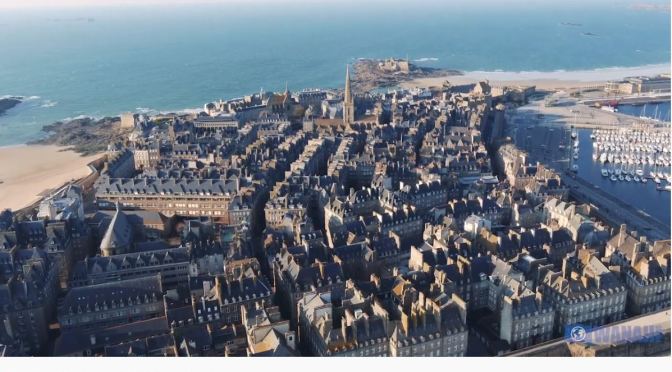

 Robert Bound speaks to writer Craig Brown about his new biography of the Beatles, called ‘One Two Three Four: The Beatles in Time’. How do you say something fresh about one of the most written-about bands in history?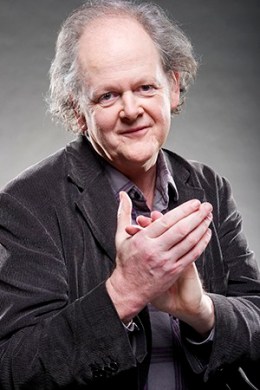


 Rupert Beale talks again to Thomas Jones about his work at the Francis Crick Institute, where he’s helping to set up a testing lab for Covid-19.
 Boomers Daily