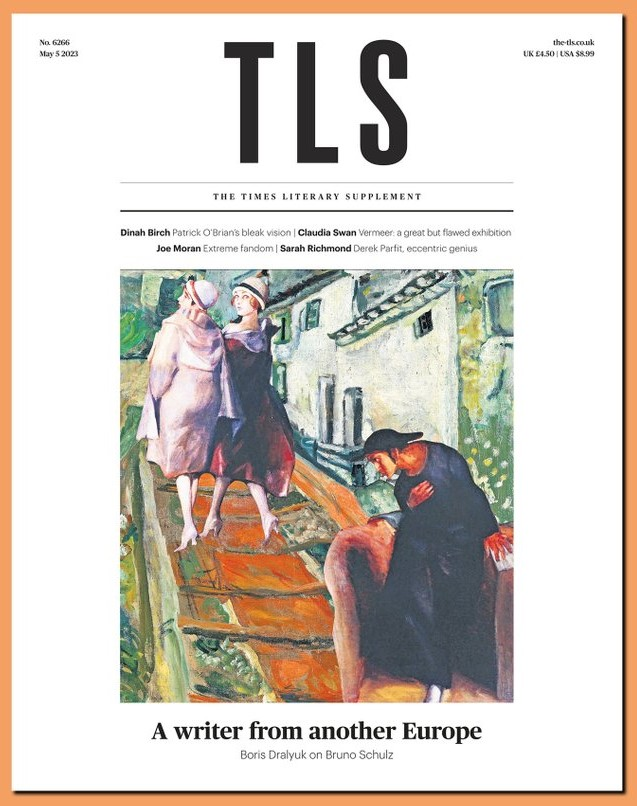
Times Literary Supplement @TheTLS (May 5, 2023) – This week’s @TheTLS features Bruno Schulz – a writer from another Europe; Patrick O’Brian’s bleak vision; Vermeer – a great but flawed exhibition; extreme fandom and Derek Parfit, eccentric genius.
How Bruno Schulz found freedom on the periphery of life By Boris Dralyuk
It’s more than a little discomfiting to read the great Polish novelist Witold Gombrowicz’s description, in his diary from the early 1960s, of his not-quite-friend Bruno Schulz: “A tiny gnome with enormous head, appearing too scared to dare exist, he was rejected by life and slouched along its peripheries”. Written for publication two decades after Schulz was gunned down by a Nazi just outside the ghetto of his occupied native town of Drohobych in November 1942, these words cannot help but seem impious.
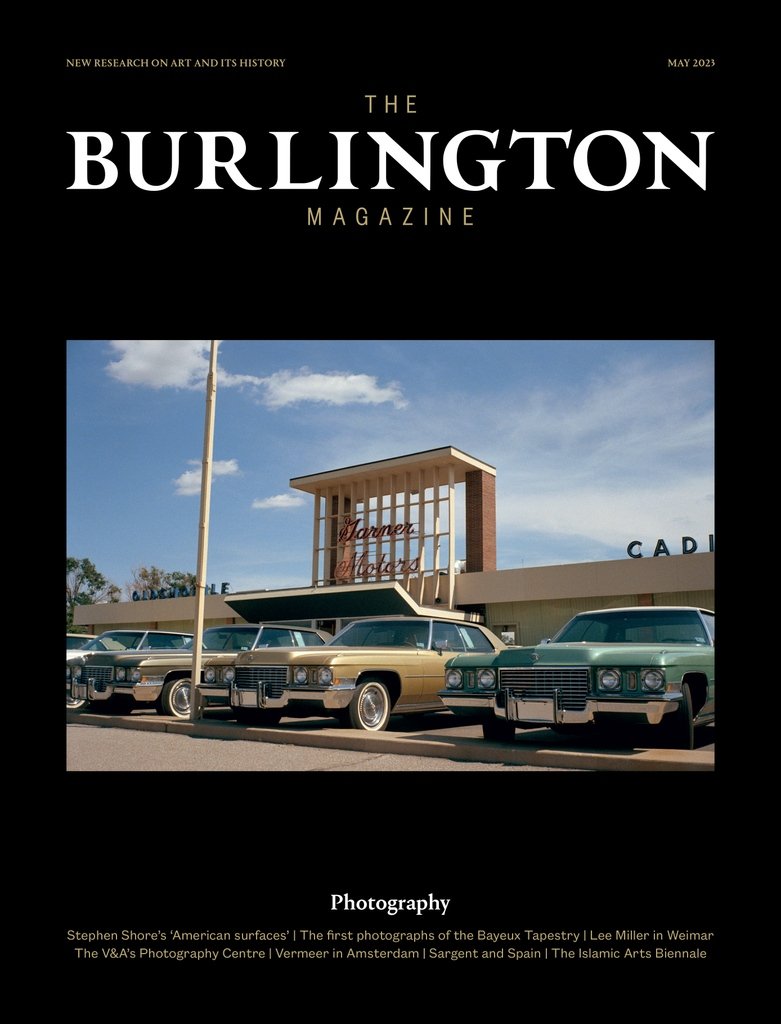
The Burlington Magazine – May 2023:Anxiety about the future of the two great photographic libraries housed in the Courtauld Institute of Art, London, can be traced back at least thirty years. In October 1992 we published an Editorial, ‘The Witt and Conway libraries under threat’, which was prompted by a demand from the University of London that the Courtauld – not yet a self-governing and self-financing entity – produce a business plan that would show how the libraries could develop commercial opportunities to offset a threatened reduction in university funding.
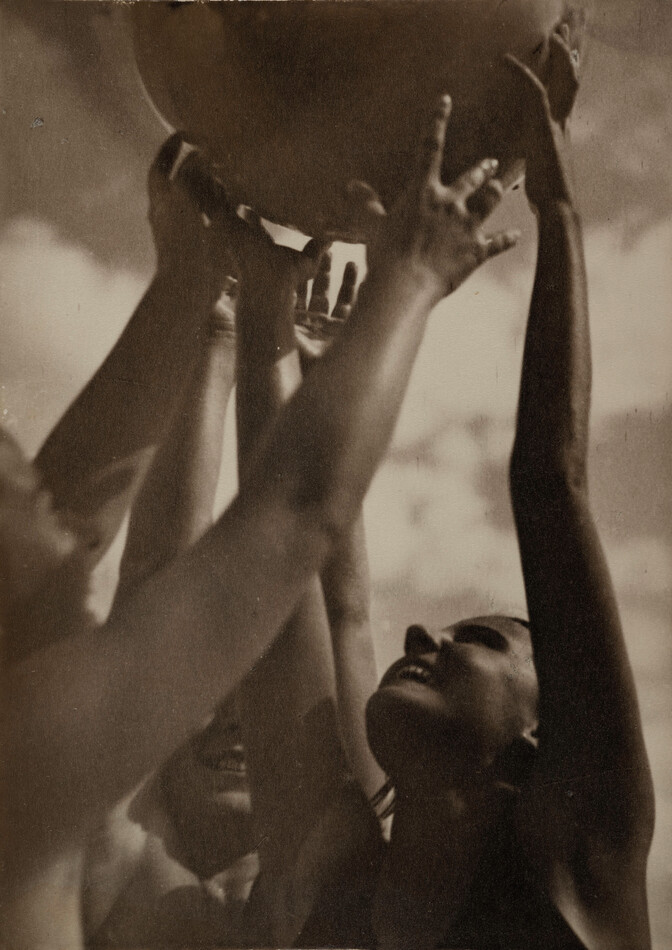
Although Mey Rahola (1897–1959) was one of the first women to become renowned for art photography in Spain, she remains a little-known figure today. Two linked exhibitions with a single catalogue dedicated to the Catalan photographer set out to rectify this and liberate an overlooked artist from the shadow of anonymity. Working with Rahola’s family, the curators, Lluís Bertran Xirau and Roser Martínez Garcia, have assembled 550 items from her collection, including 250 negatives and a number of photograph albums. That this material had been handed down and divided between the artist’s friends and family is testimony to her interest in her posterity. The fact that, nonetheless, Rahola has remained largely unknown, one is reminded in the exhibition catalogue, is a result partly of her status as a female photographer operating in the early twentieth century and partly of the events of the Spanish Civil War, which ruptured her burgeoning career.
Sotheby’s (May 1, 2023) – Returning each season to live and paint in Truro elevated Hopper’s art, allowing him to concentrate on the simplification of forms and the depth of both light and color woven into the surrounding landscape.
Both his technical approach to painting and his perception of the world from 1930 onwards are greatly informed by the Cape. Cobb’s Barns, South Truro derives its bright palette and topographical features from Hopper’s immediate environment, and is emblematic of the profound influence that life in South Truro had on his manner of painting.
Group of Houses, dated 1923-24, stems from a pivotal stage in the development of Edward Hopper’s career. Residential homes occupy much of Hopper’s subject matter in these early watercolors, and Group of Houses is no exception. These charming saltbox houses are typical for the Cape Ann region, whose architectural style reflects its coastal New England atmosphere.
The Battery, Charleston, S.C., dated 1929, is the result of Hopper’s three-week stay in the charming southern city, which is renowned for its Georgian-style architecture and cobblestone streets lined with lush palm trees. His Charlestown pictures possess an inherently tropical feeling, which sets them apart from his otherwise New England-focused oeuvre.
Red Barn in Autumn Landscape is among the limited number of watercolors that Hopper completed during the fall of 1927 in Vermont, and embodies the rustic quality of the New England scenery that drew Hopper to this region in the first place. Hopper routinely sketched his surroundings in coastal towns on the Cape or along the Maine shore, but Red Barn in Autumn Landscape is quite unique in that it captures a specific fall moment as the leaves gradually fade from green to burnt orange and red. The present work is emblematic of the simplicity and charm that characterize Hopper’s New England watercolors.
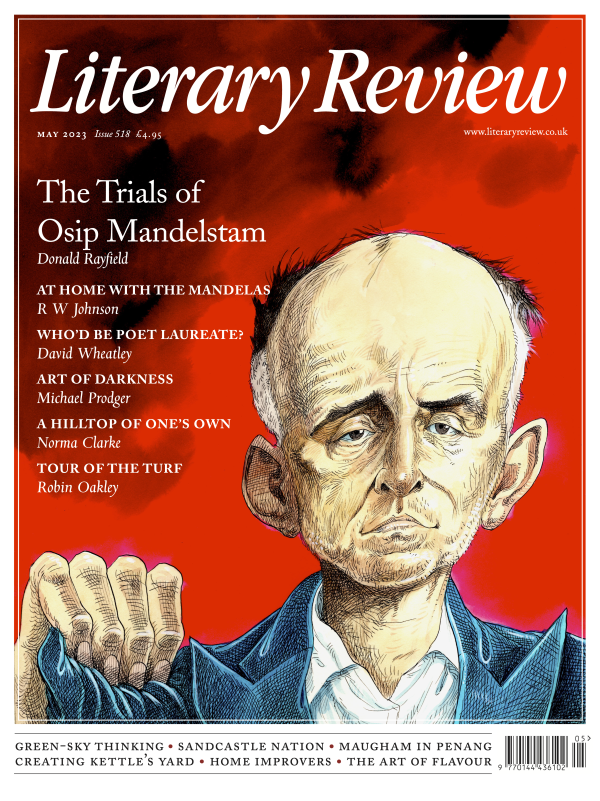
When in 1960 I first came across Osip Mandelstam’s poetry, nobody in the USSR had enjoyed access to his work since the early 1930s and few even knew of his existence, let alone of his death, as he had predicted, in Stalin’s Gulag. His books had been removed from libraries and bookshops.
‘Winnie and Nelson: Portrait of a Marriage’ By Jonny Steinberg
Under apartheid, aspiring South African writers frequently marketed themselves to the world as committed and heroic anti-apartheid activists. The enormous success of Alan Paton’s Cry, the Beloved Country (fifteen million copies sold and counting) showed the way, though Paton was the real McCoy, a committed liberal who suffered for his beliefs.
The Economist ‘Editor’s Picks’ Podcast (May 1, 2023) – A selection of three essential articles read aloud from the latest issue of The Economist. This week, Israel: the survivor nation at 75, is Sir Keir Starmer ready to govern Britain? (10:25) And why ChatGPT raises questions about how humans acquire language (19:05).
“People 50 and older hold the vast majority of wealth in the country, but we’re producing products and services for people who don’t have nearly as much money to spend…”
by Alexander Gelfand
April 27, 2023: Thanks to advances in medicine and public health, people are living longer, healthier lives. The world’s population of people 60 and older is growing five times faster than the population as a whole. Global life expectancy has doubled since 1900, and experts say that children born in developed countries now have a good chance of living to 100.
A “silver tsunami” is already sweeping the U.S. labor force: the Bureau of Labor Statistics projects that 36% of people ages 65–69 will remain on the job in 2024 — up significantly from the 22% who were working in 1994.
These longer-lived, longer-working individuals generate an ever-bigger slice of global GDP and control an expanding tranche of global wealth. In her recent book Stage (Not Age), Golden estimates that the “longevity economy” is worth more than $22 trillion — $8.3 trillion in the United States alone.
That may be a conservative figure: AARP (the organization formerly known as the American Association of Retired Persons) estimates that people over 50 already account for half of consumer spending worldwide, or $35 trillion. (This range of figures may have to do with how “older adult” is defined: The term is variously used to refer to people over the ages of 65, 60, or — sorry, Gen Xers — 50.)
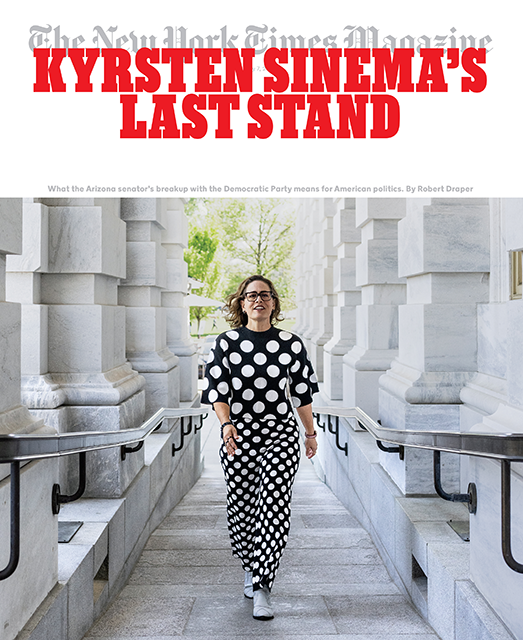
“I would never in my life crack under pressure,” the recently declared independent says. “Why would they think I’m going to do it?”Credit…Ashley Gilbertson/VII for The New York Times
What the Arizona senator’s breakup with the Democrats means for American politics.
Kyrsten Sinema was standing a few yards from the border wall with four Republican members of Congress. The men were staring balefully at a row of nearby portable toilets, wondering aloud if they could hold out for a proper bathroom on the way back to the airport.
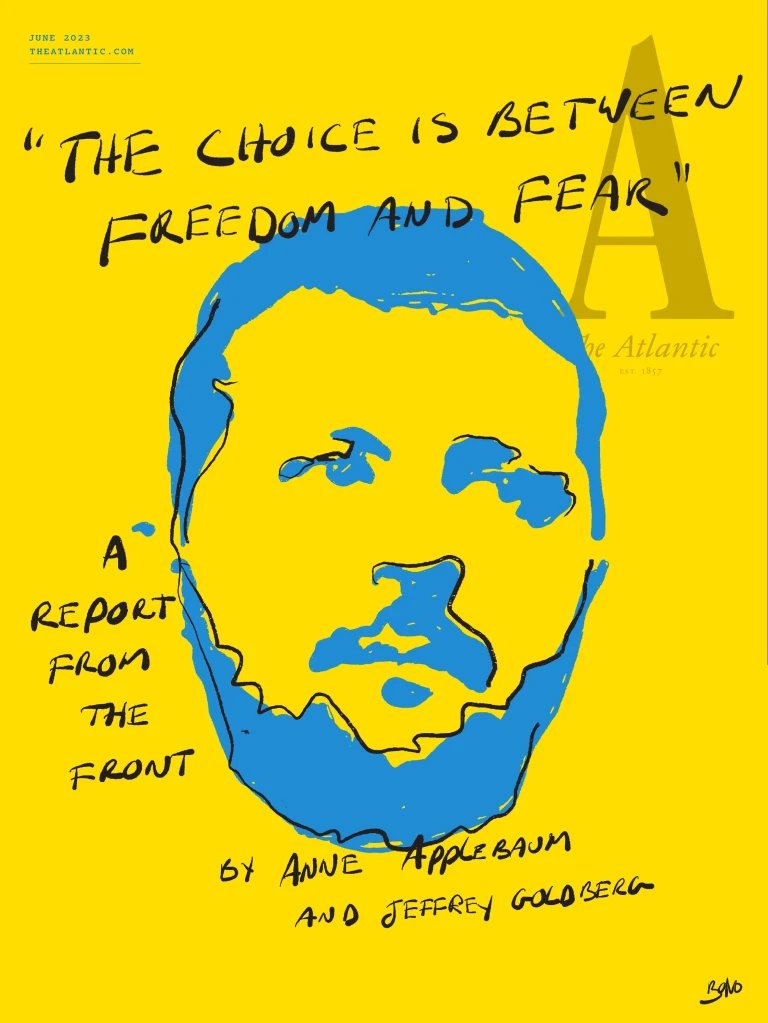
Bono illustrates President Zelensky for June cover
The Atlantic’s June cover is illustrated by U2’s lead singer, Bono, who sketches Zelensky and includes a quote from the Ukrainian president:
“The choice is between freedom and fear.”
In an editor’s note, also published today, Goldberg writes that, after learning Bono has a hobby of redesigning and reimagining Atlantic covers, he invited the singer and writer to create an original.
“Zelensky, a man we both admire, was a natural subject for his first go. Like Anne, Bono is preoccupied with issues of freedom and dignity, and, working with Oliver Munday, our associate creative director, he made a stunning cover that captures the resolve of Ukraine’s wartime president.”
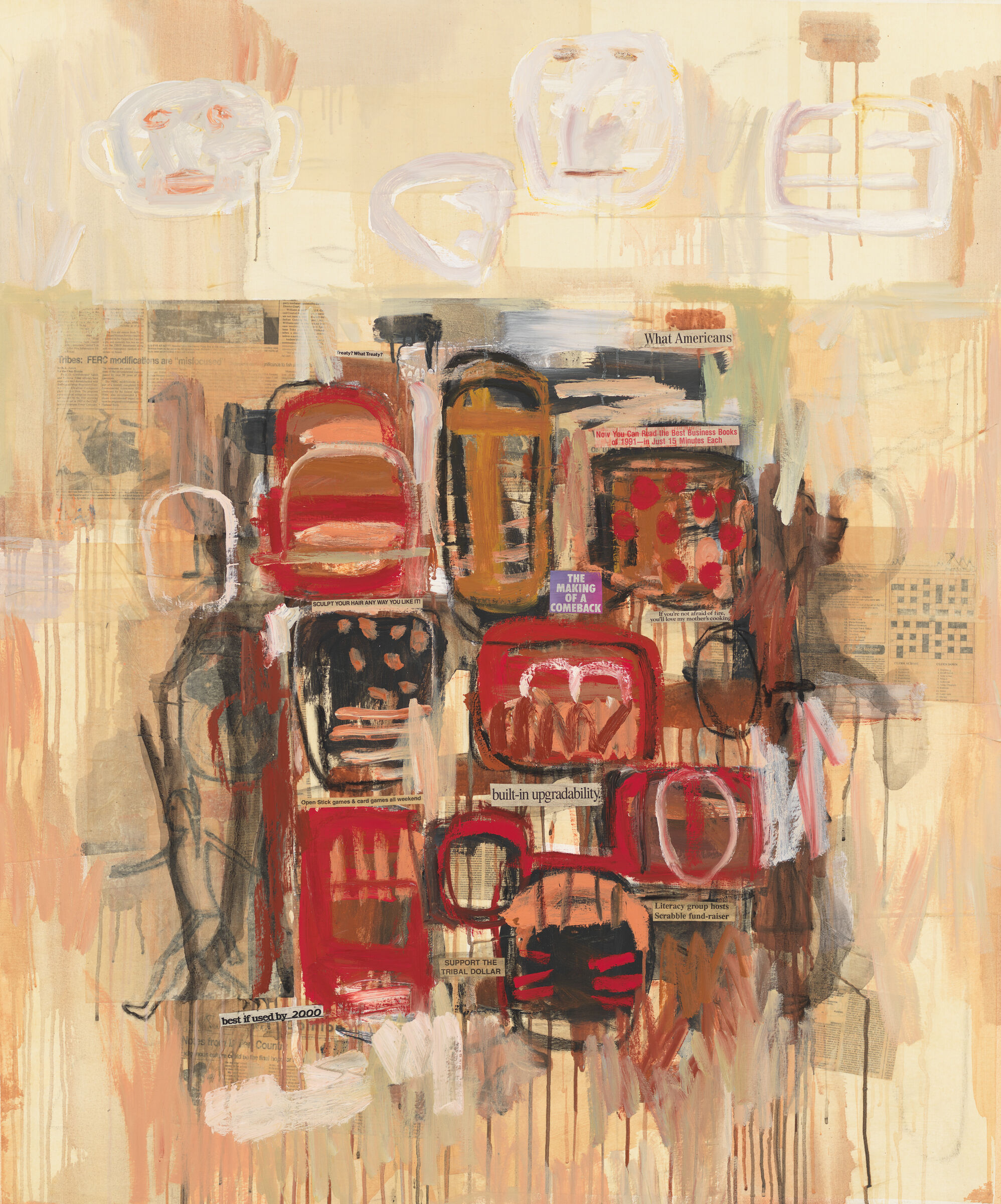
Art Trip (April 30, 2023) – A tour of the new exhibition – ‘Jaune Quick-to-See Smith: Memory Map’, at the Whitney Museum of American Art. The first New York retrospective brings together nearly five decades of Smith’s drawings, prints, paintings, and sculptures in the largest and most comprehensive showing of her career to date.
This exhibition is the first New York retrospective of Jaune Quick-to-See Smith (b. 1940, citizen of the Confederated Salish and Kootenai Nation), an overdue but timely look at the work of a groundbreaking artist. Jaune Quick-to-See Smith: Memory Map brings together nearly five decades of Smith’s drawings, prints, paintings, and sculptures in the largest and most comprehensive showing of her career to date.
Smith’s work engages with contemporary modes of making, from her idiosyncratic adoption of abstraction to her reflections on American Pop art and neo-expressionism. These artistic traditions are incorporated and reimagined with concepts rooted in Smith’s own cultural practice, reflecting her belief that her “life’s work involves examining contemporary life in America and interpreting it through Native ideology.” Employing satire and humor, Smith’s art tells stories that flip commonly held conceptions of historical narratives and illuminate absurdities in the formation of dominant culture. Smith’s approach importantly blurs categories and questions why certain visual languages attain recognition, historical privilege, and value.
France-Amérique Magazine – May 2023– Our publication was launched in New York City on May 23, 1943, during World War II – a period of intense political debate between supporters of the Vichy regime and those fighting for de Gaulle that our historian-in-residence,
1943-2023 – We’ll Always Have Passion
This month, France-Amérique is celebrating its 80th anniversary – a miraculous example of longevity in today’s print media sector. This success is due to America’s longstanding passion for France, and the omnipresence of America in French controversies.
WORK TO LIVE? A French Pension Row with Deeper Implications
The scale and intensity of the current protests reflect a deeper discontent relating to the very nature of work and its place in people’s lives. While these concerns may seem specifically French, they echo a much broader and long-standing debate in our societies.
By Anthony Bulger
News, Views and Reviews For The Intellectually Curious



















 Boomers Daily