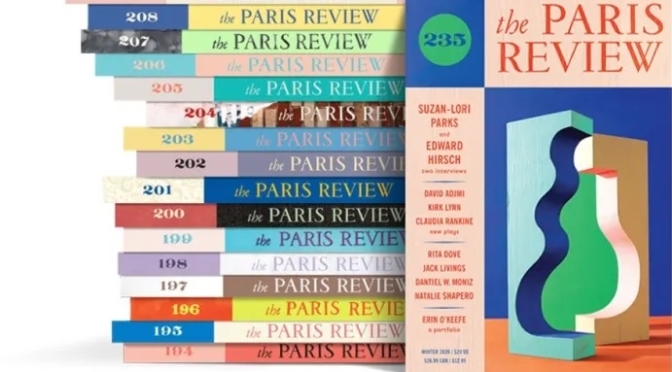
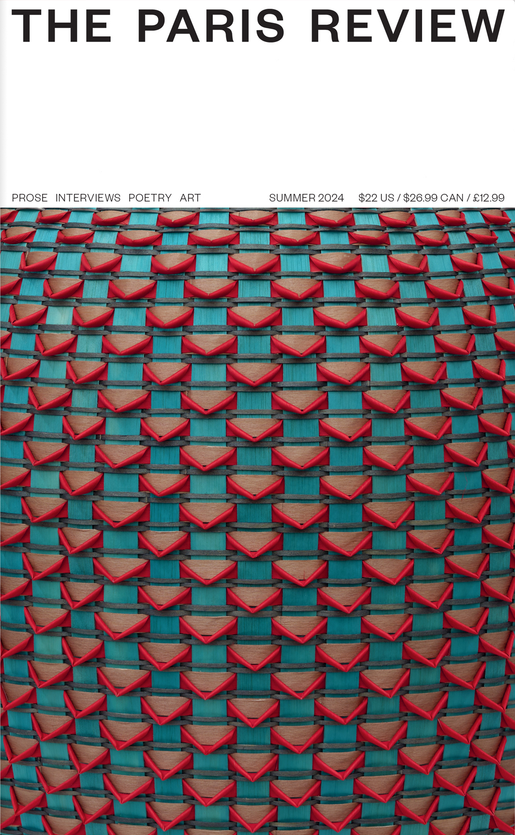
Mary Robison on the Art of Fiction: “The first thing they’d say was ‘This is a nice story—where’s your novel?’ And I would just lie my head off. ‘Oh, it’s at home. It’s almost there!’”
Elaine Scarry on the Art of Nonfiction: “A lot of my troubles in life have come from taking literally what I should have understood as figurative.”
Prose by Peter Cornell, Rodolfo Enrique Fogwill, Renee Gladman, Nancy Lemann, Banu Mushtaq, K Patrick, and Anne Serre.
Jhumpa Lahiri on the Art of Fiction: “My question is, What makes a language yours, or mine?”
Alice Notley on the Art of Poetry: “Writing is not therapy. That’s the last thing it is. I still have my grief.”
Prose by Elijah Bailey, Julien Columeau, Joanna Kavenna, Samanta Schweblin, Eliot Weinberger, and Joy Williams.
Poetry by Gbenga Adesina, Elisa Gabbert, Jessica Laser, Maureen N. McLane, Mary Ruefle, Julian Talamantez Brolaski, and Matthew Zapruder.
Country Life Magazine (June 18, 2024): The latest issue features ‘Why we adore Venus’, Move over Buckingham Palace – Our grandest houses, Jeremy Clarkson’s favorite painting and Old Masters – Chippendale and Coward revisited…
Jeremy Clarkson’s favourite painting
The television presenter and farmer immerses himself in the age of steam by selecting a 19th-century masterpiece that really stokes the imagination
Venus was her name
Michael Hall lays bare the story of the art world’s enduring love affair with the alluring goddess Venus, from the 4th century BC right up to the modern era
Tripping the light fantastic
Iridescence is one of the natural world’s greatest special effects. Laura Parker showcases the shimmering, jewel-like hues that can take your breath away
The good stuff
It’s the final straw for Hetty Lintell as she picks perfect summer accessories crafted from raffia
Interiors
Giles Kime is whisked through a Sicilian palazzo, a Gothic castle and a Baroque bedroom thanks to the wonders of WOW!house
‘Makes Buckingham Palace seem rather dull’
The London homes of the British aristocracy were often grander than their country counterparts and perfect for entertaining, says Lucien de Guise
Native herbs
Mugwort is connected with child-birth as ‘the mother of herbs’, but John Wright prefers to focus on its many uses in the kitchen
Having the last laugh
Why are beaming faces such a rarity in our portrait galleries? Claudia Pritchard seeks out the grins among the grimaces
‘The oldest Old Thing in England’
Puck has been causing mayhem and misery for a millennium and more. Ian Morton traces the story of the mischievous sprite
Bend it like Beckham
Scotland’s only furniture school is keeping alive the old crafts of upholstery and marquetry, doing justice to its Chippendale name, as Mary Miers discovers
Coward on a mission
Michael Billington finds a depth of emotion behind the laughs in a rare revival of Noël Coward’s last work — a welcome antidote to mind-boggling technology
Opening the shutters
In the second of two articles, John Goodall applauds the remarkable revival of Wolterton Hall in Norfolk as a modern home equipped for the 21st century
The legacy
Victoria Marston hails Douglas Bunn, whose desire to test top British riders to the max led to the drama of the Hickstead Derby
Bourne to run
Kathryn Bradley-Hole finds no end of reasons to stop and stare as she explores the dramatic garden created from a flat water-side site at Emmetts Mill, Surrey
Kitchen garden cook
Melanie Johnson conjures up a trio of dishes to demonstrate the versatility of the courgette
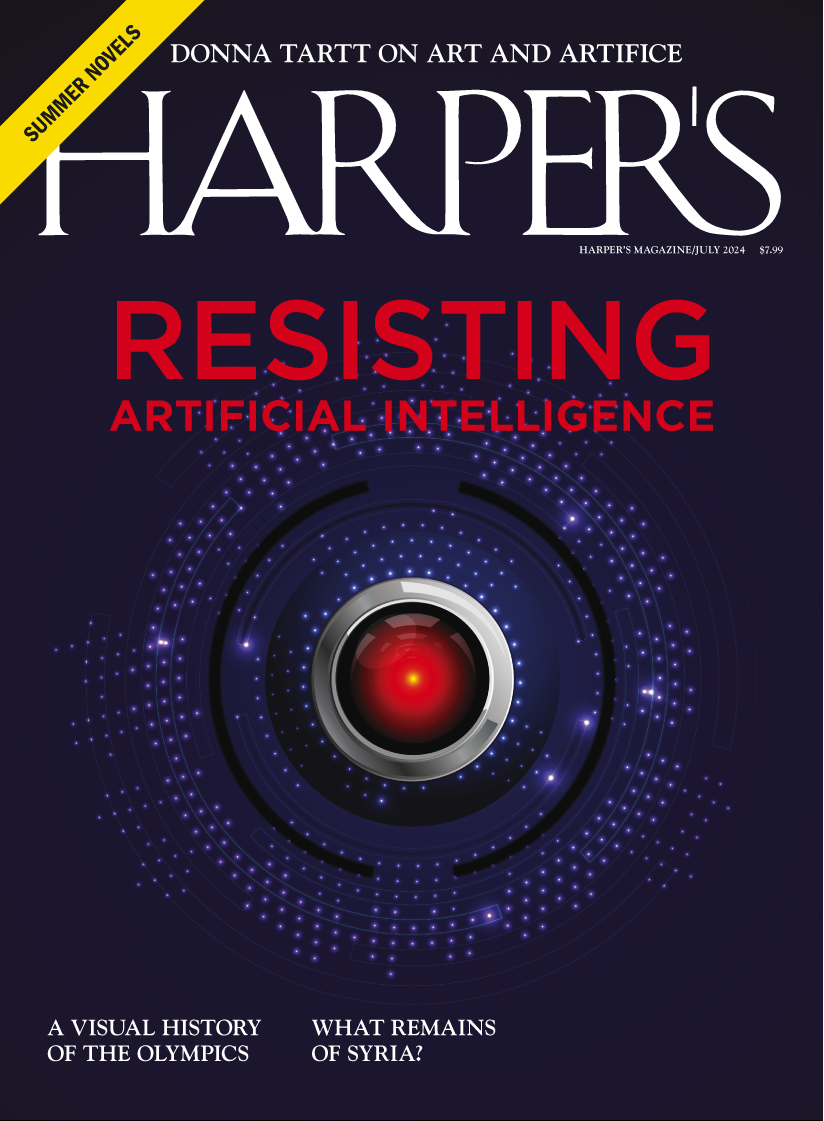
We will never know how many died during the Butlerian Jihad. Was it millions? Billions? Trillions, perhaps? It was a fantastic rage, a great revolt that spread like wildfire, consuming everything in its path, a chaos that engulfed generations in an orgy of destruction lasting almost a hundred years. A war with a death toll so high that it left a permanent scar on humanity’s soul. But we will never know the names of those who fought and died in it, or the immense suffering and destruction it caused, because the Butlerian Jihad, abominable and devastating as it was,…
“Far as the east from even, / Dim as the border star, / Life is the little creature / That carries the great cigar.” So wrote Emily Dickinson, with some unfortunate help from a computer. As I read that stanza in February 2022, I was more than six months into a scientific experiment I was conducting with my friend and colleague Morten Christiansen, a cognitive psychologist at Cornell, where he and I are professors. In 2021, two years before ChatGPT would become a household name, Christiansen had been impressed by the initial technical descriptions of GPT-3, the recently released version of the generative large language…
The New Yorker (June 17, 2024): The new issue‘s cover featuresAdrian Tomine’s “Eternal Youth” – For parents trying to look hip, no effort goes unpunished.
Nanotechnology can already puncture cancer cells and drug-resistant bacteria. What will it do next?
By Dhruv Khullar
After the European Elections, President Macron Makes a Gamble
The rise of the far right in Europe might help Americans deprovincialize their own crisis. The single wave has struck many coastlines.
By Adam Gopnik
Deaccessioning the Delights of Robert Gottlieb
The eminent editor’s wife and daughter sift through a lifetime’s worth of collectibles: quirky plastic purses, a porcelain Miss Piggy, and many, many books.
0:15Mini-factories in space – Space Forge says its technology could revolutionize manufacturing. The satellites contain miniature manufacturing systems. They take advantage of the conditions in low-Earth orbit such as microgravity, extreme temperatures and a contaminant-free environment to forge materials that would be impossible to manufacture here on Earth.
1:53Biodiversity credits explained – Nature is under unprecedented threat. Around 2 million plant and animal species could go extinct in the next few decades as climate change and habitat loss push ecosystems towards irreversible tipping points. To fight this crisis, experts are coming up with new ways to protect life on Earth by assigning value to the ecosystems around us. These innovations include biodiversity credits.
6:58 Nairobi switches to electric buses – Private minibuses called matatus are the main mode of public transport in Nairobi. Most matatus are old, diesel-powered and inefficient and 60% of the city’s population rely on them to get around. Electric mobility start-up BasiGo has built an all-electric alternative. The first bus rolled off its Nairobi production line in early 2024. Nairobi bus operators have already ordered 500 more. More than 90% of Kenya’s electricity is generated renewably, which means BasiGo’s buses are virtually emission-free.
8:40How to build healthier cities – This architect designs buildings that bring communities together – Sumayya Vally grew up in post-Apartheid Pretoria, South Africa in what had been an Indian-only township and saw how division kept communities apart. Vally founded the Johannesburg-based architecture practice Counterspace to fight the built legacies of colonization and highlight the peaceful coexistence between communities.
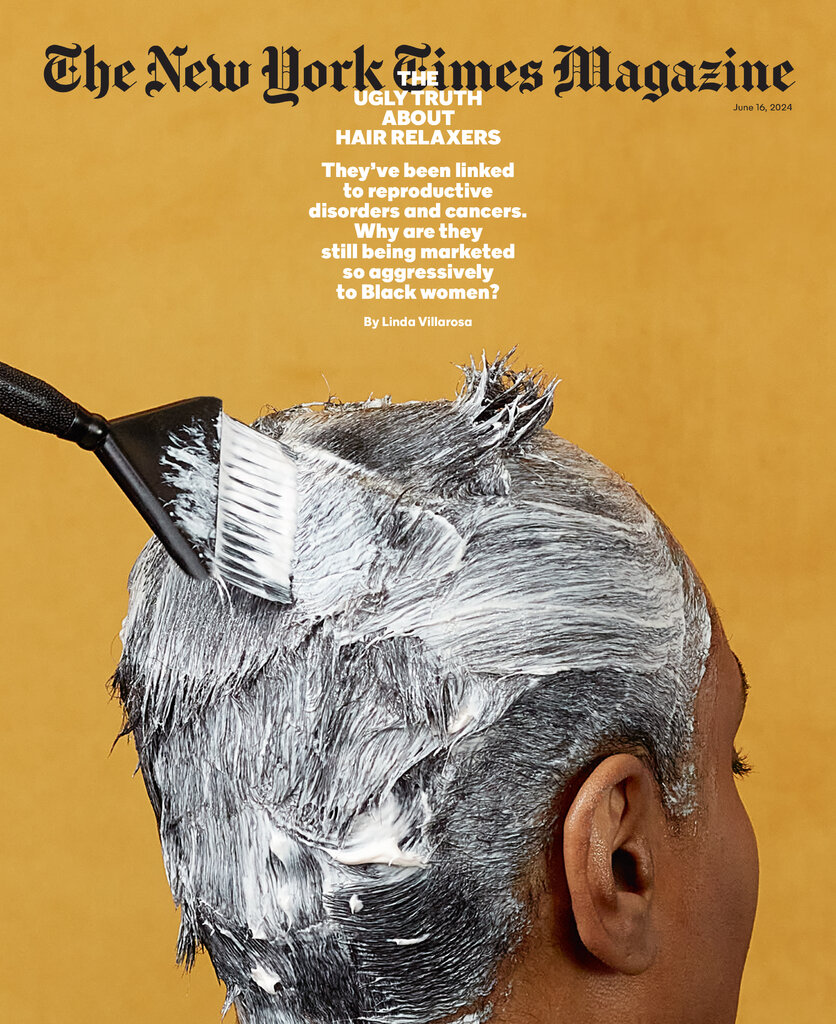
They’ve been linked to reproductive disorders and cancers. Why are they still being marketed so aggressively to Black women?
The Woman Who Could Smell Parkinson’s
She first noticed the scent on her husband. Now her abilities are helping unlock new research in early disease detection.
The Interview – The Darker Side of Julia Louis-Dreyfus
At some point in almost every performance she gives, Julia Louis-Dreyfus has this look. If you’ve watched “Seinfeld,” “The New Adventures of Old Christine” or “Veep,” you know it — the perfect mix of irritation and defiance. As if she were saying, Try me.
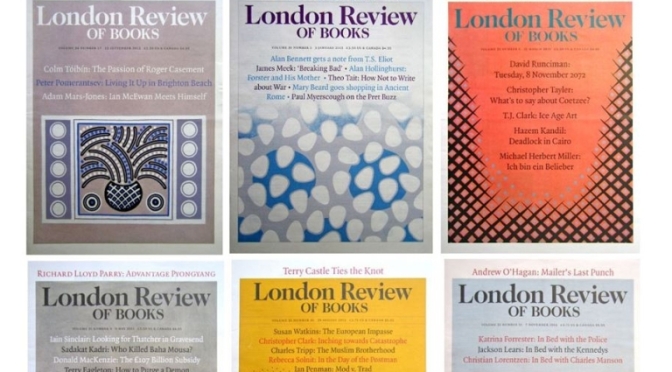
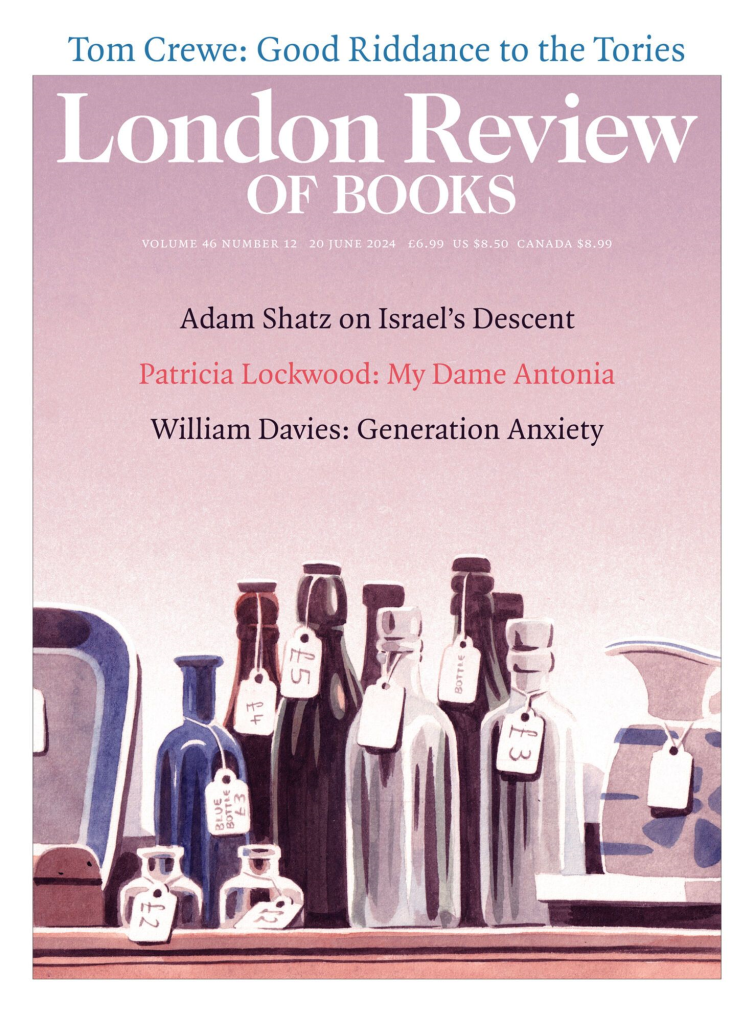
London Review of Books (LRB) – June 14 , 2024: The latest issue features Good Riddance to the Torries; Adam Shatz on ‘Israel’s Descent’; Patricia Lockwood – My Dame Antonia; William Davies – Generation Anxiety…
The Anxious Generation: How the Great Rewiring of Childhood Is Causing an Epidemic of Mental Illness by Jonathan Haidt. Allen Lane, 385 pp., £25, March, 978 0 241 64766 0
In the 1980s the term ‘anxiety’ was almost eliminated from the lexicon of American psychiatry. The infamous DSM-III (the third edition of the Diagnostic and Statistical Manual of Mental Disorders) took an axe to various legacies of psychoanalysis that had dominated psychiatric thinking in the postwar decades. Among them was a preoccupation with anxiety. Anything and everything could, it seemed, be attributed to anxiety: whether it presented as a specific phobia or a panic attack, a somatic symptom or just a lurking sense of dread, anxiety was at the root. It was this sort of all-purpose explanation, with no apparent scientific rigour or falsifiability, that the authors of DSM-III were trying to root out.
When Ariel Sharon withdrew more than eight thousand Jewish settlers from the Gaza Strip in 2005, his principal aim was to consolidate Israel’s colonisation of the West Bank, where the settler population immediately began to increase. But ‘disengagement’ had another purpose: to enable Israel’s air force to bomb Gaza at will, something they could not do when Israeli settlers lived there.
The State of Israel v. the Jews by Sylvain Cypel, translated by William Rodarmor. Other Press, 352 pp., £24, October 2022, 978 1 63542 097 5
The Palestinians of the West Bank have been, it seems, gruesomely lucky. They are encircled by settlers determined to steal their lands – and not at all hesitant about inflicting violence in the process – but the Jewish presence in their territory has spared them the mass bombardment and devastation to which Israel subjects the people of Gaza every few years.
Deux peuples pour un état?: Relire l’histoire du sionisme by Shlomo Sand. Seuil, 256 pp., £20, January, 978 2 02 154166 3
Our Palestine Question: Israel and American Jewish Dissent, 1948-78 by Geoffrey Levin. Yale, 304 pp., £25, February, 978 0 300 26785 3
Tablets Shattered: The End of an American Jewish Century and the Future of Jewish Life by Joshua Leifer. Dutton, 398 pp., £28.99, August, 978 0 593 18718 0
The Necessity of Exile: Essays from a Distance by Shaul Magid. Ayin, 309 pp., £16.99, December 2023, 979 8 9867803 1 3
Deluge: Gaza and Israel from Crisis to Cataclysm edited by Jamie Stern-Weiner. OR Books, 336 pp., £17.99, Ap
The Week In Art Podcast (June 14, 2024): This week: it’s arguably the best loved of the major art fairs among collectors and dealers, but what have we learned about the art market at this year’s Art Basel, in its original Swiss home?
The Art Newspaper’s acting art market editor, Tim Schneider, tells us about the big sales in Switzerland amid the wider market picture. The journalist Lynn Barber has a new book out, called A Little Art Education, in which she reflects on her encounters with artists from Salvador Dalí to Tracey Emin. We talk to her about the highs and lows of several decades of artist interviews.
And this episode’s Work of the Week is Woman Leaning on a Portfolio (1799) by Guillaume Lethière. Lethiére was born in Guadeloupe in the Caribbean to a plantation-owner father and an enslaved mother, but eventually became one of the most notable painters of his period in France and beyond. We talk to Esther Bell and Olivier Meslay, the curators of a major survey of Lethière’s work opening this week at the Clark Art Institute in Williamstown, Massachusetts, US, and travelling later in the year to the Louvre in Paris.
Art Basel, Basel, Switzerland, until Sunday, 16 June.
A Little Art Education by Lynn Barber, Cheerio, £15 (hb).
News, Views and Reviews For The Intellectually Curious




















 Boomers Daily