On this week’s show, host Joel Goldberg gets an update on the coronavirus pandemic from Senior Correspondent Jon Cohen. In addition, Cohen gives a rundown of his latest feature, which highlights the relationship between diseases and changing seasons—and how this relationship relates to a potential coronavirus vaccine.
Also this week, from a recording made at this year’s AAAS annual meeting in Seattle, host Meagan Cantwell speaks with Alexandra Maertens, director of the Green Toxicology initiative at Johns Hopkins University, Baltimore, about the importance of incorporating nonanimal testing methods to study the adverse effects of chemicals.
Though U.S. legislation targeting the problem of surprise medical bills advanced out of key congressional committees in 2019 with support from leaders in both parties, Congress ultimately failed to pass a law to end such bills.
Erin Fuse Brown is an associate professor of law at Georgia State University. Stephen Morrissey, the interviewer, is the Executive Managing Editor of the Journal.
Researchers have developed an ultra-fast electrical switch that they hope can be used in communication and imaging applications.
In this episode:
01:57 Speedy switches
Researchers have developed an ultra-fast electrical switch that they hope can be used in communication and imaging applications. Research Article: Nikoo et al.
Chloroquine was shown in 2004 to be active in vitro against SARS coronavirus but is of unproven efficacy and safety in patients infected with SARS-CoV-2. The drug’s potential benefits and risks for COVID-19 patients, without and with azithromycin, is discussed by Dr. David Juurlink, head of the Division of Clinical Pharmacology and Toxicology at Sunnybrook Health Sciences Centre in Toronto.
From Wall Street Journal article:
Our experience suggests that hydroxychloroquine, with or without a Z-Pak, should be a first-line treatment. Unfortunately, there is already a shortage of hydroxychloroquine. The federal government should immediately contract with generic manufacturers to ramp up production. Any stockpiles should be released.
As a matter of clinical practice, hydroxychloroquine should be given early to patients who test positive, and perhaps if Covid-19 is presumed—in the case of ill household contacts, for instance. It may be especially useful to treat mild cases and young patients, which would significantly decrease viral transmission and, as they say, “flatten the curve.”
As many businesses around the world struggle, a Canadian disinfectant company is increasing production to keep up with demand during the novel coronavirus outbreak. Photo: Ron Kolumbus/WSJ
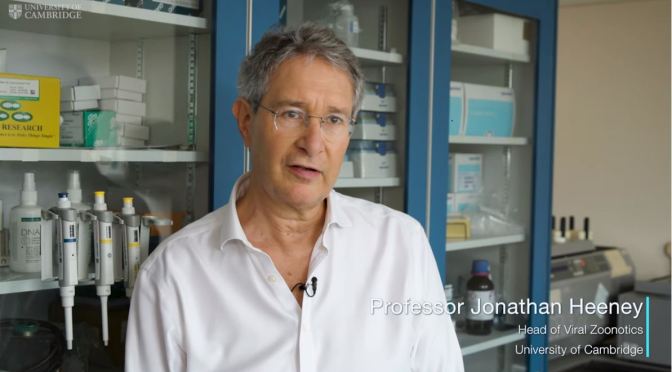
The race is on to find a vaccine against the new COVID-19 coronavirus. Professor Jonathan Heeney explains why a cautious approach is needed and how his team is using new technology developed for influenza and Ebola viruses to target the new infection.
It is hard now to conceive that two months ago, few people had heard of the new coronavirus. Now, the virus, which causes the disease COVID-19, has spread to every corner of the globe. The World Health Organization has officially declared the outbreak a pandemic.
With the threat of hundreds of thousands – possibly millions – of people being infected and healthcare systems becoming overwhelmed, the race is on to develop a vaccine that will protect individuals and slow the spread of the disease. But Professor Jonathan Heeney, Head of the Laboratory of Viral Zoonotics at the University of Cambridge, and one of the people working on a vaccine, says that coronaviruses present a particular challenge to vaccine developers.
Coronaviruses are named after their appearance: they are spherical objects, on the surface of which sit ‘spike’ proteins. The virus uses these spikes to attach to and invade cells in our body. Once inside, the virus uses the cell’s own machinery to help itself replicate and spread throughout the body, causing disease and allowing it to transmit onwards.
Traditionally, scientists would develop vaccines that programme the body to produce antibodies that recognise and block these spikes. But this strategy can misfire with coronaviruses due to a phenomenon known as ‘antibody-induced enhancement’ or ‘vaccine-induced enhancement’, says Heeney.
“If you make antibodies against the spike, they can end up binding to it and helping the virus invade important immune cells known as monocyte-macrophages. Rather than destroying the virus, these cells can then end up being reprogrammed by the viruses, exacerbating the immune response and making the disease much, much worse than it would otherwise be.”
NPR’s Tamara Keith and Amy Walter of the Cook Political Report join John Yang to discuss the latest political news, including where former Vice President Joe Biden and Vermont Sen. Bernie Sanders stand in a Democratic presidential primary essentially frozen by the coronavirus pandemic and the potential political ramifications of the crisis for President Trump.
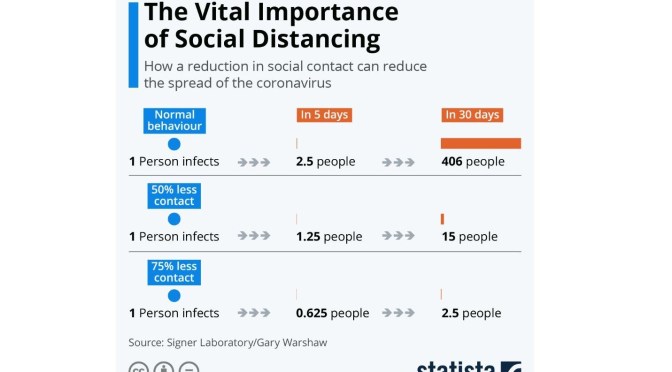
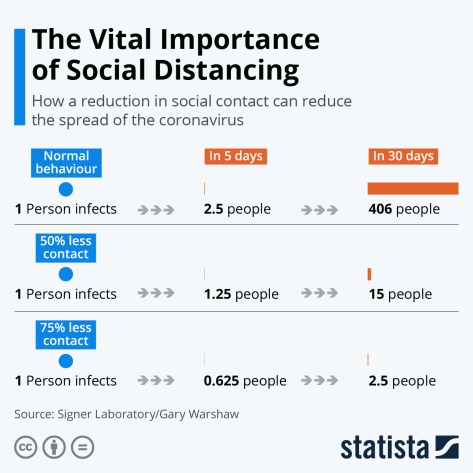
In order to stem the spread of the coronavirus, social interactions around the world are being restricted. This infographic, based on calculations by Robert A. J. Signer, Assistant Professor of Medicine at the University of California San Diego, shows how this so-called social distancing can reduce the spread of the virus.
With no changes to social behaviour, one infected person will on average pass the virus to 2.5 people within five days. After 30 days, the figure would rise to a devastating 406 new infections. The number can be significantly reduced though by engaging in less social contact. With a 50 percent reduction, the number of new infections caused by the average person after 30 days is just 15 people. A 75 percent change would result in an even lower 2.5 new cases – greatly reducing the burden on health services and, if followed by everybody, allowing a country to ‘flatten the curve’ of new infections.
Nordic citizens experience a high sense of autonomy and freedom, as well as high levels of social trust towards each other, which play an important role in determining life satisfaction.
From 2013 until today, every time the World Happiness Report (WHR) has published its annual ranking of countries, the five Nordic countries – Finland, Denmark, Norway, Sweden, and Iceland – have all been in the top ten, with Nordic countries occupying the top three spots in 2017, 2018, and 2019. Clearly, when it comes to the level of average life evaluations, the Nordic states are doing something right, but Nordic exceptionalism isn’t confined to citizen’s happiness.
No matter whether we look at the state of democracy and political rights, lack of corruption, trust between citizens, felt safety, social cohesion, gender equality, equal distribution of incomes, Human Development Index, or many other global comparisons, one tends to find the Nordic countries in the global top spots.
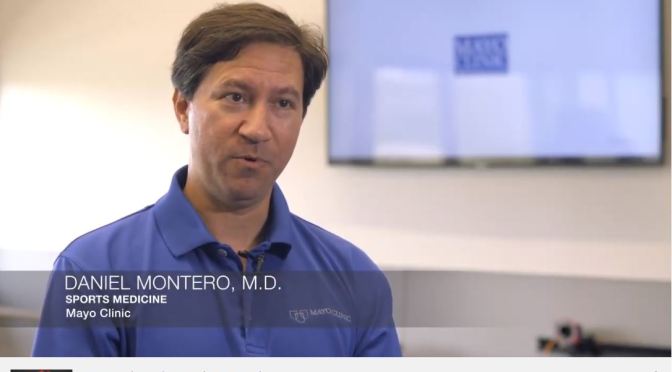
As we’re spending more time at home, it’s important to find new ways to remain active and exercise is important. Mayo Clinic physical therapist Sunni Alessandria and her colleagues offer some insight and tips for exercises you can do at home.
News, Views and Reviews For The Intellectually Curious


 On this week’s show, host Joel Goldberg gets an update on the coronavirus pandemic from Senior Correspondent Jon Cohen. In addition, Cohen gives a rundown of his latest feature, which highlights the relationship between diseases and changing seasons—and how this relationship relates to a potential coronavirus vaccine.
 Though U.S. legislation targeting the problem of surprise medical bills advanced out of key congressional committees in 2019 with support from leaders in both parties, Congress ultimately failed to pass a law to end such bills.
 Researchers have developed an ultra-fast electrical switch that they hope can be used in communication and imaging applications.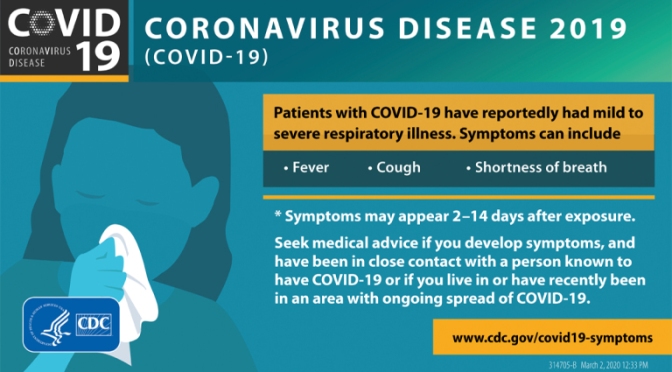

 Chloroquine was shown in 2004 to be active in vitro against SARS coronavirus but is of unproven efficacy and safety in patients infected with SARS-CoV-2. The drug’s potential benefits and risks for COVID-19 patients, without and with azithromycin, is discussed by Dr. David Juurlink, head of the Division of Clinical Pharmacology and Toxicology at Sunnybrook Health Sciences Centre in Toronto.


 Nordic citizens experience a high sense of autonomy and freedom, as well as high levels of social trust towards each other, which play an important role in determining life satisfaction.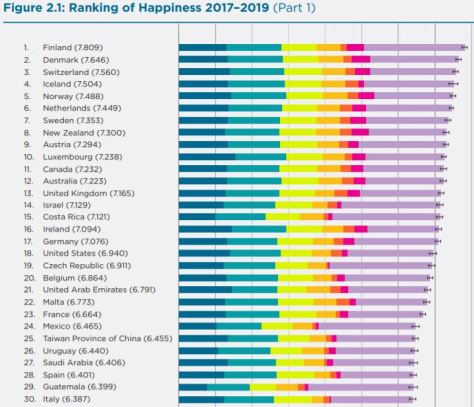
 Boomers Daily