Category Archives: History

Top New Books: “The Art Of Earth Architecture – Past, Present, Future” (Mar 2020)

The Art of Earth Architecture Past, Present, Future Jean Dethier March 2020The Art of Earth Architecture demonstrates the wide-ranging applications and sustainability of this building material, while presenting a manifesto for its ecological significance. Featuring raw-earth masterpieces, monumental structures, and little known works, the book includes the temples and palaces of Mesopotamia, the Great Wall of China, large-scale urban developments in Tenochtitlan in Mexico, the medinas of Morocco, and housing in Marrakech and Bogota.

For almost ten thousand years, unbaked earth has been used to build remarkable structures, from simple dwellings to palaces, temples, and fortresses both grand and durable. Jean Dethier spent fifty years researching this landmark global survey, which spans five continents and 250 sites.

This definitive reference features many UNESCO World Heritage sites and contains essays on the historical, technical, and cultural aspects of raw-earth construction from twenty experts in the field, as well as hundreds of photographs, illustrations, and architectural drawings.

The Art of Earth Architecture Past, Present, Future Jean Dethier March 2020

Jean Dethier has dedicated his life to the research, safeguarding, and development of earth structures around the world. Dethier worked at the Centre Pompidou as a curator of influential architectural exhibits for thirty years. Winner of the prestigious Grand Prix national de l’architecture, he sat on the jury of the 2016 Terra Award, the first international prize for contemporary earthen structures.

Read more

Travel & Surrealism: “Jungle Xanadu – The Story Of Las Pozas” (2020)

Filmed, Edited and Written by: Bob Krist

Narrated by: Fabiola Stevenson

Jungle Xanadu - The Story of Las Pozas Short Film by Bob Krist March 26 2020

Edward James, a rich eccentric and patron of artists Salvador Dali and Rene Magritte, built a surreal sculpture park in the jungles of the Sierra Gorda in Xilitla, Mexico. The project took 35 years, spreads over 80 acres, and is accessible to the public. This piece is filmed in black & white infrared, a technique that reacts to heat as well as visible light.

Website

Art: “Van Gogh In Paris, 1886” (Hammer Galleries)

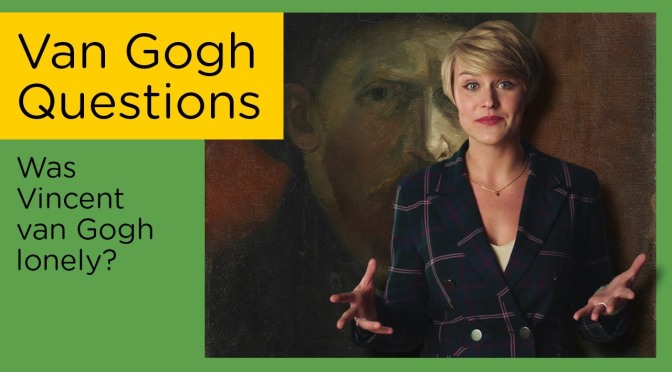
TEFAF’s Meet the Experts presents Howard Shaw from Hammer Gallery shares what Van Gogh would have most likely seen when he visited Paris in 1886. This period of Van Gogh’s life is pivotal to his works as an artist.

History: “European Castle Ruins” Digitally Restored By NeoMam Studios

From AtlasObscura.com (March 26, 2020):

…a team of designers recently looked at the now-ruined castles of Middle Ages Europe, lifting the fortifications up from their dilapidated states and digitally reimagining the structures as they were in their heyday.

Samobor Castle Croatia - Digital Enhancement by NeoMam Studios March 2020

Seven European castles were virtually rebuilt, restoring them from their keeps to their baileys. Architects pored over old paintings, blueprints, and other research documents that describe the strongholds, then offered their opinions to the NeoMam Studios design team, which digitally revived the structures from the ground up.

NeoMam Studios website

Read full article


Art: “The Most Beautiful Gardens In Art” (Christie’s)

From a Sotheby’s Online Magazine (March 26, 2020):

From Sargent to Sorolla, Jonas Wood to Winston Churchill, Berkshire to Bali — how artists have found solace and inspiration in gardens the world over.

Edouard Manet The Monet Family In Their Garden at Argenteuil 1874 - Christie's Online Magazine

Edouard Manet The Monet Family in Their Garden At Argenteuil 1874

Gustav Klimt Farm Garden with Sunflowers 1905-06 - Christie's Online Magazine

Gustav Klimt Farm Garden with Sunflowers 1905-06 Christie's Online Magazine

Christie's Online Magazine

Read more

Art Videos: “El Greco: Ambition And Defiance” (Art Institute Chicago)

Art Institute ChicagoExplore the exhibition “El Greco: Ambition and Defiance” with curator Rebecca Long and research associate Jena Carvana. Follow along as they lead you through the galleries and share some of the reasons El Greco and his work continue to fascinate us.

Website

Top Podcasts: Alexander Von Humboldt – “The Last Man Who Knew It All”

Smithsonian Sidedoor PodcastAlexander von Humboldt might not be a name you know, but you can bet you know his ideas. Back when the United States were a wee collection of colonies huddled on the eastern seaboard, colonists found the wilderness surrounding them scary. 

It took a zealous Prussian explorer with a thing for barometers to show the colonists what they couldn’t see: a global ecosystem, and their own place in nature. In this The Invention of Nature Alexander von Humborldt's New World Andrea Wulfepisode, we learn how Humboldt—through science and art—inspired a key part of America’s national identity.

More fascinating Humboldt facts:

  • He strongly opposed slavery in the early 19th century, calling it the “greatest of all the evils which have afflicted mankind.”
  • He was the first to theorize human caused climate change by changing how water flows through a landscape, on a local level, and warned about deforestation.
  • He invented isotherms, the lines on a weather map that we still use today. He used them to show which parts of the world were experiencing similar temperatures.
  • He made the world’s most detailed map of Mexico and the American west.
  • He nearly summited what was then thought to be the world’s tallest mountain (while wearing 18th century wools, no less.).
  • Another thing Humboldt and Jefferson bonded over? Mastodons. Humboldt was the first to discover remains of a species now known as Cuvieronius hyodon in Ecuador, which were similar to the “giant elephants” being found in Ohio. The teeth Humboldt found were the clue that these weren’t modern elephants; they looked pretty different. And because these teeth looked sharp, Jefferson and some American scientists thought they were for meat eating! Eventually Georges Cuvier, a French scientist who was friends with Humboldt, proved that these were different from Indian and African elephants, and even woolly mammoths—and the species eventually ended up renamed after him. One of the few eponymous misses for our friend Humboldt!

If you’re interested in learning more about the life and times of Alexander von Humboldt, I’d recommend reading Andrea Wulf’s book The Invention of Nature: Alexander von Humboldt’s New World.

Travel & Quarantines: Author Frances Mayes Writes Of Poet John Keats In Naples, Italy In 1820 (NYT)

From the New York Times (March 26, 2020):

I have seen Naples from his vantage of a ship anchored offshore — one of the most sublime locations in the world, that sweep of coast stacked with apricot, carmine, azure and rose villas; the blue, blue U of the harbor; the emphatic Vesuvius anchoring the view. 

Frances Mayes
Frances Mayes

In October of 1820, typhus raged in Naples. With his artist friend, Joseph Severn, the British poet John Keats rocked in the city’s harbor for 10 days, not nearly the quaranta giorni — 40 days — that give us our word quarantine.

Before this journey, Keats always felt intense melancholy. In “On Seeing the Elgin Marbles for the First Time,” he wrote “… mortality / Weighs heavily on me like unwilling sleep.” (And in the smooth pentameter of “Ode to a Nightingale”: “I have been half in love with easeful death.”) Not a holiday, this voyage out of England was a desperate trip to the sunny climate of Italy. His cough had grown steadily worse. Since the morning he’d seen a splotch of blood on his pillow, he knew he had little chance of surviving the consumption that had invaded his lungs. His last-ditch: Go to Rome. Meanwhile, exile at sea.

Read full article

Culture & Sports: “The Adidas Archive” – 100 Years Of “Three-Stripe Thrills” (Taschen, May 2020)

100 years ago the brothers Adolf (“Adi”) and Rudolf Dassler made their first pair of sports shoes. Hundreds of groundbreaking designs, epic moments, and star-studded collabs later, this book presents the first visual review of the adidas shoe through more than 350 models including never-before-seen prototypes and one-of-a-kind originals.

To further develop and tailor his products to athletes’ specific needs, Dassler asked them to return their worn footwear when no longer needed, with all the shoes eventually ending up in his attic (to this day, many athletes return their shoes to adidas, often as a The Adidas Archive Taschen May 2020thank you after winning a title or breaking a world record). This collection now makes up the “adidas archive”, one of the largest, if not the largest archive of any sports goods manufacturer in the world—which photographers Christian Habermeier and Sebastian Jäger have been visually documenting in extreme detail for years.

Shot using the highest reproduction techniques, these images reveal the fine details as much as the stains, the tears, the repair tape, the grass smudges, the faded autographs. It’s all here, unmanipulated and captured in extremely high resolution—and with it comes to light the personal stories of each individual wearer. We encounter the shoes worn by West Germany’s football team during its “miraculous” 1954 World Cup win and those worn by Kathrine Switzer when she ran the Boston Marathon in 1967, before women were officially allowed to compete; custom models for stars from Madonna to Lionel Messi; collabs with the likes of Kanye WestPharrell WilliamsRaf SimonsStella McCartneyParley for the Oceans or Yohji Yamamoto; as well as the brand’s trailblazing techniques and materials, like its pioneering use of plastic waste that is intercepted from beaches and coastal communities.

The Adidas Archive Three-Stripe Thrills Taschen March 2020

Accompanied by a foreword by designer Jacques Chassaing and expert texts, each picture tells us the why and the how, but also conveys the driving force behind adidas. What we discover goes beyond mere design; in the end, these are just shoes, worn out by their users who have loved them—but they are also first-hand witnesses of our sports, design, and culture history, from the beginnings of the Dassler brothers and the founding of adidas until today.

Concept and photography by

Christian Habermeier has been working as a photographer and designer since 1989. He taught communication design and has taught photography and digital illustration from 2000 to 2006. His own projects span from Cuba, Kenya, Nepal, India, Switzerland, to Hong Kong. In 2000 he founded studio waldeck photographers and was able to realize his long cherished vision of a CO2-neutral studio in 2013.

Sebastian Jäger studied design at the Georg-Simon-Ohm University of Applied Sciences in Nuremberg, focusing on moving images and photography, where he met former lecturer Christian Habermeier in 2005. Their joint company studio waldeck photographers serves customers from industry and the cultural sector. Since 2011, they have been creating a visual record of the holdings of the historical adidas archive.

Read more or purchase

Art History Videos: “Michelangelo – Mind Of The Master” (The Getty)

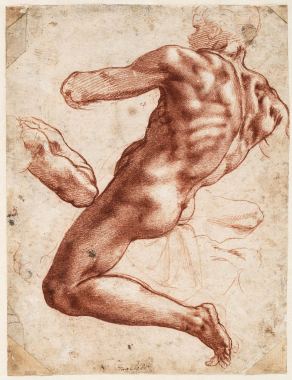
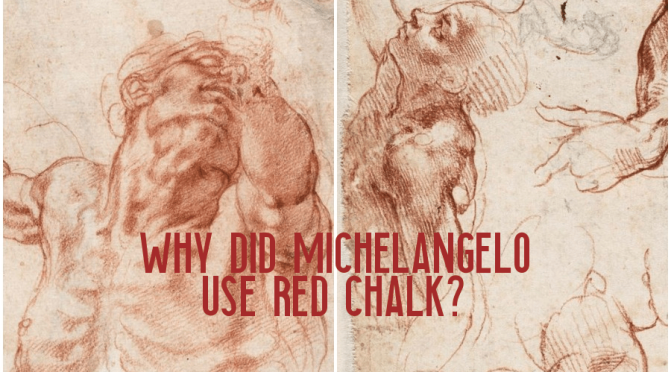
Take a visual journey into the mind of Michelangelo, a painter, sculptor, architect, draftsman, and one of the most creative and influential artists in the history of Western art. See how he used drawings to create, explore, and prepare for some of his most famous works of art. Produced for the J. Paul Getty Museum’s exhibition, “Michelangelo: Mind of the Master.” https://www.getty.edu/art/exhibitions…