

Often called the Father of Impressionism, Claude Monet inspired the term that defined this movement. Born in Paris, Monet would later live in Giverny, where he purchased a property, planted sprawling gardens, and painted his famous water lilies. https://www.philamuseum.org/collectio…
Category Archives: History
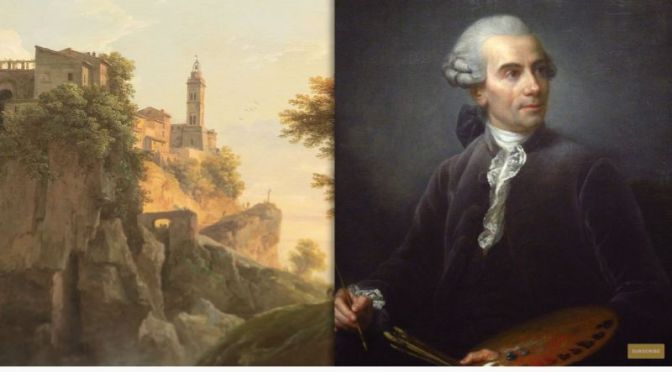
Artist Profile: French Landscape Painter Joseph Vernet – ‘View Of Tivoli’
In the 18th century, Joseph Vernet was uncontestably the greatest landscape painter of his generation. In this episode of Anatomy of an Artwork, discover how the ambitious and poetic landscape of ‘View of Tivoli’ pays tribute to the Italy Vernet loved so dearly.
Claude-Joseph Vernet was the leading French landscape painter (with Hubert Robert) of the later 18th century. He achieved great celebrity with his topographical paintings and serene landscapes. He was also one of the century’s most accomplished painters of tempests and moonlight scenes.
Vernet was born at Avignon and trained there with his father, Antoine, and with the history painter Philippe Sauvan. He spent the years 1734 to 1752 in Rome, where he studied classical landscapes in the tradition of Claude and Gaspard Dughet, as well as the dramatic paintings of Salvator Rosa. In Rome he was influenced by the contemporary Roman topographical painter Giovanni Paolo Panini. He had many English clients and admirers in Rome, including Richard Wilson, whom Vernet is thought to have encouraged as a landscape painter.
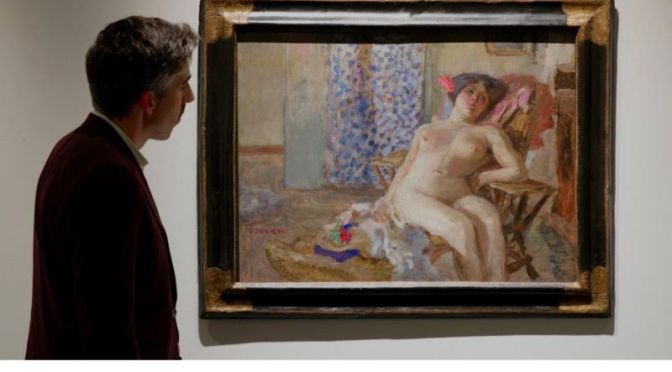
Artist Profile Video: French Painter Pierre Bonnard (1867-1947)
In this episode of Expert Voices, Scott Niichel examines three captivating works by Pierre Bonnard. Bonnard explores variations in colors and light in a way no other artist can; in effect, the artist builds a bridge between Impressionism and Modernism.
Pierre Bonnard was a French painter, illustrator, and printmaker, known especially for the stylized decorative qualities of his paintings and his bold use of color.

Foods: How Japan Has Been Making Soy Sauce For Over 220 Years (Video)
Masatsugu Fueki uses the same traditional practice of making soy sauce that his predecessors used at Japan’s Fueki Syoyu Brewing over 220 years ago. Fueki takes us through the factory and the multi-step natural brewing process which only uses three ingredients — soybeans, flour, and salt.
Credits: Producers: Carla Francescutti, Pelin Keskin Director/Camera: Tofu Media Editor: Carla Francescutti

Ancient Arts: ‘Lost-Wax Bronze Casting’ (Video)
See the process involved in casting a bronze figure – from the creation of a wax model through to the final sculpture. Find out more about sculpture: https://www.vam.ac.uk/collections/scu…
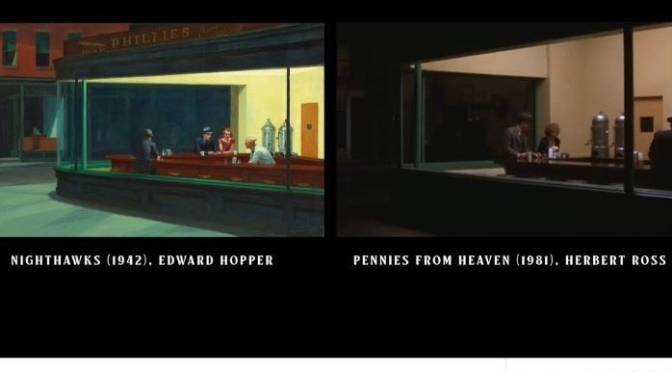
Art & The Movies: Paintings That Inspired Great Films
This video is a visual representation on how film directors create movies or movie scenes influenced by famous paintings.

Military Videos: ‘History Of Submarine Combat’
From silent one-man midget subs to U-boats on secret missions, both sides used secret submersibles of all shapes and sizes to conduct clandestine warfare in the war. An examination of the murky world of underwater “sneak craft” in WWII.
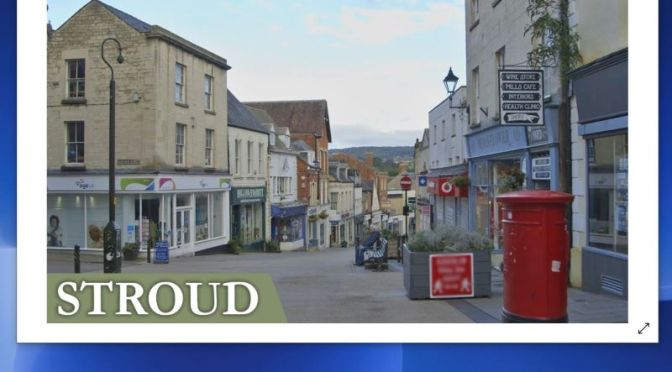
Travel In The Cotswolds: ‘Stroud’, Gloucestershire
Stroud is a market town on the western side of the Cotswolds in Gloucestershire, England. It is the meeting point for the surrounding five valleys and is renowned both for its steep streets and highly political culture. It was heavily involved in the industrial revolution and produced cloth, powered by small rivers which flow through the five valleys. Although not often considered a classic Cotswold town, it is well worth a visit.
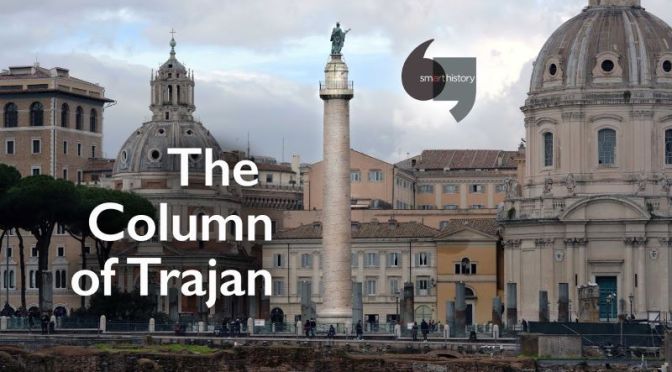
History: ‘The Column Of Trajan’ In Rome (Video)
Trajan’s Column is a Roman triumphal column in Rome, Italy, that commemorates Roman emperor Trajan’s victory in the Dacian Wars. It was probably constructed under the supervision of the architect Apollodorus of Damascus at the order of the Roman Senate. It is located in Trajan’s Forum, built near the Quirinal Hill, north of the Roman Forum. Completed in AD 113, the freestanding column is most famous for its spiral bas relief, which artistically represents the wars between the Romans and Dacians (101–102 and 105–106). Its design has inspired numerous victory columns, both ancient and modern.
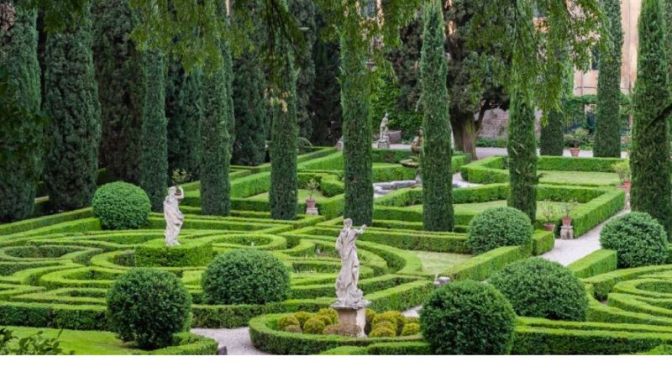
Italian Gardens: ‘Giardino Giusti in Verona’ and ‘Villa Fracanzan Piovene’ near Vicenza – “Shakespearean”
Giardino Giusti in Verona and Villa Fracanzan Piovene: The centuries-old Italian gardens that evoke the romance of Romeo and Juliet.
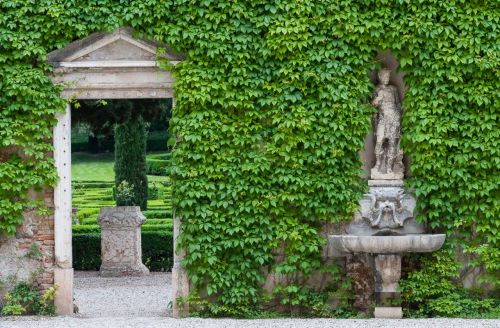


The name Giusti has been synonymous with one of Italy’s most celebrated Renaissance gardens since the late 16th century. Originally wool-dyers from Prato in Tuscany, the Giusti family had moved its business north in the previous century, settling in an unglamorous industrial suburb of Verona. Within a few generations, its members were rich and had also acquired the requisite antiquarian and artistic tastes of true Renaissance gentlefolk.
The garden created by Agostino Giusti between 1565 and 1580 was intended to fulfil various functions. It had to showcase his collection of Roman inscriptions and to serve as a setting for the lavish theatrical and musical productions—the predecessors of opera—then in vogue. To this day, the garden retains the surprise element of a stage set, presenting a magnificent and entertaining spectacle that totally confounds one’s expectations of a city garden.
 Boomers Daily