Category Archives: Design

Video Profiles: 60-Year Old Canadian Designer Bruce Mau – “Beauty Of Books”

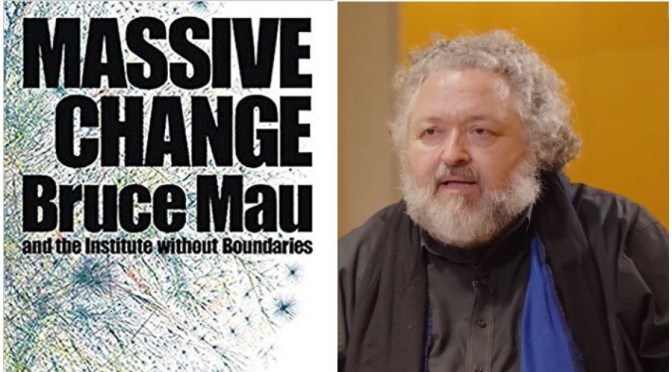
Meet the influential Canadian “design guru”, Bruce Mau, in this short video. Mau, who is the author of quintessential publications on architecture and design, shares his thoughts on how we can bring the book into the technological environment without losing its beauty and richness.

“I think it’s such a brilliant technology that if it didn’t exist today – if somehow we got to the present through technology and computers before the book – we would have to invent the book,” Maus says of the discussion surrounding the alleged ‘death of the book’. The book, he continues, is such a brilliant technology, that no computer can match: “It never crashes, it sequences narrative, which is one of the most important things we need to do to understand the world.”

Massive Change Bruce Mau

Mau shares how he is working on a technology platform for books because he realized that “when we moved the book from the physical book to the digital book, we left behind the beauty of the book. We left behind the culture of the book and the experience of the book. We just took the text.” The true experience of the book, he feels, should be better incorporated into the technological environment, while adding the capacity and reach that technology offers.

Bruce Mau website

Bruce Mau (b. 1959) is a Canadian designer. Mau began as a graphic designer but has later extended his creative talent to the world of architecture, art, films, conceptual philosophy and eco-environmental design. From 1985-2010, Mau was the creative director of Bruce Mau Design (BMD), and in 2003 he founded the Institute Without Boundaries in collaboration with the School of Design. In 2010, he went on to co-found The Massive Change Network in Chicago. Mau is the recipient of prestigious awards including the Chrysler Award for Design Innovation in 1998, the American Institute of Graphic Arts Gold Medal in 2007, the Philadelphia Museum of Art’s Collab Design Excellence Award in 2015, and the Cooper Hewitt 2016 National Design Award for Design Mind – for his impact on design theory, design practice and public awareness. In 1998, Mau designed a widely circulated 43 point manifest called ‘The Incomplete Manifesto for Growth’, which assists its users in forming and assessing their design process. Mau is also the author of iconic books such as ‘S, M, L, XL’ (1995) with Rem Koolhaas: an architecture compendium that quickly became a requisite addition to the shelves of creatives. In June 2020, he will publish ‘MC24’, which features essays, observations, project documentation, and design work by Mau and other high-profile architects, designers, artists, scientists, environmentalists, and thinkers of our time.

Bruce Mau was interviewed by Marc-Christoph Wagner in connection with The World Around conference (https://theworldaround.com/) in New York City in January 2020.

Website

Fusion Of Design & Film: The “Making Of Mercedes-Benz Vision AVTR” (Video)

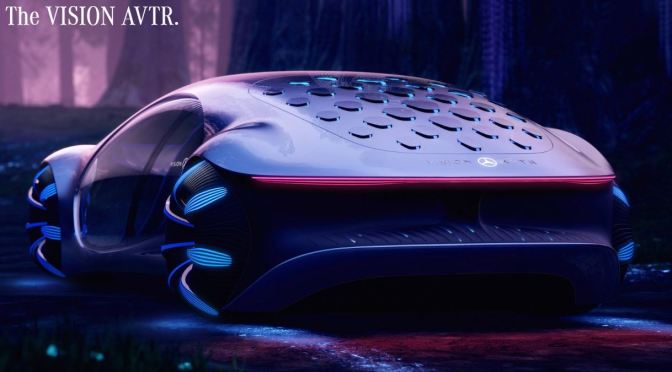
Mercedes-Benz and the upcoming “Avatar” films – what at first seemed to be an unexpected global partnership, turned into a unique interdisciplinary experience.

Jon Landau Producer Lightstorm Entertainment Making Of Mercedes-Benz Vision AVTR concept Car February 10 2020 video

Inspired by the world of “Avatar”, the two partners created the astonishing VISION AVTR. In this exclusive behind-the-scenes feature, key team members from both parties share their thoughts on the cooperation process and provide fascinating insights into the concept vehicle itself.

Credits: ™ & © 20th Century Fox Film Corp.

Website

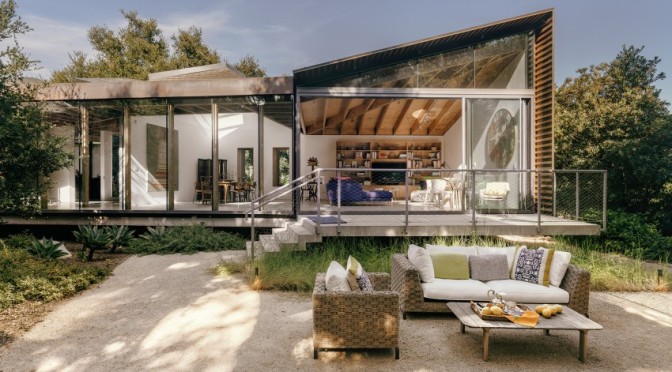
Top 2019 Architecture: “Branch House” By Tolo Architecture (Montecito)

branch-house-by-tolo-architecture-1-e1579038253756.jpg

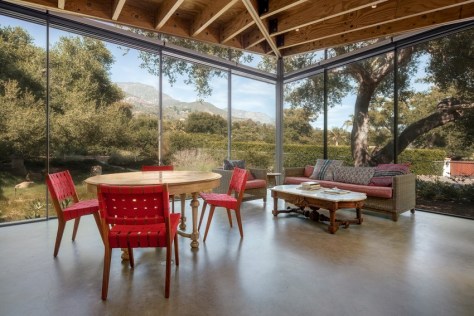
The interior palette is simple, even stark: concrete floors, gypsum board walls and ceilings, and exposed laminated-veneer lumber joists in the corridors and other areas. Colorfully glazed Heath clay tile punctuates specific areas: blue for the kitchen, and blue, pink, and yellow for the bathrooms. The exterior is even simpler, with the roof and siding of the boldly geometric volumes sheathed in copper shingles that act as a rainscreen while protecting the wood-framed structure from fire like a protective armor.

Branch House by Tolo Architecture
http://toloarchitecture.com/

Designed by Los Angeles–based TOLO Architecture, the Branch House brings a village of abstract domestic forms to a typical suburban enclave in Montecito, Calif. The 4,400-square-foot single-family residence sits on a 1-acre site on a cul de sac. A series of eight rectangular volumes, each with a skylight, enclose a living room and dining room, a kitchen, a two-car garage, an office, two bedrooms, a master bath, and a powder room, respectively, and are deployed in a nonorthogonal layout across the site. The positioning of each balances the desire for occupant privacy as well as views of the surrounding landscape. Meandering glass-lined hallways connect the volumes and act as galleries for the client’s art collection.

Read more 

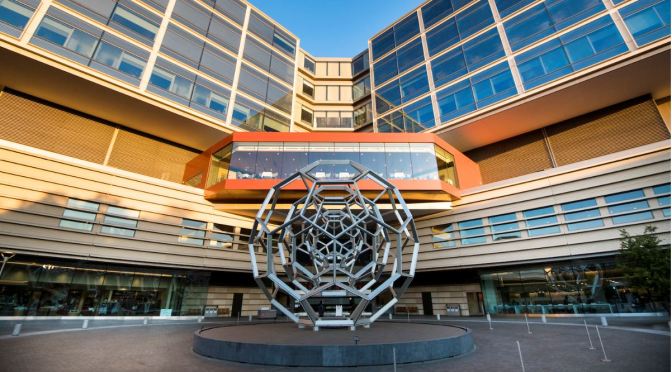
Health: New Stanford Hospital Features “Patient-Centric” Design (Video)

Precision Health puts the patient at the center of the health care paradigm, and at the newly-opened Stanford Hospital, the patient was the focus throughout the design process.

Learn more about how the building’s design combines with the latest medical and communications technology to put patient wellness first: http://stanmed.stanford.edu/2019fall/…

Classics: Famed Italian Car Designer “Pininfarina” Turns 90 (1930 – 2020)

Pininfarina Logo

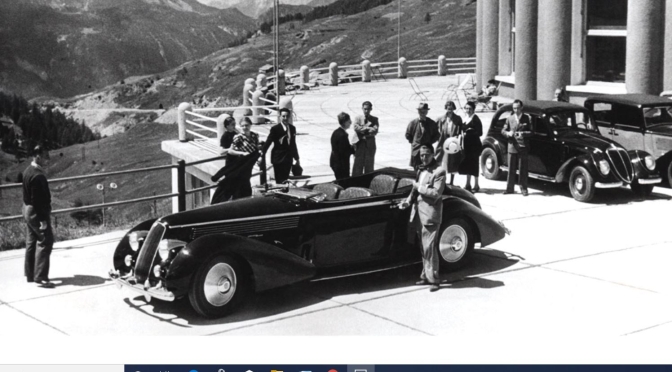
On May 22nd (1930), Battista “Pinin” Farina founded Carrozzeria Pinin Farina in Turin. The company was designed to build special car bodies for individual customers or in small production runs. The Corso Trapani plant had 150 employees on a covered area of 9250 square meters. In June, the following news appeared on an automobile periodical: “And now the popular nickname “Pinin” used by the whole of the Turin motoring world when talking about Battista Farina, was officially about to become used throughout the country, as a result of the recent Company changes which led to the founding of S.A. Carrozzeria Pinin Farina“. At the Paris Motor Show Pinin Farina exhibited Lancia, Alfa Romeo, Isotta-Fraschini and Fiat cars. The Lancia Dilambda, the first official Pinin Farina special, appeared at the 1931 Concours d’Elegance at Villa d’Este. His first accomplishments in the 1930’s included the Hispano Suiza Coupé and the Fiat 518 Ardita.

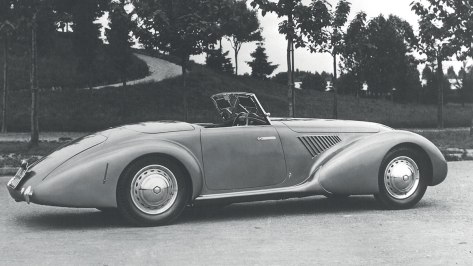
Heritage-1939-AlfaRomeo-8C-2900-CabAero

In the Thirties the car was a good that was reserved for a minor élite, almost a plaything for a narrow circle of bold, blasé youngsters. Yet Pinin felt sure that these unlikely, noisy jalopies, which also happened to be expensive, would change quickly to become outstanding and entirely respectable tools of individual mobility. One of the early ads says: “Luxury and grand luxury cars”.  Cars were destined to ruling houses, diplomats, maharajahs and even some Middle East sheiks who were beginning to collect some of the first oil royalties, for actors and actresses, more foreigners than Italians. Pinin wrote: “In September I sold a Dilambda spider cabriolet to the Queen of Romania, I began to have some of the nobility amongst my customers”.

pininfarina-design-90-years.jpg


Pinin immediately embraced the cause of modernity and aerodynamics. In his view, it was the most natural way (in so far as it was the most respondent to the “nature” of the object) of solving the problem of the autonomous and original formal identity of cars. Aerodynamics, he was to write in his memoirs, was the “form of speed”. At the 1935 Milan Motor Show Pinin exhibited the Alfa Romeo 6C Pescara Coupé aerodinamico. One year later, the Lancia Astura Cabriolet tipo Bocca: elegance and craftsmanship for a small series of streamlined, richly finished cabriolets which introduced the unprecedented notion of the legitimacy of making a certain number of replicas of a custom-built model. Then the Lancia Aprilia Aerodinamica was built, a revolutionary berlinetta where an astonishing Cx of 0.40 was intuitively and empirically achieved. Aerodynamics was no longer a symbolic element, a metaphor of speed; it had now become a real standard of efficiency.

Pininfarina Design  90 Years.jpg

Pininfarina website

History Of Travel: “The Marketing Of Pan Am” From 1950 – 1980 (Podcast)

Monocle 24 - Monocle's House View podcastMoncocle.com spoke with Tom Geismar, founding partner of Chermayeff & Geismar, one of the top graphic design agencies in the world and the man responsible for the marketing of Pan Am in the 1950’s, 60’s and 70’s.

From the Chermayeff & Geismar website:

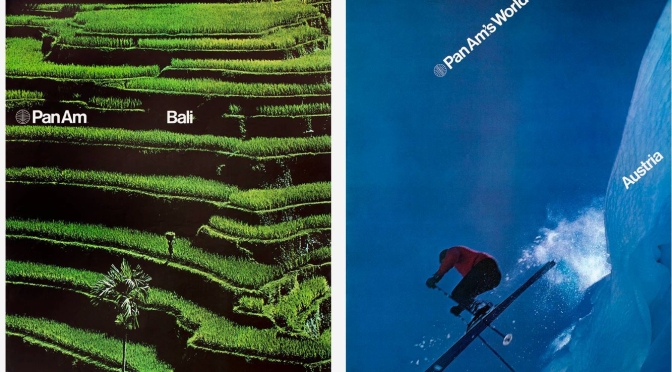
Chermayeff & Geismar PanAm Travel Posters New ZealandThe most important aspect of the identity design for Pan Am was to suggest that the name of the airline be changed to “Pan Am” from the long and cumbersome “Pan American World Airways.” The Pan Am logotype in capitals and lower-case letters was also adopted with an accompanying world symbol.
In addition to the corporate identity, our firm designed comprehensive graphics for the airline, including a poster campaign and the menus for the inaugural flight of the Boeing 747.

Monocle website

Art: “Bassins de Lumières” Opens As Largest Digital Art Center In World, Bordeaux (April 17, 2020)

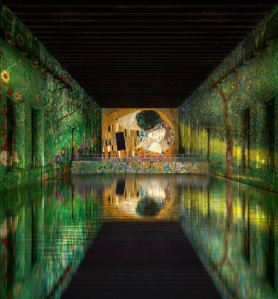
Bassins de Lumières Digital Art Center Bordeaux France April 2020 OpeningLocated in Bordeaux’s former submarine base, the BASSINS DE LUMIÈRES will present monumental immersive digital exhibitions devoted to the major artists in the history of art and contemporary art. The submarine base’s surface area is three times the size of that of the Carrières de Lumières in Les Baux-de-Provence and five times that of the Atelier des Lumières in Paris.
The digital exhibitions will be perfectly adapted to the monumental architecture of the submarine base and will be reflected in the water of the four enormous basins, thereby adding a new dimension to the immersive experience. Visits will be conducted on gangways above the water and along the quays of the enormous basins.

On 17 April 2020, Culturespaces will open the largest digital art centre in the world: the Bassins de Lumières. France’s leading private operator in the management and promotion of monuments, museums, and art centres, Culturespaces is pursuing the creation of digital art centres and immersive exhibitions.

Website


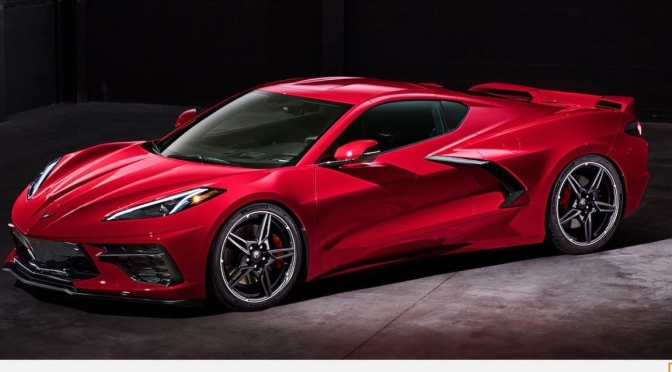
New American Cars: “2020 Corvette C8”, Mid-Engine With Retractable Hardtop

From a New York Times online article:

The 2020 Corvette Stingray has moved its engine behind the driver and passenger, adopting the physics-approved layout that brought Ferdinand Porsche his first racing successes in the 1930s. Today, this approach is associated with money-torching supercars from Ferrari, Lamborghini and McLaren.

The long-awaited “mid-engine” Corvette easily outruns its formidable predecessor, as I learned during a time-warping desert drive near Tortilla Flat, Ariz. The eighth-generation “C8” Corvette is earning rapturous reviews and dominating industry awards, as a car that can take on European exotics that cost $200,000 and more, but at a $59,995 base price that reads like a misprint.

Read more

Mobility In The 2020’s: Top 15 Electric Bikes (Video)

If you haven’t been up on the world of electric bikes you may think that bikes with motors are bulky, ugly contraptions with little power. But electric bikes are quietly revolutionizing commuting and fitness around the world, setting a newer, higher standard for versatility and strength for today’s riders. In this video, we’re bringing you 15 Electric Bikes Changing the Way We Travel in 2019-2020.